
Editor’s note: Got Hall of Fame questions? Submit them here for Jayson Stark’s subscriber mailbag.
COOPERSTOWN, N.Y. — We’ve made it through another Hall of Fame election, as recently as, let’s see now … Tuesday. So what better time than, well, one day later, to look ahead to the next one.
All right, what do we see in our Cooperstown crystal balls as we gaze at the stage in 2027? Hmmm, is that the pastoral hillsides of upstate New York or … the Golden Gate Bridge?
There’s good reason to wonder, you know. If there aren’t a lot of current and former San Franciscans delivering Hall of Fame speeches on July 25, 2027, we’ll need to take our crystal ball into the shop ASAP.
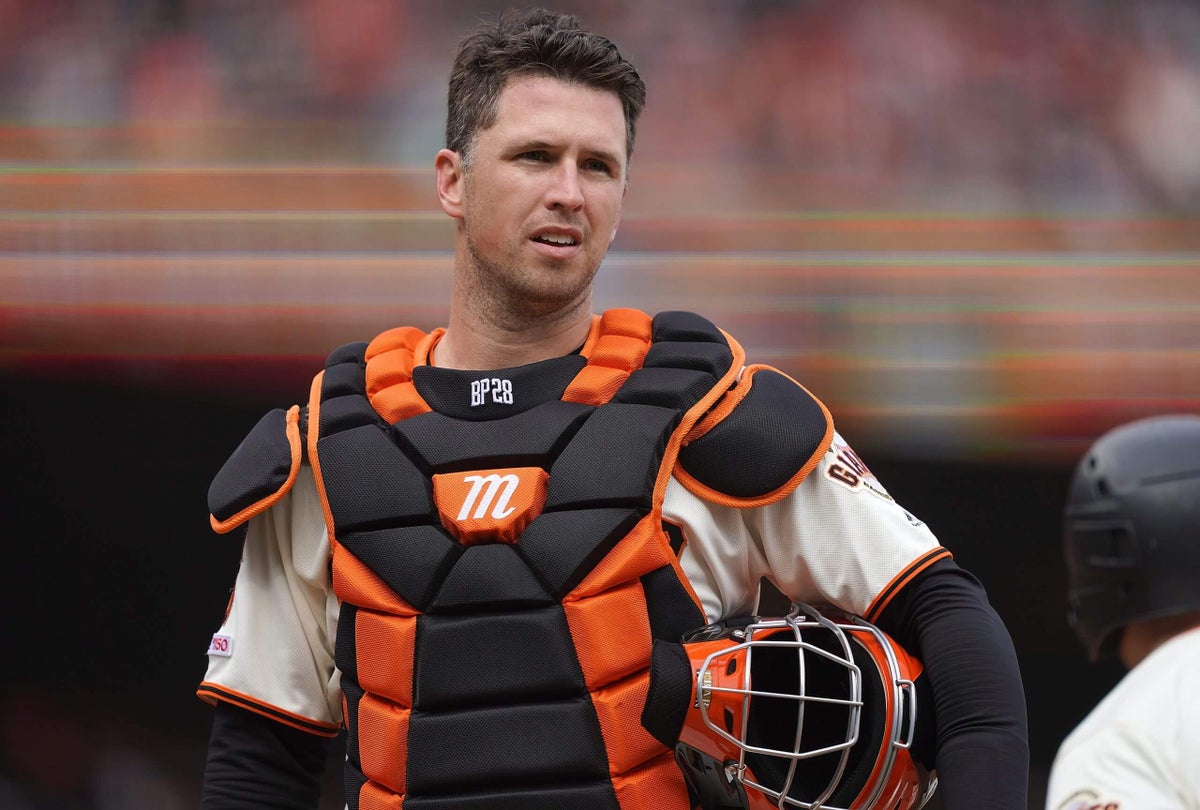
A fellow named Buster Posey is the biggest attraction on the writers’ ballot next year. And he’s now the ultimate modern-day San Francisco Giant.
Won three World Series as a player. Now running the show in their front office. He may not have the traditional numbers once associated with first-ballot Hall of Famers, but he has every other ingredient a first-ballot icon ought to have.
Then there is the Contemporary Baseball Era Committee, which will meet in December to vote on managers, executives and umpires. The co-favorites to be elected by that group are two gentlemen named Bruce Bochy and Dusty Baker. Any guesses what those two men have in common? Here’s one thing: Every World Series game played by the Giants in the 21st century has been managed by one of them.
So the first prediction we’d like to make about the 2027 Induction Weekend is, we foresee a lot of pop-up sourdough stands on Main Street in Cooperstown.
But what else do you need to know? Let’s preview the 2027 Baseball Writers’ Association of America election.
BUSTER POSEY — On one hand, Posey is kind of a tricky candidate. He finished with only 1,500 career hits. And the writers haven’t elected anybody with fewer than 1,600 hits since 1962. The man they honored that year? A legend named Jackie Robinson.
But if you’re just staring at Posey’s hits column, or his Wins Above Replacement column (he’s at 45.0 on Baseball Reference, 57.9 via the more catcher-friendly FanGraphs WAR), you’re missing the big picture.
Here are the selling points that should propel Posey into the Hall on the first ballot:
• An MVP award
• A Rookie of the Year award
• Three World Series rings
• A Gold Glove award
• A batting title
He may not be the first player ever with a Gold Glove, batting title, multiple World Series triumphs and both an MVP and Rookie of the Year trophy, but … you can count the entire group without needing a whole hand’s worth of fingers:
Pete Rose (won three World Series)
Frank Robinson (won two World Series)
Albert Pujols (won two World Series)
And Buster!
You’ll be reading that list again when the ballot gets announced next November. We promise.
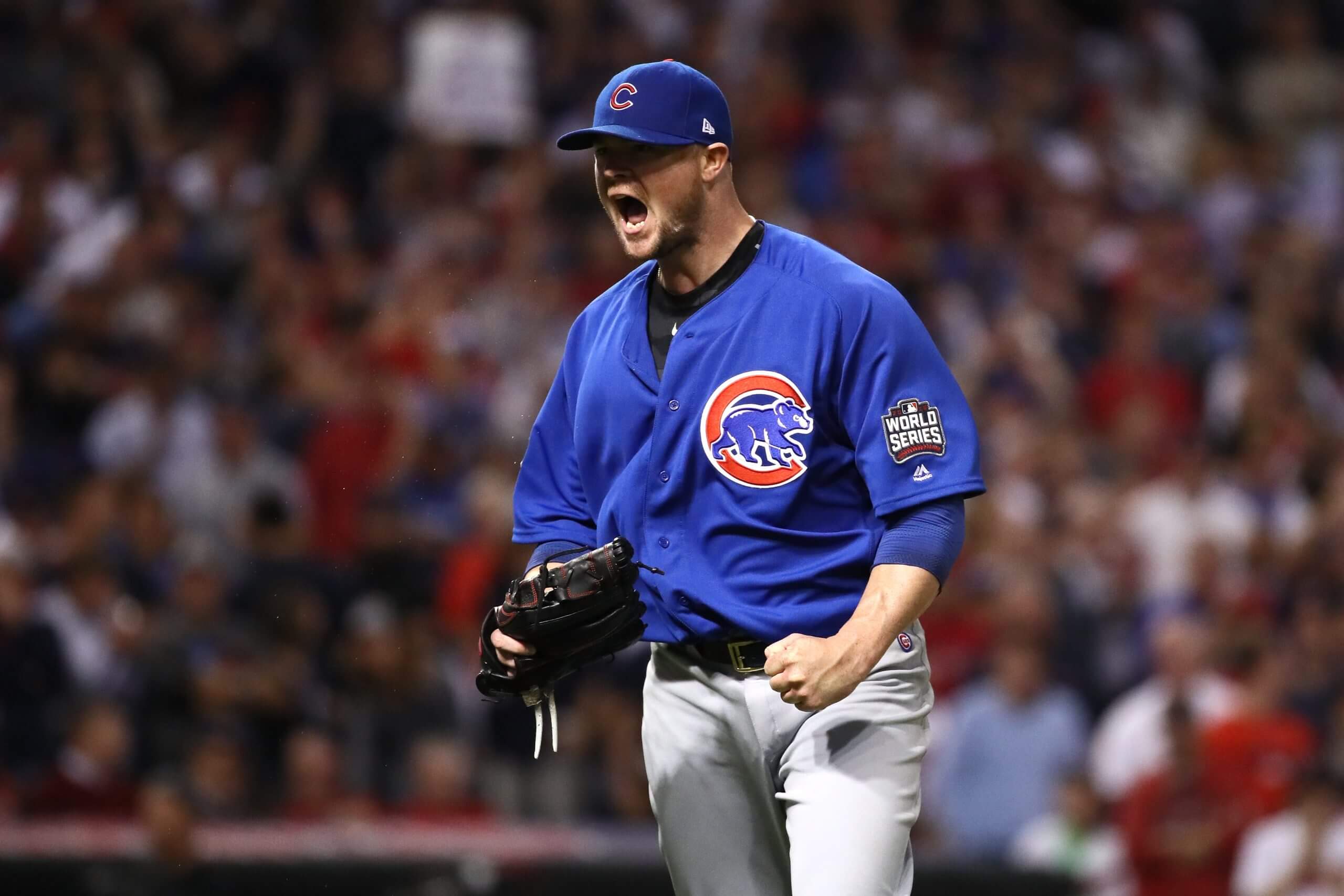
Jon Lester had a .631 career winning percentage and a sterling postseason resume. (Ezra Shaw / Getty Images)
JON LESTER — Lester might not seem like a slam-dunk Hall of Famer, but he probably has a more compelling collection of credentials than you think.
• A 200-117 career won-lost record, with a higher winning percentage (.631) than Greg Maddux, Tom Glavine or John Smoltz.
• A 3.66 career ERA and a 117 ERA+ — which is a tick better than the 116 ERA+ of the last left-hander elected to the Hall, CC Sabathia.
• Are you into awarding postseason bonus points? Lester gets a slew of those. He pitched for nine playoff teams, started games for three World Series champs (2007 Red Sox, 2013 Red Sox, 2016 Cubs) and went a dazzling 3-0, with a 1.77 ERA, in six World Series games. But also …
• He ranks No. 1 in history in both postseason ERA (2.51) and WHIP (1.019) among starting pitchers with at least 20 games pitched and 75 career postseason innings.
Maybe his 43.5 bWAR will derail Lester with some voters. But it’s more likely we’ll be spending a lot of time comparing him with the other three left-handed starters on the ballot: Andy Pettitte, Mark Buehrle and Cole Hamels.
OTHER FIRST-YEAR CANDIDATES — There are no other obvious Hall of Famers keeping those two guys company next year. But the rest of the new position-player class is headlined by Brett Gardner, Ryan Zimmerman, Kyle Seager and Jay Bruce. Plus we’ll have ballot debuts from a former Cy Young Award winner (Jake Arrieta) and the closer for a Royals team that won the 2015 World Series (Wade Davis). So we won’t lack for stuff to talk about.
The Holdovers 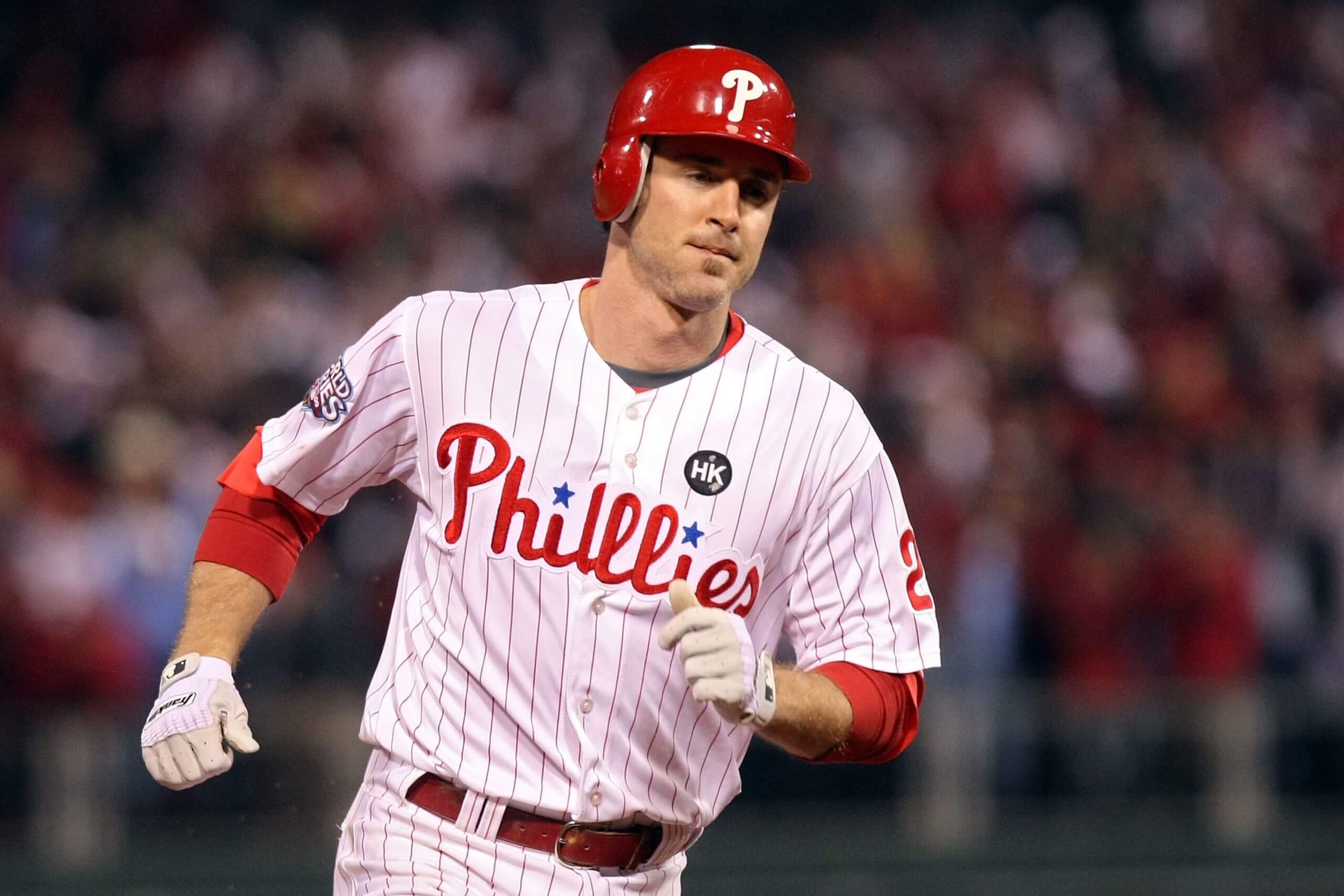
Chase Utley will be the highest returning vote-getter, at 59.1 percent. (Nick Laham / Getty Images)
CHASE UTLEY — It’s always helpful to be the highest returning vote-getter. And the longtime Phillies second baseman is that guy, coming off an election in which he attracted 59.1 percent of the vote in his third year on the ballot.
It’s a big leap from 59.1 percent to 75 percent, so 2027 might be a longshot for election. But if Posey is about to get elected with only 1,500 hits, Utley’s 1,855 won’t feel like much of an obstacle anymore. Here’s a guess that nobody on the ballot will be helped more by Posey’s arrival than Utley.
FÉLIX HERNÁNDEZ — Hernández will be appearing on his third ballot, and he isn’t that dissimilar to Utley. King Félix’s whole case is built around a stellar peak — which lasted anywhere from six years (2009-14) to nine years (2007-15), depending on how you define his greatness.
Will more traditional voters be skeptical of a starting pitcher who won “only” 169 games and was essentially done as a productive starter at age 31? That could happen. But we didn’t see evidence of it this year, when he tied for the biggest one-year voting jump (from 20.6 percent to 46.1 percent) in history.
COLE HAMELS — Hamels was the biggest surprise of the 2026 election, attracting 23.8 percent of the vote in his first year on the ballot, from voters who looked past his career won-lost record (163-122).
Hamels has a decade and a half of consistency and durability going for him, plus a World Series MVP award, an LCS MVP award, a no-hitter and a 123 ERA+ that obviously impressed a lot of voters. To this voter, there is more Roy Oswalt there than Roy Halladay, which puts him in my Great But Not Hall of Fame Great class. But we might find reason to re-evaluate that because of the debut of Lester, who had a very similar career.
ANDY PETTITTE — It will be Year 9 on the ballot for Pettitte, so he’s running short of time and still hasn’t topped 50 percent of the vote. So if he’s going to get elected, his best source of inspiration needs to be the case of Larry Walker, who got in on his final try in 2020.
Since the Hall of Fame shortened each candidate’s election window to a maximum of 10 years (instead of 15), only three men have needed all 10 years to get elected: Walker, Tim Raines and Edgar Martinez. Here, alongside Pettitte, is how they compared:
PETTITTEWALKER RAINES MARTINEZ
YEAR 8
48.5%
34.1%
55.0%
58.6%
YEAR 9
?
54.6%
69.8%
70.4%
YEAR 10
?
76.6%
86.0%
85.4%
The bad news for Pettitte is that clearly, Raines and Martinez were polling way ahead of him at this stage. The better news is that Pettitte has already changed enough minds to charge from just 13.5 percent two years ago to 48.5 percent this year.
But no one — not even Walker — has ever even been more than 60 percentage points away from election with four years left and then made up all that ground. So if there’s an induction speech in Pettitte’s future, next year is a pivotal election.
OTHER HOLDOVERS TO WATCH — What happens to the rest of this field if Posey gets elected and rewrites the definition of a Hall of Famer in the 21st century? Good question. But three guys who potentially could benefit are Dustin Pedroia, David Wright and Jimmy Rollins. I’ve been voting for all of them, just to keep them on the ballot long enough to find out if they’ll fit that definition.
It will be the sixth election for Rollins, the fourth for Wright and the third for Pedroia. So is Posey going to open the door for players like that — men who had star power, winning pedigree and more modest WAR numbers that didn’t (used to) fit the Cooperstown mold? Those answers are coming.
The 2027 election will be the window into what will come next, and who will reap the benefits. We don’t know for sure yet what we’ll learn. But we can’t wait to find out.