
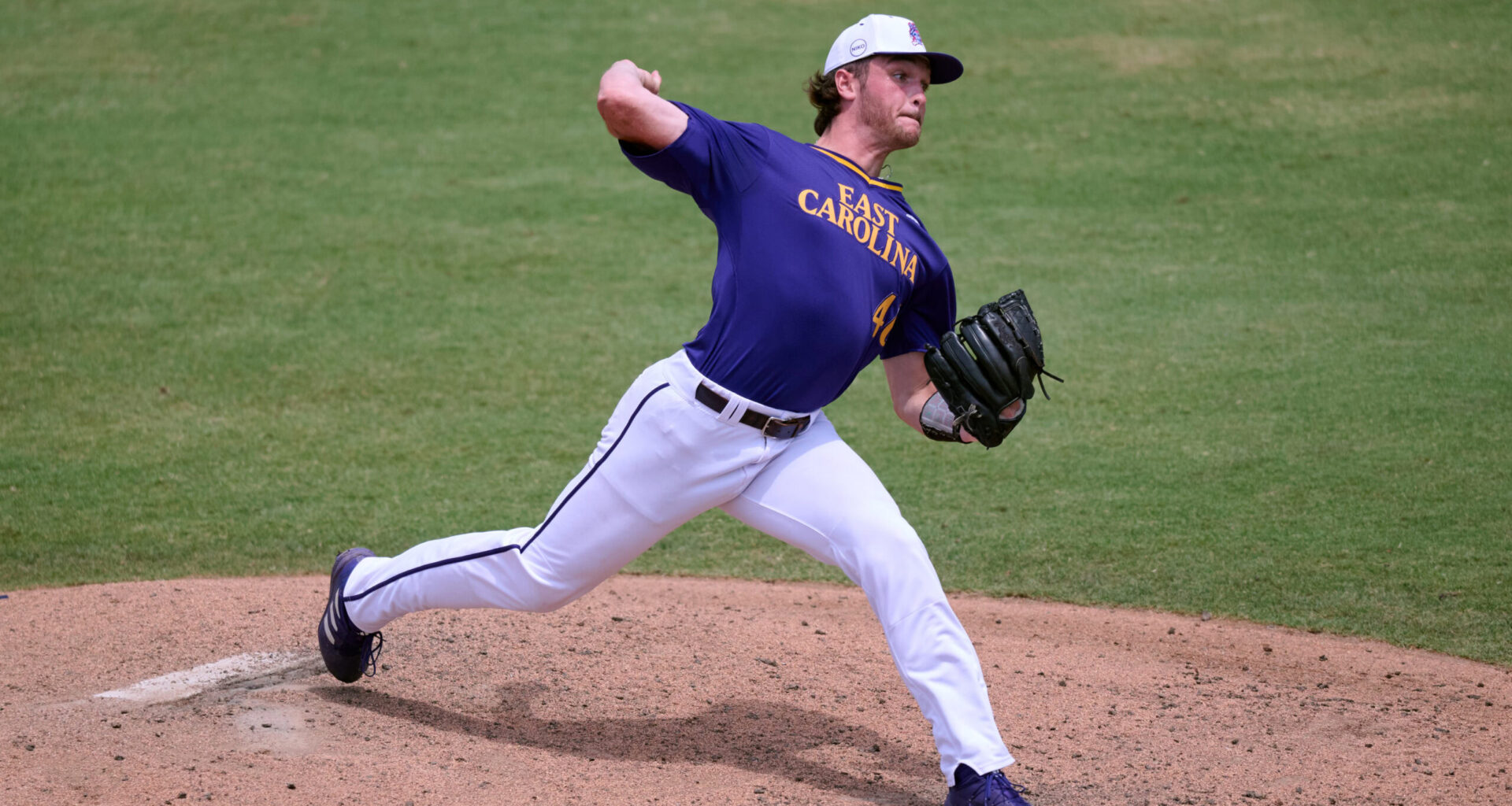
Image credit:
Trey Yesavage (Mike Janes/Four Seam Images)
College baseball continues to play an increasingly central role in how quickly elite prospects move through professional baseball.
This year’s Baseball America preseason Top 100 Prospects list reflects that shift, as 25 different colleges are represented among the rankings—a sign of how widely high-end talent is now distributed across Division I programs. The schools range from traditional powerhouses to programs that, a decade ago, were rarely associated with top-of-the-board impact, if it at all.
More Top 100 Coverage
That breadth matters. It speaks to how player development at the college level has both professionalized and diversified, producing prospects capable of stepping directly into pro environments with fewer developmental checkpoints required. The first chart illustrates that spread, showing every college represented in the Top 100 and highlighting how no single program dominates the list.
schooltop 100 prospectsOregon State3Arkansas2Florida State2LSU2Oklahoma State2Alabama1Cal1Caldwell Community College
and Technical Institute1East Carolina1Florida1James Madison1Kansas State1Kentucky1Liberty1McLennan Community College1Northeastern1Oklahoma1TCU1Tennessee1Texas A&M1UC Santa Barbara1Virginia1Wake Forest1West Virginia1Winthrop1
Of the 31 players on the Top 100 who attended college, 29 came from Division I programs, while two spent time at the junior college level.
playercollegeConnor PrielippAlabamaJaxon WigginsArkansasHagen SmithArkansasDylan BeaversCalBo DavidsonCaldwell Community College
and Technical InstituteTrey YesavageEast CarolinaBrandon SproatFloridaJamie ArnoldFlorida StateParker MessickFlorida StateChase DeLauterJames MadisonKaelen CulpepperKansas StateRyan WaldschmidtKentuckyTrey GibsonLibertyKade AndersonLSUGage JumpLSULogan HendersonMcLennan Community CollegeMike SirotaNortheasternKyson WitherspoonOklahomaNolan McLeanOklahoma StateCarson BengeOklahoma StateTravis BazzanaOregon StateAiva ArquetteOregon StateJacob MeltonOregon StatePayton TolleTCULiam DoyleTennesseeBraden MontgomeryTexas A&MTyler BremnerUC Santa BarbaraConnelly EarlyVirginiaRhett LowderWake ForestJJ WetherholtWest VirginiaBrody HopkinsWinthrop
Recent seasons have seen a historic acceleration in how quickly drafted players reach the major leagues, with college players at the center of it.
In 2025, 27 players made their major league debuts within two years of their draft season. Eight of those players were selected in the 2024 draft alone. Several were college standouts who arrived with advanced pitchability, physical readiness and a clearer sense of role than their high school counterparts typically possess. Former East Carolina righty Trey Yesavage became the first pitcher in baseball history to strike out 11 or more batters without allowing a hit through the first five innings of a postseason start less than two years after pitching in college.
In 2024, 28 players reached the majors within two years, including nine from the 2023 draft class. Among them was Paul Skenes, who went from being drafted first overall out of LSU to NL Cy Young winner in 2025.
The peak of the trend came in 2023, when 29 players reached the big leagues within two years of being drafted, the highest total in at least a quarter century.
Across the three-year stretch from 2023 to 2025, 84 players reached the majors within two years of their draft season. For context, that nearly matches the total from the entire eight-year span from 2015-22, when just 87 players did the same.
The takeaway is not that development has become easy, or that every college prospect is destined for a fast track. It is that the baseline has shifted. College programs are producing players who are closer to major league ready than ever before, and professional teams are responding accordingly.