
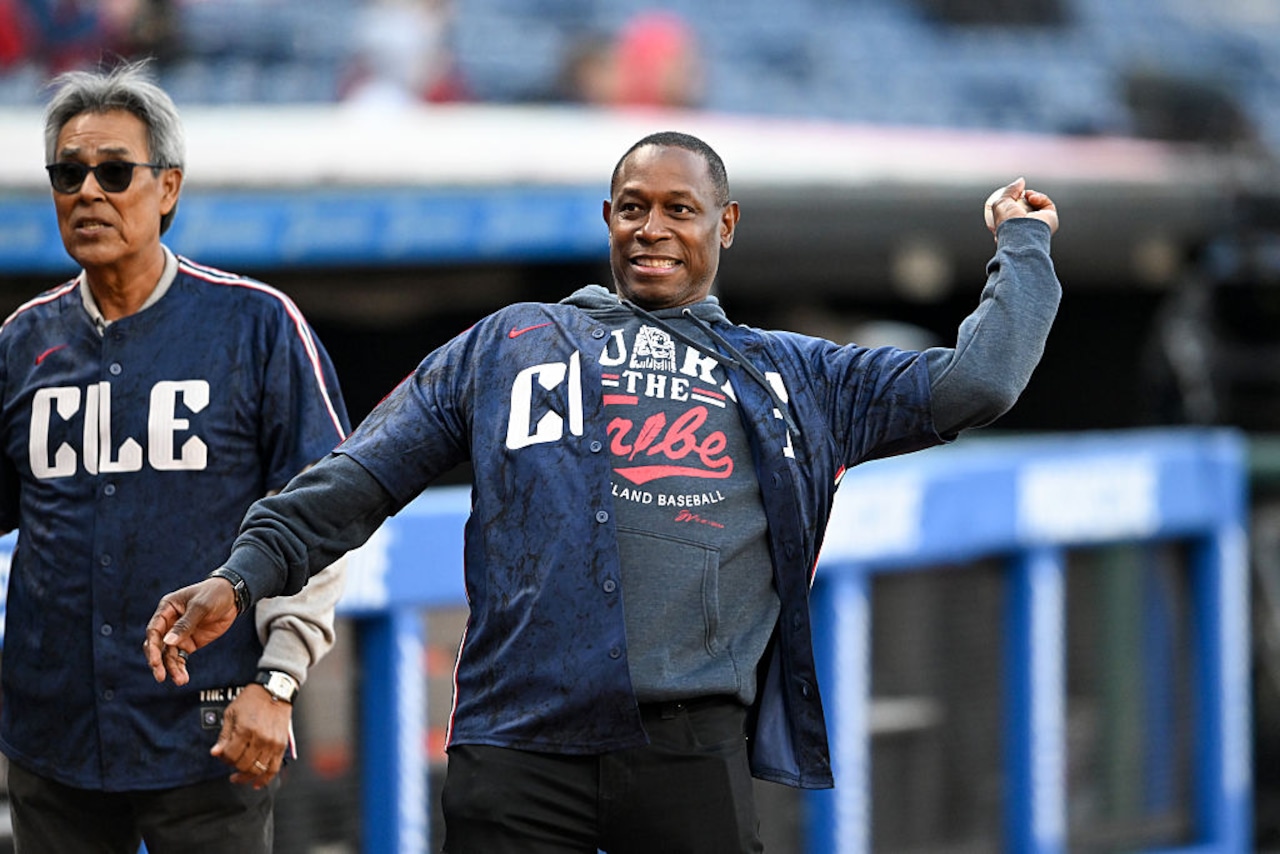
CLEVELAND, Ohio — The National Baseball Hall of Fame’s embrace of Andruw Jones and Carlos Beltran has cracked open a door that Kenny Lofton supporters have been pounding on for years. Their selection to Cooperstown this week serves as a perfect comparative case study that should have the Hall’s Modern Era Committee taking a serious look at Lofton’s credentials when he becomes eligible again.
On the latest Cleveland Baseball Talk Podcast, hosts Joe Noga and Paul Hoynes didn’t hold back when discussing the statistical argument that makes Lofton’s Hall of Fame exclusion increasingly difficult to justify.
“If you look at head to head stats, according to Baseball Reference WAR, Kenny Lofton a 68.4 WAR. Jones, who’s a Hall of Famer now 62.7,” Noga pointed out, launching into a detailed statistical breakdown that places Lofton ahead of the newly-minted Hall of Famer in several key categories.
The numbers tell a compelling story. Lofton collected more hits (2,428 to Jones’ 1,933) despite playing in fewer games. While Jones has the clear advantage in home runs and RBIs, Lofton scored significantly more runs (1,528 to 1,204) – reflective of his role as an elite table-setter for Cleveland’s powerhouse teams of the 1990s.
Even more telling is Lofton’s superior batting average (.299 to .254) and on-base percentage (.372 to .337). The defensive argument favors Jones with his 10 Gold Gloves to Lofton’s four, but the overall WAR numbers suggest Lofton’s complete game made him an exceptionally valuable player.
“Kenny was a dynamic player,” Hoynes emphasized on the podcast. “I think for a long time he was the postseason leader in stolen bases. He still might be, but he really was a team changer. He could impact a team. And he did that throughout his career. He didn’t deserve to be a one and done guy on the ballot.”
That “one and done” status remains perhaps the most egregious aspect of Lofton’s Hall of Fame journey. Despite his impressive statistical case, Lofton received just 3.2% of the vote in his only appearance on the writer’s ballot in 2013, falling below the 5% threshold needed to remain under consideration.
Noga described Lofton’s multi-dimensional impact on games in a way that statistics alone can’t capture: “He was a game wrecker in the 90s. He would get on base and affect pitchers in multiple different ways… He would impact the game in three different phases and he would do that on a nightly basis.”
With Jones now headed to Cooperstown alongside fellow center fielder Carlos Beltran, there seems to be a renewed appreciation for the position. As Hoynes noted, “Since 2001, only four center fielders have been elected to the hall of Fame. It’s Kirby Puckett, Ken Griffey Jr. And now Beltran and Jones.”
That shifting perspective could work in Lofton’s favor when his case eventually reaches the Modern Era Committee. The comparison to Jones and Beltran provides a powerful benchmark that the committee can’t easily ignore.
For Cleveland fans who watched Lofton patrol center field with unmatched grace and intensity, his Hall of Fame case has never been about statistics alone. It’s about recognizing a player who changed games, energized lineups, and helped transform the franchise into a perennial contender. As the podcast makes clear, Kenny Lofton’s Cooperstown credentials deserve a serious second look.
Read the automated transcript of today’s podcast below. Because it’s an AI-generated transcript, it may contain errors and misspellings.
Podcast Transcript
Joe Noga: Welcome back to the Cleveland Baseball Talk Podcast. I’m Joe Noga, joined by Paul Hoynes. Hoynsie, the National Baseball Hall of Fame in Cooperstown announced its 2026 class as elected by the Baseball Writers association of America. As expected, Carlos Beltran and Andrew Jones both get in and I think it’s, you know, a really good sign that a pair of center fielders get in on the, the writers ballot. Maybe it sends a message to some folks that this is a position been a little overlooked lately.
Paul Hoynes: Yeah, no doubt about it, Joe. Since 2001, only four center fielders have been elected to the hall of Fame. It’s Kirby Puckett, Ken Griffey Jr. And now Beltran and Jones. And I think, you know, that brings up, I think that’s, you know, you could tell there was a groundswell of support for some of the center fielders that have been overlooked in that time period. Just among the commentators yesterday, you know, around the hall of Fame announcement, and Kenny Lofton’s name came up quite a bit. Joe, how do you, how do you feel about that?
Joe Noga: I think that this is a good sign for Kenny when the, the ERA committee that he would be eligible for the, the modern committee would be come up in its next cycle in a couple of years. I think that’s a, a really positive sign that he would at least get consideration to be on the ballot. That’s sort of the thing that was frustrating this year. It was that he wasn’t even able to be considered in that room on that committee. And, you know, he’s got to wait another two, three years before he can even be considered to be on the ballot again next year. I think if that committee was to meet or the people who put together that ballot were to get together and put the ballot together tomorrow, I think he would definitely be somebody to consider just based on the comparable stats between Lofton and a guy like Andrew Jones that is now a Hall of Famer and deservedly so. But if you look at a head to head comparison of their overall stats, Kenny Lofton comes out looking pretty good compared to a guy who’s now going to be able to call himself a Hall of Famer.
Paul Hoynes: Yeah, you know, the only discrepancy probably, obviously is the home runs and the RBIs. You know, Jones hit.434 home runs over 1200 RBIs. And he, you know, was not that kind of player. But everywhere else, defensively, you know, All Star game wise, old glove w. You know, Jones wins 10 Gold Gloves, Kenny won four. But you know, Lofton had, you know, really, the analytics love Lofton. He’s got over a 60 war. You know, this is a guy that, that deserves a longer look. And one way or another, Joe, I hope he gets it.
Joe Noga: Yeah. If you look at their, their head to head stats, according to baseball reference, in baseball reference, WAR, Kenny Lofton a 68.4 WAR. Jones, who’s a Hall of Famer now 62.7. Lofton’s got, you know, you know, more. He played in a little less than a hundred fewer games, but has more hits. 2428 to 19, 33. Obviously Jones has the edge in home runs, but Lofton was a table setter. Lofton was a leadoff batter for his career. So you look at, you know, maybe runs scored as an equalizer there. Runs scored, Kenny Lofton 1,528 in his career, Jones 1,204. That’s a couple of seasons there of run scored for. A lot of guys differ obviously. Steals, Kenny’s going to have a lot more.622 to 152. But his career batting average of.299 owns.254. The on base percentage obviously for a leadoff hitter is very high.372. Jones was.337. But you know, the slugging percentage, not that far off.423 for Lofton or 86 for, for Jones. The OPS, Jones up over 808.23. Lofton with a.794 OPS right at the edge of that 800. That elite status. And the OPS plus, both of them up over a hundred, but not too far off. Ops plus. Jones is 111 and Kenny 107. These are all numbers that compare very favorably between Lofton and a guy who the writers right now think is, is, is worthy. And I think that’s a great trend and a great sign for Lofton.
Paul Hoynes: Yeah, no doubt about it. You know, was kind of a hired gun at, you know, the second part of his career. But the key with Kenny, to me at least, was everywhere he went, his team usually went to the post season. I mean, he’s played a ton of postseason games. So has Jones. I was a member of the Braves and Kenny was with the Braves as well. I guess there’s a little comparison there. Both center fielders just, you know, I thought he, Lofton was a dynamic player. I think for, for a long time he was the postseason leader in stolen bases. He still might be, but, you know, he really was a, he was a team changer. He, he could impact a team. And he did that throughout his career to be on the ballot more than one year, which he didn’t, he didn’t deserve to be a one and done guy.
Joe Noga: Yeah. And you know, you’re talking about not just a team changer. He was a game wrecker in the 90s. He would get in there and he would get on base and affect pitchers in multiple different ways. He could hit the ball once he got on base. He, he could affect the game by, by stealing bases and running his speed in the outfield. You know, he would impact the game in three different phases and he would do that on a nightly basis. It wouldn’t just be, you know, he’d have a hot stretch and then cool off or whatever. He would do that almost every game where the threat of a bunt going first to third, you know, running down balls in the gaps in the outfield, he would do all of that on a, on a nightly basis. And I think a lot of the people who maybe formulated these ballots or sat, Sat around and, you know, forgot that he was like that. He was, he was a guy who impacted the game in a multiple, you know, so, yeah, I think this is a good sign for Kenny Lofton. But let’s talk about Andrew Jones and Carlos Beltran. These are guys who now have waited a little while for Beltran. He was, he was supposed to walk right off the field after his time in Houston and walk right off the field and right into the manager’s spot in the dugout. And that never materialized in New York.
Paul Hoynes: Oh, and you know that he, he was, in fact, the Mets hired him as manager, but you know, with the penalties coming down from the, you know, the sign stealing scandal in Houston, he was, he was deeply involved in that in his final year as a player, you know, he, you know, they, they separated. They, they, you know, he was, he was, you know, I don’t know if he was fired as a manager of the Mets, but it fell through. Whatever, you know, his, his deal with that. So he’s, you know, he’s had to kind of pay the price there. But he still got in, what, on his fourth year, Joe. So, you know, that, that’s, that was, you know, he had to wait a little bit. I really, you know, I think I voted for him, you know, all four times. The four times he’s been on the ballot, I believe. And I didn’t really handle that, you know, hold that against him. You know, I know sign stealing goes on. You know, it’s, it’s been a Part of baseball for a hundred years. They took it to the Astros, took it to the N degree though, and you know, they’re penalized. But he was the only player named that, that really took a hit there. You know, Alex Cora, you know, was. I think he was. He was suspended a year too. Right. I believe, and. And A.J. hen suspended and the GM lost his job. But Beltran kind of took to heat for a lot of that.
Joe Noga: Yeah. And I think, you know, being around and covering that and, you know, we had, we’ve talked about it on podcasts before, just how deeply that, that sign stealing situation sort of went for him to be the only player. And he was sort of on his way out. He was, Everybody knew he was retiring. The other players weren’t held accountable for their actions. I don’t think the writers sort of held it against him. Eventually his body of work really sort of spoke for itself in terms of his play on the field. So. Yeah, that’s, that was interesting to see that he got in there. And then Andrew Jones, the numbers were always really good at his peak. But you’re talking about another guy who played a lot of seasons and towards the end the numbers weren’t as great. And that sort of maybe got held against him for, for a little while and made them delay him getting into the Hall. That’s eventually. Until last night.
Paul Hoynes: Yeah, no doubt about it, Joe. That was. He was in his ninth year of eligibility, meaning, you know, he had one year left. He only hit.254 in his career. Uh, you know, that’s, you know, it’s not a great batting average for a Hall of Famer, but He did hit over 400 home runs. 10, 10 Gold Gloves, five All Star games. So he was really at his peak, you know. You know, he came in as he got to the big leagues as a 19 year old. You know, he did, you know, he had some impress and I think, you know, it was the defense, the combination of defense and power that really, you know, had some, that, that got him into the hall of Fame. He, he made it 78.4% of the vote. You need 75 to get in. You know, Beltran got in with 84.2% last year. Beltran was at 70% and Jones was at 66%. So, you know, that, that was on both guys. But Beltran, I thought, you know, when you get to 70%, you usually get in the next year. So, you know, both those guys deserve it. And Beltran, Joe, switch hitter, rookie of the year, you know, nine time all star three time gold glove winner. He did 30, 30 once. Another guy that hit over 400 home runs. 435 home runs. So you another just, you know, kind of that, that, that same blend of defense and power and they both played center field.
Joe Noga: I hear he did 30, 30 once and I hear that to me just tells me that Jose Ramirez is a lock for the hall of Fame when his time comes. Just, just to hear that because Jose Ramirez has done 30, 30 multiple times as a guardian. So I think Beltran and Jones are great. They have a lot in common. One of the things that they’re going to have in common, they’re both going to be riding behind you in the, the hall of Fame induction ceremony parade on July 26th. 5th I believe it’ll be out 20 July 25th. They will be inducted on the 26th, but the day before that, Paul Hoynes at Cooperstown to receive the Platinum pen Career Excellence award from the BBWAA. It will be something to look forward to this summer. Hoynsie, Beltran and Andrew Jones and Joe Buck and Jeff Kent. And what a, what a class it’s going to be there in Cooperstown in July.
Paul Hoynes: Hopefully I don’t fall out of the.
Joe Noga: Yeah, that’s, you know, I’ve seen the parade. I’ve, I’ve, I was there last summer to, to watch Hammy’s induction. And you’re riding in the back of like an F150 with these specially made benches on it. And then when it stops at the, at the, the, the steps of the hall of Fame, they wheel up these stairs and I’m, I’m thinking to myself, gosh, Hoynsie, man, this is not the story that I want to write. You know, we’ll, we’ll, we’ll keep an eye on that situation. We’ll make sure we put the, the safety rails in place for you there. All right. You know, just moving on to, to next year. Thinking about next year. The class of 2027. As, as far as the first year guys on the ballot, only one survived. It was Cole Hamills. The rest of the players on the, on the ballot for the first time, they fell short of that 5% threshold and will not be on the ballot next year.
Paul Hoynes: Yeah, it’s always a, it was kind of when you looked at the, the ballot this year, you know, you knew, you know, had you that Jones and Beltran would have strong showings. Chase Utley, another guy that took a big jump. But the, you know, the, the new, the first year candidates, it was seemed like they were going to have a tough time getting that 5% necessary to stay on the ballot. And that’s how it, that’s how it turned out, Joe. Except for, you know, Cole Hamels. Well, you know, had, who garnered, you know, 23.8% of the vote in his first year on the ballot, which is, you know, an impressive start.
Joe Noga: Yeah. And with all those names coming off after their first year, it gives the guys who stay on for next season or next year, next, the next voting cycle, you know, a stronger case. A guy like Jimmy Rollins got 108 votes this year, 25%. You know, I would expect his, his vote total to go up next year just because there will be so many new names on the ballot. Dustin Pedroia got 88 votes, 20% and your guy, Mark Burley, 85 votes out of the 400 and some that were cast, I would expect he would probably get a bump next year. He was at 20%. So the Cleveland players that, the former Cleveland players that were on the ballot, Manny Ramirez got 165 votes, 38.8%. So, you know, a little less than half of what you need to get to get in. That was his 10th year on the ballot. So he will now, his case will now move to the ERA committee and, you know, be handled by the veterans in that way. Omar Vizquel gets 78 votes, 18.4%. He’s got one more season on the ballot, one more year on the ballot before he’s moving off. And then, you know, the, the other two, Edwin Encarnacion got six votes. Shin-Soo Choo got three votes. Both of them fell short of the 5% threshold and won’t be on the ballot next year. But there will be two former Cleveland players eligible to be on the ballot if they’re selected by the ballot committee for next season.
Paul Hoynes: Yeah, both of them that would be Asdrubal Cabrera, you know, longtime middle infielder for Cleveland, and Scott Kazmir, left hander that just spent, you know, one season with Cleveland to, in 2013. But it was, it was the restart of the second phase of his career, Joe, and, and he, you know, made the most of it. He went on to make a lot of money as a free agent. I think he signed with Oakland and then he, you know, kind of bounced around, but, you know, it reignited his career. But Cabrera was really an underrated player, Joe. I really liked watching him switch hitter, shortstop. He moved to second base. He could play all over, played forever, had some power. Good, you know, good, solid, good Solid player, Joe. It’s just, you know, when we’re saying goodbye to Manny Ramirez and to me it’s, it’s a tough story, man. It’s a heartbreaking story. To me. This is a guy that, that still has hit. No one has hit more postseason home runs than this guy. He said he did 29 in his career. 555 for, you know what, I think he played maybe 16, 18 years, you know, like over 300 career hitter. A guy that should have been in the hall of Fame, you know, in his first or second ballot, no doubt about it. You know, maybe the best right handed hitter I’ve ever seen. And you know, the steroid thing just, just scuttled his career. You know, I’ve talked to Manny about it. You know, he’s, he’s says he’s at peace with it, but geez. Oh man, he should be there, Joe. He should be in Cooperstown. It’s just a shame.
Joe Noga: Yeah, this is multiple positive tests which, you know, not a lot of players who, who you can sort of make an argument for, you know, have that it’s definitely what, what held him back. A lot of, a lot of the voters just say, you know, this is not something that they’re comfortable deciding and they, they kick it on to the, to the errors committees and let the, those veteran players decide whether or not a guy like Manny Ramirez is eventually going to get in. Maybe the, the attitudes shift and change years from now, but we’ll see if Manny ever gets his chance to make it into Cooperstown again. You’re talking about a select group and, and there’s a few guys who by their finish on the, the vote this year are going to have a really strong case next year. I think we mentioned Chase Utley. He’s the next closest, the first guy to, you know, to fall short. 59.1%. He was named on 251 ballots out of what, 428 that were cast. 11 blank ballots submitted this year. That’s the most since 2021. Andy Pettit, 206 votes. He got 48.5% of the vote. And Felix Hernandez took a big jump this year. He’s up to 46.1%. Alex Rodriguez, 170 votes. He’s at 40%. So you’re talking about a couple of steroid guys there in Pettit and Rodriguez, but you’re also talking about a guy who’s a curious case in Felix Hernandez, you know, wins a Cy Young Award with some, some questionable stats. The year that he won his Cy Young. But you know, Utley has the sort of the resume and the credentials. Pettitte is the all time dominant pitcher in, in postseason play. And then you got, I mean, you’ve got a steroid guy in Rodriguez who, you know, had there not been sort of the taint of that, that steroid era would be in without question.
Paul Hoynes: Yeah, he was a first ballot guy. He’s. He’s just like Manny Joe Rodriguez, if he would have just kept clean. But the BALCO thing, you know, hurt him. I think it was about. No, I don’t think that he wasn’t with.
Joe Noga: No, it wasn’t.
Paul Hoynes: It was the other, the second, the second steroid scandal. I can’t remember the name of it. The guy’s from Florida, I think. Yeah, he, I mean, this is a guy that, I mean, you look at his, his numbers, what, over 600 home runs. I mean, no doubt, no doubt about it. Hall of Famer. And he just kind of, you know, they did it to themselves, Joe. That’s the thing that, that gets me. I mean, these guys are so talented and they’re hall of Famers one way or the other. And that, I guess that, that competitive nature kind of gets out of whack at sometimes and that drives them, I mean, but just, I don’t know, I don’t know how they feel about it, but it makes me sad when the best players in the world aren’t in the hall of Fame.
Joe Noga: And you know, a Rod would sit there and tell you, I think he said earlier this year that, you know, only a handful of those home runs were hit when he was, was using steroids. So, you know, that makes it all right. Which I don’t think makes it all right, but, you know, again, that’s. We’re talking. All these guys have made millions of dollars and, you know, you got to do it the right way. And I can understand the hall of Fame, you know, sort of being something that they can’t achieve if they, if they can’t come out and say that, you know, they went about doing it the right way. But what did you think of, you know, the, the jump that Felix Hernandez took? What did you think of Andy Pettit being as close as he is now and still having a few more years of eligibility on the ballot? These are guys who could possibly get in at some point in the next couple of years.
Paul Hoynes: Yeah, Pettit is. He has two years left on the ballot. You know, Hernandez, this is his second year on the ballot, Joe. You know, he made A huge jump. He was at 20% last year. Now he’s at 46.1%. You know, I kind of like Link Hernandez and Cole Hamels. We’ve been talking. We’ve talked about this before, kind of, you know, the new era of pitching, especially starting pitching, the restraints, the restrictions that have been put on them, the pitch counts, the innings limits, you know, go five. You know, the philosophy of going five innings as hard as you can for, and we’ll come and get you. After that, you know, just worry about going through the lineup two times. So I think that’s really changed the nature of the starting pitcher, and it’s really kind of. If as voters. I think the voters have to refocus on that because is there, Joe, are we going to see a guy that throws 300 innings in a season anymore? Are we going to see a guy that makes 35 starts or wins, you know, 20, 25 games? I just don’t think we’re going to see that. We may have to. The voters may have to readjust the way they look at starting pitchers, and I think the vote totals for Hernandez and Hamill’s are probably an indication of that.
Joe Noga: I think that the voters, especially the longtime voters who are in. They have to make the adjustment in their head, because it’s understandable that we’re not going to see 300 innings or 35 starts out of a pitcher anymore, just based on the way the velocities have gone up and the way that these guys are getting paid. You’re not going to be. You’ve got a Garrett Cole who missed the season because, you know, he had to have elbow surgery and all these elbow surgeries that are coming up. You’re not going to pay guys $20 million to be on the shelf for a year, a year. Plus, if you’re going to have those protections built in so that they don’t blow their elbows out. If you’re paying these guys the big money, I think with the way the contracts have been and the way that the salaries are right now, you’re not going to see those, you know, those numbers like you mentioned, the 300 innings, the 35 starts, you know, multiple complete games and things like that, they’re going to be protective of these pitchers who are making, you know, just incredible salaries, and they want to make sure that they’re out there and viable.
Paul Hoynes: I. I’ve got to admit, I. Maybe. I think what Felix. Felix won his. His Cy Young. Well, he won a couple Cy Youngs, right?
Joe Noga: I think he just won the one Cy Young. But it was.
Paul Hoynes: Yeah, in 2010 with 13 wins. Still got a problem with the 13 wins. You know, other than that. You know, you look at his line score that year, 249innings, 2.27 ERA, over a thousand strikeouts or. No, not a thousand. I’m sorry. And 232 str. You know, the, the, the supporting numbers are there, but, you know, I’m still. I, I still got a little of that old school in me that. I mean, 13. 13 and 12 is, you know, that. That’s. I don’t know. That’s. It doesn’t sound like a Cy Young. Cy Young winner, but the other numbers do.
Joe Noga: But imagine he put up those numbers in a walk year right now. What would he be making on the open market that, you know, as the, as the top free agent pitcher ever, they would never let him throw 249innings in a regular season. The following year, they would be protecting him and, and keeping him at a, at a reasonable number of innings to, to reduce the, the possibility that his, that his elbow explodes.
Paul Hoynes: Yeah, that’s right. You’re right about that. And.
Joe Noga: But.
Paul Hoynes: Jesus. Oh, man. Yeah. I don’t know, but I think that’s where things started to change for sure. And I think that’s why, you know, Hamills and, And, you know, Hernandez’s vote total, that’s reflective of that.
Joe Noga: Yeah. And. And like you said, the changing sort of electorate, those who, Those who coming in now, the newer voters in the last two or three years are going to start operating on those principles, whereas the guys who still have a problem with a Cy young winner at 13 wins or a Cy Young winner at almost.500 in a season, those guys are, they’re fewer and far between now.
Paul Hoynes: Dinosaurs, Joe.
Joe Noga: When you’re, when your BBWA badge number is in the single digits, Hoynsi. I think. I think that’s a reflection of maybe where your attitudes lie. Holding that against you in any way. I, for one, I celebrate it. Hey, moving away from the hall of Fame talk really briefly. We have to talk about something that’s going to impact the guardians in the offseason. Last night, while everybody is sort of basking in the glow of two center fielders getting into the hall of Fame, a center fielder was traded out of the American League Central. An All Star Gold Glove center fielder traded out of the American League Central, Luis Robert Jr. Who had long been on the. The, you know, rumored on the, on the trading block, the Mets finally got. Go out and get a guy. I think they Rolled the dice here. They pick up the full $20 million salary for 20, 26 on Luis Robert, and they, they send a couple of prospects, a couple of an infielder and a pitcher to the White Sox. So really, they, the White Sox didn’t get a huge ransom in exchange for Luis Robert, but they got somebody to pay his salary, which is probably, you know, probably the biggest part of that deal.
Paul Hoynes: Yeah, I think so. I mean, you know, the White Sox are, you know, you know, they’re still a ways away from contention. They’re getting better, they’re getting younger, and they had to get out from under that $20 million that they owned. Robert and the Mets, I guess. Does this mean they’re not in the Bellinger thing anymore, I wonder? And, you know, this Robert, the guardians have seen a lot of them. We’ve seen a lot of them. You know, just, you know, a physical specimen, really, when he’s healthy, he’s a, He’s a really a good center fielder. He’s got power, but he’s had a. He’s had trouble staying healthy, Joe, especially the last two years.
Joe Noga: Yeah. And, you know, I think not just the health issues, almost like all the losing that he had to go through there in Chicago, I think maybe sort of wore on him. I think a. A fresh start for him, a good, a better approach, a new attitude now. Is he going to find that with the Mets, who apparently this offseason have. It’s been reported that they don’t necessarily have the greatest clubhouse environment, and you could definitely see that going sour if, if Luis Robert and Francisco Lindor don’t get along. There’s, there’s a whole. There’s a mix there. I think they’re going to need somebody to come in and, and sort of be a Jason Giambi type or a Mike Napoli type to, to sort of bring that clubhouse together. Then the Nets, the Mets have all the, the potential in the world because they’ve got a lot of talent in that clubhouse, but I just think, you know, they need sort of a glue guy in that clubhouse to, to, you know, make it all work. You bring up the, the Bellinger thing, you know, Cody Bellinger, obviously still out there and still doing the dance with the, The Yankees. Will they or won’t they? You know, is the Mets bringing in another outfielder like Robert? They signed Bo Bichette officially yesterday. Are they done? Does this mean that the Bellinger won’t go to the, you know, is off the board for them? Does it narrow the market for him or could he wind up somewhere like, like Baltimore or. I don’t know, is there another player? Is Toronto a player in that? After getting snubbed on Kyle Tucker, could you see Cody Bellinger still staying in the the AL east and haunting the Yankees?
Paul Hoynes: I definitely could see that Toronto, I don’t know what their appetite is right now after making the offer to Tucker that huge, that what, 10 year, three, $300 million offer to Tucker and, and coming up short. Do they go after Bellinger? I’m not sure, but you know, I would think they’re still looking. They’re still, you know, still trying to counter the Dodgers and stay, stay even with the Dodgers. They’ve had a big winner so far, but Bellinger would kind of cap that for sure.
Joe Noga: Yeah, that’s a big move that they could make. You know, the Mets go from having a really, you know, a big disappointment of an offseason to, to at least satisfying some of their fans as to them, you know, making moves and getting Robert and Bichette on the same day. Yeah. So it’ll, it’ll be interesting to see who’s done and who, who’s still out there making moves. And if the Yankees and Bellinger can come together, how does this affect the Guardians and their pursuit in the Central? Well, they don’t have to deal with Robert at least in, you know, 13 meetings with the, the White Sox this year. And that’s always a good thing to take a bat out of the middle of a lineup and not have to worry about them.
Paul Hoynes: And you know, I’m, I’m sure some people are thinking, why could the Guardians have acquired Robert? I don’t know. You know, you know, that’s, I think that’s, you know, it would be for a one year. Right, Joe? I think.
Joe Noga: Right. He’s a free agent after this year.
Paul Hoynes: Yeah. So, you know, I think maybe that’s the kind of guy that would block the Lauder or Angel Martinez or whoever the, they’re thinking about playing in center field. I’m not sure. But you know, I still think they need help offensively, Joe. I mean, I’m going to take that to the grave, but I just, I don’t know. This is a, this is a team that’s really, really, you know, it’s going to be interesting to see how this offense, you know, what it, what it produces and how consistent it’s going to be.
Joe Noga: I don’t know, right handed stick. Good, good outfielder, Gold glove center fielder, 20 to 30 home runs a season. Even if you buy him for a Ren you’ve got the money laying around, you’ve got to be able to find that somewhere. Even if you’re not contending by the trade deadline in July. You could, you could move him to a contender for at least some level of a prospect. I don’t know. I think, yeah, it’s, it would have been a risk, but he sure would have looked good batting in the middle of that lineup. I don’t know, given Jose Ramirez a little bit of protection from the right side of the plate. But, yeah, there, there are probably other reasons outside of the money that the Guardians wouldn’t have been interested in. So, you know, take it for what it is. All right, Hoynsie, that’s going to wrap up today’s edition of the Cleveland Baseball Talk Podcast. We’ll be back tomorrow with some Hey, Hoynsies. And maybe we’ll talk a little bit about deferred payments. I’ve, I’ve got a list that’s, that’s pretty interesting about the, the upcoming 2026 season and some crazy deferred payments. And I think that’s a topic that we want to explore tomorrow right here on the Cleveland Baseball Talk Podcast. We’ll check in with you then.
Paul Hoynes: Deal. Joe.