
First, there was the Isaac Paredes trade. In July 2024, as they teetered on the tightrope of contention for an NL Wild Card berth, the Cubs traded talented but positionless could-be slugger Christopher Morel, promising reliever Hunter Bigge and far-off prospect Ty Johnson to the Rays for controllable, All-Star third baseman Isaac Paredes. It was a bold move, designed to help the team both in the present—Morel was still struggling to connect his raw talent with his baseball skills, and simply wasn’t playable at third base anymore—and in the future. Paredes came with three and a half years of team control, so to make an upgrade from Morel to him, the Cubs coughed up two interesting arms.
As I wrote at that time, that move was part of a shift in organizational philosophy and direction, which has not abated since. The team understood that, having languished a few years already on the wrong side of .500 and after firing David Ross to hire Craig Counsell and make him the highest-paid manager in baseball in November 2023, they needed to deliver on-field results soon, so they began systematically converting long-term value into short-term value. It meant churning through their draft classes faster, converting them from prospects with vague asset value into real help in the majors as quickly as possible.
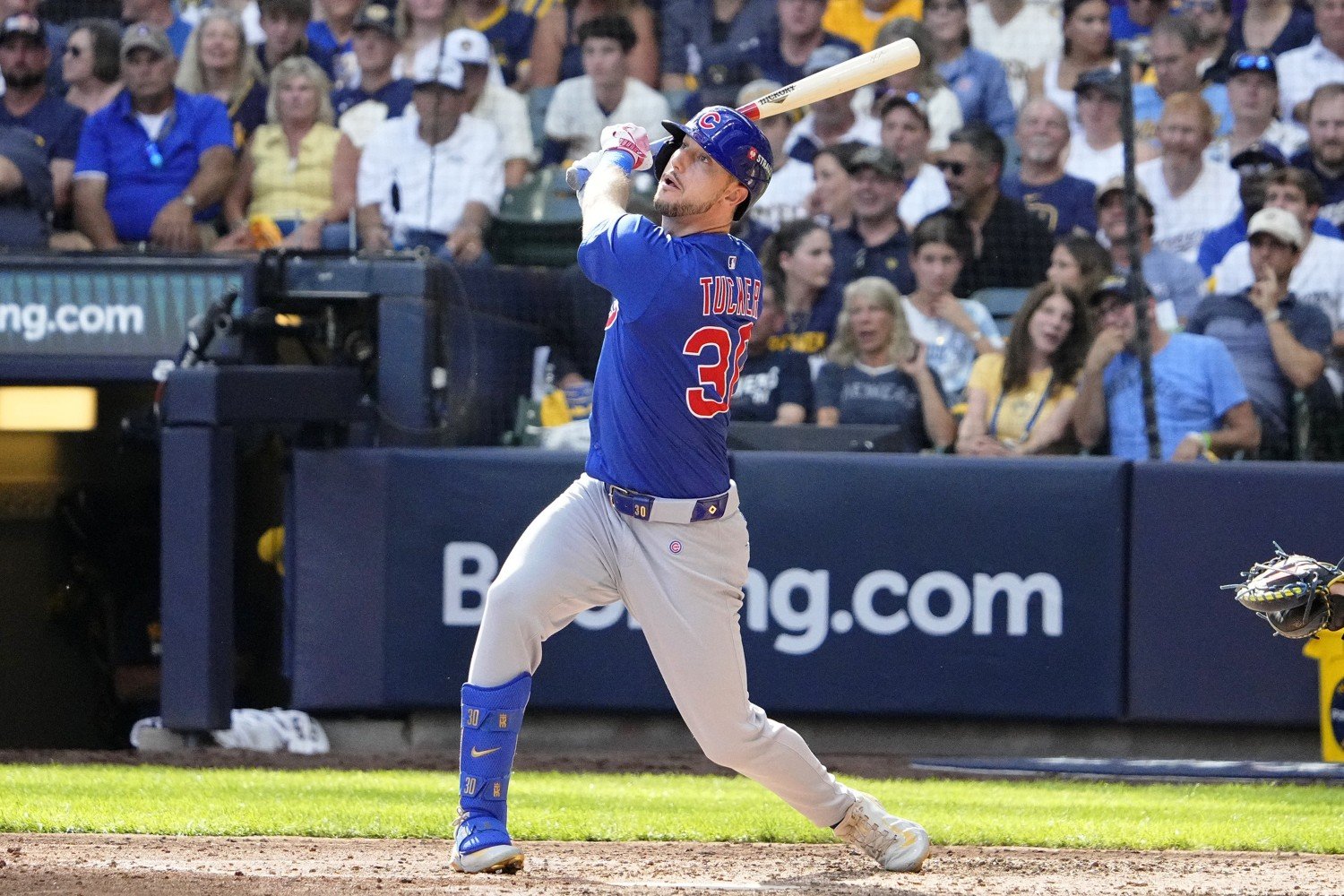
Thus, it was no real surprise when the team included 2024 first-rounder Cam Smith in their deal for Kyle Tucker in December 2024. That deal also sent Paredes to Houston (after an unlucky and unproductive half-season in Chicago), though, and the Cubs also threw in young pitcher Hayden Wesneski. It was a lot to give up for one year of Tucker, who became a free agent after the 2025 World Series.
Tucker didn’t have a once-in-a-lifetime season with the team, either. He was the anchor of an extremely productive lineup in the first half, but he had a very inconsistent, injury-dimmed second half and played little part for the team down the stretch or in October. The Cubs organization, Wrigley Field and Tucker didn’t form a love connection, and the team didn’t seriously court him when he hit free agency. Although it’s not entirely fair to Tucker, for many fans, the emblematic moment of his year in Chicago will be his pivotal strikeout during the team’s only promising rally in Game 5 of the NLDS.
Resist the temptation to let that set of facts mark the trade as anything but a resounding success, though. Tucker won’t be a long-term part of the Cubs, and his influence was positive but not transformative on the field. However, he was what the 2025 team needed to get over the hump and back into the postseason, and the benefits of that extend far beyond last year.
As we’ve reported here before, the Cubs’ ownership group (including members of the Ricketts family, but also high-level business operations staff, like team president Crane Kenney) sets each year’s baseball operations budget based on the previous year’s revenue. Arguably, that’s a closed-minded, overly conservative way for a team as rich and popular as the Cubs to do business, but it’s what they do. One benefit of the approach is that success is self-sustaining. The better the team does, the more money they make, and the more money they make, the more money they’re permitted to spend the following year. The baseball operations staff under Jed Hoyer astutely recognized that moves that boosted their hopes last season would increase their flexibility thereafter. That informed not only their trade for Tucker, but their efforts to land (first) Tanner Scott and (later) Alex Bregman.
This way of thinking about their constraints and their opportunities is really just an extension of the way Hoyer and company do business all the time. It’s similar to the way they eschewed higher-rated prospects to take Cade Horton in the first round in 2022, and used the savings to draft Jackson Ferris—whom they’d then include in the Michael Busch trade months later. It’s also akin to their philosophy on free agency, which favors the middle of the market over pursuits of players in position for megadeals, even though ownership would sign off on a $400-million deal if it fit into the overall budget for Hoyer.
The Hoyer Cubs aren’t playing 4-D chess, but they are playing regular chess. When they make a move, they know that some of the things that happen next will be beyond their control, and they accept that. To select a move, they consider which move gives them the most desirable set of long-term outcomes and chances to pivot toward a new strategy if needed. Trading for Tucker looked, from the outside, like an all-in move for 2025, especially when they didn’t push hard for an extension with him that spring. Now, though, we can see how the value will spill forward, into 2026 and beyond.
Making the playoffs directly earned the Cubs perhaps $25 million, and being good right from the outset ensured that they also made more throughout the summer than they would have otherwise. Tucker was a big reason for that, and a meaningful chunk of the $50 million or so in total revenue increase from 2024 to 2025 can be ascribed to the trade for him. That increase boosted the budget for 2026 and made signing Alex Bregman possible, which is likely to keep the team competitive and increase their revenues over the life of that deal. The team can also recoup some value via the draft pick they’re set to receive as compensation for Tucker signing elsewhere. Even if they sign free agent Zac Gallen, giving up a pick in the process, they’ll be one pick richer for having had and lost Tucker than if they’d had the same offseason but never had him.
The team is still rolling up future value and exchanging it for present value. After dealing Smith and Paredes, they backfilled third base by fast-tracking 2023 first-round pick Matt Shaw to the lineup last spring; they might trade him for even more present utility before camp opens. They traded top prospect Owen Caissie for Edward Cabrera earlier this month. Last summer, they took an injured but polished college hitter (Ethan Conrad) with their top pick, giving themselves a chance for a quick payoff on their investment either via extremely rapid development for a kid taken so low in the first round or via a blockbuster trade in July. However, that doesn’t mean they’re forgetting about the future. What they do to win games today is also designed to improve their chances tomorrow. The Tucker deal came at a high cost, but its dividends didn’t end when he moved on.