
For much of the last decade, the Twins have quietly tried to squeeze every marginal win out of their roster. Sometimes that has meant platoons. Other times, it has meant defensive flexibility or depth over star power. This offseason, a clear pattern is emerging. Minnesota appears to be leaning harder than ever into matchup play and lineup optimization.
The most obvious signal came with back-to-back investments in switch hitters. Josh Bell and Victor Caratini were added for their overall production, their fit in the roster, and because they eliminate problems. A switch-hitter erases the need to protect a lineup spot when the opposing starter changes handedness, and that matters for a team that wants to play the percentages every night. This approach stretches well beyond those two signings and into how the entire roster fits together.
Minnesota is under an owner-imposed payroll limit, which makes it challenging to field the best lineup. Without the ability to add star-caliber players in free agency, the front office must pivot to attempt to find a market inefficiency. So, are the Twins trying to make up for a dearth of talent with really good matchup-proofing? The short answer is probably yes, at least in part.
The Twins do not have the payroll or the top-end depth to roll out nine everyday bats who are immune to matchups. What they do have is a collection of hitters who can be deployed strategically. Keeping Trevor Larnach at $4.475 million in arbitration fits that logic. On the surface, Larnach looks expendable. In practice, he is a valuable strong-side platoon option who can punish right-handed pitching. Last season was a down year for Larnach, but he still posted a .759 OPS against righties, matching his career total.
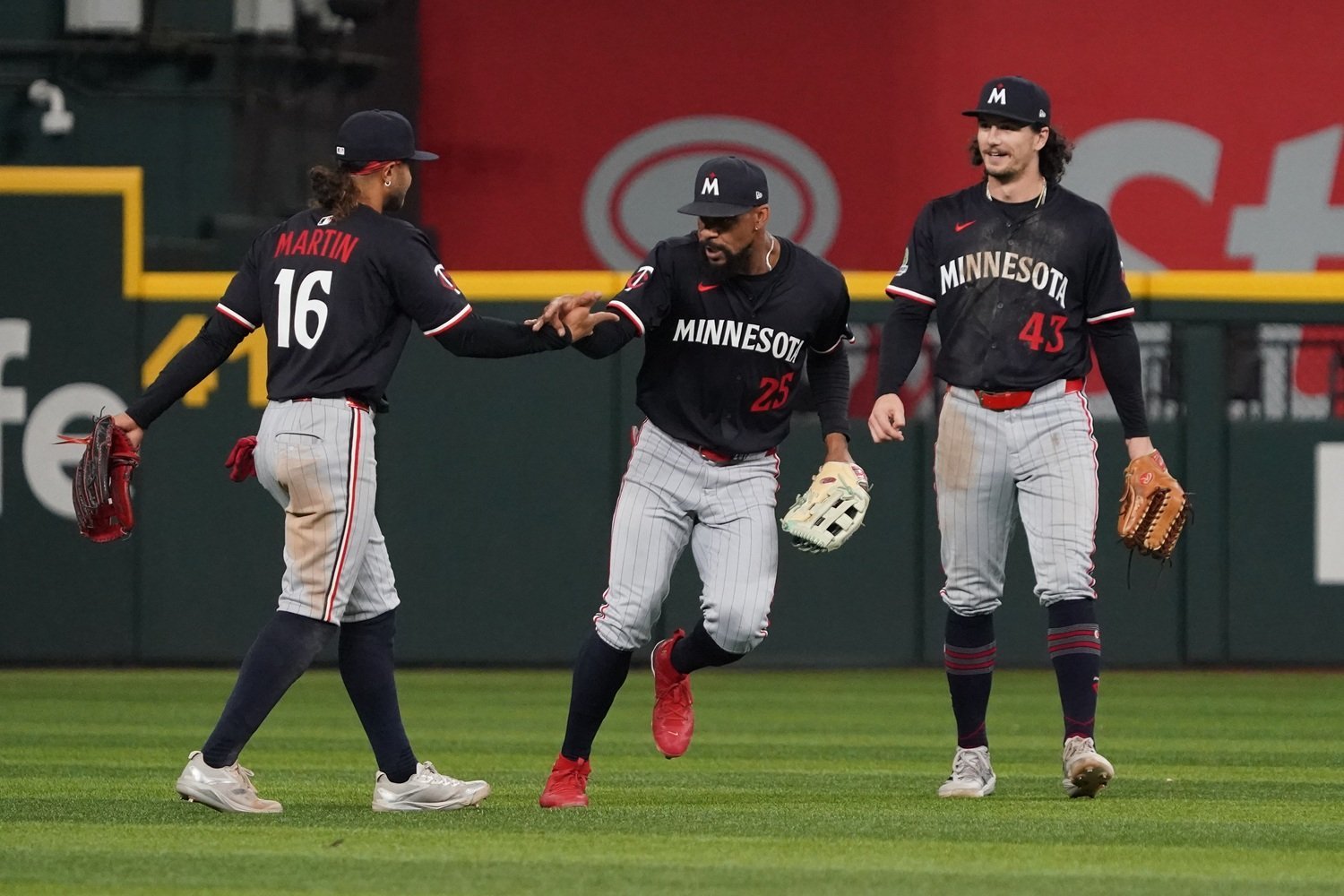
A left field pairing of Larnach and Austin Martin is not flashy, but it is efficient. Larnach gets the favorable matchups where he has shown real damage potential. Martin handles left-handed pitching and adds defensive versatility and speed. In fact, Martin was one of the team’s lone bright spots in the second half last season, helped in part by his .884 OPS against southpaws. Together, they approximate a more expensive everyday option.
That same philosophy is visible across the infield. Left-handed bat Kody Clemens can be deployed aggressively against right-handed starters. Right-handed options like Luke Keaschall, Royce Lewis, and Eric Wagaman can take on left-handed pitching without forcing the Twins to accept bad matchups elsewhere. Orlando Arcia, a veteran right-handed hitter, was brought in on a minor-league deal and has a chance to make the Opening Day roster. Brooks Lee, a switch-hitting shortstop, serves as a stabilizer, keeping the lineup from tilting too far in either direction. The Twins have options at nearly every spot.
Even the outfield depth reflects this thinking. The left-handed group of Larnach, Matt Wallner, Alan Roden, and James Outman pairs naturally with right-handed or right-leaning options like Byron Buxton, Martin, Ryan Kreidler, and eventually Gabriel Gonzalez. Other top prospects like Walker Jenkins and Emmanuel Rodriguez are also expected to join the left-handed hitting group at some point in 2026. This is not about finding the best nine hitters. It’s about finding the best nine hitters for a specific opponent each day.
Against right-handed starters, Minnesota can stack lefties and switch hitters.
C: Caratini (S)
1B: Clemens (L)
2B: Tristan Gray (L)
3B: Lewis (R)
SS: Lee (S)
LF: Larnach (L)
CF: Buxton (R)
RF: Wallner (L)
DH: Bell (S)
The alignment above leaves Lewis and Byron Buxton as the lone right-handed bats.
Against left-handed starters, the picture flips.
C: Jeffers (R)
1B: Bell (S)
2B: Keaschall (R)
3B: Lewis (R)
SS: Lee (S)
LF: Martin (R)
CF: Buxton (R)
RF: Wallner (L)
DH: Caratini (S)
This gives the Twins a right-leaning core. Right field becomes the lone spot needing a lefty, with Wallner the apparent choice. There will also be injuries that arise, requiring the Twins to shift pieces around. None of this screams overwhelming talent. It does scream intention.
So, is this what we have seen in the past from the Twins, or is this a new twist? Platoons are not new in Minnesota. The Twins have lived in this space for years, especially during their recent competitive window. What feels different now is how deliberately the roster is being built around that concept, rather than falling into it out of necessity.
In the past, platoons often existed because the Twins lacked better options. Now, they appear to be acquiring players specifically because they enable matchup flexibility. Switch hitters like Bell and Caratini are cheap fixes and targeted solutions. Keeping Larnach rather than clearing his salary suggests the team values optionality over simplicity.
There is also more lineup insulation than before. Multiple switch hitters and right-handed bats who can move around the field reduce the risk of being exposed by a single pitching decision. This is less about reacting to matchups and more about dictating them. That shift suggests an organization leaning fully into modern roster construction. The Twins may not win many talent comparisons on paper, but they are trying to win the decision-making battle that happens before the first pitch.
The Twins appear to be building a roster designed to win at the margins. By prioritizing switch-hitters, platoon advantages, and lineup flexibility, Minnesota is attempting to turn matchup management into a competitive edge. Whether that approach can compensate for a lack of star power remains an open question, but the plan itself is becoming increasingly apparent.
Is this smart optimization that will squeeze extra wins out of a flawed roster, or does it place too much pressure on perfect lineup management to succeed over a full season? Leave a comment and start the discussion.