
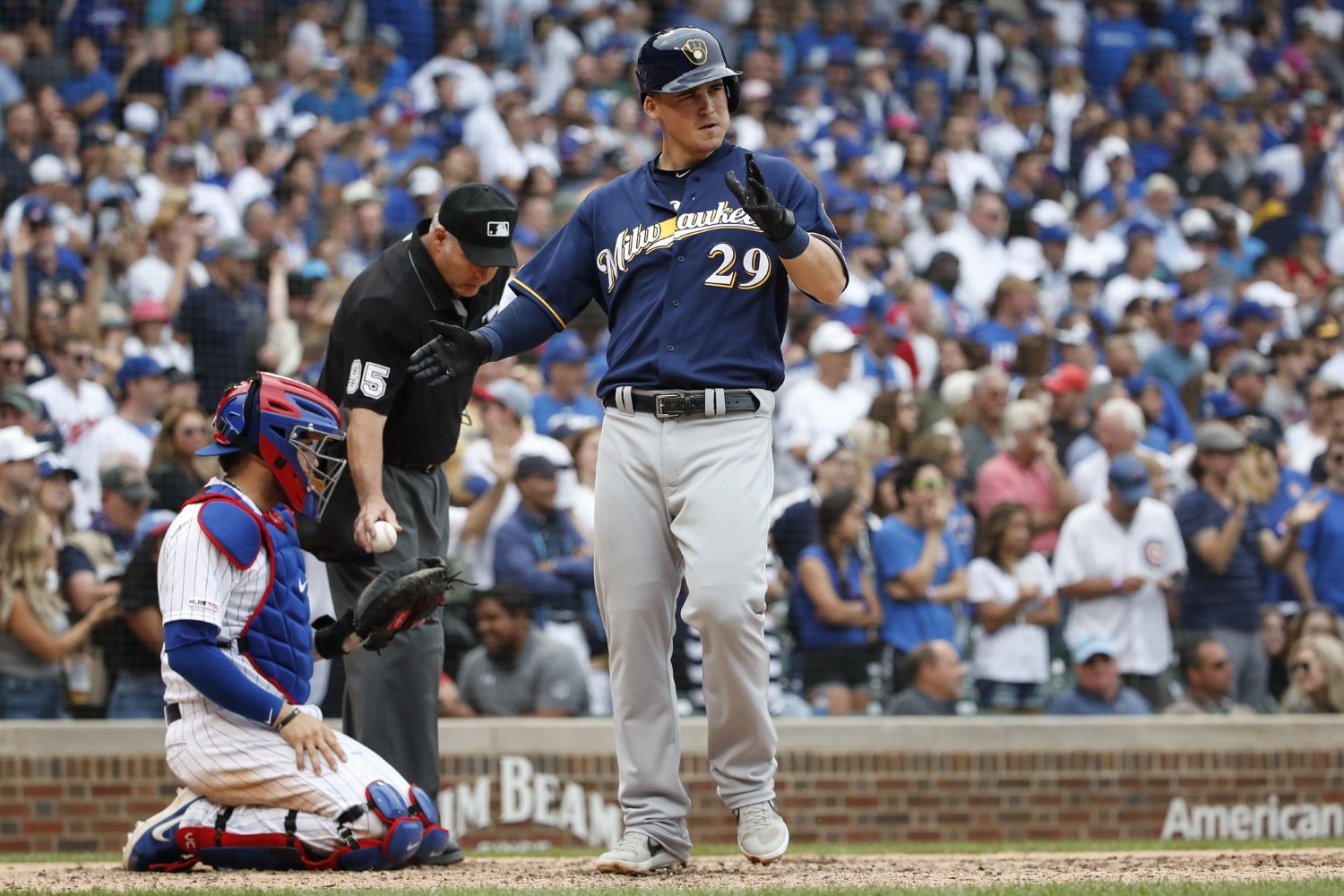
Nobody in baseball quaked when the Cubs signed Tyler Austin, bringing him back to the States after a half-decade in Japan. The 34-year-old did have some impressive stats (.287/.372/.554, in 1,796 plate appearances), but he hasn’t been tested by the deeper staffs of power arms in the U.S. since 2019. He could be a piece of a contender, or he could just disappear. Does Austin have a stable role on the 2026 Cubs?
Fans were understandably underwhelmed when news of the signing broke. At the time, it was conceivable that he was a major part of the plan to replace the departed Kyle Tucker. Alex Bregman changed things; Austin is now a semi-expendable bench piece.
Projections for Austin are strong, with projection systems at FanGraphs showing a 105-110 WRC+ for 2026. He’s historically been much stronger against left-handed pitching (.884 OPS Stateside), and Michael Busch is not a strong bat against them. Austin also topped out at a 197 WRC+ in Japan in 2024. The guy does have talent at the plate.
The question is in Austin’s role. Counsell has a history of underutilizing veteran bench pieces, preferring to lean on a trusted set of everyday guys unless he can identify a clear opportunity for a full-fledged platoon. In 2023, Brian Anderson went almost six weeks between games played. There was no announcement, no dramatic benching. Anderson just occupied space on the roster, biding his time until the Brewers front office furnished someone more to Counsell’s liking. Unless he gets off to a hot start, Austin might become a footnote in whatever book is written about the 2026 Cubs.
How Austin Could Carve Out a Role
1. Michael Busch continues to struggle against left-handed pitching
This is the most obvious option, and feels downright likely. Busch only posted a .642 OPS against southpaws even in his breakout 2025, compared to a .910 against right-handed pitching. Counsell told a crowd at Cubs Convention that he intends to play Busch every day in 2026. If he can hold his own there, Austin is out. But managers say a lot of things in January, and the difference between Austin and Busch against lefties is pretty glaring. It’s hard to imagine Busch actually getting as much playing time as Counsell is promising, and easy to envision Austin becoming the de facto platoon first baseman.
2. Moisés Ballesteros or Matt Shaw flames out
Both of these players are in line for a substantial number of at-bats. At the moment, Ballesteros is penciled in as the regular DH, with Seiya Suzuki likely to play right field most of the time. The upside of Ballesteros and Shaw is tantalizing. We do need to acknowledge the floor, however. In a contending season, there may not be time to let them work through their struggles, and we’ve already seen enough to know that each comes with a risk of not hitting enough to be regulars. Austin could fill DH at-bats, particularly as a platoon option opposite Ballesteros.
3. Tyler Austin simply rakes
A 197 wRC+ in Japan just two years ago is an impressive number. Even in a part-time role, Austin could be an impactful bat. Steve Pearce would be a template. While he didn’t play daily, he did see the field in 102 games for the playoff-bound Baltimore Orioles in 2014. Pearce slashed .327/.405/.704 from the strong side of a platoon that season. He posted a 161 wRC+. If Austin can do something like this, he’ll not only carve out a spot in the lineup, but he’ll be a Cub cult hero, like Pearce was in Baltimore—and later in Boston, as a key cog in the 2018 Red Sox’s World Series run.
This feels least likely of the three scenarios, but it’s possible, and the fact that Ballesteros is the only obstacle to him being the full-time DH is telling. A version of Austin that goes on a tear for two-plus months could easily wrest the regular gig away from the younger guys, even if they’re scraping by. In all likelihood, he’ll be a bench piece, pinch-hitting often and starting rarely. It will be worth watching, though, because Counsell’s neglect or an emergent need could swing him a good distance either way from that median outcome.