
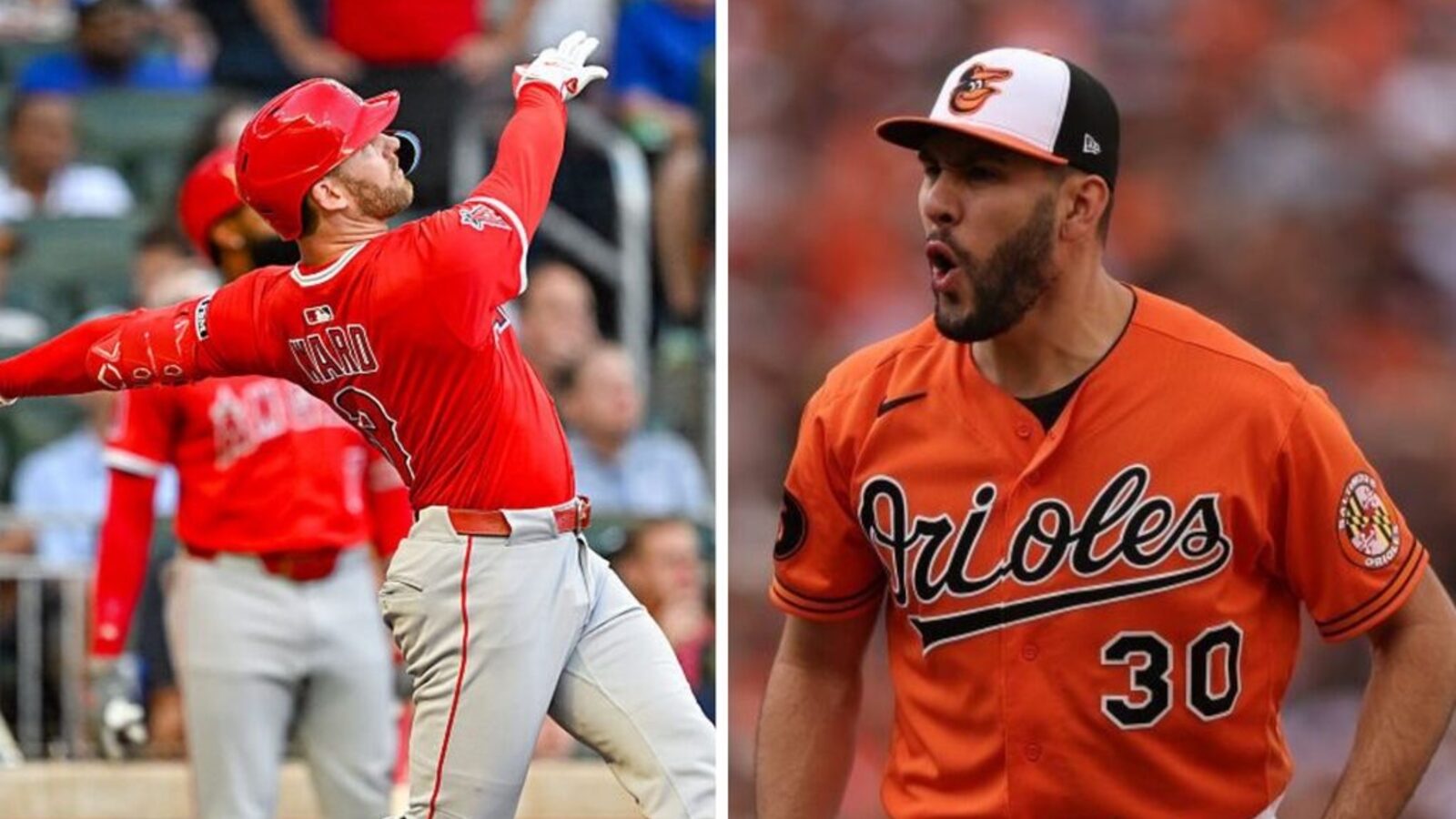
After a couple of trade deadlines came and went with Taylor Ward still on the Angels’ roster, the team finally pulled of a trade. I would have expected the Angels to go with a package that consisted of a few prospects who could work out down the road, but instead the Angels took a swing and swapped Ward straight up for talented righty Grayson Rodriguez.
It was a trade that surprised many, not only because of Rodriguez’s upside in exchange for one year of Ward, but because the Angels have not been one to make this type of trade in the past. The need for starting pitching was abundantly clear, and the front office addressed it in a way that gives them innings and a chance to land an ace-caliber pitcher.
Just a few weeks later, the team continued to add to their rotation signing Alek Manoah, whose flame burned faster than a bottle rocket to start his career and is overdue for a rest. Another chance. A fresh start.
Bringing in Manoah is the type of project that a team in the Angels’ position should be taking on. The talent is in there somewhere — we’ve seen it — but not since 2022. Injuries have slowed him down, and perhaps he no longer can reach previous highs. But there’s one way to find out: Get him in the building and put in the time and effort to maximize what’s left.
The Angels also added two bats that needed a change of scenery in Vaughn Grissom and Josh Lowe. Grissom was sent to Boston as part of the Chris Sale deal with Atlanta and never really earned an opportunity before going to Los Angeles in exchange for Isiah Jackson, a 2025 fifth-round pick.
Lowe was moved as part of a three-team deal with Cincinnati and Tampa Bay that cost the team Brock Burke, a relief pitcher with no long-term future, and Chris Clark, a prospect deep enough in the organization that it did not sting.
Both of these players come to the Angels at a pivotal point in their careers. They’re young enough to still blossom but old enough to fall into irrelevance if they do not produce soon. I’m sure they know that.
The Angels will give these players every opportunity and a long runway to show their worth. The players understand how crucial this year will be for their careers and should have their best foot forward.
These players will not only plug holes in the Angels’ roster, but they will keep the team from aggressively rushing prospects — at least that’s what I hope.
Notorious for pushing prospects through to supplement the needs of the major-league roster, the Angels have stunted development and passed on higher-upside draft picks in order to address current needs.
Now, the Angels have added enough to push AAAA guys like Bryce Teodosio from starting roles to depth expectations. Denzer Guzman, Caden Dana, and Ryan Johnson can now focus on development and not be pushed into a role they were not yet prepared for.
Veteran Moves Are Starting to Align With Team Direction
Not only have the Angels’ trades shown a shift in priority for a youth movement, but the moves they have made for veteran additions fit their timeline better than moves in the past. For starters, they finally moved on from Anthony Rendon after a few years of injuries, distractions, and disappointment.
While the move was an obvious one to make, I wasn’t so sure the Angels would be willing to do it. Pulling the band-aid off and ending the side show of trying to get Rendon to play baseball feels like a weight taken off the organization’s shoulders.
The veteran additions from this winter have aligned much better than in years past. Instead of shelling out multi-year deals, the Angels have focused on one-year commitments almost solely focused on their bullpen.
I like this for a couple of reasons. First, the bullpen was a disaster and needed a few arms who have, at the very least, found success at this level. Second, every single contender will look for bullpen help at the deadline, and the Angels will now have options without long-term commitment.
Signing Drew Pomeranz, Kirby Yates, Jordan Romano, Angel Perdomo, Tayler Saucedo, and Miguel Castro gives the Angels a number of veterans who could raise their trade value while also filling out a bullpen that lacked depth and upside.
While this might sound counterintuitive to the youth movement, the bullpen reached a point last season where there were not enough options who were major-league caliber or at least close to it. Add the veterans to get through the first few months, wait for the younger options to prove they are ready, and use them to replace the veterans on expiring contracts throughout the season.
Changes in Leadership