
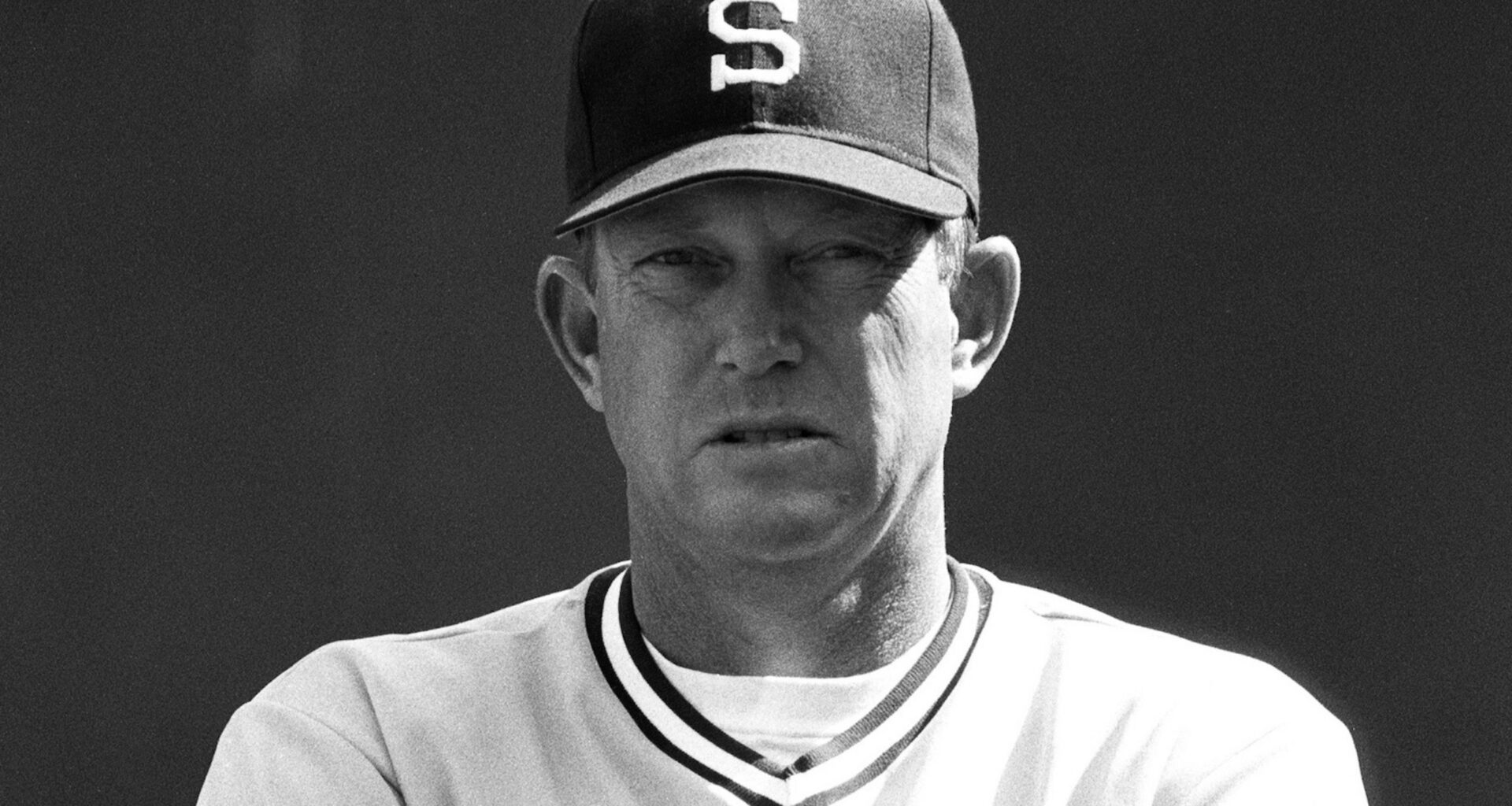
Image credit:
Mark Marquess (Larry Goren/Four Seam Images)
We’ve spent the winter turning over one word again and again at Baseball America: dynasty.
It’s a word that feels heavy, almost sacred. A word reserved for programs that bend time and resist the sport’s natural erosion. As the 2026 season approaches, Jay Johnson’s LSU team sits on that threshold, chasing a label few ever touch and fewer still earn.
But the closer you get to the word, the clearer it becomes that dynasties are not really about banners or rings. They’re about people. They’re about the rare figures who build something that outlives seasons, rosters and, eventually, themselves.
When Johnson was asked what a dynasty meant to him, he didn’t hesitate. He named the coaches who had done it.
One of the first names he said was Mark Marquess.
Marquess, the former Stanford coach and one of the most consequential figures the sport has ever known, died Friday at the age of 78.
Marquess didn’t just win at Stanford, where he helped guide the Cardinal to back-to-back national championships in 1987 and 1988. He built a standard so enduring that it came to feel permanent, as if the program’s place among college baseball’s elite was less a function of year-to-year success than a fact of life.
Inducted into the National College Baseball Hall of Fame in 2021, Marquess finished his career as the fourth-winningest coach in Division I history, compiling a 1,627-878-7 record over 41 seasons. His teams won nearly 65% of their games, a figure made more remarkable by the consistency required to sustain it across generations of players, rule changes and competitive eras.
He was inducted into the American Baseball Coaches’ Association Hall of Fame in 1997, the Stanford Athletics Hall of Fame and later the San Jose Sports Hall of Fame in 2017, formal recognitions of what had long been obvious to the sport.
But Marquess’ true legacy lives most vividly in Omaha.
Under his guidance, Stanford reached the College World Series 14 times, advancing to the national championship series on five occasions and winning two national titles. From 1999 to 2003, the Cardinal made five consecutive trips to Rosenblatt Stadium, a school-record stretch that included three national runner-up finishes and placed Stanford within two appearances of Oklahoma State’s NCAA-record run of seven straight trips in the 1980s. Every one of Marquess’ 14 Omaha teams won at least one game, a testament not just to talent, but to preparation and belief.
Across the postseason, Marquess’ teams were relentless. He finished 133-66 in NCAA postseason play, including an 84-29 record in regionals, a 13-10 mark in super regionals and a 36-25 ledger in the College World Series.
Stanford reached the NCAA Tournament 30 times during his tenure, winning 18 regional titles, six super regional championships and 11 conference regular-season crowns. Individually, Marquess was recognized as NCAA Coach of the Year three times and Pac-10 Coach of the Year nine times, but the honors never felt like the point.
They were byproducts of something larger.
More than 200 Stanford players were selected in the MLB draft under Marquess, including 26 first-round or compensation picks. He also produced 1991 College Player of the Year Dave McCarty and 1998 College Player of the Year Jeff Austin. His program became synonymous with producing players who were as prepared for professional baseball as they were for life beyond it, a reflection of Marquess’ belief that development did not end at the foul lines.
That philosophy extended well beyond Palo Alto.
On the international stage, Marquess helped elevate American baseball at a moment when the sport was still fighting for global footing. In 1988, he led the United States Olympic team to a gold medal at the Olympic Games in Seoul, South Korea, defeating Japan 5-3 to secure the first Olympic gold medal in baseball for the U.S. The achievement earned him International Coach of the Year honors and cemented his influence on the sport worldwide.
Before Seoul, Marquess guided the national team to a silver medal at the World Amateur Baseball Championships in Italy and another silver at the 1987 Intercontinental Cup in Cuba. Earlier still, as head coach of the U.S. collegiate national team, he led the program to a gold medal at the World Games in Santa Clara. From 1989-98, Marquess served as president of USA Baseball, overseeing the organization responsible for the sport’s growth from the youth level through college and the Olympic program.
It was stewardship in the truest sense.
For decades, Mark Marquess didn’t just occupy college baseball’s highest levels. He shaped them. He set expectations. He showed what was possible when excellence became habitual rather than aspirational.
Dynasties, the kind that bend time and outlast the people who build them, rarely belong to institutions alone.
Sometimes, they belong to one man.