
The Diamondbacks’ system is very hitter-heavy right now, most of them lacking in the vertical stature department, and the quality of the system as a whole has declined as some of their draft classes from earlier this decade haven’t yielded many prospects.
(Notes: Tools are graded on a 20-80 scouting scale; ages as of July 1, 2026. EV = exit velocity. Z-swing rates = swings at pitches in the zone.)
Height: 6-2 | Weight: 205 | Bats: R | Throws: R | Age: 23
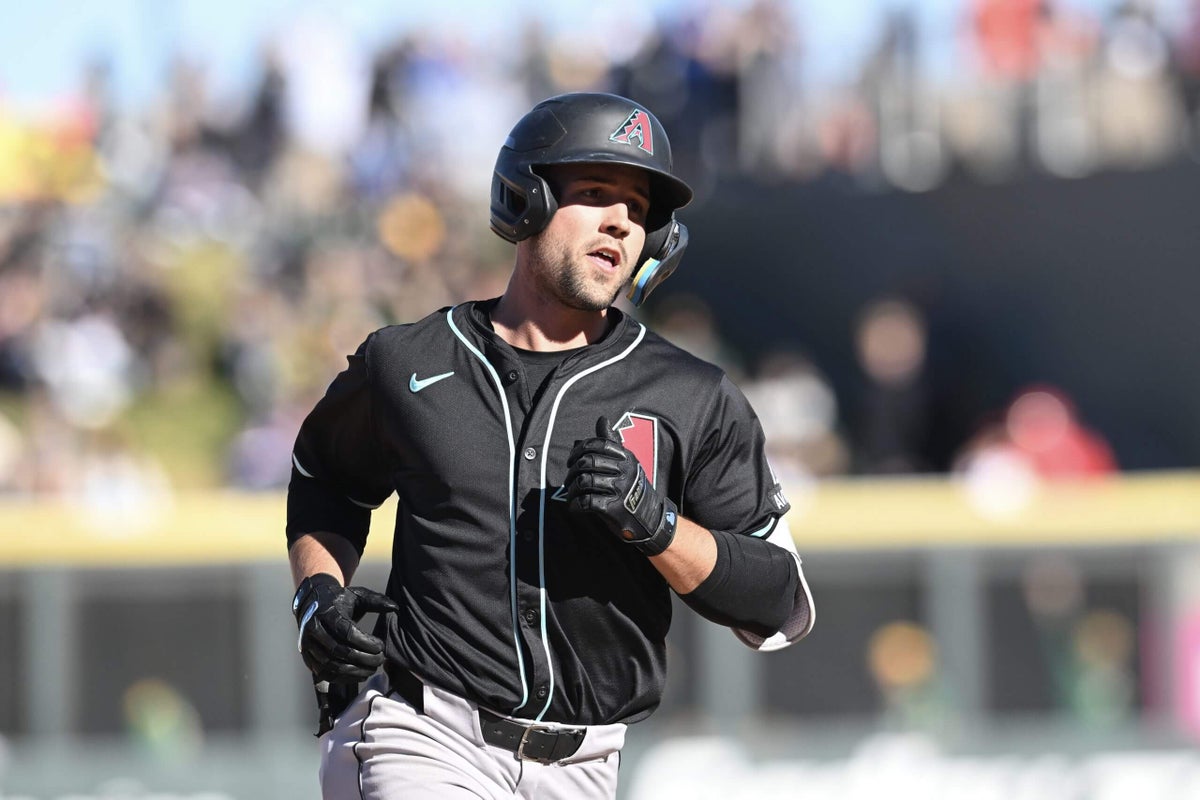
Waldschmidt was the Diamondbacks’ second pick in the 2024 draft but was ranked at No. 11 on my final draft board, one spot ahead of the guy they took with their first pick, Slade Caldwell. So far, Waldschmidt has more than justified the pick with a .426 OBP in pro ball. He’s a good athlete who ran better last year and played surprisingly solid defense in center, both of which were improved from 2024 when he was still recovering from a torn ACL suffered during the summer of 2023. He has excellent feel for the strike zone, chasing pitches well out of the zone just 12 percent of the time, although Double-A pitchers showed that he needs to work on picking up spin, as he demonstrated a markedly higher propensity to whiff on sliders and curveballs at that level.
His raw statlines last year were boosted by spending half his season playing for Double-A Amarillo, where the wind could take a bowling ball from home plate out to center, with all nine of his homers in Double A coming at home. He has no stride, just a heel-tap, still rotating his hips well to get to above-average power, but there could be more in here if he loosened up and even took a short stride toward the pitcher to help with his weight transfer. I believe in his bat, particularly his patience and potential for high OBPs, but I wouldn’t look at his production last year and expect him to race to the majors — and he’s going to go off in Reno, elevation 4,400 feet, whenever he gets there this year. He looks like a solid regular with above-average defense in an outfield corner who could reach All-Star level in years when he gets to 20-plus homers.
2. Slade Caldwell, OF (Just missed)Height: 5-9 | Weight: 182 | Bats: L | Throws: L | Age: 20
Caldwell has a chance to be a pure leadoff hitter in the old-fashioned sense, a guy who sees a ton of pitches to try to get on base and to show hitters behind him what a pitcher’s arsenal is like, hitting for average without a ton of power and adding some value on the bases with his legs.
He finished eighth in all of the minors last year with 91 walks, third among teenagers (with Alfredo Duno above him), as he walked over 15 percent of the time at both levels of A-ball in his full-season debut. It’s a combination of factors, including pitch recognition, a small strike zone (he is a legit 5-foot-7, regardless of what the listed height is), and one of the lowest swing rates in baseball. Caldwell swung at 34 percent of pitches he saw last year, which is lower than any big leaguer in 2025, including a very low chase rate of 15 percent, but also a low 56 percent swing rate at pitches in the zone — only Chase Meidroth and Bryson Stott had lower Z-swing rates among qualifying MLB hitters last year. The result of all of this is that he gets on base a ton, but nearly half of his strikeouts last year came on called third strikes; he needs to start to swing the bat more.
Caldwell is a plus defender already in center with good instincts and has shown improvements already since signing with the Diamondbacks as their first-round pick in 2024. He is strong for his size — I met him at the Futures Game, and he looks like Michelangelo just carved him out of marble, albeit a very short slab — and should be able to impact the ball enough to hit for average with some gap power. The concerns I’ve heard from scouts are that he’s too passive and won’t hit the ball in the seats enough. I agree with the former, but if his profile is really 60 or better defense with solid batting averages, that’s an everyday player. The Diamondbacks promoted him after he hit .294/.460/.454 in 48 Low-A games, after which he hit .238/.370/.311 in High A as a 19-year-old. We might see him a little differently had he spent more time at the lower level.
3. Kayson Cunningham, SSHeight: 5-10 | Weight: 182 | Bats: L | Throws: R | Age: 20
Stop me if you think you’ve heard this one before, but the Diamondbacks took a short high school position player with their first pick in the draft. Cunningham, the Diamondbacks’ 2025 top pick, is listed generously at 5-10 and he’s probably more like 5-8, but he’s very strong for his size — more Corbin Carroll than Slade Caldwell or Alek Thomas.
He’s a shortstop for now and the D-Backs believe he’ll stay there with some work, getting to maybe 55 defense, although he could be a plus defender if he moved to second or third. It’s really a bet on his hit tool, and Arizona has done pretty well with similar bets in recent drafts.
4. Demetrio Crisantes, 2BHeight: 6-0 | Weight: 178 | Bats: R | Throws: R | Age: 21
Crisantes was on the top 100 a year ago, and still has the best pure hit tool in the system, but his 2025 season ended after 34 games when he tore the labrum in his left (non-throwing) shoulder, finishing with a .252/.358/.415 line in his High-A debut. That comes on top of Tommy John surgery when he was in high school, which had to be redone because the first surgery didn’t take, so he just hasn’t played all that much over the last three years.
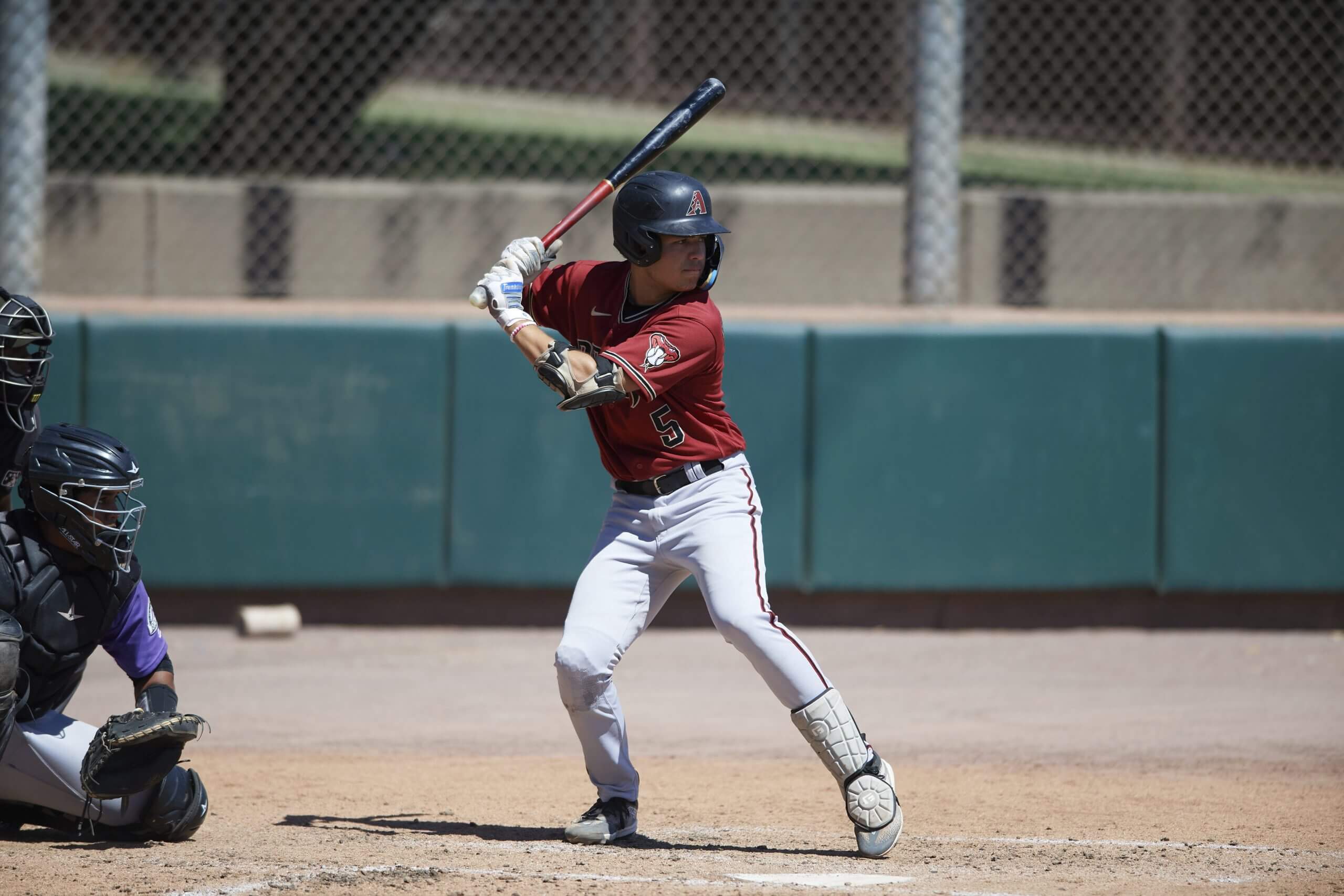
Demetrio Crisantes has the best hit tool in the Arizona system. (Tracy Proffitt / Four Seam Images via Associated Press)
He has excellent hand-eye coordination and posts very high contact rates, whiffing on just 5 percent of the fastballs he swung at last year, with the contact quality to at least hit a slew of doubles and get to double-digit homers in a full season. His position was a question even before the latest injury, with second base most likely but first a possibility, while the Diamondbacks are at least trying him at third to see if he can handle that. His overall value does depend more on his position than anything else, as he’s going to hit wherever he plays.
5. Jansel Luis, IFHeight: 6-0 | Weight: 170 | Bats: B | Throws: R | Age: 21
Luis is extremely toolsy and appeared on my top 100 two years ago, then on the just-missed list last year. He hit .304/.342/.422 in his first time in High A last year, although his overaggressive approach got exposed a bit there, with a 34 percent chase rate that drove his walk rate down to just 6 percent. He’s a switch-hitter with plus speed and surprising power for his frame, with exit velocities up to 109 mph in the Arizona Fall League, but so far he hasn’t translated those physical tools into consistent performance anywhere in his game — at the plate, on the bases or in the field, where he’s played mostly second base and could profile at third.
There’s a lot of upside here, more than any of the four guys ahead of him offers, and he’s still young (turning 21 in March). He needs consistency and probably to slow himself down and apply more of a plan at the plate.
6. JD Dix, 2BHeight: 6-2 | Weight: 180 | Bats: B | Throws: R | Age: 20
Dix can really hit and he’s starting to come into power, with his position the issue that’s holding him back. The Diamondbacks took him with the No. 35 pick in 2024 after he’d missed his senior season in high school due to surgery on his throwing shoulder. His arm really hasn’t bounced back from that, so for now, he’s going to be limited to second base and probably still has to get a little more arm strength than he has presently, even to stick there. He did rake in his debut in the Arizona Complex League last year, hitting .342/.421/.493, and continued to show a good eye in Low A, with a chase rate of just 18 percent. He has already gotten stronger since the end of last season, and another year removed from the surgery should help him at least swing more freely, perhaps also helping him get the arm strength back to stick at second rather than moving to left field or DH.
7. Druw Jones, OFHeight: 6-4 | Weight: 180 | Bats: R | Throws: R | Age: 22
Jones made a little progress last year when he needed to make a lot more, so he’s still a prospect, but the chances of him being a star are already dimming. He moved up to High A and cut down on his strikeout rate, even though he swung the bat more, while also losing some of the easy walks he got in Low A in 2024. He continues to hit the ball on the ground way too often, although he brought that rate down from 57.2 percent to 50.8 percent, even though he has the raw power to hit 25-30 homers a year.
The Diamondbacks did work with him to get him more on top of the plate, and the ground-ball tendency declined as the year went on. He’s still an elite defender in center, probably a 70 but maybe an 80, and that’s the one place where he still looks like his now Hall of Famer father, Andruw Jones. Druw Jones may have come into pro ball expecting it to be easy the way things were when he was an amateur, so if you’re looking for reasons for optimism, his 2025 season did have some positive signs, and he made some visible adjustments for the first time that at least put him on a path to becoming a big-league regular.
8. David Hagaman, RHPHeight: 6-4 | Weight: 215 | Bats: R | Throws: R | Age: 23
One of the three pitchers obtained from Texas last July 31 in the Merrill Kelly trade, Hagaman had only made his pro debut that June, about seven weeks before the trade deadline, after returning from internal brace surgery on his right elbow. He’s got a true four-pitch mix with a 93-96 mph four-seamer, above-average changeup, traditional curveball and a sharp downward-breaking slider that moves almost like a spike curve. His command and control were never great in college, but they were better in short outings in his return until he pitched in the Fall League, where he still showed above-average stuff but may have been tired — or he just caught the walkitis that affects every pitcher out there. It’s a starter’s build and delivery if he can stay healthy and continue throwing strikes as he did in the regular season.
9. Patrick Forbes, RHPHeight: 6-3 | Weight: 220 | Bats: R | Throws: R | Age: 21
The Diamondbacks took Forbes in last year’s draft with their second pick (No. 29), as he was coming off his best year as an amateur, striking out 36.7 percent of the batters he faced for Louisville and nearly doubled his career innings total in college. He’s been up to 100 mph and sits mid-90s, working all fastball-slider, with the latter pitch easily plus, where he can manipulate the shape a little to get more sweep or more vertical break to it. He doesn’t have a third pitch right now and will probably need one at some point for lefties, although it was not an issue for him last spring. He did miss time in the spring with a flexor strain and had some trouble staying healthy prior to 2025. There’s No. 2 starter upside with the two pitches he has, and clear reliever risk between the injury history and the lack of a third pitch.
10. Cristian Mena, RHPHeight: 6-2 | Weight: 170 | Bats: R | Throws: R | Age: 23
Mena made his MLB debut in 2024, his first year in the system after Arizona acquired him from the White Sox for Dom Fletcher (who had 34 PA for Chicago, and was outrighted and left as a free agent). He returned to the big leagues briefly last season, but suffered a strain to his right teres muscle and didn’t pitch after June 6 at any level. He could be a back-end starter if healthy, throwing strikes with four pitches and showing good feel to spin a curve and sweeper, with his changeup his weakest offering as it’s too firm and needs more separation from the fastball.
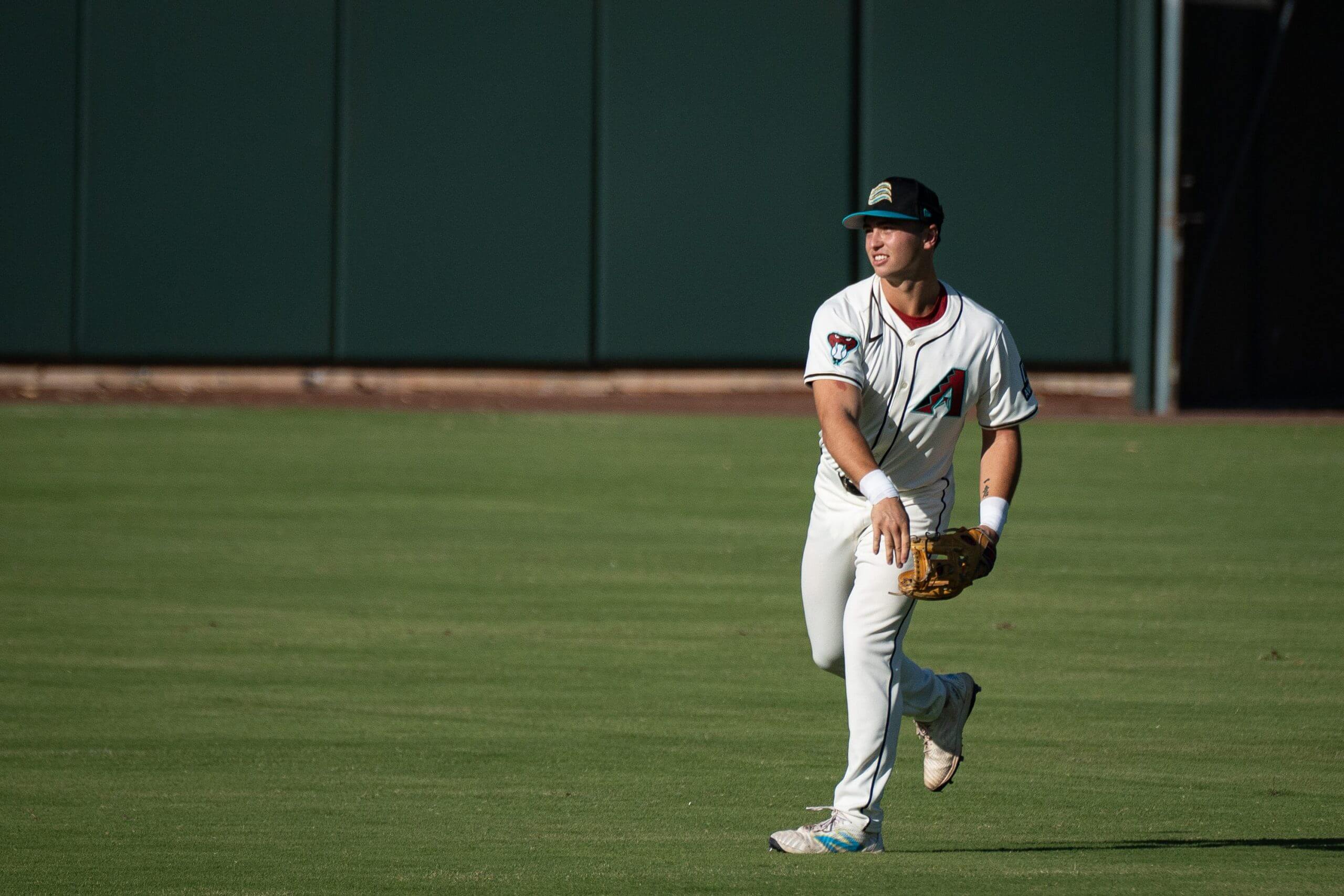
Tommy Troy reached Triple A last season. (Megan Mendoza / The Republic / USA Today Network via Imagn Images)
11. Tommy Troy, 2B/OFHeight: 5-9 | Weight: 197 | Bats: R | Throws: R | Age: 24
Arizona’s first-round pick in 2023, Troy reached Triple A last season, but didn’t hit for much power even though their affiliate is in Reno, a hitter’s paradise. He’s more of an approach/on-base guy who can move around the field a bit, playing some center field last year while mostly standing around second base. He’s best suited to an outfield corner, but he can back up in center, at second, or at third, and the on-base skills — he was at .381-.382 at both Double A and Triple A last year, with strong contact rates as well — will help him stick around in a super-utility role. He ran better last year than I have ever seen from him and might actually be a plus runner underway, stealing 24 bags in 29 attempts.
12. Carlos Virahonda, CHeight: 5-11 | Weight: 180 | Bats: R | Throws: R | Age: 20
Virahonda came to the U.S. last year after a solid debut in the Dominican Summer League in 2024, destroying the Arizona Complex League for 37 games with a .347/.464/.455 line, then hitting .256/.362/.357 in 33 games in Low A, all before his 20th birthday. He’s a very promising catcher with a plus-plus arm and athleticism behind the dish, while at the plate, he shows a good eye and is strong enough to project average power down the line. He’s a ways off, but there’s a chance for an above-average everyday catcher here.
13. Daniel Eagen, RHPHeight: 6-4 | Weight: 205 | Bats: R | Throws: R | Age: 23
Arizona took Eagen in the third round in 2024 out of Presbyterian College, which hasn’t had a big leaguer since 1953. He’s got a hammer breaking ball that should help him break Presbyterian’s drought, while his 92-94 mph fastball is a little flat and he’s got 45 control and 40 command. He also needs to develop his changeup to get lefties out multiple times through the order, as he already showed some platoon split last year and that’s likely to grow. He has a starter’s delivery and the out-pitch you need to be a No. 3 starter, with several other areas where he has to improve to get there.
14. Mitch Bratt, RHPHeight: 6-1 | Weight: 190 | Bats: L | Throws: L | Age: 22
Acquired from Texas in the Kelly trade, Bratt is the safest bet to be a starter of the three pitchers in that deal, with the lowest ceiling of the trio. His fastball is 90-94 and he attacks hitters with a five-pitch mix, nothing plus, throwing a ton of strikes, posting a 4.1 percent walk rate in his full year at Double A and continuing to fill up the zone even after he went to the extreme hitter’s environment of Amarillo. The lack of an out-pitch limits his upside, but he could easily be someone’s No. 5 starter by the latter half of 2026.
15. Ivan Luciano, CHeight: 5-10 | Weight: 185 | Bats: L | Throws: R | Age: 19
Luciano was Arizona’s second-round pick in 2024 and he had a solid debut in the ACL last year, splitting time behind the plate with Virahonda and hitting .275/.398/.382. He’s a very disciplined hitter with good bat control, while he made big strides defensively over the course of 2025, even just from spring training — where he was still dropping catchable balls — to the end of the year. He’ll take a longer time to get there than Virahonda, but he offers everyday catcher upside.
16. Kohl Drake, LHPHeight: 6-5 | Weight: 220 | Bats: L | Throws: L | Age: 25
Drake is primarily a sinker/cutter lefty whose stuff has been hard for hitters to square up, throwing enough of a changeup to keep right-handed hitters in check as well. He’s more power than command or feel, so while he has the three pitches needed to start, he may be better suited to the bullpen, where he can air it out more and worry a little less about locating. His 2025 season ended in late August when he suffered a shoulder sprain, which is not expected to be serious. He was also in the Kelly deal along with Hagaman and Bratt.
17. Dean Livingston, RHPHeight: 6-4 | Weight: 205 | Bats: R | Throws: R | Age: 19
Arizona went over slot to sign Livingston in the fourth round last year, and he’s already added about 15 pounds of muscle, sitting 92-94 during side sessions, as he’s just beginning to tap into his physical projection. He can flash a plus slider and has a good delivery he can repeat for future (maybe very future) command. He’s a projection high school right-hander, so he’ll probably take time, but this was a great selection in that spot in the draft.
18. Yassel Soler, 3BHeight: 5-11 | Weight: 185 | Bats: R | Throws: R | Age: 20
Soler is going to be a monolith when he fills out, and he already posts huge exit velocities, just not getting the ball in the air enough to translate that into big home-run totals yet. He’s got a long path to the ball, which isn’t helping matters, but kept his strikeouts in check as a 19-year-old in Low A, with just a 22.3 percent strikeout rate there. He wears an enormous glove at third base, but moves well at the position with a plus arm. He’s all upside at this point with a chance the hit tool falls apart at better levels given the swing shape.
19. Jose Fernandez, SSHeight: 6-3 | Weight: 165 | Bats: R | Throws: R | Age: 22
Fernandez started the year at first base for Double-A Amarillo, didn’t take over at shortstop until early May, and then held the position all year while showing above-average defense and mashing against lefties (.305/.377/.511). He also avoided the big home/road splits many hitters have for that club. He’s got a great frame and looks like he should be an above-average athlete, but he’s not that twitchy and probably fits better as a utility/platoon guy, especially as his approach at the plate isn’t great and he’s mostly looking for fastballs to hit.
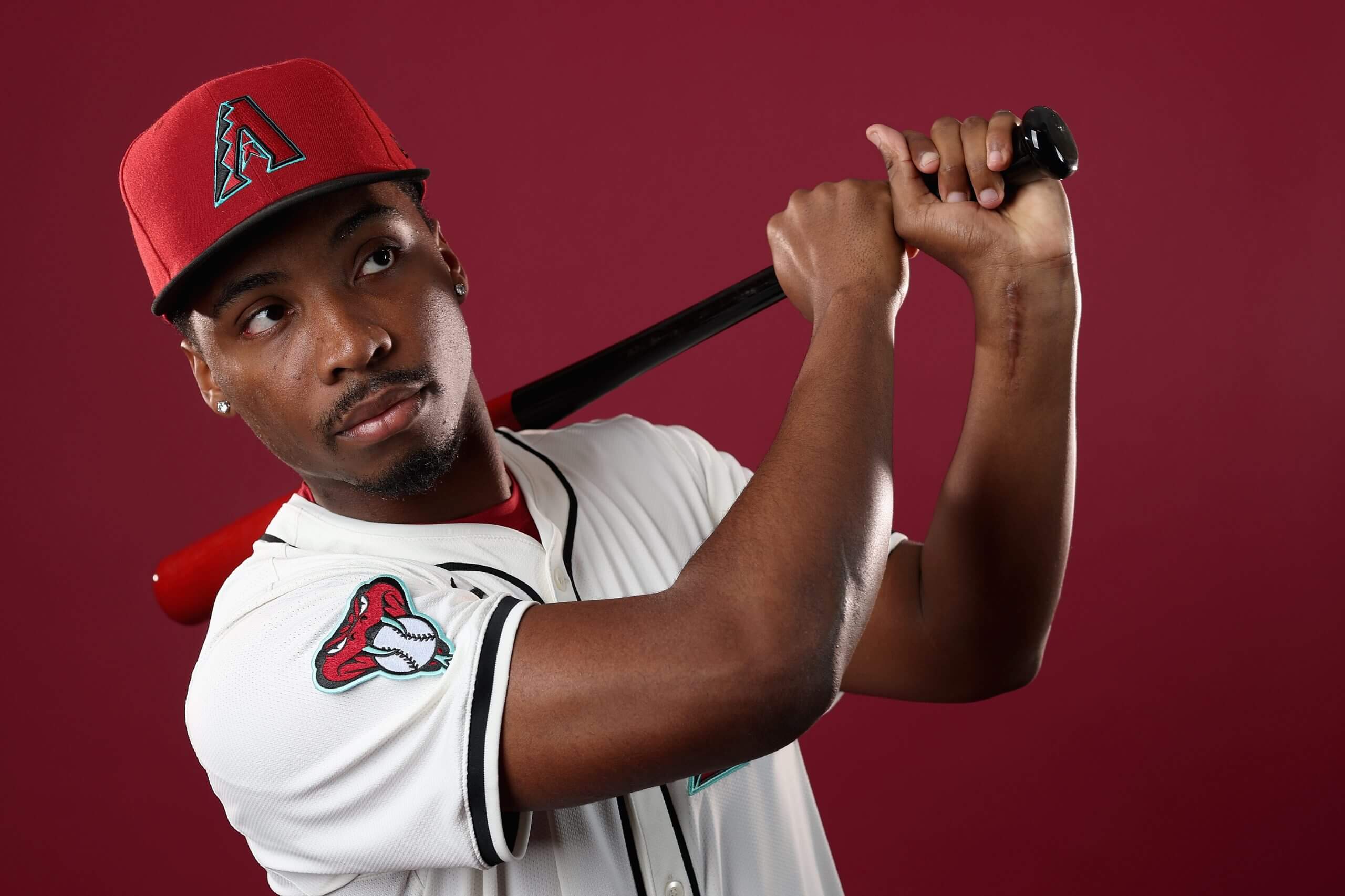
Gino Groover put up big numbers in Amarillo. (Christian Petersen / Getty Images)
20. LuJames “Gino” Groover III, 3BHeight: 6-2 | Weight: 212 | Bats: R | Throws: R | Age: 24
Groover took advantage of the very friendly home park in Amarillo, hitting .359/.446/.544 at home in 2025 but .258/.351/.322 on the road. He played a handful of games at first base in the AFL in 2024, which might be his long-term position, as he is below-average at third and doesn’t move well enough to handle second base. He might be a platoon guy at first who can temporarily fake a couple of other positions.
Others of note
Jaitoine Kelly, brother of Pirates prospect Antwone Kelly, is a right-handed pitcher who hails from Aruba and has size and arm strength already, as he’s a strong 250+ pounds at age 18 and can flash mid-90s without much present feel or control … Third-rounder Brian Curley is a 5-10 right-hander with a 95-98 mph four-seamer that has good carry and a 55 slider along with a cutter and curve, lacking a pitch for lefties. He has a no-wind-up delivery and fringy control; I think he’s probably headed to the bullpen in time.
2026 impact
Mena and Bratt are probably the next two guys, in that order, to come up when they need a starting pitcher. Unless they carry Mena as a reliever, they probably won’t have a rookie on their Opening Day roster.
The fallen
Yu-Min Lin made the back of my top 100 before the 2024 season, but took a ball off his face that May and hasn’t been the same pitcher since then, struggling in every way in Triple A last year with a 6.64 ERA (in Reno, to be fair) and by far the worst walk rate of his career. He doesn’t throw that hard and has succeeded by changing speeds, using the whole kitchen sink, an approach that presumes you’re going to throw a lot of strikes. He’ll pitch at age 22 this year, so the book on him isn’t finished.
Sleeper
Virahonda has the offensive upside and positional value to become a top-100 prospect in fairly short order, given the paucity of catching around the minors.