
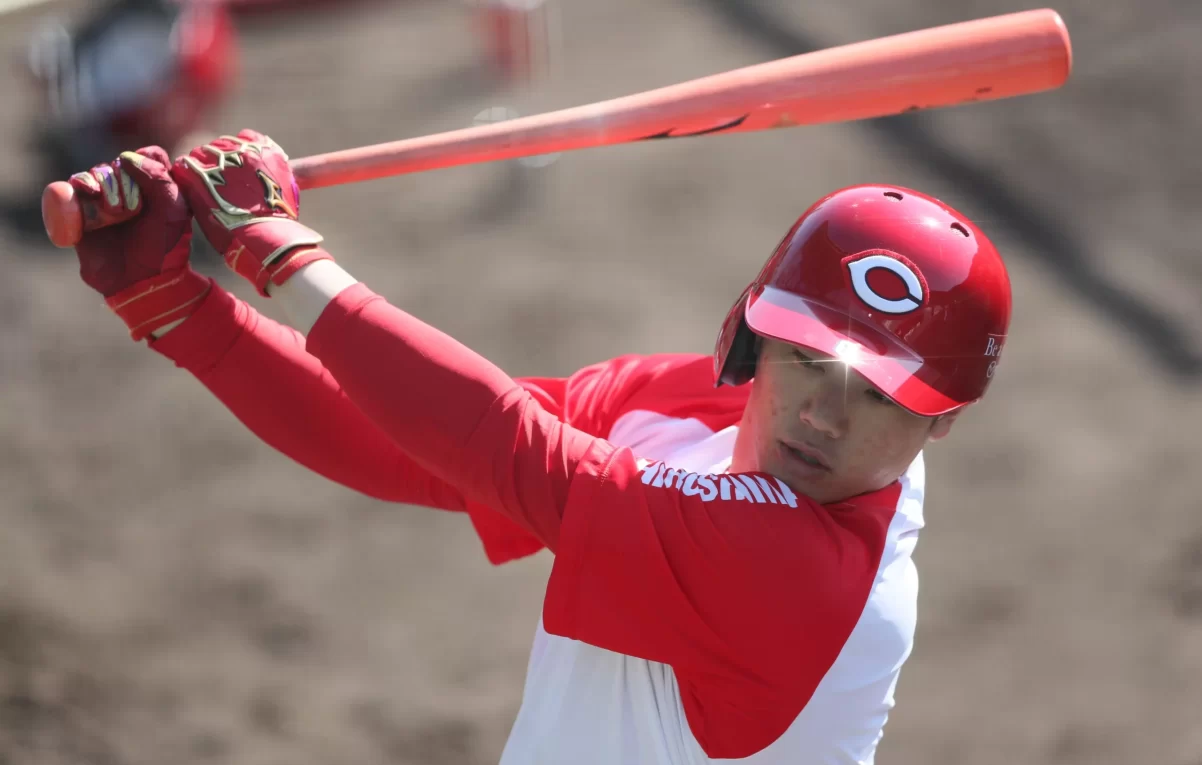
Japan’s professional baseball teams have begun spring training. And mid-February, will find the Japanese team for the World Baseball Classic (WBC), led by manager Hirokazu Ibata, at its training camp. Samurai Japan will be preparing for its quest for a second consecutive title in the tournament. The hopes of fans are certain to grow as baseball season arrives.
However, the landscape of professional baseball may change dramatically this season. This is because two of Japan’s leading long-ball hitters will make their Major League Baseball (MLB) debuts) in 2026.
Kazuma Okamoto, who belted a total of 248 home runs in his 11 years with the Yomiuri Giants, has joined the Toronto Blue Jays. And Munetaka Murakami, who has left the Tokyo Yakult Swallows for the Chicago White Sox, hit a total of 246 home runs in eight years in Nippon Professional Baseball (NPB). It will not be easy to fill the gaping hole left in the world of Japanese baseball with the departure of these stars.
Inspired by the success of prolific home-run hitters Shohei Ohtani and Seiya Suzuki in the US baseball world, the trend of power hitters crossing the ocean is likely to continue.
Clearly, not only NPB, but the entire baseball world, must work with a sense of urgency to discover and develop the next generation of Japanese sluggers. To achieve this goal, for teams from each age group representing Japan in competition to the top teams, consistency in training policies will be essential.
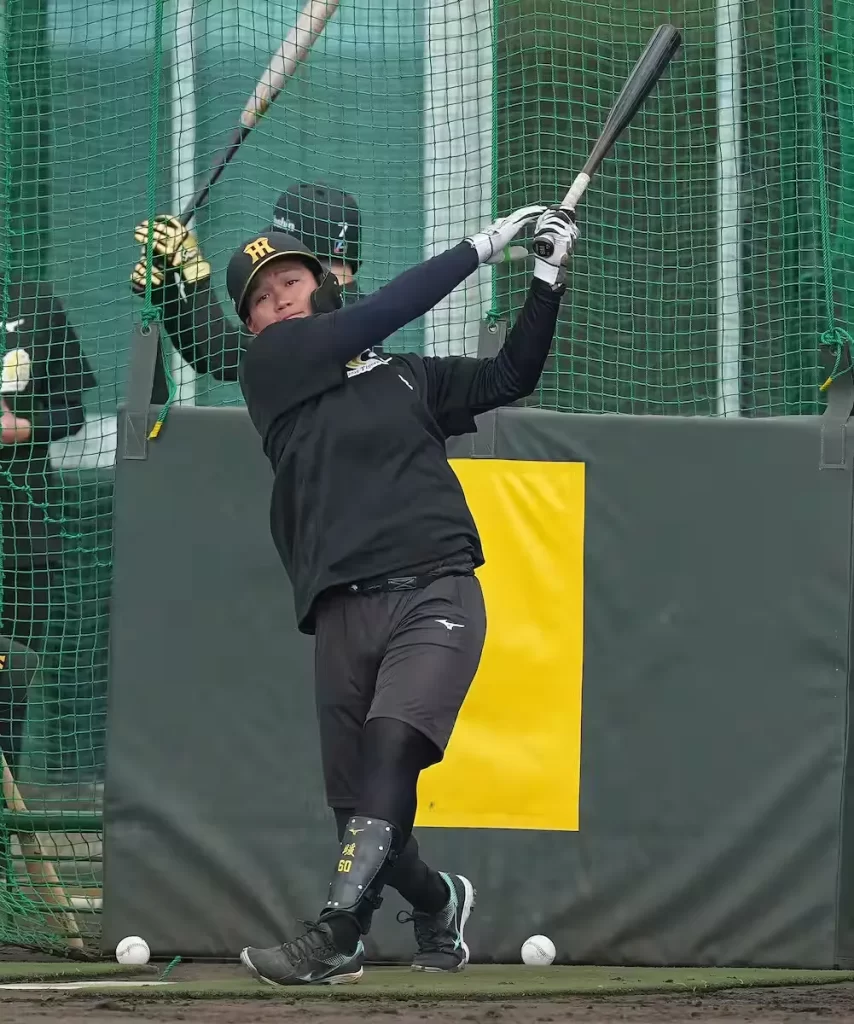 Outfielder Shota Morishita of the Hanshin Tigers takes batting practice during spring training in Okinawa on January 29. (©Sankei by Shohei Matsunaga)
Instructive Baseball Case Studies
At the previous WBC held in the spring of 2023, Japan took home the championship with a style of baseball that highlighted the power of players like Ohtani.
On the other hand, the Japanese team that competed in the U-18 (under-18) World Cup held that summer did not include powerful hitters such as Rintaro Sasaki, who had hit a total of 140 home runs in high school competition. Incidentally, Sasaki is now attending Stanford University in California.
The coach of the Japanese team that summer chose to emphasize defense and mobility. Even though the team went on to win the tournament, its members managed to hit only one home run in nine games. If the training policy changes for players who are nearly old enough to turn professional, Japan will not be able to develop players who can compete on the world stage.
The days are long gone when Japanese ballplayers were widely considered weak hitters. And the lineup of Japan’s current WBC team, including Ohtani and Suzuki, is comparable to that of the American team or other national teams, whose lineups are filled with MLB players.
Hope for the Future
Even though we might want to focus our efforts on the “small ball” style of pro ball that was once praised, we need to avoid that temptation. After all, there is no stopping the trend of using power hitting to compete with the rest of the world.
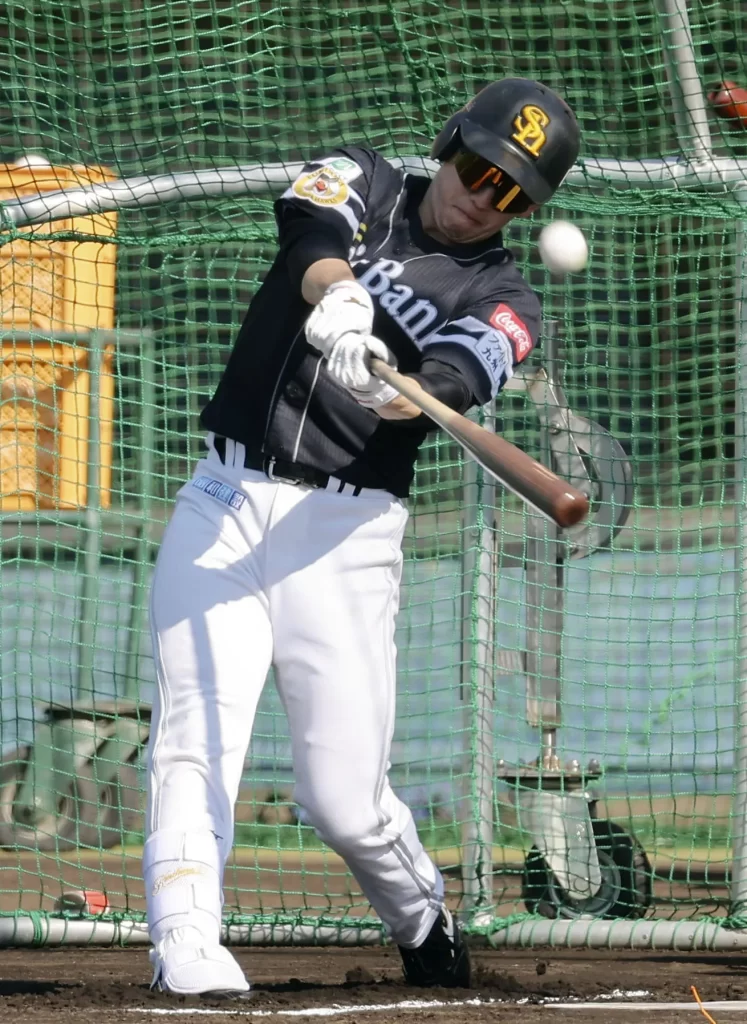 Fukuoka SoftBank Hawks infielder Ryoya Kurihara also takes batting practice on February 2, 2026, at the team’s spring training camp in Miyazaki. (©Kyodo)
Spectacular home runs that can change the flow of the game with one swing are one of the greatest highlights in baseball. And the presence of a powerful hitter who can hit a home run not only intimidates the opposing team, but also provides great enjoyment for fans.
Let us hope that new candidates for the title of “home-run stalwart” will emerge from this year’s training camps.

RELATED:
(Read the editorial in Japanese.)
Author: Editorial Board, The Sankei Shimbun
Continue Reading