
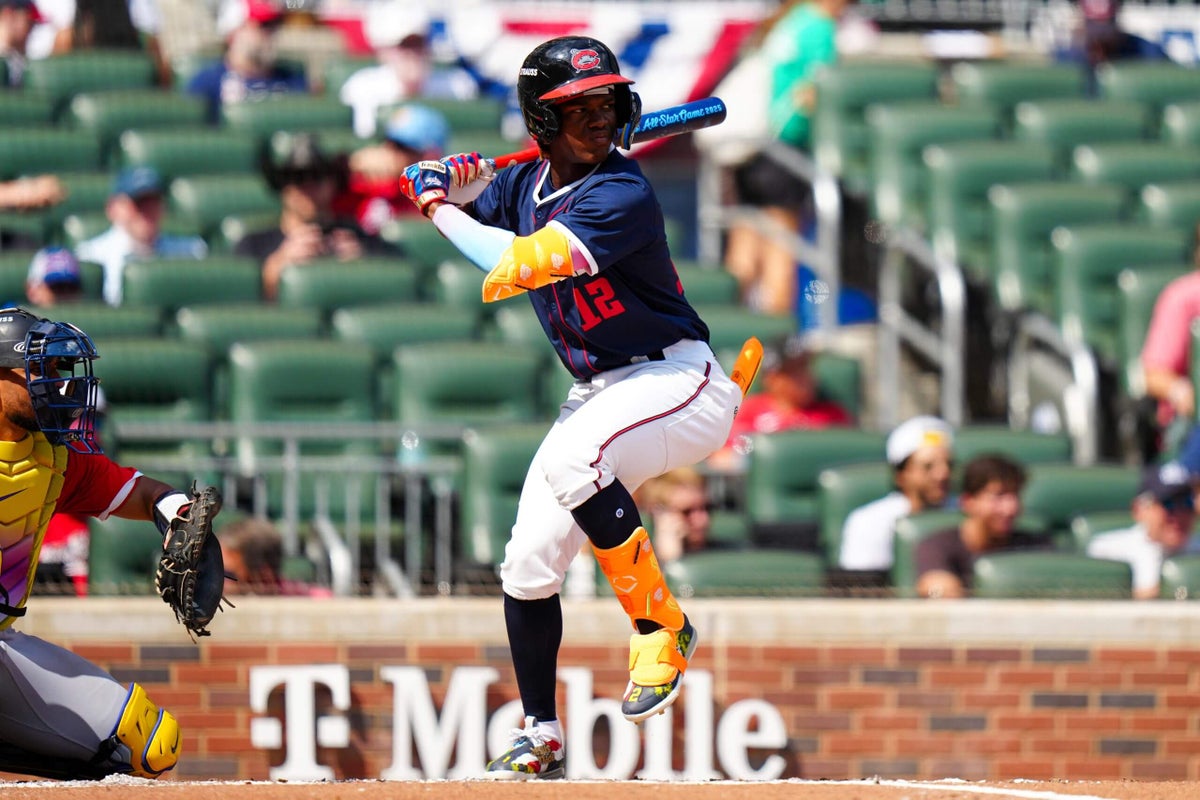
The Milwaukee Brewers have the best farm system in baseball, and it features potential stars, depth, hitting, pitching, shortstops and one catcher still recovering from shoulder surgery. The Brewers have drafted well, cleaned up in international free agency and developed their players exceptionally well. They’ve also done fairly well in trades to restock the system as some of their veterans approach free agency, adding two more top 100 prospects in a trade this offseason.
(Note: Tools are graded on a 20-80 scouting scale; ages as of July 1, 2026. EV = exit velocity.)
Height: 6-1 | Weight: 187 | Bats: S | Throws: R | Age: 19
Made turned only 18 in May but started 2025 as one of the youngest players on any full-season roster, skipping the Arizona Complex League entirely. He started strongly, as did the entire Low-A Carolina roster in April, then after some adjustment periods, he earned a promotion to High A in August, hitting so well there the Brewers gave him a week in Double A to close the season.
He’s an advanced hitter for his age — he’d be an advanced hitter if he were 21 and played like this — with a real two-strike approach and an understanding of when and how to use the whole field. His bat speed is electric — he should walk up to “Danger! High Voltage!” — and even though he’s still lean and looks his age, he’s capable of hitting the ball extremely hard because of how fast his wrists are, with a peak exit velocity in 2025 of 111 mph. The biggest surprise in his season was his defense, as a year ago it looked like he’d probably end up at third or second, but he played easily plus defense at shortstop this year, with a quick first step and excellent range to his right, and at this point I’d say not only does he stay there, but also he’s going to be at least above average in the majors.
I said last year in the top 100 that he could be a top-20 prospect this time around, but I undersold him; he’s in that tiny echelon of teenage hitters who are so good so young that they can shoot to the majors even before they turn 20. You just don’t see many hitters, ever, with this combination of quickness, athleticism and aptitude at age 18.
Height: 5-11 | Weight: 185 | Bats: R | Throws: R | Age: 19
Peña has been overshadowed by the superstar usually playing to his left (Made), but he’s an outstanding young hitter with plus-plus speed and surprising pop from a strong lower half. Peña jumped from the DSL to Low A to start last season, tagging along with Made. He hit .308/.375/.469 at the level with a very impressive 13.3 percent strikeout rate, with only one teenage regular at Low A striking out less often than Peña did. He’s an aggressive hitter with excellent hand-eye coordination, with High-A pitchers exploiting his willingness to go beyond the zone after his promotion there in July. He also has a short swing that’s geared toward contact over power but still has some loft in its finish. He keeps his hands inside the ball well on pitches in and does have a bigger swing in there when he sees something to drive, all of which looks fairly advanced for a player who turned only 19 in November.
He’s played short, second and third, with second the best bet given his average arm, although I imagine he could handle center field given his speed, too. I believe in the hit tool over everything else here — he can put the bat on the ball and needs to just tighten up the swing decisions a little bit to be a plus hitter for average with 10-15 homers a year and a slew of stolen bases.
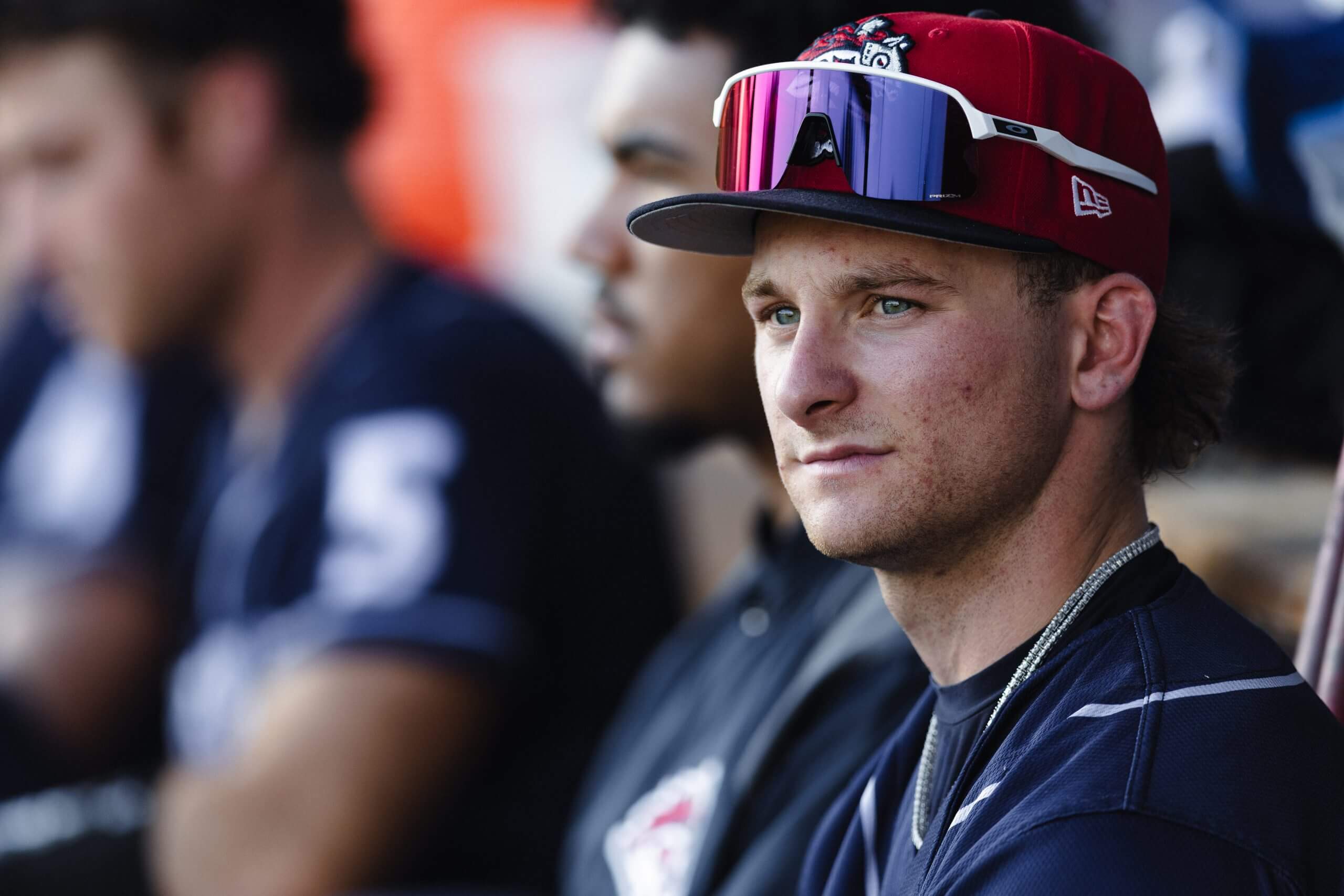
Jett Williams joins the Brewers from the Mets organization and should have an impact on the big-league team this year. (Rob Tringali / Minor League Baseball via Getty Images)
Height: 5-7 | Weight: 175 | Bats: R | Throws: R | Age: 22
Williams bounced back from an injury-shortened 2024 season to play a full season in 2025, hitting .281/.390/.477 in 96 games in Double A and then .209/.285/.433 in 34 more games in Triple A, while moving between shortstop, second base and his most likely position of center field. Williams is a fun-sized hitter who has an excellent eye at the plate and swings very hard to produce more power than you’d anticipate from his frame, with 17 homers in 2025 and a max EV in Triple A of 108.4 mph. He’s a 70 runner who plays and runs and swings hard all the time, which probably works better in center, where he can put that speed to use, than at shortstop, where his clock can be too fast.
Even in his first stint in Triple A, where he didn’t hit well, he didn’t whiff or chase excessively, and he should see better results the next time around. It’s possible moving to just one position will help as well. He’s an everyday player, whether he’s in center or at second, with an excellent chance to be an above-average regular as long as he keeps taking his walks and making hard enough contact.
Height: 5-11 | Weight: 203 | Bats: R | Throws: R | Age: 23
Quero was a top-20 prospect in baseball before tearing the labrum in his throwing shoulder in April 2024, and I kept him up there while we waited to see his return, but his return in 2025 was something of a mixed bag that at least ended on a higher note. He finished his rehab stint in late May and went to Triple A, where he had an even 250 PA in 58 games, catching two to three times per week. He hit for no power for his first two months, with a .259/.333/.362 line when he hit the injured list with an injury to his left (non-throwing) shoulder July 23, then came back and at least started driving the ball some more with a .250/.339/.470 line the rest of the way. The data do back it up — he went from an average EV before the IL stint of 85 mph to 88.9 mph after, and his hard-hit rate went from 24.8 percent to 34.9 percent, so things were trending up when the season ended. He was not throwing nearly as well as he did before the surgery, dropping from a 35 percent caught-stealing rate in Double A in 2023 to 19 percent in Triple A last year, and that arm strength is probably the least likely aspect of his game to return to pre-injury levels.
Quero has always been a high-contact hitter who likes to swing the bat, and he kept that up with a 36.8 percent chase rate in Triple A while still striking out only 14 percent of the time because he doesn’t miss pitches in the zone much and actually makes more contact on balls out of the zone than most hitters. I don’t know how much that formula will work in the majors, where pitchers have better command of better stuff, and if he has to change positions because his arm doesn’t return (or because the Brewers have an All-Star back there), his potential value is quite a bit lower than it seemed two years ago. I do believe the bat will keep coming back, however, and that could still make him a regular somewhere other than behind the plate.
Height: 6-3 | Weight: 215 | Bats: R | Throws: R | Age: 25
Sproat throws a 95-96 mph sinker and has been up to 98-99 on his four-seamer, which was good enough for him to race up to Triple A in his first full pro season in 2024. The Mets gave him a sweeper and a harder slider, which helped him get over the next hurdle, succeeding in Triple A to reach the majors last year. He has a five-pitch mix, with the hard slider — maybe a cutter, although it turns out the name you use for a pitch has no effect on what hitters do with it — the weakest right now but potentially a real weapon for him against lefties, who did hit him hard at both stops in 2025. He’s built like a starter and has a starter’s stuff, overpowering hitters for most of his baseball life, so he could get away with some missed location.
Developing some semblance of command, so that he’s not going middle-middle so much with his fastball and both sliders, and finding a pitch to get lefties out will determine whether he’s an elite starter, a starter or a bulk reliever. It shouldn’t surprise you that I think the middle outcome is the most likely, where he becomes an Edwin Jackson-like starter who seems like he should be a No. 2 but whose command and even control knock him down to a No. 4, and he has that upside that Jackson had but never reached.
Height: 6-3 | Weight: 206 | Bats: R | Throws: R | Age: 21
Pratt is a 70 defender at shortstop with excellent contact skills who needs to grow into some more power now to be more than a soft regular at the position. He continued to work the count well and get on base in Double A last year, with a 12.7 percent walk rate and 15.2 percent strikeout rate that were well above the median for the level, although he showed some weaknesses against offspeed stuff for the first time. He has a good swing that should put the ball on a line — and it did until this past year, when the Brewers effectively jumped him over High A, where he scuffled in 23 games in 2024, straight to Double A to open the 2025 season. He went from a .361 BABIP in Low A to a .267 BABIP last year, and a good portion of that decline is a function of contact quality. If he can hit the ball harder on a more consistent basis, he’ll be an above-average regular at shortstop because of all of his other skills, even if he maxes out at 10-12 homers a year.
7. Logan Henderson, RHPHeight: 6-0 | Weight: 209 | Bats: R | Throws: R | Age: 24
Henderson made his MLB debut in 2025 and pitched extremely well, only to have yet another elbow injury end his season in August. Before he was shut down, he threw a career-high 103 innings between Triple A and the majors, working with a plus changeup and a fastball with just average velocity but excellent ride and run. He’s never really found a serious breaking ball, with the cutter the Brewers gave him before 2024 his best option, enough to make him a starter if his elbow allows it — and probably a better than league-average one because of the changeup and his easily plus control.
8. Andrew Fischer, 3B/1BHeight: 6-1 | Weight: 210 | Bats: L | Throws: R | Age: 22
The Brewers’ 2025 first-round pick, Fischer has plus power and might even end up with a plus hit tool, with the biggest question his defensive position rather than his bat. He transferred to Tennessee last spring and overhauled his approach, swinging at far fewer pitches out of the zone, and his 60 percent hard-hit rate was among the best in the country. He had one of the better pro debuts of any draftee as well, going to High A and hitting .311/.402/.446 with a 25.3 percent strikeout rate. The Brewers announced him as a third baseman and played him there exclusively after he signed; I can’t rule it out, but I saw him at first base in college, and he didn’t move at all like someone who could play a more challenging position. He was better at first base for the Vols than his predecessor, Blake Burke, also now in the Brewers system. At first base, Fischer could be an above-average regular; at third, he’d be an All-Star.
9. Marco Dinges, CHeight: 5-11 | Weight: 190 | Bats: R | Throws: R | Age: 22
Drafted in the fourth round in 2024, Dinges caught one game with Florida State but moved exclusively behind the plate after he signed, showing enough promise to project as at least a backup with the potential to be an everyday backstop. He makes a lot of contact and already shows plus power, with 13 homers in 77 games last year, swinging very hard until he gets to two strikes. He actually whiffs less often in two-strike counts, cutting his whiff rate from 29 percent overall to 24 percent in those situations. His defense behind the plate is a work in progress, with enough receiving and blocking already to say he can stick; most importantly, he likes to catch and wants to keep doing it. He ended up hitting .273/.371/.483 in his time in High A, where he spent most of his season around a hamstring strain that cost him a month. That’s nothing compared with what he went through in 2023, however; he developed HLH, a hematologic disorder with a 50 percent mortality rate, and spent 43 days in the hospital before he recovered enough to go home. (As for his last name, it’s pronounced with a soft g, ya dingus.)
10. Braylon Payne, OFHeight: 6-2 | Weight: 186 | Bats: L | Throws: L | Age: 19
Payne was the Brewers’ first pick in 2024, selected in the draft a month before he turned 18. In his first year in full-season ball, he hit .240/.354/.382, showing not only a good approach but also the lack of physical maturity he showed in high school. He has almost no hand load, which also limits his ability to hit for power, and he still whiffed on 36 percent of his swings last year after the big jump from high school to Low A. He missed some time with minor injuries as well, including a stint in the concussion protocol and a groin strain. He’s a plus runner who should end up a plus defender in center, and he does have the frame to add some strength, for more power and to reduce the fatigue he suffered at the end of last season. He’s still just 19 and could easily return to Low A to try to improve his pitch recognition while he works on staying strong through an entire year. He could end up a leadoff hitter with on-base skills, speed and very good to elite defense in center field.
11. Blake Burke, 1BHeight: 6-3 | Weight: 236 | Bats: L | Throws: L | Age: 23
The Brewers’ second pick in 2024, Burke had a mediocre start in High A, hitting for none of the power we saw from him at Tennessee. He had five homers in 95 games when the Brewers promoted him to Double A, and he responded by going off, hitting 11 homers in 37 games at the higher level while conceding only a little ground on his swing decisions. He does whiff and chase more than you’d like, but makes up for it with consistently hard contact when he does put the ball in play, allowing him to hit .369 on balls in play across the two levels. He’s a mediocre defender at first who should still manage to stay there, catching what’s thrown to him with limited range. I see a solid regular with a chance to be more if he becomes a 30-homer guy without conceding too much contact.
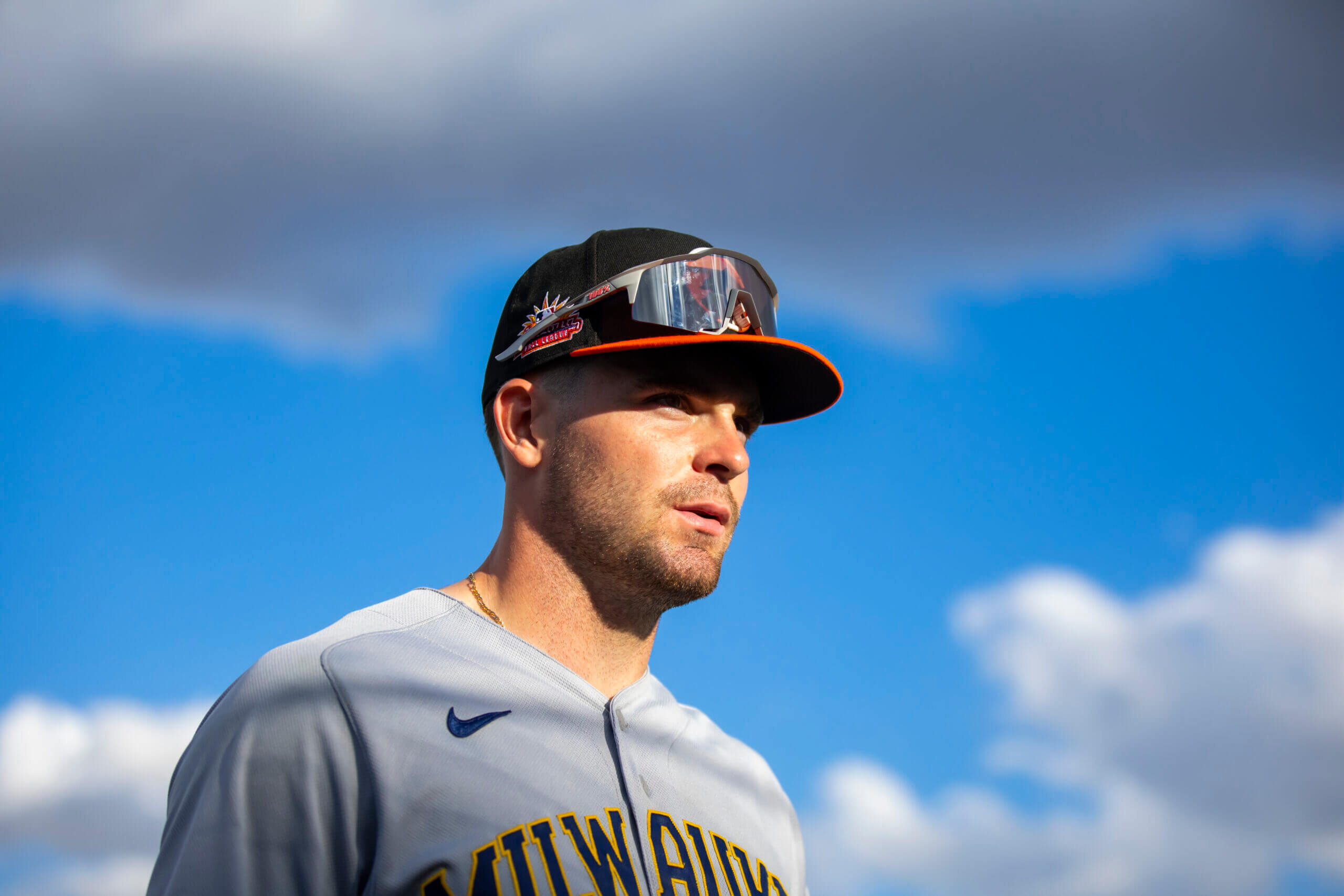
Tyler Black’s 2025 season was hampered by a broken hamate bone. (Mark J. Rebilas / USA Today)
12. Tyler Black, OF/1BHeight: 6-1 | Weight: 199 | Bats: L | Throws: R | Age: 25
Black broke a hamate bone during the final week of spring training last year, missing two months, and he choked up on the bat for much of the season to try to reduce the discomfort after his return. He never hit for any power in Triple A or the majors for the remainder of the year — not that he had all that much to give. He’s a disciplined, ultracompetitive hitter who rarely chases pitches out of the zone, with walk rates consistently in the 13 percent-17 percent range in his pro career, as well as a plus runner with excellent acumen on the bases. He hasn’t been able to throw well since shoulder surgery several years ago, so the Brewers moved him to left field last year, and that’s probably his best option defensively since he wasn’t able to handle second base. He’s probably the strong side of a left-field platoon at this point and able to back up at first and maybe second in a pinch, requiring a right-handed caddy to face lefties.
13. Bishop Letson, RHPHeight: 6-4 | Weight: 170 | Bats: R | Throws: R | Age: 21
Letson lost about three months in the middle of the 2025 season to a right shoulder impingement, returning in late August to make six more appearances, including two after a promotion to Double A. He was mostly 93-94, throwing two- and four-seamers, with an above-average slider and an improved changeup that helped him avoid a platoon split last year in a very small sample. It’s a funky delivery where he crouches over the rubber somewhat, extending well out front and throwing from a lower release height, although there’s some added effort to it. This was his second straight year with an arm injury that didn’t require surgery, as he ended 2024 on the IL with an elbow problem. He has mid-rotation upside if he stays healthy and continues to throw more strikes as he did in his limited outings in 2025.
14. J.D. Thompson, LHPHeight: 6-0 | Weight: 199 | Bats: R | Throws: L | Age: 22
The Brewers’ third pick (second round) in the 2025 draft out of Vanderbilt, Thompson has a plus changeup that might be a 70 and an above-average fastball with ride up top, although it does get hit when he drifts down in the zone with it. He has a 55 curveball and average slider, both good enough to keep lefties in check, and generally throws strikes, albeit more with control than true command. He’s a starter, with ceiling TBD depending on whether his command develops and whether either breaking ball becomes more of an outpitch.
15. Robert Gasser, LHPHeight: 6-0 | Weight: 192 | Bats: L | Throws: L | Age: 27
Gasser returned last season after the All-Star break after he recovered from 2024 Tommy John surgery, working mostly in two-to-three-inning stints in Triple A and the majors. He mixed in more two-seamers last year and fewer changeups, resulting in a massive platoon split even though he was typically facing guys just once per outing. His sweeper is his best pitch and very effective against lefties, and he’s always had at least average control. He’ll be 27 in May, so it’s kind of time for him to find a major-league role, and I still hold out hope he can be a starter given the assets he already has.
16. Luke Adams, 1BHeight: 6-4 | Weight: 210 | Bats: R | Throws: R | Age: 22
Last season, Adams collided with a catcher while trying to score and injured his shoulder, missing two months but returning to go bananas in the Arizona Fall League, making a lot of medium-hard contact and, as usual, drawing a lot of walks. He’s a super-patient hitter to the point of hurting himself, swinging at pitches in the zone only half the time, and swinging at the first pitch just 11 percent of the time, rather than offering at more pitches he can put in play. He’s played third and first, with first clearly the better option as he’s 6 feet 4 and kind of lumbering. He’s not going to have the stereotypical first-base profile of 25-30 homers, but that guy is mostly extinct anyway, and Adams could end up an everyday player thanks to his on-base skills if, and only if, he starts to take advantage of all of the hitter’s counts he gets into.
17. Josh Adamczewski, 2BHeight: 6-0 | Weight: 190 | Bats: L | Throws: R | Age: 21
Adamczewski started the 2025 season at second base in Low A, where he raked, then moved to left field in the AFL, which is probably the best option for him as he’s not an above-average defender anywhere and isn’t good on the dirt. He missed time last year with sacroiliitis, inflammation of one of the joints where the spine meets the pelvis, which really affected his swing in the middle of the year, especially since he tends to swing very hard. He knows the strike zone well and makes hard enough contact to have a future bench role, maybe roving among a few positions without really sticking at one.
18. José Anderson, OFHeight: 6-0 | Weight: 183 | Bats: R | Throws: R | Age: 19
Anderson got off to a strong start in the Arizona Complex League in 10 games last year when the Brewers traded Yophery Rodríguez and had an opening in their Low-A outfield, so they promoted Anderson to fill it. He struggled almost across the board, as he was 18 and is still physically immature, although he did flash some above-average power and similar defense in center. I love the swing, and he still has projection to his frame — he might be taller than his listed 6 feet — and he moves around well enough that if he can’t stay in center, he should be at least a 55 defender in a corner. He really, really needs to go back to Low A to start the year, though.
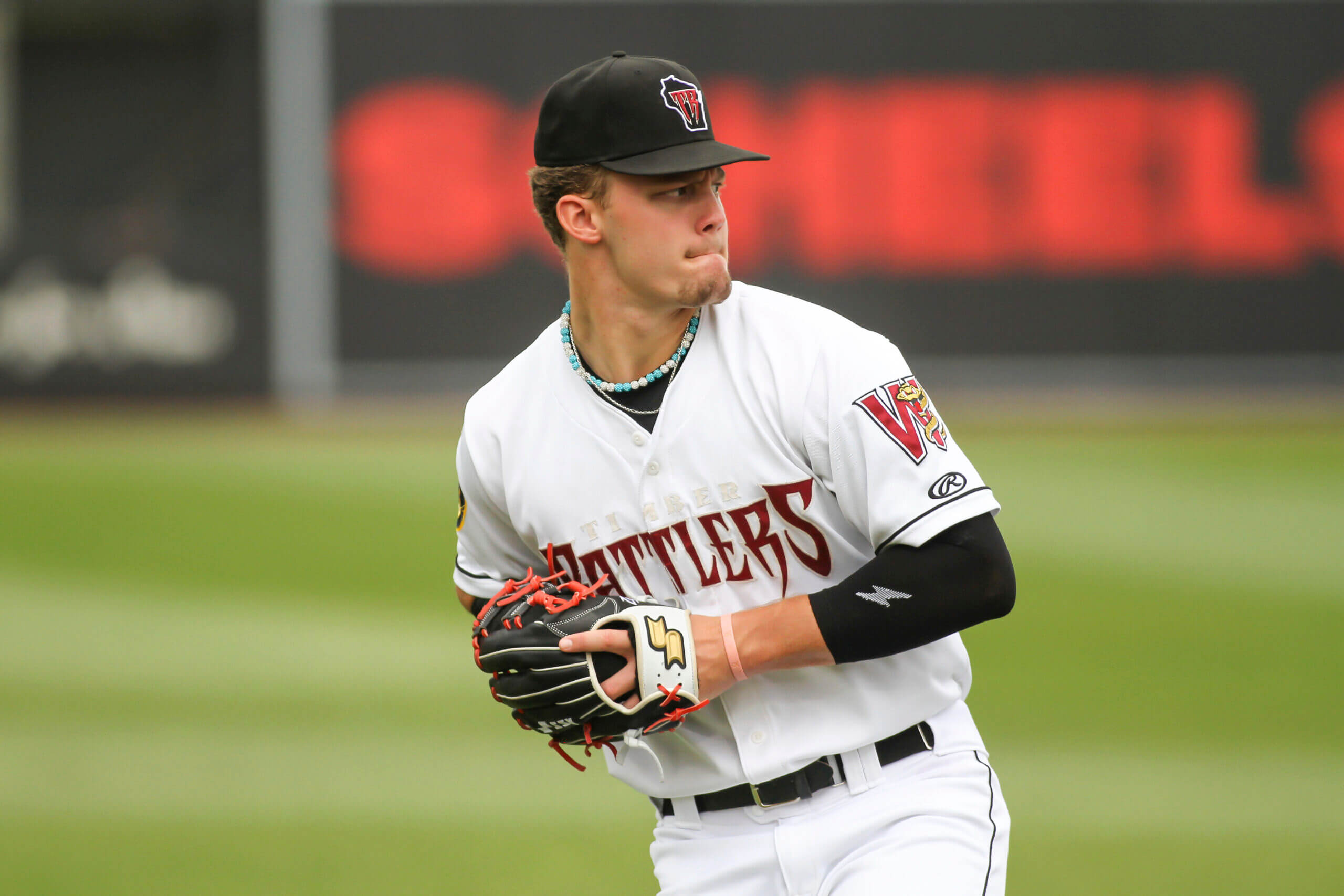
Brock Wilken has been snakebit by injuries the last two seasons. (Brad Krause / Four Seam Images via Associated Press)
19. Brock Wilken, 3BHeight: 6-4 | Weight: 225 | Bats: R | Throws: R | Age: 24
Wilken had a weird 2025 season, to put it mildly. He started 1-for-18, then rallied enough to get to a season line of .230/.392/.550 — which includes that slow start and another 0-for-17 stretch — with a 26 percent strikeout rate June 18, when Biloxi clinched the first-half title … and Wilken slipped on the plastic during the locker room celebration, injuring his knee and missing two months. He returned in late August to go 10-for-54, all singles. Wilken missed a huge chunk of 2024 after he was hit in the face by a pitch that April, and his 2025 was still a marked improvement for him, but I’m not sure what he really is as a hitter at this point. There’s still the power and patience for a regular if he can keep his contact rate steady against better pitching, but that seems unlikely given what we’ve seen when he’s been healthy.
20. Luis Lara, OFHeight: 5-8 | Weight: 167 | Bats: B | Throws: R | Age: 21
Lara hit .257/.369/.343 as the Brewers’ everyday center fielder in Double A last year, doing what he always does — getting on base, running plus, playing plus defense and showing next-to-no power. He’s probably a fourth outfielder or at worst, an up-and-down guy who plays a long time because of the defense and speed. He’s so small that it’s hard to imagine him getting to enough strength to keep his batting average up against major-league arms.
Others of note
Right-hander Bryce Meccage is 93-96 with a slider and curveball, spinning everything well, and lacking a real changeup while showing decent control but below-average command. He won’t turn 20 until March and has premium stuff with a high-effort delivery that might inhibit his ability to locate or go softer for any change-of-pace pitch. … Right-handed reliever Craig Yoho made his MLB debut last year and walked more than a batter an inning, working with a 55 changeup and an average-ish fastball that’s 92-93 with a lot of run. He’ll end up a solid middle reliever, assuming he throws more strikes, of course. … The Brewers’ second pick in 2025, Brady Ebel, was the third baseman on the loaded Corona High School team that had two guys drafted in the top 10 (Billy Carlson and Seth Hernandez). His bat speed is just average, and he’s not a shortstop, which is how the Brewers announced him, lacking the power right now for a corner. He was a little young for the class, turning 18 about two weeks after the draft. … Right-hander Josh Knoth had Tommy John surgery last February and should be back throwing live BPs in spring training; before the injury, he had an above-average curveball with a straight four-seamer at 92-93, probably a reliever in the long term. … Eric Bitonti moved to first base last year and repeated Low A, still striking out 33.4 percent of the time; he’s young, turning 20 this past November, but I’m not sure he’s ever going to hit enough for the power to play. … Left-hander Frank Cairone was the Brewers’ second-round pick in 2025, but over the holidays, he was seriously injured in a car accident. Brewers president of baseball operations Matt Arnold reported that Cairone was “progressing positively” a few weeks ago. Cairone’s baseball career is secondary at this point. Here’s hoping for the fullest recovery possible.
2026 impact
Henderson should be in the Opening Day rotation, with Gasser probably next in line. Yoho probably will get significant time in the bullpen. Jett Williams likely will debut this year, sooner if Joey Ortiz hits like he did (not) in 2025 rather than like he did in 2024.
The fallen
Mike Boeve was Milwaukee’s second-round pick in 2023, and a reasonable selection at the time for his very high contact rates, but he repeated Double A last year after offseason shoulder surgery and was nowhere close to his old self, hitting .239/.336/.341 with a huge platoon split while mostly acting as the designated hitter.
Sleeper
The Brewers draft so well it’s hard to choose, but I’ll go with Dinges, because the value of even a passable catcher with his kind of power is enormous.