
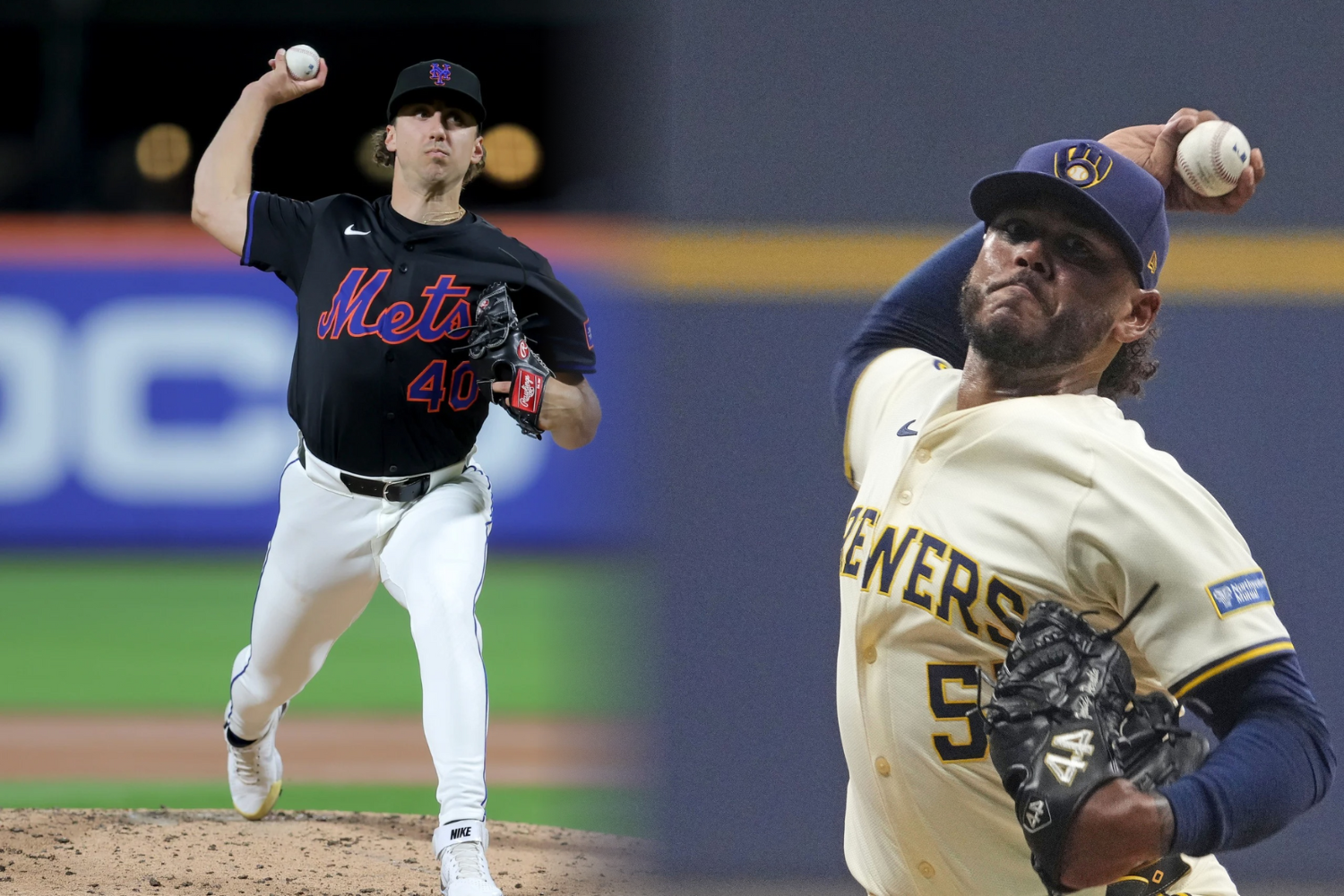
To the surprise of no one, the Brewers traded away arguably their best pitcher for the third winter in a row. This time, Freddy Peralta was sent to the Mets, with two consensus top-100 prospects returning to Milwaukee. Unlike the previously traded Corbin Burnes and Devin Williams, the Brewers did not sign or draft Peralta as an amateur; they acquired him in a trade. In fact, it was a deal executed by none other than the current New York Mets president of baseball operations David Stearns, who can carve his initials twice on the Freddy Peralta trade tree.
The Milwaukee Brewers’ Freddy Peralta Era begins with Tyler Walker. On Jan. 28, 2010, the Washington Nationals signed Walker to join their bullpen. Walker had a respectable 3.57 ERA with the Nationals that yea, in what would be his final season in the majors. To make room for Walker on their roster, the Nationals designated Marco Estrada for assignment, and the Brewers claimed him off waivers on February 3. At the time the Brewers acquired Estrada, he had only had a couple of cups of coffee in the big leagues, with a total of 20 innings over two seasons. Baseball America rated Estrada as the Nationals’ 18th-best prospect that winter, and the team was coming off a 103-loss season, so it’s a little surprising that they removed a pitcher who had posted 3.63/3.41 ERA/FIP over 136.1 innings in Triple A from their roster. At 6 feet and 180 pounds, Estrada was seen as undersized at the time and had low strikeout numbers in 2009, but it’s hard to imagine that a last-place team wouldn’t find a player like this valuable. The Nationals’ mistake would become the Brewers’ gain.
Estrada missed the majority of 2010 with shoulder fatigue, and the Brewers outrighted him from the 40-man roster, but he returned in 2011 and contributed a strong 92.2 innings in 43 appearances and seven starts. Estrada had a breakout year in 2012, starting 23 games with a 3.64 ERA over 136.1 innings and more than a strikeout per inning. Estrada pitched two more seasons with the organization, giving the team a lot of flexibility by starting 39 games in 60 appearances. On Nov. 1, 2014, the Brewers sent Estrada to the Blue Jays for first baseman Adam Lind. Estrada would go on to pitch with the Blue Jays for four seasons, providing a lot of solid innings and making an All-Star appearance for the club.
Adam Lind was the fourth attempt by the Brewers to replace Prince Fielder at first base. He came to Milwaukee following a strong season in Toronto, with a .321/.381/.479 line in 290 plate appearances. Lind was under contract for the 2015 season on a $7.5-milliion deal, with a 2016 team option for $8 million. In what ended up being his only season as a Brewer, Lind hit a respectable .271/.360/.460, with 20 home runs and 2.0 fWAR. Following the season, new Brewers general manager David Stearns picked up Lind’s option, with an eye toward trading him. Just over a month later, Stearns struck a deal with the Seattle Mariners and their notoriously active general manager, Jerry Dipoto. Lind hit another 20 home runs in Seattle during the 2016 season, but his walk rate and BABIP declined sharply. He went from being 20 percent better than the average MLB hitter in 2014 to 7 percent worse than average in his lone season with the Mariners.
The Brewers’ return for Lind was three teenage pitchers: Carlos Herrera, Daniel Missaki, and Freddy Peralta, with a combined 34.1 innings above rookie ball. Stearns cashed in Lind for three lottery tickets, and one of them hit. Missaki was recovering from Tommy John surgery when the Brewers acquired him; he never pitched for the organization. After nine years away from major-league organizations, including stints in Japan, Latin America and Mexico, he pitched in the Cubs system in 2024 and threw 74 innings with the Rangers’ Double-A affiliate last year. Herrera peaked with 85.2 innings in 2018 for the Brewers’ Low-A affiliate, and hasn’t pitched in affiliated baseball since 2019.
Peralta debuted with the Brewers in 2018, with a memorable one-hit, 13-strikeout performance in front of his parents. He evolved quickly into a fan and clubhouse favorite, and eventually into a true top-of-the-rotation starter. After pitching as both a starter and reliever in his first two seasons, Peralta signed a team-friendly extension in February 2020, which allowed the team to extend their contractual control through the upcoming 2026 season and (ultimately) to trade him this winter. In parts of eight seasons with the Brewers, Peralta accrued 17.8 fWAR, throwing 931 innings with 70 wins, 1,153 strikeouts and a 3.59 ERA.
The Freddy Peralta trade tree will continue to grow, through the contributions of Brandon Sproat and Jett Williams. Sproat will likely compete for a rotation spot with the Brewers immediately. The 56th overall pick in the second round of the 2023 MLB Draft threw 141.2 total innings in 2025, including 20 with the Mets. Williams likely needs more time in Triple A to refine his skills with the bat and in the field. His strong approach at the plate and defensive versatility should set the floor for him as a valuable utility player capable of handling all three up-the-middle positions in the field.
The Brewers have had consistency and stability in their front office for most of this century. Doug Melvin was the general manager when Estrada was acquired. Melvin stayed with the team when Stearns was brought in to lead the baseball operations department, and one of Stearns’s first hires was Matt Arnold, the current president of baseball operations. All three executives completed key moves, to draw the line from Estrada to Sproat and Williams. It’s possible that contributions from the two new Brewers (or a new branch added in the future) will lead to a name change, but for the foreseeable future, this is the Freddy Peralta trade tree.
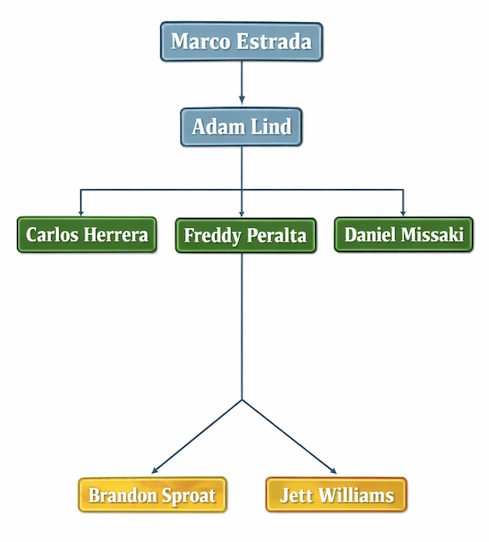
For something that grew from the seed of a late-winter waiver claim, it’s a mighty oak. Estrada, Lind and Peralta have combined to give the team 21.6 wins above replacement (WAR), according to Baseball Reference. That’s value created by extremely low-cost risk-taking, like claiming Estrada in the first place and extending Peralta, rather than by using vital resources like first-round picks or young talent. In Williams and Sproat, they now have two players who could generate a similar amount of value for them in the decade to come. It’s a great reminder of the value of savvy scouting, player development, and deft transactions.