
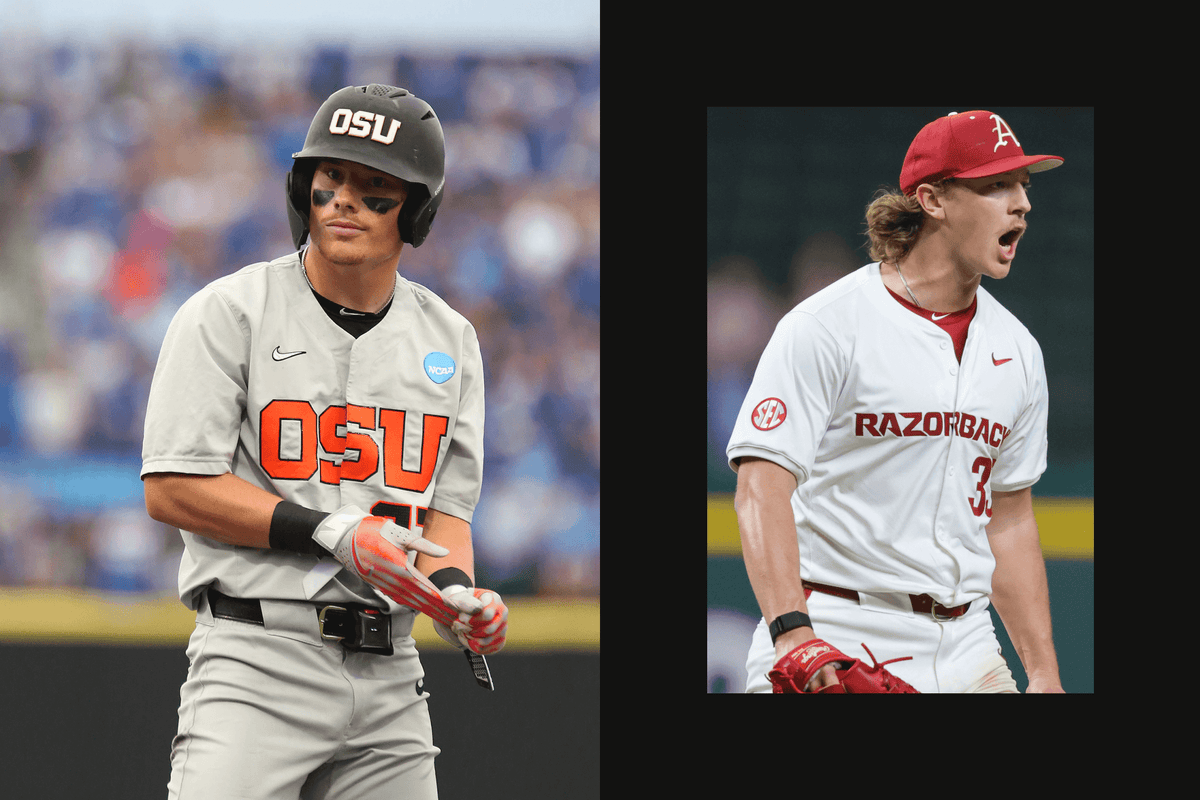
With the 2024 MLB Draft now in the books, here’s my look at each American League team’s draft class. (The National League version of this piece is here.) I focus on the top 10 rounds, since those are the picks that count toward each team’s bonus pool. Players taken after the 10th round may be paid up to $150,000 without counting against the bonus pool, so the best prospects taken in Rounds 11 through 20 rarely end up signing.
The number in parentheses after each player’s name indicates the round in which he was taken; a letter (A, B, or C) after a number indicates that it was a supplemental pick between rounds, either for losing a free agent or from the competitive balance lottery. I do assume that all players taken in the top 10 rounds will sign, although each year there are roughly two to five players who don’t for various reasons. I also skipped over college seniors who were probably selected as money-saver picks, agreeing to bonuses under their slot figures so their teams can go over slot for other players, or other players who appear to be more about under-slot bonuses than major-league potential.
Finally, I don’t grade drafts. I think that whole idea is absurd. The best I can offer is to tell you that I think teams did well or not well based on what I know about the players available at those picks, and in general I prefer to talk about specific picks than try to sum up months of work for each scouting department in a pithy line or two.
(Note: Scouting grades are on a 20-80 scale.)
The Orioles took UNC outfielder Vance Honeycutt (1) with their first pick. If they hadn’t, he might have slid out of the first round entirely, and it’s still a shocking fall for a player who was considered a lock to go in the top 10 coming into the spring. Honeycutt is a 70 or 80 defender in center with 70 power, but his plate discipline is poor across the board — he struck out 83 times this spring, with more K’s than hits, and his whiff and chase rates are all below the Division I median. It’s more than a simple swing fix, but the Orioles are one of the few teams that can take a risk like this to hope for the reward of a superstar. He has a similar skill set to Jud Fabian, Baltimore’s second-rounder from 2022 who’s now in Double A.
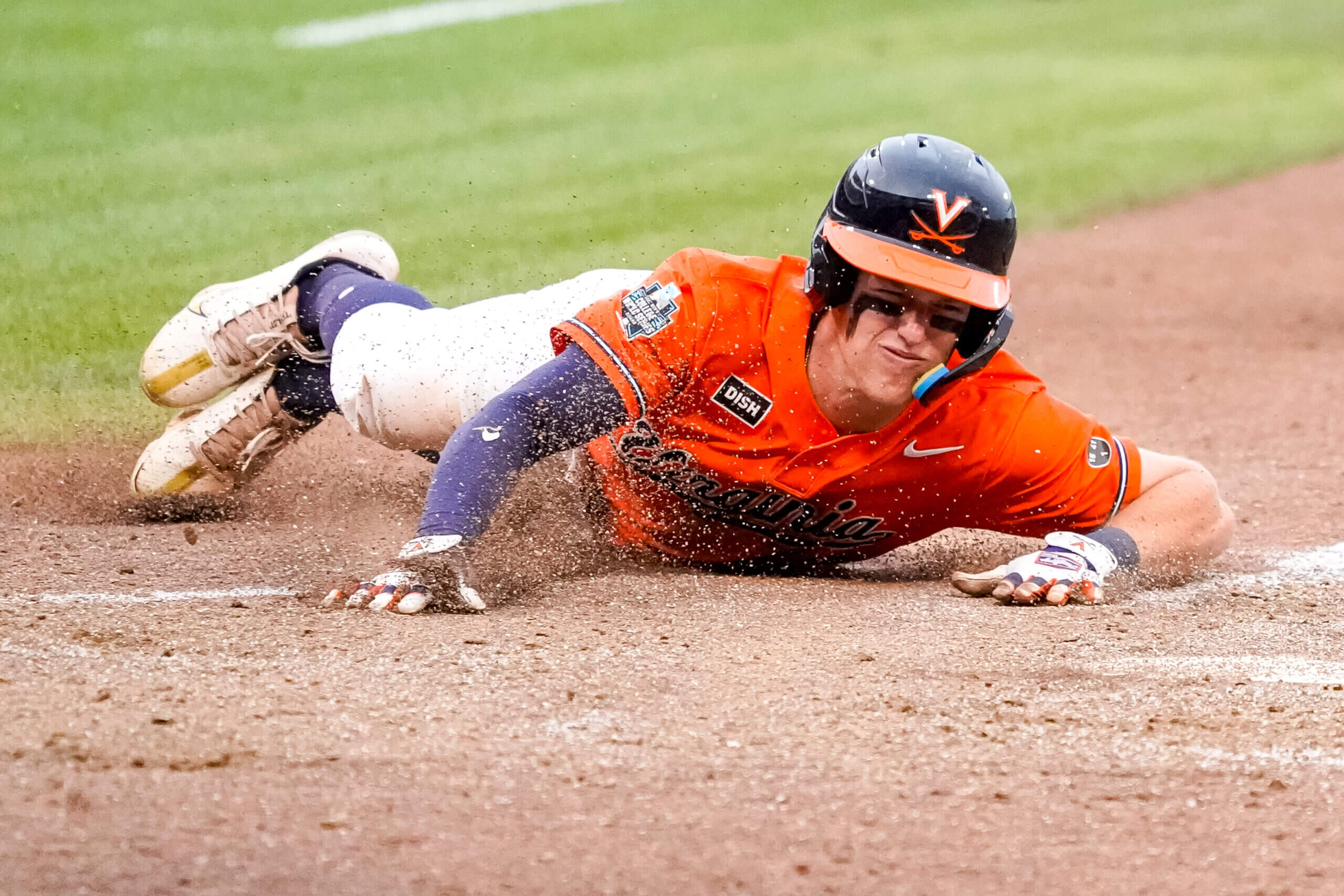
Griff O’Ferrall was one of the top contact hitters in the class. (Dylan Widger / USA Today)
With the extra pick they got for Gunnar Henderson’s Rookie of the Year win, the Orioles went completely in the opposite direction by taking one of the best contact hitters in the draft, Virginia shortstop Griff O’Ferrall (CBA). O’Ferrall whiffed on pitches in the zone less than 5 percent of the time he swung, but a swing change to try to improve his launch angle just resulted in fewer hits and a lot of soft flyballs. He’s a plus defender at short and could be better just by reverting to his sophomore-year swing and hoping the O’s can help him make a little bit harder contact.
The O’s went back to Charlottesville for Ethan Anderson (2), a catcher and first baseman — announced as a catcher — who has great bat speed and has shown above-average power in the past, but struggled with weaker contact and hitting too many groundballs this year. He lost the catching job for the Cavaliers to a fifth-year senior, but I see no downside to starting him out there to see if he can improve his footwork and receiving.
USC outfielder Austin Overn (3) was probably the most disappointing player I saw in person this year. I didn’t see feel to hit or other tools to make up for it, and he hit just .274/.349/.461 in a weak Pac 12 this year before going to the Cape, where he’s been raking for a month. I didn’t even see the advertised speed, and thought he’d have to go to a corner. He’s a true center fielder, and if he can just make more contact, he’s got the slap-and-go, low-power profile that would make him a decent extra outfielder.
Right-hander Chase Allsup (4) was very homer-prone for Auburn this year, allowing 13 homers in 62 innings, nine of them to lefties because his changeup is a grade-40 pitch. He’ll sit 96-97 with a power slider, although the four-seamer is pretty true and his command isn’t great. There could be a decent reliever hiding in here. Ryan Stafford (5) is a high-probability backup catcher from Cal-Poly, San Luis Obispo who makes a ton of contact, rarely missing fastballs and hitting plenty of line drives, with good catch-and-throw skills including a plus arm. High school shortstop DJ Layton (6) has gotten a lot stronger in the last year-plus and runs very well, probably moving to second base in the long run, with work to do on the hit tool. He was committed to Southern Miss. Left-hander Carson Dorsey (7) has as long an arm swing as you’ll see and comes from a very high slot that makes it harder for hitters to pick the ball up. He’s been up to 96 and was more effective in relief, even though he has a starter’s repertoire. That arm swing is going to be really hard for him to repeat to get to even average control.
The Red Sox got one of the steals of the first round when Texas A&M outfielder Braden Montgomery (1) slid to them at pick 12. I had him fourth on my board, and I suspect he fell where he did primarily because of the ankle injury that ended his season. Montgomery makes very hard contact, all the time, ranking among the very top of players by average exit velocity and in the top 1 percent in 90th percentile exit velo. He’s a switch-hitter with power from both sides, but he’s a far better hitter left-handed and may end up only batting that way even with the platoon disadvantage. He’s a 55 or better defender in right with a 70 arm, and used to be a two-way player at Stanford before he transferred.
GO DEEPER
Red Sox thrilled Braden Montgomery drops to them at 12, draft pitcher with second pick
TCU left-hander Payton Tolle (2) was also a transfer, coming from Wichita State, and he gets huge extension from his 6-foot-7 frame. He’s up to 96 but none of his pitches are plus and he comes a little bit across his body. At the least, he’ll need to find a clear out-pitch among his secondaries, as he’s succeeded so far with the fastball and the deception from the delivery.
Right-hander Brandon Neely (3) was No. 87 on my 2021 draft rankings but ended up at Florida, where he’s missed plenty of bats but struggled with command, especially of his 92-95 mph heater. He has a little slider that’s probably average, working almost exclusively with those two pitches. The delivery is still unrefined and he could benefit just from someone else helping him clean it up, but as is he’s probably a two-pitch reliever.
Zach Ehrhard (4) had a breakout season this year for Oklahoma State, hitting .331/.458/.627 for the Cowboys after hitting just six homers his first two years in Stillwater. He’s a very disciplined hitter who almost never whiffs in the zone, probably an everyday guy if he can stick in center but a tweener if he goes to a corner. The power output isn’t totally backed up by the batted-ball data and I’m not sure it’ll hold up with the wood bat.
Lefty Brandon Clarke (5) is a J3 who started at Alabama and then spent the last two years at the JUCO State College of Florida, Manatee, working 93-96 with a big curveball that could be plus. He’s got a wrist-wrap in back and his arm swing is very inconsistent, which may explain his high walk rates and probably pushes him to relief in the end.
Right-hander Blake Aita (6) works with four pitches, using a cutter in lieu of a changeup, showing above-average control but no pitch better than a 50. He’s got a good, durable body and his arm works well, so if he can find even a consistently above-average pitch — possibly the slider — he’d be a back-end starter.
South Alabama outfielder Will Turner (7) hit .349/.460/.591 as a sophomore, but changed his swing and hit just .218/.409/.421 this year. He’s a great buy-low candidate who looked like a solid regular coming out of last spring. The Red Sox announced Georgia prepster Conrad Cason (8) as a two-way player. He’s a better prospect as a pitcher but also was beset by injuries this spring and seemed way more likely to head to Mississippi State. He’s 91-94 with a solid slider that projects to plus and a good delivery, with quite a bit of projection left to his body and just based on his athleticism.
The White Sox took the best left-handed pitcher in the draft in Arkansas ace Hagen Smith (1), who finished second in Division I in strikeouts and produced one of the most dominant pitching performances scouts have ever seen in his 17-strikeout outing against Oregon State in February. He’s 92-97 with a plus slider, coming from a lower three-quarters slot with a funky delivery and starts all the way on the extreme first-base side of the rubber, making him tougher on lefties but also making it harder for him to get to his glove side. I think he has No. 2 starter upside but there’s some development required.
I was surprised to hear Caleb Bonemer (2) get picked after a down spring that sparked rumors the Michigan prep product would just go to Virginia, but you could also argue that the White Sox got a guy who was a clear first-rounder coming into the year and are taking advantage of a buy-low opportunity. He’s got plus power and above-average speed, with a dead-pull approach even as he’s changed his swing mechanics multiple times in search of better results. He’s a shortstop now but probably moves to third or second. Florida prep pitcher Blake Larson (2A) is another low-slot left-hander — the White Sox do have a type — who’s very projectable, 92-94 already with a tight slider that should be plus in time, although his delivery looks like it will put stress on the shoulder and he may need some help cleaning it up for durability and control.
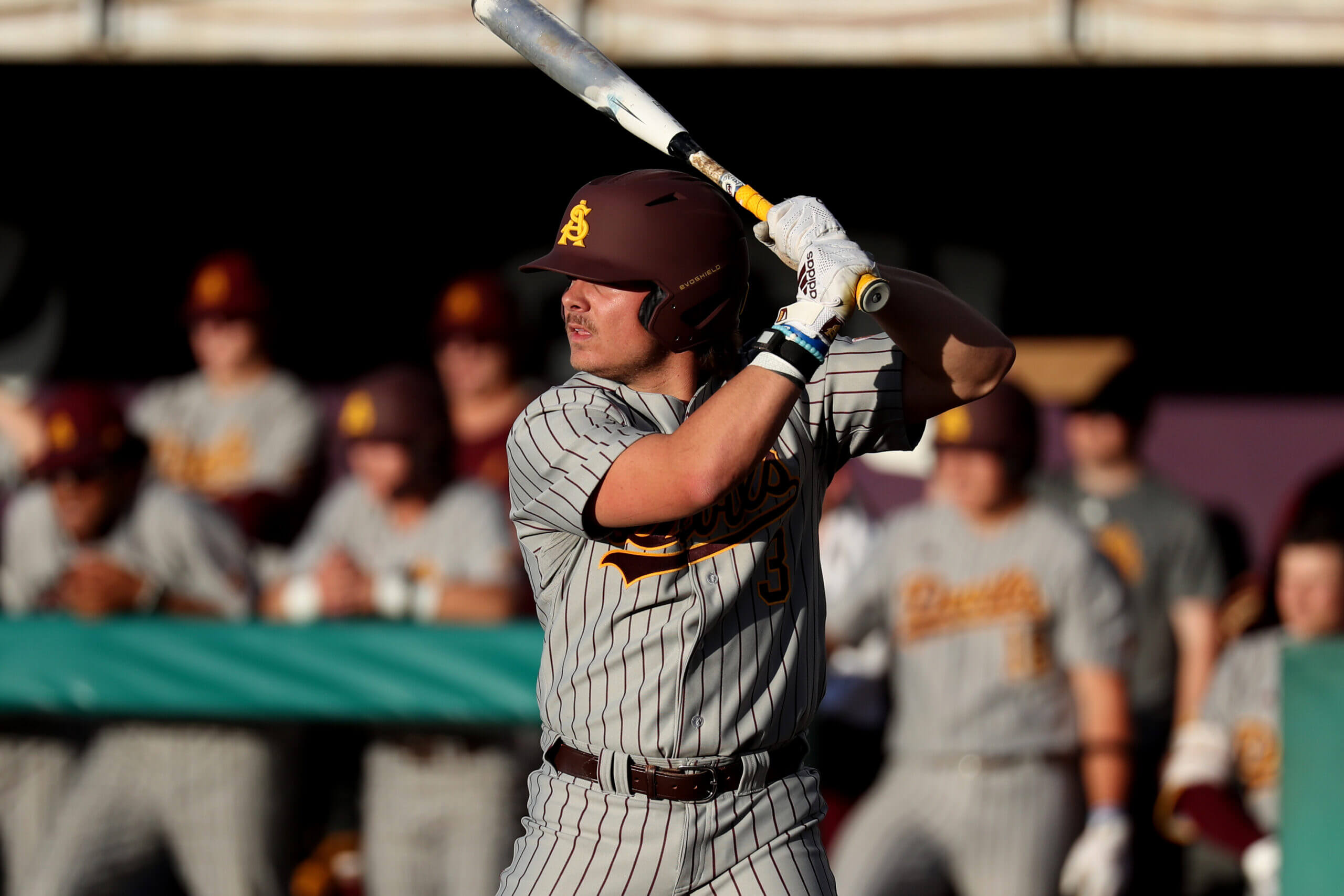
Nick McLain is the younger brother of the Reds’ Matt McLain. (Zac BonDurant / Icon Sportswire via Getty Images)
Nick McLain (3), the younger brother of Reds infielder Matt McLain, took off this year once he was fully recovered from a hand injury from last year, hitting .342/.457/.663 with more walks than strikeouts for Arizona State. He plays very hard and scouts say he’ll get the most out of his tools, for what that’s worth. Once he got going, he had one of the better swings in the draft, with a Barrel rate in the top 5 percent of the class. The main concern is he hasn’t shown he can hit good velocity, without a hit on anything registered over 93 this spring, while he’ll expand the zone somewhat against offspeed stuff.
Virginia outfielder Casey Saucke (4) won’t turn 21 until a week after the draft, so he’s one of the younger college players in the class. He’s got some bat speed and power but his hand load is so high and deep that he has real timing issues. He also expands the zone way too easily when he gets to two strikes. He’s probably an extra outfielder but does have everyday upside with some serious approach work.
Infielder Sam Antonacci (5) transferred from JUCO to Coastal Carolina this spring and hit .367/.523/.504 for the Chanticleers, with an extremely high contact rate on pitches in the zone and a swing that’s consistently in the ideal launch angle range, allowing him to get more out of his contact than you’d otherwise guess from his fringy power. He’s played short, third, and second over the last three springs and summers but isn’t great at any of them and may end up in left field.
Pitt right-hander Phil Fox (7) transferred from Gardner-Webb this spring and apparently purified himself in the waters of the Monongahela, going from a 15 percent walk rate in 2023 in the Big South to a 2.1 percent walk rate this year in the ACC. He reduced his glove tap, started getting down the hill a little faster, and went from throwing about 75 percent fastballs to over 90 percent fastballs. He’s 91-94 and does have at least an average slider. It’s straight relief but I’d like to see him get to Double A quickly to see how this all plays against pro hitters, because I don’t think you’re waiting on anything here to get him more ready for a middle reliever role in the majors.
The Guardians picked first, and I think they did well, taking the No. 2 player on my board in second baseman Travis Bazzana (1), who offers more probability than the guy I ranked ahead of him, outfielder Charlie Condon, and earned some of the highest plaudits for his makeup that I’ve ever heard. He was born and raised in Australia, playing in the Australian Baseball League as a teenager against much older competition, then jumping to Oregon State, where he raked for three years, including a .407/.568/.911 line this spring with 28 homers, more than he hit in his first two years for the Beavers combined. He hits the ball hard all the time, with excellent batted-ball metrics to back up his production. He’s limited to second base or the outfield, though, so the Guardians may eventually have to shift him to left. The savings they’ll probably get relative to the slot value allowed the Guardians to nab four high-ceiling high school arms with subsequent picks, which is probably the best way to approach that high-risk demographic — going for volume.
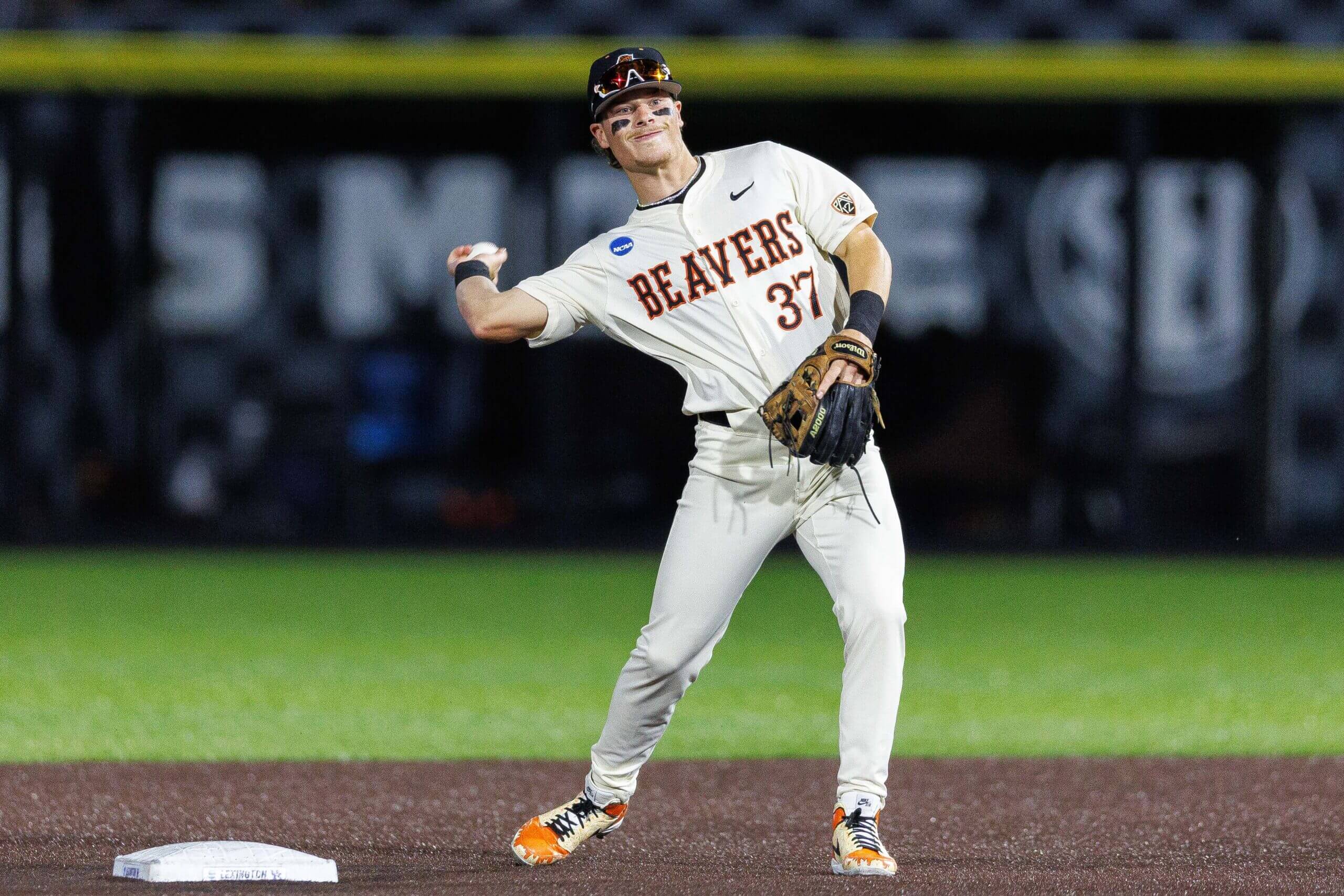
Travis Bazzana has the highest probability of meeting his ceiling in the class. (Jordan Prather / USA Today)
The Guardians came back with high school right-hander Braylon Doughty (CBA), who can really spin the ball and might have a plus curveball in the near future, working now with a low- to mid-90s two-seamer and a sweeper-style slider. I said before the draft I’d like to see him go to a traditional slider to give him a different look from the curveball, and he will need to develop his changeup. He’s only six feet tall and doesn’t have a ton of projection, but he also may not need it.
North Carolina State catcher Jake Cozart (2) had a breakout year and finished extremely strongly against good competition in the NCAA tournament. He’s a definite catcher who can show above-average power, even the other way, but chases offspeed stuff out of the zone too often.
Iowa prep right-hander Joey Oakie (3) will probably come in over-slot, as he’s one of the top high school arms in the class and had a strong commitment to the University of Iowa. He came out strong this year, 93-97 with a plus slider, but after some overuse his velocity tapered off to 91-92 and he had more trouble throwing strikes. He’s typically a low three-quarters guy with strong metrics on the fastball and the delivery, but more effort. He raised his slot a little this year, making the arm action cleaner but reducing the vertical approach angle that made him more appealing. Cleveland is about as good an organization for him as you’ll find. They have the technology. They can make him better than he was. (This quote would work better if his bonus was $6 million.)
Miami sidearming left-hander Rafe Schlesinger (4) moved into the Hurricanes’ rotation this year with disastrous results, including a 5.83 ERA and 107 hits allowed in 78 2/3 innings. He’s fastball/slider, using the breaker even more than the fastball to lefties, with a changeup he only uses against righties. This year he didn’t get hitters on either side out enough to matter. His arm slot makes it almost impossible for him to start, as right-handers will always have a huge advantage hitting against him.
West Virginia right-hander Aidan Major (5) moved from the bullpen to the Friday night role, but after some very heavy usage, including starts of 119 and 124 pitches, his UCL tore and he will probably need Tommy John surgery. He did continue to pitch intermittently, but his control was badly diminished. He’s been up to 97 but it’s a straight, lower-quality fastball. His upper-80s changeup has great fading action and is his best pitch, ahead of a short slider that’s only moderately effective against right-handers. It’s a relief profile with his fastball and short stature, although I wouldn’t be surprised to see Cleveland retool his repertoire once he’s healthy, perhaps adding a two-seamer.
Right-hander Cameron Sullivan (7) is 92-95 with at least a 55 slider that shows tight spin and some late tilt. The Indiana prep could really benefit from some delivery help as he’s athletic but doesn’t get down the mound that well nor does he finish much out front to get some better extension from his 6-2 frame. He’s still got some projection and definitely fits Cleveland’s archetype for pitching prospects. Sullivan was committed to Notre Dame and will almost certainly come in well over slot.
Rutgers left-hander Donovan Zsak (8) is a redshirt freshman who turned 21 two days before the draft began, so he’s eligible after just one year of performance where he struck out 39 and walked 20 in 35 innings for the Scarlet Knights. He throws almost all fastballs, 92-95, touching 99, with a curveball as his main secondary pitch and a changeup he only uses to right-handers. He’s probably just a one-inning reliever but he’s pitched so little that there could be something else here.
Right-hander Sean Matson (9) was born in Wilmington and went to Harvard, so obviously he’s going to be a superstar. Or a reliever, as he’s just 88-90 from a high slot as a starter with a slurvy breaking ball and some effort to the delivery. Right-hander Chase Mobley (10) will be another over-slot guy, as the Florida prep was committed to Florida State. He’s 6-6 but comes from a low three-quarters slot that reminds me of Eury Pérez’s delivery, getting up to 99 with two-seam life but struggling to hold the velocity or command his curveball. I think he may benefit from a slider given his arm slot.
The Tigers went all-in on high school players early again, a year after a draft that brought them their top two hitting prospects in Max Clark and Kevin McGonigle. Shortstop Bryce Rainer (1) was the top high school player on my board, a no-doubt shortstop with a 70 arm and plus power, including strong exit velocities to back it up. He’s a heady, instinctive player who shows good leadership on the field. I didn’t see great bat speed from him and I want to see him show he can turn on major-league average velocity.
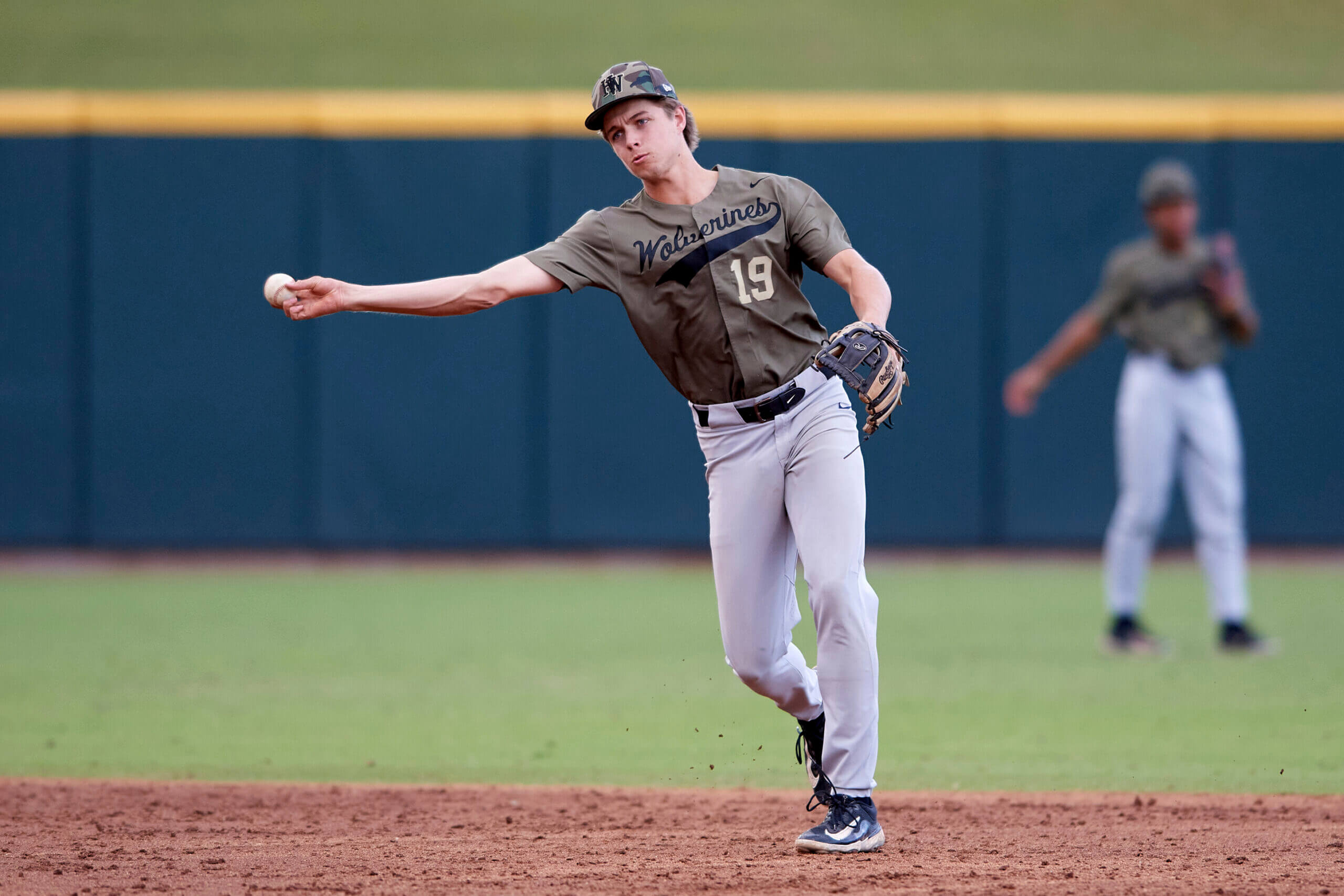
Rainer is a no-doubt shortstop. (Tracy Proffitt / Four Seam Images via Associated Press)
Right-hander Owen Hall (2) was one of the best high school projection guys in the class, working 90-94 now and touching 97 with a ton of room to fill out and gain some more velocity over time. His slider is plus and he spins the ball well, with a delivery that he repeats pretty well when he gets all the way around to land online to the plate. If I were drafting, which MLB still refuses to let me do because of some silly rule that I don’t actually work for a team, he’s exactly the kind of high school arm I’d target after the first round.
Lefty Ethan Schiefelbein (2B) was a reach for me at this spot, as he’s just low-90s without a ton of projection and his primary offspeed pitch is a slow 12/6 curveball. He’s completely off balance when he finishes his delivery, although I like how well he stays over the rubber before striding forward. He’s committed to UCLA.
Josh Randall (3) transferred to San Diego from Arizona this year after a poor freshman season in Tucson and a sophomore season limited to one inning by injury. He broke out in every way this year, throwing a 95-96 two-seamer with ridiculous sink and tail and a short upper-80s slider, generating a groundball rate over 55 percent. The right-hander has a low three-quarters slot and he doesn’t repeat the arm swing that well. I’d expect a bigger platoon split but he was actually better against lefties this spring, even without much use of his changeup. He hit 25 batters this spring, a 7.6 percent HBP rate, which is not a stat I typically have to calculate and was one off the NCAA lead which was, oddly, a pitcher at San Diego State. Too many fish tacos = too many hit batsmen?
Wake Forest right-hander Michael Massey (4) moved to the rotation this spring, making short starts on Sundays until his hamstring and back took him out of action, and when he returned he was back in relief. He had back surgery after the season to repair a bulging disc. He has an extremely short arm action, getting up to 95 with a hard slider, struggling enough against lefties that he almost certainly sticks in relief. Notre Dame shortstop Jack Penney (5) hit just .269/.406/.492 this spring and didn’t hit .300 in any of his three seasons in South Bend, although he does make hard enough contact — he just rarely swings, with more walks than strikeouts thanks to a 38 percent swing rate.
Oregon State commit Zach Swanson (9) is 92-95 with some arm-side run from an abrupt, rushed delivery that gives him a head-whack and definitely inhibits his command. The right-hander has a solid frame and plenty of projection left, with a lot of work to do to end up a starter. UNC-Wilmington right-hander R.J. Sales (10) was 93-94 as a starter with a power curveball in the low 80s and a hard cutter up to 89. His delivery is fine, with a high three-quarters slot, but it’s 45 command and control and the fastball plays down just enough that he may be more of a long man than a back-end starter — unless he boosts his strike-throwing.
Walker Janek (1) had a huge year at the plate for Sam Houston State, and as we got closer to the draft I heard more from scouts who said he might be an elite defensive catcher already, after hearing earlier in the spring that he was “just” above average. Whatever you think of the defense, he’s definitely staying back there, and he’s a hitter first, going gap-to-gap, showing a real two-strike approach, with some pull power that could get him to 20 homers. I learned at the draft that he pronounces his last name “YAH-neck, as in the thing you should protect.
The Astros gave up their second-round pick to sign Josh Hader to a forever deal, so their next pick was in the third round with Ryan Forcucci (3), a metrics darling out of UC-San Diego who was trending toward the first round in March but was shut down with an elbow injury that eventually required Tommy John surgery in June. He’s up to 97 with big fastball life and gets high spin on the slider, with a starter’s delivery but no history of staying healthy — he’s never thrown more than 53 innings in a season.
GO DEEPER
Astros prioritize college pitching on Day 2 of MLB Draft
Rice right-hander Parker Smith (4) is 92-94 with a 55 or better slider. While his changeup has good fade, it’s too close in velocity to his fastball, bumping 90 at its peak. He should at least go out as a starter given the chance for a real three-pitch mix and a decent delivery. Liberty right-hander Cole Hertzler (5) came to school as a two-way guy who had power at the plate but couldn’t really hit, eventually transitioning completely to the mound and joining the Flames’ rotation this spring. He’s got a starter’s delivery and his breaking stuff improved substantially as the season went along, giving him a true four-pitch mix led by a fastball that’s 92-94 and up to 97. He cuts himself off just slightly when he lands, so the glove-side command isn’t great, but it’s fixable. He’s a real sleeper.
South Alabama outfielder Joseph Sullivan (7) missed over a month with a broken hamate bone and his power was down all year. He was better as a sophomore across the board, striking out a little too often but with some power/speed upside in left field. Radford right-hander Dylan Howard (8) is a strike-thrower who works with the whole kitchen sink, up to 94 with a cutter, curve, slider, and changeup, working with a very long arm stroke that he somehow manages to repeat. There’s nothing plus here and he gives up too much good contact as a starter, so perhaps there’s relief future where the delivery gives him more deception once through the order.
Only two Royals have ever hit 40 homers in a single season; they may have just drafted the third in Jac Caglianone (1), who has 80 raw and smacked 68 homers in his last two years at Florida. He does chase out of the zone way too often, especially earlier in counts, and will need to cut that down even when he gets to Double A. I’d try him in right field, as he’s a good athlete for his size and first base wastes both his 80 arm and his athleticism, but it sounds like the Royals will at least start him as a two-way player.
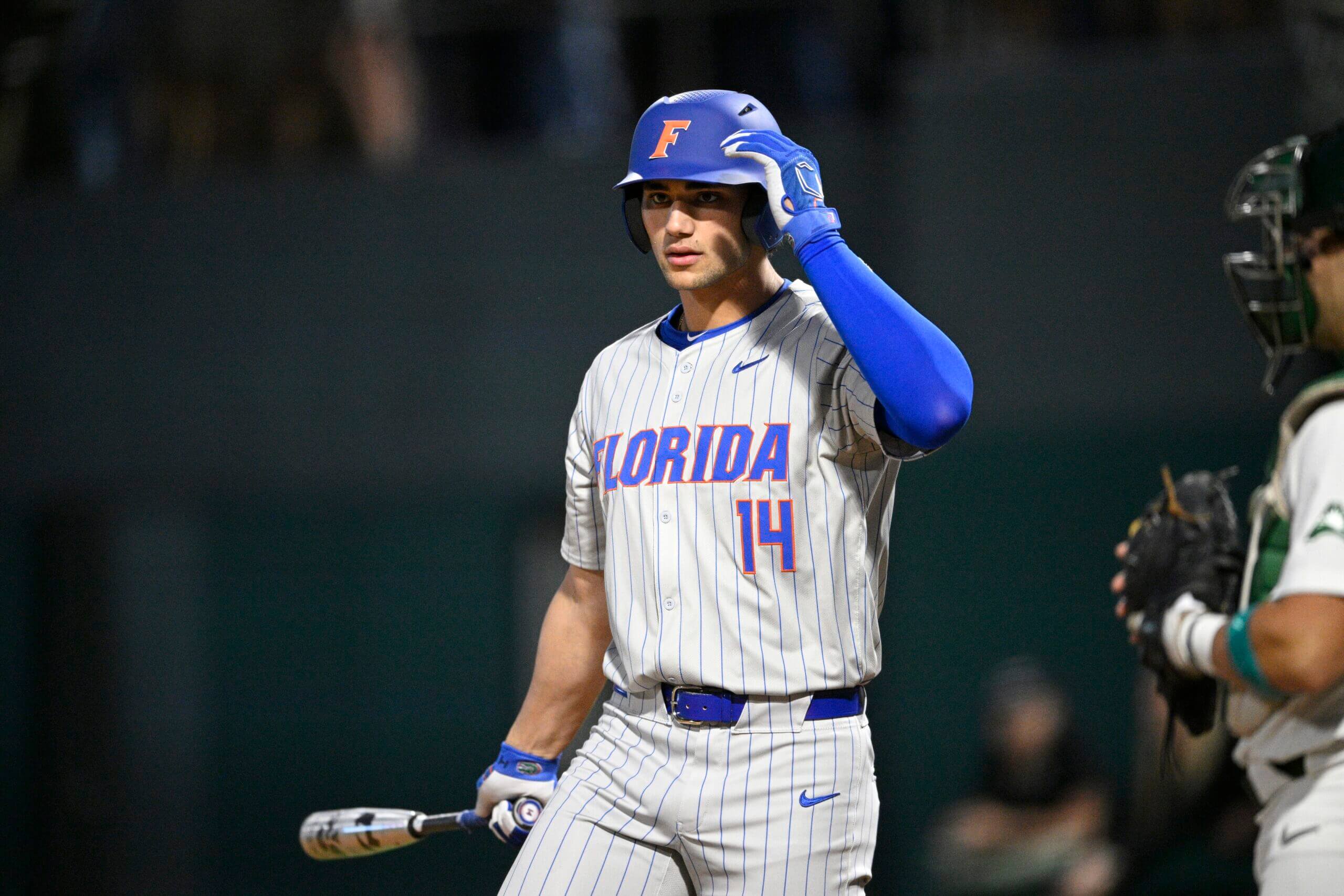
Caglianone has 40-homer power potential. (Phelan M. Ebenhack / Associated Press)
Off the mound, he’s 97 with a good breaking ball, but he throws very cross-body with 30 command. He walked 50 batters in 73 2/3 innings this spring, and he’s had some little scares with his arm after undergoing Tommy John in high school. Just tell him to give up pitching and go hit dingers already.
The Royals took one of the best projection arms in the draft in David Shields (2), a high school left-hander from western Pennsylvania who earned raves for his command and feel given his age. It’s a very easy arm action, producing a low-90s fastball and a 55 or better breaking ball. He cuts himself off when he lands, though, and that should be addressed sooner rather than later. He’s a former star quarterback who’s committed to Miami.
Tennessee right-hander Drew Beam (3) is 92-95 with a four-pitch mix, nothing plus, with his upper 80s cutter his best weapon. He throws a ton of strikes and can be effective when he’s locating, but he’s a bit homer-prone and doesn’t miss enough bats yet to be more than a back-end starter. Right-hander L.P. Langevin (4) is a Quebecer and pitched for Louisiana-Lafayette. The only way he could seem more French would be to walk out to “La Marseillaise.” He’s a straight reliever who comes from a low slot and gets big spin and ride on his four-seamer, throwing it 80 percent of the time, with some trouble with left-handed batters (.352 OBP allowed) because of his arm slot and mediocre changeup.
Beam’s teammate at Tennessee, A.J. Causey (5), had the better year, punching out 32 percent of batters he faced, but has less stuff and upside, throwing 89-92 from a low slot with some fringy secondaries. He looks more like a swingman than a true starter with his present stuff.
Right-hander Tanner Jones (6) transferred to Texas A&M from Jacksonville State and posted a 6.33 ERA as his 93-95 mph fastball comes in flat and he gives up too much line-drive contact. He has four pitches and may be better off throwing the cutter more and the four-seamer less to try to stick as a starter. Right-hander Dennis Colleran (7) had a 7.97 ERA in Northeastern’s bullpen this year, his first year back from Tommy John surgery. He was up to 100 with a 55 slider but gave up way too much contact for that kind of stuff.
The Angels took Tennessee star second baseman Christian Moore (1), supposedly with the idea of getting him to the big leagues this season. I think this is a big reach, as Moore is not a second baseman and probably ends up in left field, while at the plate he has a super-wide setup with no stride, and pitchers showed he’d chase offspeed stuff out of the zone. Moore did hit the ball very hard all season, though, and if you’re looking for a big exit-velocity guy, he’s near the top of the list.
GO DEEPER
Angels draft Tennessee infielder Christian Moore with eyes toward potential quick call-up
Right-hander Chris Cortez (2) is a reliever, working mostly in that role for Texas A&M this year, with a plus slider/sweeper and a fastball up to 101. He walks too many guys to be anything other than a reliever, but I could also see him moving to the majors this year given the stuff. Dallas Baptist right-hander Ryan Johnson (2C) walked just 14 batters all spring and finished third in Division I in strikeouts behind two top-five picks in Chase Burns and Hagen Smith. It is a bonkers delivery, though, with no pause up top, a very short arm stroke, and a motion I can only describe as “flinging the ball.” He comes from a low three-quarters slot and everything he throws moves toward his glove-side, so he has already shown a platoon split and needs something to get lefties out.
Texas A&M left-hander Ryan Prager (3) returned from Tommy John surgery to throw 97 2/3 innings for the Aggies with 124 strikeouts even though he pitches with just fringe-average velocity. He has excellent command and there’s enough deception between the delivery and his 55 changeup that hitters haven’t squared up the fastball like you might expect. He has an average slider as well, but everything is on the slower end of the velocity scale and I think he’s just going to have to keep proving it works as he moves up the ladder. Guys like this do succeed, but they’re rare.
Clemson right-hander Austin Gordon (4) punched out 31 percent of batters he faced in 39 innings but allowed 10 homers, all but one to right-handed batters. He’s 92-96 with a mid-80s slider and a very quick delivery that doesn’t take any advantage of his wiry 6-5 frame.
Right-hander Dylan Jordan (5) has a super-long arm action that he doesn’t repeat, often getting under the ball from a low 3/4 slot and struggling to get consistency to any of his three pitches. The Florida prep product is committed to Florida State. Miami (Ohio) right-hander Peyton Olejnik (6) has a narrow frame and is 91-94 from a low three-quarters slot. Hitters see the ball extremely late out of his hand, so everything has played up, with a 29 percent strikeout rate this spring and 38 percent in the MLB Draft League this summer. Oregon State closer Bridger Holmes (7) struck out a third of the batters he faced in his one year with the Beavers, throwing his slider almost three-fourths of the time from a true sidearm slot. He could be a righty specialist.
I loved Kaelen Culpepper (1) based on the swing and the defense at shortstop, and completely see why he ended up the Twins’ first-rounder even with concerns about his approach and contact quality. He’s very athletic with loose, quick hands, and when he gets everything synced up it’s a great line-drive swing that produces average power now. I know some teams had him in the second round because his chase rate was high, albeit not extremely so, and I think this is something that he can improve enough to make himself an above-average regular.
GO DEEPER
Twins draft college shortstops Kaelen Culpepper and Kyle DeBarge with first-round picks
Shortstop Kyle DeBarge (1C) hit 20 homers this year for Louisiana-Lafayette, but projects more as a high-average guy who’ll get to maybe average power at his peak. He didn’t homer at all on the Cape last summer and had just three doubles there. He’s an above-average runner with a fringy arm and probably moves to second base.
Tennessee third baseman Billy Amick (2) is a power-over-hit guy who tries to pull the ball too much and is very vulnerable to sliders down and away. He’s a fringy defender at third but has played a little first and the corner outfield in the past. He also missed less than two weeks this spring after having his appendix removed, which is impressive.
Left-hander Dasan Hill (CBB) was one of my favorite projection arms in the draft, a 6-5 pitcher who can really spin the ball and gets good tumbling action on his changeup. It’s average velocity now but you can easily see him adding as he fills out. Catcher Khadim Diaw (3) was born in New Jersey but is of Senegalese descent, so if he makes it to the majors, he might be the first player with that background. He played just 20 games for Loyola Marymount this spring around multiple injuries, and redshirted in 2022 due to a back fracture. The Twins announced him as a catcher, a position he hasn’t played much, with just 27 games back there for the Lions and seven more in summer ball. He’s got a good swing with some easy loft for power, with too much tendency to chase offspeed stuff out of the zone. He’s young for a third-year college player, turning 21 in late August.
Outfielder Jaime Ferrer (4) exploded for 22 homers this year for Florida State after hitting 16 total in his first two years there, and it’s consistent hard contact, just with a ton of chase, enough so that he’s going to have trouble hitting for average in pro ball. He played exclusively in left this spring but he’s probably a DH in the long run, and with his issues recognizing spin it’s hard to see him as more than an up-and-down guy.
Outfielder Caden Kendle (5) hit .387/.479/.590 as a senior at UC-Irvine, but with below-average power and speed he’s probably a money-saver pick at this spot. Coastal Carolina DH Derek Bender (6) has caught in the past but lost the job this year to a better defender. He destroyed the Cape last summer, hitting .374/.446/.557, absolutely bonkers numbers for a pitcher-friendly wood-bat league, but he hasn’t done anything like that in either year as a starter for the Chanticleers. The Twins announced him as a catcher, but he’s big and slow and seems extremely unlikely to be able to play it or any other position.
South Carolina right-hander Eli Jones (7) had a miserable year as a starter in 2024 but was much better in relief in 2023. The stuff was the same but hitters teed off the second and, rarely, third times they saw him. I assume they’ll return him to the bullpen and see if the results revert as well.
The Yankees went after college pitching in a big way this year, starting with the underrated Alabama righty Ben Hess (1), who gets great extension and has a full assortment of pitches, with a new two-seamer that I think will really help him keep hitters off the four-seamer, along with the potential for an out-pitch in the slider. He doesn’t throw his changeup much and may need to use that more for lefties. The Tide used him cautiously for most of the spring but let him work deeper into his last three starts, where he showed he could hold 94-95 into the seventh inning. I see a mid-rotation starter.
Vanderbilt righty Bryce Cunningham (2) is another tall, hard-throwing pitcher, 94-97 on his four-seamer with a plus change and fringy slider. The delivery works for a starter but his four-seamer is rather true and got hit hard this year. I would be zero percent surprised to see him show up next April with a sweeper and a two-seamer and run his way up to Double A.
Thatcher Hurd spent two seasons with LSU. (Steven Branscombe / USA Today)
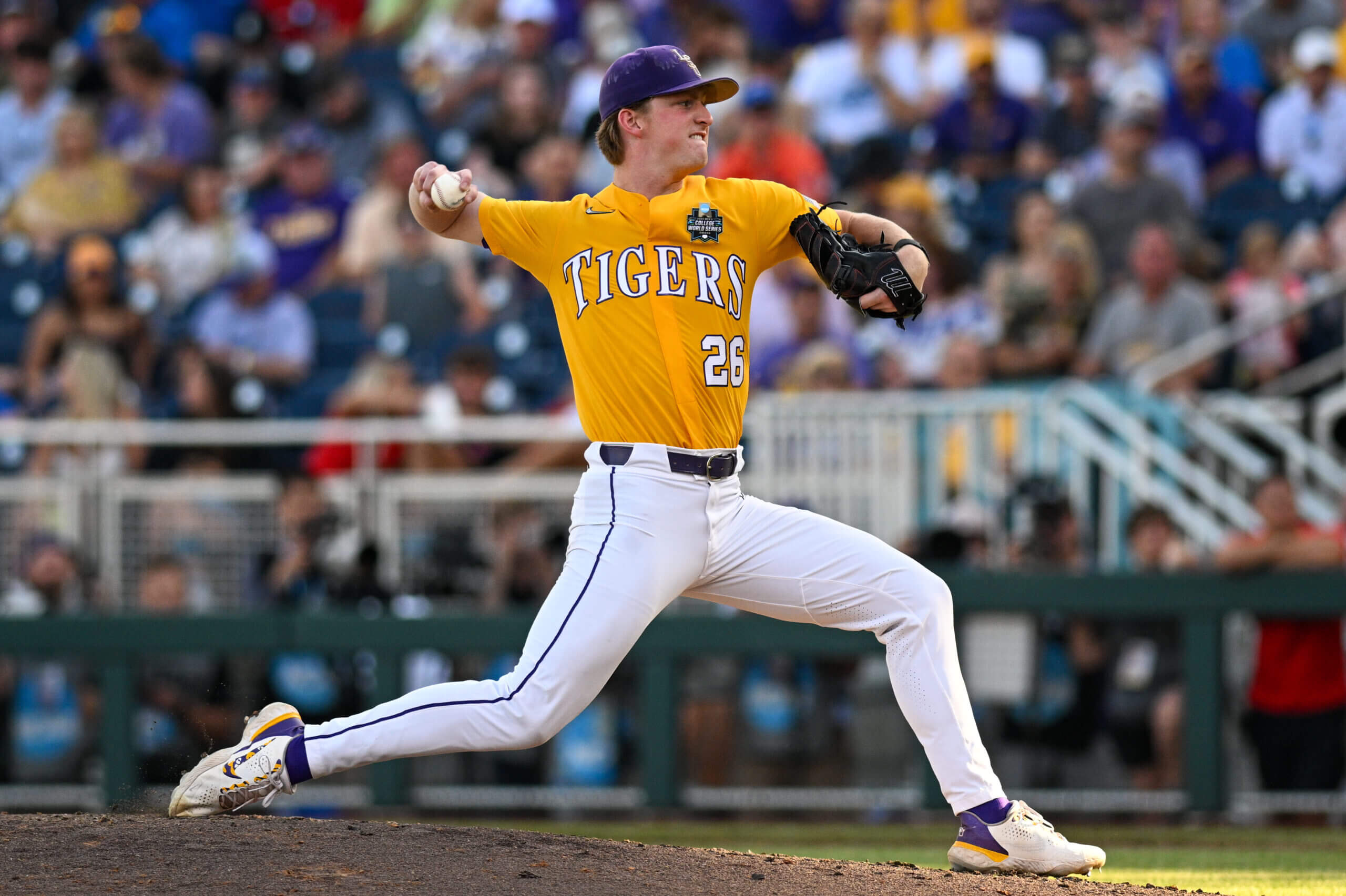
Right-hander Thatcher Hurd (3) has a great arm but went way backward in two years at LSU, with a 6.55 ERA in 2024 in a season that saw him banished to the bullpen. He’s still 94-97 and his short slider is up to 90, but it’s not that effective against same-side hitters and he allowed a .420 OBP to right-handers. He’s had trouble repeating his arm swing as well, leading to below-average control. I’ll be very interested to see how the Yankees work with him, as he’s certainly still got potential, with no track record of success. Right-hander Gage Ziehl (4) has plus control and works mostly four-seamer/slider, but the Miami product doesn’t have a real weapon for lefties right now and has been flyball-prone. Without adjustments, he’s going to end up a reliever.
Vanderbilt right-hander Greysen Carter (5) walked 69 batters in 73 2/3 innings for the Commodores, even though he throws his 96-98 mph four-seamer almost three-fourths of the time. He’s big and strong and the delivery is fine, so I don’t know where you go from here. LSU left-hander Griffin Herring (6) is a straight reliever who’s 90-92 with a 55 slider from a low three-quarters slot. He threw the two pitches almost with equal frequency, with plus control, and didn’t have a platoon split even with the slider coming in toward right-handers’ bats. Right-hander Wyatt Parliament (7) transferred from Rutgers to Virginia Tech but posted a 7.63 ERA with 14 homers allowed in 43 2/3 innings for the Hokies. He’s a four-seamer/slider guy, with good ride on the fastball at 92-94 and hard vertical break on the slider, but it’s all north-south and lefties slugged over .600 against him.
Oakland A’s
The A’s took the guy who walks a lot, because it’s 2003. Wake Forest first baseman Nick Kurtz (1) had the highest walk rate of any eligible Division I hitter, and he does have bat speed and raw power to go with it, so you can project a high OBP and 30 homers if he gets to a reasonable upside. He missed some time this spring with a shoulder injury that did concern some teams coming into the draft.
LSU third baseman Tommy White (2), sometimes known as Tommy Tanks, actually had his worst season as a college player this season, as pitchers threw him fewer strikes and he continued chasing stuff out of the zone. He does make a lot of very hard contact and has 25-30 homer power, while he improved his defense at third enough this year that the consensus among scouts was that he’d probably stick.
Lefty Gage Jump (2B), White’s teammate in Baton Rouge, has excellent pitch characteristics, with good ride on the 92-95 fastball and high spin on two breaking balls. It’s a violent, jerky delivery, though, and he’s already had one Tommy John surgery, while LSU worked him very hard down the stretch this year. I think he’s a reliever in the long run.

GO DEEPER
A’s go for power early with Nick Kurtz, Tommy White, add lefty Gage Jump on Day 1
Rutgers shortstop Joshua Kuroda-Grauer (3) is a plus runner with excellent contact skills, lacking much power and swinging extremely often, averaging under 3.25 pitches per plate appearance this spring. It’s a utility floor, but his path to be a regular probably requires more strength for harder contact and more patience.
Cal outfielder Rodney Green (4) had Day 1 potential coming into the year, needing a step forward at the plate to get there, but he took a step back instead, getting beaten badly on all kinds of offspeed stuff. He has at least 20/20 upside, though, and could stick in center, which makes him a great gamble at this spot in the draft. Right-hander Sam Stuhr (5) is 94-96 as a starter with a short slider that was very effective against right-handed batters. The University of Portland pitcher has a circle-change but may need to switch it up — or just throw it a lot more to improve his feel for it — to get lefties out. I think he has starter upside and is another great value pick here.
Josiah Romeo (6) is a Canadian high school right-hander who’s a sinker/slider guy, up to 94, and has pitched well in four outings in the MLB Draft League, walking just one batter out of the 56 he’s faced so far. The slider is a tick above average and he’ll have to work on his changeup, which he can telegraph out of his hand, with some projection left on his 6-3 frame.
Third baseman Davis Diaz (8) never took a step forward offensively in three years at Vanderbilt, hitting .248/.350/.385 this spring for the ‘Dores, but I have seen a good bit of him and think he’s a very solid ballplayer who should at least be a good organizational player for the A’s. They announced him as a catcher, so he could be an interesting conversion guy.
The Mariners took one of the most fun players in the draft in switch pitcher Jurrangelo Cijntje (1), who had a real breakout year for Mississippi State and is truly able to pitch with both arms. He’s much better from the right side, working with a full arsenal for that side, while left-handed he’s more cross-body but still has great arm strength. He’s a little undersized at 5-11 but athletic and pretty strong, with no concerns here about his ability to stay a starter long-term. How fast he moves in the minors may depend on whether he keeps trying to throw with both arms or if the Mariners decide at some point to have him focus on throwing right-handed.
GO DEEPER
The most intriguing player in this year’s MLB Draft? Switch-pitching phenom Jurrangelo Cijntje
They came back around with high school right-hander Ryan Sloan (2) with their next pick, a selection that will undoubtedly take up a large portion of their remaining draft pool, as they went almost exclusively with college seniors and grad students and possibly a professor or two for the remainder of the top 10 rounds. Sloan has been up to 100 with good extension and shows an above-average or better changeup with good fade, although he doesn’t use it a ton, I assume because he throws 100 and why do high school hitters that kind of favor? He’s also got a potential out-pitch in the slider and a very good delivery that has him online and on time. There’s risk in any high school kid throwing this hard, but he has everything else I’d want to see in a teenage pitching prospect.
Right-hander Hunter Cranton (3) was a redshirt senior at Kansas who’ll turn 24 in October. He moved to the bullpen this year and jumped to 96-98 with an upper-80s slider. It’s a long arm action and he’s already had shoulder surgery once, in 2020, but he’s a real relief prospect as long as he holds up.
Nebraska catcher Josh Caron (4) was the only other player the Mariners took in the top 10 rounds who wasn’t a college senior/grad student or a JUCO kid, all of whom will probably come in under slot to help give Sloan a wheelbarrow full of cash. Caron has plus power to his pull side and the other way, with just over half of his homers going out to right-center, but he’s more power than hit, hunting fastballs and struggling with offspeed stuff. He’s an adequate defender with a good chance to stick behind the plate.
The Rays certainly march to their own beat, in general and specifically in the draft, taking just one player off my top 100 and going heavy on high schoolers in a draft when that group was lighter than usual. Theo Gillen (1) has one of the best swings in the high school class this year, and if he hadn’t had shoulder surgery that inhibited his throwing and raised questions about his ultimate position, I bet he never gets close to the Rays’ pick at 18. Gillen is a 70 runner and takes an all-fields approach, with a pretty left-handed swing that produces 55 power in BP and just hard contact without more than average power in games. He’s nominally a shortstop but his arm will push him to center (best-case scenario), second, or left.
Émilien Pitre (2) was the second baseman for Kentucky this year, where he hit .301/.420/.519. He’s 5-10 or so and has no projection in his frame, but his batted-ball data was elite — he actually had a higher average exit velocity than Ryan Waldschmidt, although he didn’t have the same top-end EVs. It’s not a great swing, very short with a tendency to come down at the ball, producing a lot of groundouts, especially when he was on the Cape and had to use a wood bat. I find it hard to reconcile the player with the data here, and I wonder if this will really hold up when he’s not using the tin bat anymore, but I can’t argue with the measurements, either.
Infielder Tyler Bell (CBB) is a 19-year-old switch-hitting shortstop, committed to Kentucky, who got off to a slow start this spring but played better as the season went along. His swing can get too uphill and his top and lower halves get very out of sync. He’s athletic and has some bat speed, so there’s stuff to work with here, but I had him a little lower than this and thought he might be a good college candidate.
Catcher Nathan Flewelling (3) is very young, turning 18 in November, and has a very quick bat, with kind of a deep load that adds some unnecessary length to the swing, but definitely a good foundation — especially since he’s left-handed. He’s a work in progress behind the plate, with a good size and frame for the position. William & Mary right-hander Nate Knowles (4) led all Coastal Athletic Association pitchers with 112 strikeouts. He’s 89-93 with a hard curveball, possibly a spike, and a cutter that doesn’t have a ton of cutting action. He walked a man every other inning and it’s max effort on every pitch, so I’m inclined to think he goes to the bullpen.
Right-hander Jacob Kmatz (5) pitches well above his stuff, delivering a 3.38 ERA as Oregon State’s Saturday starter this year. He averaged 91 mph on his fastball and none of his five pitches is plus. He succeeds by throwing a ton of strikes and mixing up all of his pitches. I’m surprised he went here; unless the Rays see something here I don’t, he’s got a middle relief profile, even with the control and a decent delivery. Oklahoma State right-hander Janzen Keisel (6) lost his rotation job and then effectively his roster spot this spring, throwing just once after April 25, as he couldn’t throw strikes. It’s a big metrics fastball — 93-95, up to 99, with crazy life, coming from a low three-quarters slot that helps make it harder to hit, but he just can’t command the pitch. He has a solid-average slider and a changeup with a little late tail, which would be great if he could get ahead with the fastball.
Right-hander Ryan Andrade (7) has above-average velocity from a high three-quarters slot, but walked 43 in 63 innings (14.3 percent) for Pitt this spring, only a slight improvement over his 16.6 percent walk rate in 2023 for Rhode Island. Right-hander Jayden Voelker (8) pitched this spring for Northern Essex Community College as a J3, having redshirted last year due to a wrist injury. He struck out more than two batters an inning, with more than a walk every other inning, thanks to an above-average fastball and a 55 or 60 curveball with tight, downward break.
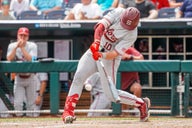
The Rangers had all of their picks for a change, albeit at the end of each round. I doubt anyone’s complaining about that, though. Stanford catcher Malcolm Moore (1) had a miserable season at the plate but his batted-ball data pointed to a lot of bad luck. His .229 BABIP is unsustainably low given how hard he hits the ball. He almost never whiffs on pitches in the zone, and his top-end exit velocities are elite, so there’s both feel to hit and some power potential in there. He’s a work in progress behind the plate and may never be more than adequate, but if he produces, it won’t matter.
GO DEEPER
A challenging season was a growth opportunity for Stanford catcher Malcolm Moore
Tennessee outfielder Dylan Dreiling (2) was a personal favorite of mine this spring because I bought the hit tool and like his workmanlike approach — there’s no plus tool here, but the guy just hits. He has a solid approach at the plate, makes hard enough contact for 55 power, and plays right field well enough to end up above average there. He does need a two-strike approach, as he tends to expand the zone too much when he’s in those counts. I think he’s a regular.
Outfielder Casey Cook (3) had a solid year for UNC, finishing with 18 homers, third on the roster behind Vance Honeycutt and a senior transfer. Cook gets over his front side too soon, but he does make a lot of above-average-quality contact. The approach isn’t great and he expands the zone with two strikes way too easily. I get the pick, though, given the contact quality and low whiff rates.
Right-hander David Hagaman (4) is recovering from the internal brace procedure on his throwing elbow. Prior to the injury, he was mostly 92-94 with a solid-average to 55 slider and below-average control, working entirely in relief for West Virginia. Left-hander Garrett Horn (6) was 92-94 with a 55 slider for Liberty before an arm injury ended his season in mid-March. Lehigh third baseman Rafe Perich (7) is a switch-hitter with real power from both sides of the plate who hit .382/.492/.572 for the (looks up Lehigh’s mascot) Mountain Hawks, with more walks than strikeouts. It’s the Patriot League, not exactly the SEC, but he hit even the best velocity he saw, and his contact was consistently hard. He’s big for third base, but not enough to move him off the position.
East Carolina right-hander Trey Yesavage (1) was the No. 3 pitcher on my draft board, and many others, I think, based on my conversations all spring. He’s 91-96 with a four-seamer and has a wipeout splitter with huge bottom and even some run that can make it look like a power slider. He has a breaking ball as a third pitch but prefers the splitter to hitters on both sides of the plate. He has a super-short arm action that works for him, although I can’t think of a starter with a comparable delivery. He suffered a collapsed lung when receiving a pseudoscience-y treatment back in May, but that shouldn’t present any long-term issues. I see a very quick-to-the-majors starter but maybe a lower ceiling of a No. 3.

GO DEEPER
Get to know Blue Jays’ first-round pick Trey Yesavage, the most polished starter in the class
Right-hander Khal Stephen (2) throws a ton of strikes, walking just 5 percent of batters this spring for Mississippi State, with a bunch of average-at-best pitches, 92-93 on the four-seamer with the slider a solid 50 and the changeup maybe a tick below. He comes from a high three-quarters slot that can make it hard to throw a traditional slider. He’s probably a back-end starter unless any of his pitches improve.
Florida prep left-hander Johnny King (3) won’t turn 18 until the end of July, and he’s got quite a bit of projection to his lanky 6-3 frame. He’s in the low 90s now with some funk in the delivery, with a big two-plane curveball that could end up an out-pitch for him. He rushes off the rubber and his arm can lag a bit behind his landing leg, although it’s all minor stuff that could be cleaned up in pro ball.
Third baseman Sean Keys (4) is the highest draft pick in the history of Bucknell, a power-hitter whose bat is ahead of his glove but who should stick at the hot corner. He hit very well on the Cape, which I know from personal experience is important in the Jays’ draft philosophy, even more so for a kid who didn’t face great pitching in the spring. The power is legit, and he’s got a chance to be an everyday guy.
Indiana outfielder Nick Mitchell (4C) doesn’t miss or chase, especially fastballs, with a lot of medium-quality contact but very little over-the-fence power. I do think he’ll hit the ball hard enough to keep his average up. He also hit well on the Cape. If he could play center, I’d say he was an everyday guy, but he’s a corner outfielder and might be a tweener.
Right-hander Jackson Wentworth (5) doesn’t have much fastball but he gets some bite on a mid-80s slider and had success with a straight change, with at least solid-average control this year. The Kansas State righty struck out 31.5 percent of batters he faced this year, although he struggled against a very advanced Virginia lineup in the Super Regionals. He’s a redshirt sophomore who’ll turn 22 next month. He missed 2022 after Tommy John surgery and had an 8.72 ERA in 2023 in limited time.
Aaron Parker (6) is a rather zaftig catcher, cast from the same mold as Alejandro Kirk, but he looks like he can hit, with quick hands that get the bat to the ball on time even after a very high — well, OK, not that high, he’s only 5-9 — leg kick. He has arm strength and can flash a plus pop time, although he rushes through his throws and ends up high too often. He does move well behind the plate for a bigger guy. Right-hander Austin Cates (7) transferred from JUCO to UNLV this year and had a solid year for the Runnin’ Rebels thanks to a plus changeup and a 3.9 percent walk rate. His fastball’s light, mostly 89-92, up to 95, and he’s probably a reliever as a result, but hitters did not care for his changeup one bit and that’s something to start with.
I don’t usually say much about senior signs, but outfielder Eddie Micheletti Jr. (8) is a Delaware product, from a high school a few miles from my house. He hit well on the Cape last summer as a rising senior and transferred from George Washington to Virginia Tech, where he hit .311/.464/.599 as a senior with a 15 percent strikeout rate. He’s got enough stick for the outfield but needs to work on his defense. Also, I know his high school coach and he’d never forgive me if I didn’t get him into the recap.
Right-hander Colby Holcombe (9) is 92-95, up to 98, with a plus slider, but he’s been awful at Mississippi State and in the New England Collegiate Baseball League because he can’t pitch with men on base. He allowed an OBP over .420 with men on base in the spring, and is doing it again for Newport this summer, much worse than he is from the windup. He posted a 9.05 ERA over two years for the Bulldogs, so I guess it can’t get worse?
(Top photos: Travis Bazzana (left) and Hagen Smith (right): Jeff Moreland / Icon Sportswire; Richey Miller / Cal Sport Media / Associated Press)