
When it comes to evaluating a signing or a trade, it’s important to take context into account.
What does the acquisition mean? How will it play out? How does it impact others?
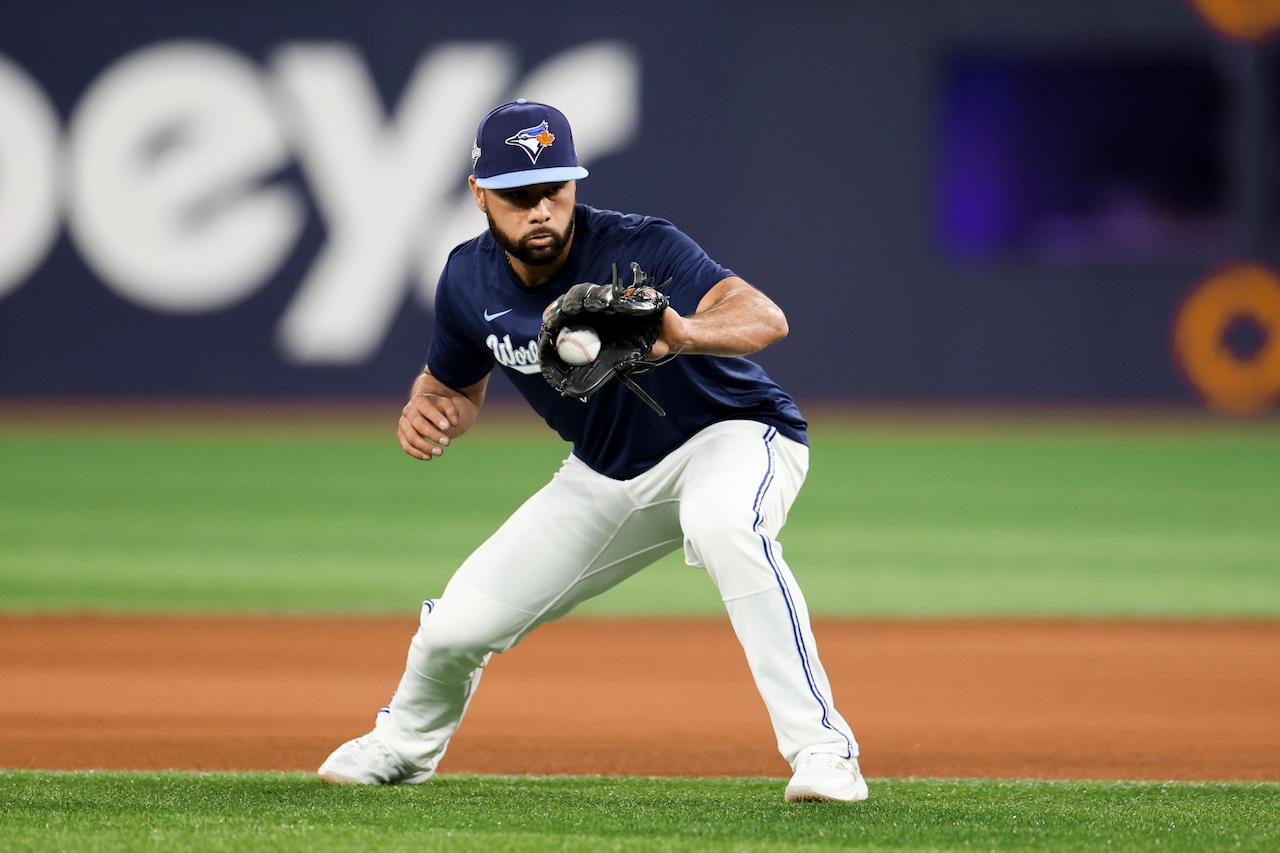
Those are all worthwhile questions to consider after the Red Sox earlier this week agreed to a one-year, $6 million contract with free agent infielder Isiah Kiner-Falefa.
For now, however, it’s impossible to properly grade the transaction because there’s so much we don’t yet know, and importantly, neither do the Red Sox.
For openers, we’re unsure of where Kiner-Falefa will play and/or how often. Both are important qualifiers.
If, for instance, the Red Sox intend to play Kiner-Falefa regularly at either second or third base, it can reasonably be said that the move was a disappointing one. While Kiner-Falefa is capable of being a plus defender at three different infield positions (third base, second base and shortstop), his offensive profile is decidedly underwhelming.
Never in his eight big league seasons has Kiner-Falefa posted an OPS as “high” as .700. For his career, he sports an OPS+ of 82, or 18 percent below average. And he’s never reached double-figures in homers in a single season.
As a defense-first addition, Kiner-Falefa qualifies as a useful — if somewhat overpriced — signing. The Red Sox now have someone to whom they can entrust the shortstop position behind Trevor Story. If they’re smart, they’ll manage Story’s workload more carefully this season and ensure that he comes nowhere close to the 157 games played — and 155 started — a year ago. At 33, it will behoove all involved to rest Story more frequently and Kiner-Falefa is a more than capable alternative.
It might also make sense for him to regularly see time at second or third, since for now, the Sox don’t have an established option at either spot. As promising as Marcelo Mayer may be, he’s not played more than a half-season worth of games at the pro level since 2021. Moreover, Mayer must still prove he can lefthanded pitching.
Fortunately, there’s evidence to suggest that the Red Sox do not, in fact, see Kiner-Falefa as anything close to an everyday player. Industry sources indicate the team is still very much in the market for another infielder, presumably one with far more offensive upside.
But even before Kiner-Falefa’s role can be determined, there’s this uncomfortable truth: his signing already will impact the Red Sox’ roster construction in the run-up to Opening Day.
The Sox have room for four depth position players beyond their starting nine. One will be a backup catcher, likely Connor Wong.
That leaves three spots, including one for Kiner-Falefa, who we presume won’t be an everyday regular and another for Masataka Yoshida, who will serve as occasional DH and an even more occasional extra outfielder. That translates into Mayer as the starter (likely) at third and someone else to play second.
Romy Gonzalez, who mashes against lefties, is the other reserve infielder, claiming the final bench spot.
Which means the Red Sox, with Kiner-Falefa aboard, don’t have room for a right-handed hitting extra outfielder, like Nate Eaton. They also won’t be able to carry Triston Casas or infield backups like David Hamilton and Nick Sogard.
Hamilton is a flawed player and has yet to demonstrate that he can be a reliable major leaguer. But for all his struggles, Hamilton’s career OPS isn’t much lower than Kiner-Falefa’s: .642 vs. .660. And while Hamilton doesn’t have the experience that Kiner-Falefa has, he has the athleticism and range to play second as well. Finally, Hamilton is far speedier on the bases, having stolen 57 bases over the last two seasons.
And there’s this: while Kiner-Falefa will earn $6 million, Hamilton could be paid a little more than the major league minimum and well under $1 million. Can the argument be made that Kiner-Falefa is worth an additional $5 million per season?
If Kiner-Falefa provides upgraded defense at three different infield positions, he’ll be a valuable addition. The Red Sox have focused on run prevention for much of the winter, adding three starting pitchers to their rotation. Now, they just need someone to catch the ball behind the pitchers.
Last year, the Red Sox infield was one of the most porous in the game, leading the league in errors while also grading out poorly in defensive efficiency (the percentage of balls in play converted into outs). Kiner-Falefa will help in that department, even if he only starts sparingly and is used as a late-inning defensive replacement.
But unless the Red Sox plan on winning a lot of games 2-1 or 3-2, the lineup continues to lack punch. Story led them with 25 homers last year, a modest total in the modern game. Willson Contreras will help deepen their lineup, but he’s effectively a power replacement for Alex Bregman.
As currently constituted, the Red Sox are woefully short on power. They finished middle-of-the-pack last year in home runs and managed just one in three playoff games. Sure, a full season of Roman Anthony will help and improvement from Wilyer Abreu can also be expected.
But days from reporting to spring training, the Red Sox are batting just .500 when it comes to fulfilling their stated two off-season goals. Yes, they bolstered the rotation by acquiring two front-of-the-rotation starters, but the lineup remains average, at best, when it comes to slug.
And no matter how much he contributes with his versatility and his glove, Kiner-Falefa isn’t changing that.