
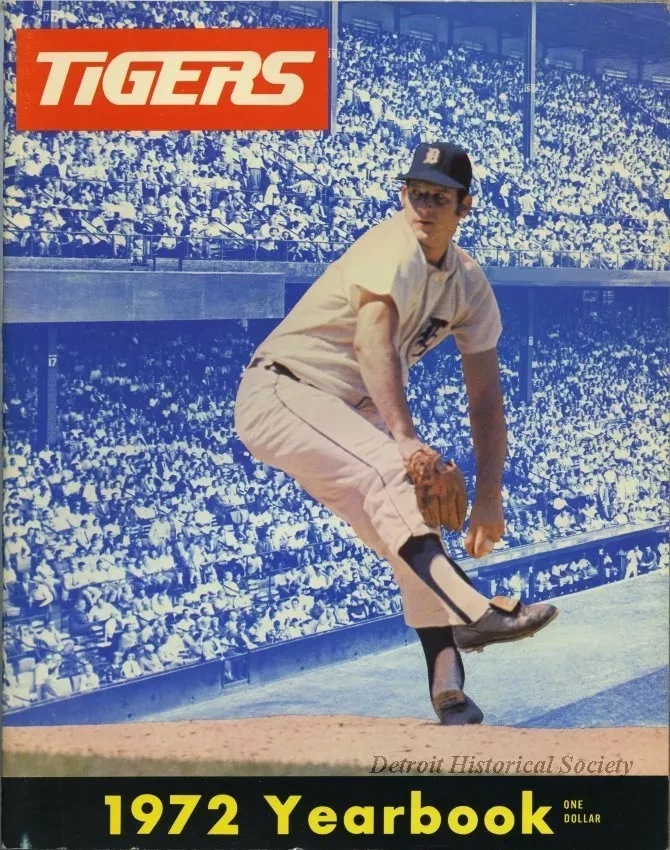
 Image courtesy of the Detroit Historical Society
I live in Ann Arbor. This week, I was sitting at a stoplight on State Street waiting to make a turn. The light was a turn on green only.
As I waited for the light to change, I noticed a gentleman in a pick up truck right behind me waving his arm out the window. I assumed he was a bit impatient and was expressing his frustration with me in not turning, even though the light was red. As I looked through the very rare glare of the winter sun through my windshield, I could still see him in my mirror waving his hat and yelling something. I pointed to the green light but he was very insistent.
I carefully opened the door of my car. As I stepped out, I saw he was waving a Detroit Tiger baseball cap. He yelled, “Your license plate! I can’t believe Mickey Lolich is gone!”
You see, for as long as I can remember, my license plate has been DETWS68. Over the years, I have often had drivers honk their horns or give me a thumbs up sign when passing me on the highway, approving of my devotion to my childhood heroes from the 1968 World Series Championship team.
I have read many beautiful comments about Lolich after his passing on Feb. 4 at age 85, and I wondered why his passing really hit home with so many Tigers fans. We all know about his historic accomplishments in the ’68 World Series, but it goes deeper than that. Lolich was a genuine blue-collar worker, long after he retired from baseball. For 18 years, he and his wife, Joyce, owned and operated a successful donut shop located in Rochester, which then moved to Lake Orion.
I have wonderful memories of stopping there as a young boy with my father to pick up donuts. And it seems that Mickey was always there, in the back, wearing an apron, making donuts. Customers would see him regularly come out to the front of the shop to chat with guests and the “coffee regulars.” It was big deal to see him up close in person.
In an Oct. 1984 interview with The New York Times, Mickey said of his donut shop, “A lot of the players I run into, there’s all kind of head-scratching. They think ex-major leaguers should be vice presidents of companies. Well, I’m the president of a company. It just happens to be my own and I just happen to make donuts.”
The New York Times noted that Mickey didn’t necessarily have to run the donut shop, despite his era of player not receiving the massive contracts of today. The article stated his biggest season salary was $125,000 and that he had set up a retirement fund to support his family for 12 years. Mickey didn’t live an extravagant life, like other athletes, and said, “Putting on the dog has never been my style. I drove a motorcycle, not a Cadillac.”
Mickey did live the life of a genuine motorcycle owner and was an avid outdoorsman. He often rode his motorcycle from his home in Washington Township to Tiger Stadium, sometimes with his wife riding on the back.
In a Feb. 1969 article for Cycle World, Mickey was asked how the Tigers’ front office felt about his beloved hobby. He said, “They raised a little bit of hell when they found out I ride motorcycles, but they said they guess it’s okay as long as I take it easy, and stay off the streets. And, I’ve been riding motorcycles since 1962, when I was 21.”
There were no airs about Mickey Lolich. He was an everyday working man, whether that was throwing an average of 290 innings every season, with a record 194 complete games and 41 shutouts or making donuts in his family-owned bakery.
No wonder his passing feels different to Tiger fans.