
It’s easy to imagine the Louis Varland trade as one of those moves that will linger in the background for a while. Varland and Ty France landed with a Blue Jays team that went on to win the American League pennant, and any contribution on a stage that big tends to tilt public opinion quickly. From the Twins’ perspective, the return has mostly been discussed through the lens of Kendry Rojas, a left-handed starter the organization remains high on despite a rocky performance in Triple-A after the deal. He’s the player whose upside so tantalized Derek Falvey and the front office that they were willing to deal away a local kid with several years of team control remaining.
That’s not quite fair to Alan Roden, the quieter piece of the trade and arguably the one who could make the whole transaction feel a lot different by the end of the 2026 campaign. When the Twins and Blue Jays lined up on the deal, Varland was still viewed by many as a controllable arm with upside, and France provided immediate major league depth. Rojas fits Minnesota’s long-term pitching mold as a young lefty with traits the organization believes it can develop. Roden, though already having played in the majors and being a more instantly recognizable name than Rojas, was viewed as a low-ceiling inclusion—a perception that has stuck.
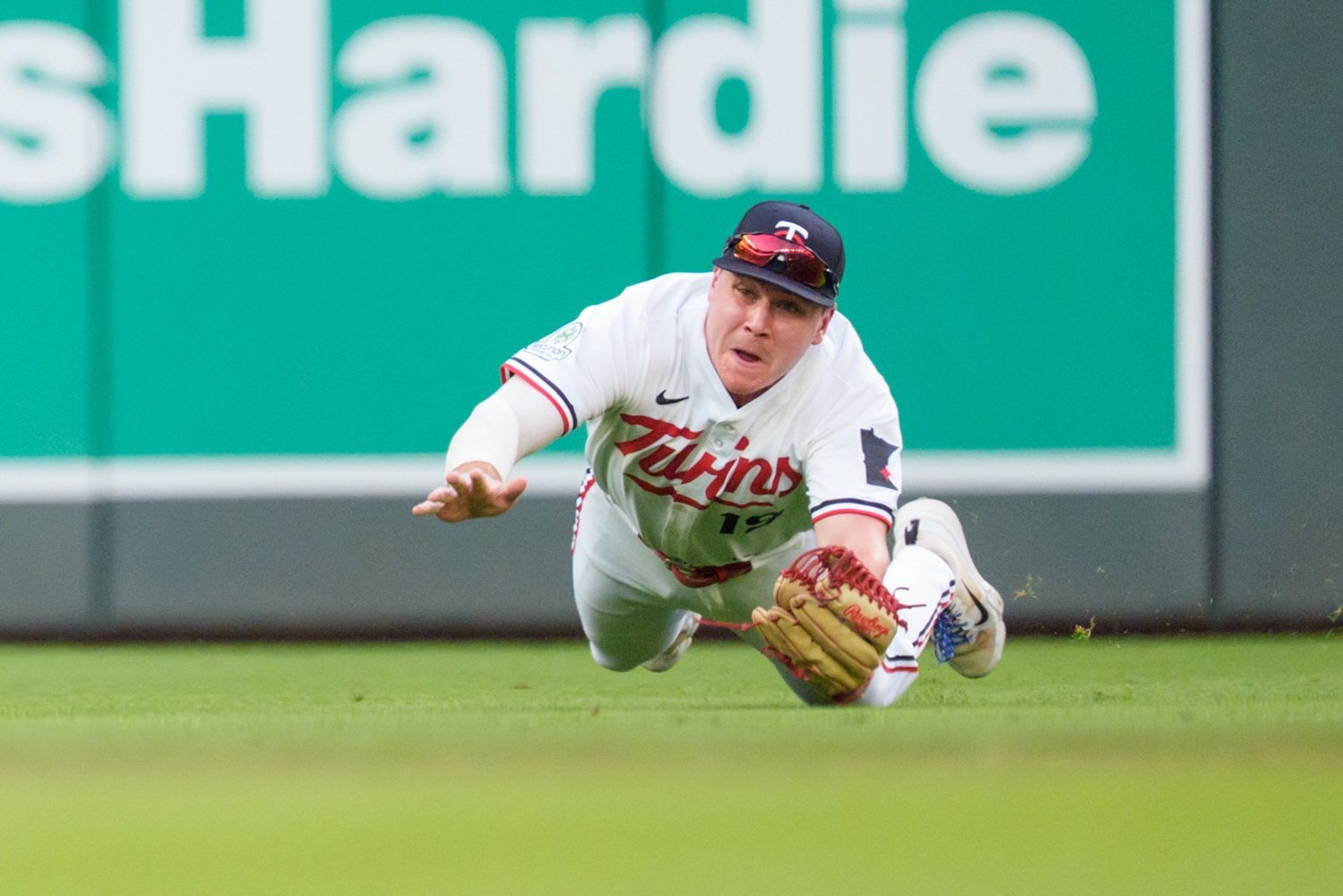
Though immediately brought to the big-league team, Roden wasn’t able to demonstrate his value down the stretch. His year ended on the 60-day injured list, after he sprained a ligament in his left thumb on a headfirst slide. Surgery followed, and the timing could not have been worse for someone trying to establish momentum in a new organization. The good news is that the 25-year-old is healthy now and had a normal offseason, which matters a lot for a player whose game is built on rhythm and consistency.
The roster math in Minnesota does him no favors. The Twins already have a logjam of left-handed-hitting corner outfielders, in Matt Wallner, Trevor Larnach, and fellow traded deadline addition James Outman. Roden adds another lefty bat to the mix, but his profile is different enough to matter. He is more athletic than Larnach or Wallner, can handle all three outfield spots, and does not bring the same swing-and-miss concerns as each of the other three do. In the minors, he showed an ability to hit for average, draw walks, and sprinkle in occasional power, rather than sell out for it.
Before the trade, Roden was one of the most productive hitters at Triple-A Buffalo, in the Blue Jays system. In 32 games, he slashed .331/.423/.496, with nine doubles, 3 home runs, and more walks (16) than strikeouts (13). That wasn’t just a hot month, either. Across four minor-league seasons, Roden has posted a .302/.409/.457 line, walking and striking out exactly 165 times each over 1,319 plate appearances. He also graded out as a plus defender, something that can give him a leg up on the other lefty corner options.
There are still obstacles to clear and questions to answer. Roden has two minor-league options remaining, while Outman is out of options entirely. That reality likely sends Roden to St. Paul, unless injuries open a door. At the same time, he is entering his age-26 season, and there isn’t much left for him to prove against minor-league pitching. Players with his track record tend to force the issue eventually, especially when their skill set fits multiple roster needs. He also needs to prove adaptable and smart in making changes to his swing and/or approach. Although the sample is small, his big-league time showed below-average bat speed, a flat swing plane and some issues with timing he’ll need to iron out. If he makes progress on those points this spring, though, he’ll rise especially quickly in the organization’s esteem.
There’s an important precedent to consider. Roden was the star of Blue Jays spring training last year and played his way onto the Opening Day roster by hitting .423 with a 1.287 OPS. He did exactly what organizations say they want from their prospects: He made it impossible to keep him off the roster. If he repeats anything close to that in Twins camp, the calculus changes quickly.
The Varland trade may not be judged fairly for another year or two, but it’s worth paying attention to the quieter parts now. Rojas still has a chance to develop into a meaningful arm. Roden might be closer to helping than most people think. If he turns his on-base skills, athletic defense, and low-maintenance approach into real production at the major-league level, the narrative around that deal could flip faster than expected.
Can Roden make the Twins’ Opening Day roster? Leave a comment and start the discussion.