

The Miami Marlins have a clearer idea of what their starting rotation will look like after striking a one-year ,$4M deal with Chris Paddack on Monday.
Drafted by the Fish in 2015, Paddack has seven seasons of MLB experience, but it’s been a bumpy road for him. After a relatively successful yet injury-riddled first three seasons with the Padres, he never regained his footing. Last season between the Tigers and Twins, Paddack had a 5.35 ERA and 5.03 FIP through 158 innings. Not ideal outcomes.
The Marlins are making this move with the expectation of extracting more value out of his Paddack than his most recent teams did. How could they do that?
Let’s begin with what Paddack does well. He limits walks and, if healthy, can eat innings for the Marlins. Paddack was tied for 10th in all of baseball with a 5.5% walk rate (min. 150 IP). Paddack’s four-seam fastball is metrically appealing as well, combining Paddack’s seven feet of extension with efficient spin, high induced vertical break, and good command at the top of the zone.
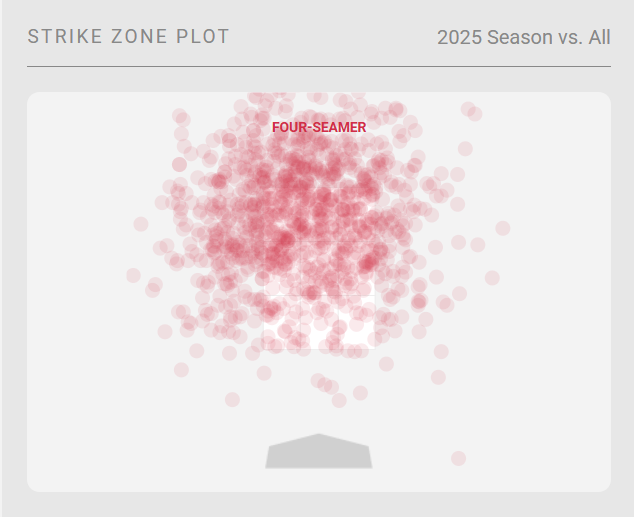
The issue is, Paddack has no reliable secondary offering and that leaves him too reliant on his fastball. Even with good fastball data, the pitch’s velocity is ordinary at 93.7 mph, leaving it vulnerable to damage, especially when hitters anticipate it coming.
bGJlQlJfWGw0TUFRPT1fVXdJRkJnWUNYZ0VBQUFCWFV3QUhVRkJmQUFNRlZnUUFWbFlFQkFZRVVBWUhWRkJm.mp4
The Marlins ought to work on the rest of Paddack’s arsenal to keep opponents off balance.
Paddack’s changeup was his second-most-used pitch last season. The pitch has graded out well per FanGraphs’ stuff model in years past, although it was a below-average pitch in 2025. The changeup is commanded very well and generated a lot of chase compared to the MLB league average with a 42.6% O-Swing. With that being said, it was hit hard when catching too much of the zone. Adding more depth on the pitch or tweaking its location could make a big difference.
MTZxbjNfWGw0TUFRPT1fQmdaU1Vsd0hYMUFBWGdGV0F3QUhCUThBQUFNRVcxRUFVRlVGQndzQ0NGWUdBZ1FD.mp4
Paddack also has a large, droopy curveball that he uses to steal called strikes. Overall, though, it is not very useful.
The usage of his slider went down from 2024 to 2025. I believe the Marlins should reverse that trend and look to expand on this pitch, modifying it into a sweeper, as they’ve done with other arms. It could be effective against righties and fit into the east-west approach that he has tried adopting recently.
Because Paddack naturally spins the ball well, he most likely will never develop an above-average sinker, but that does not mean he cannot use the pitch effectively. His sinker limited damage in 2025, which is a plus, but induced a ton of contact (90%) and was hit for line drives often. I predict that the Marlins will encourage him to continue using it vs. righties so that they aren’t always sitting on his four-seam.
ZFh6QllfWGw0TUFRPT1fVWdkU0IxSldYd1VBQVFjRFZRQUhBZzlXQUZsVFZ3QUFBUVFCVmdVTlZGWlRVd1Jl.mp4
Lastly, the cutter was poor and not commanded well in 2025. Paddack simply may not have a “feel” for that pitch.
Just eating a similar amount of innings as he did last year would make Paddack useful to the Marlins. But in order to feel genuinely satisfied with their investment and get 1 WAR of production out of him, they’ll have to tweak his pitch usage and sequencing.