
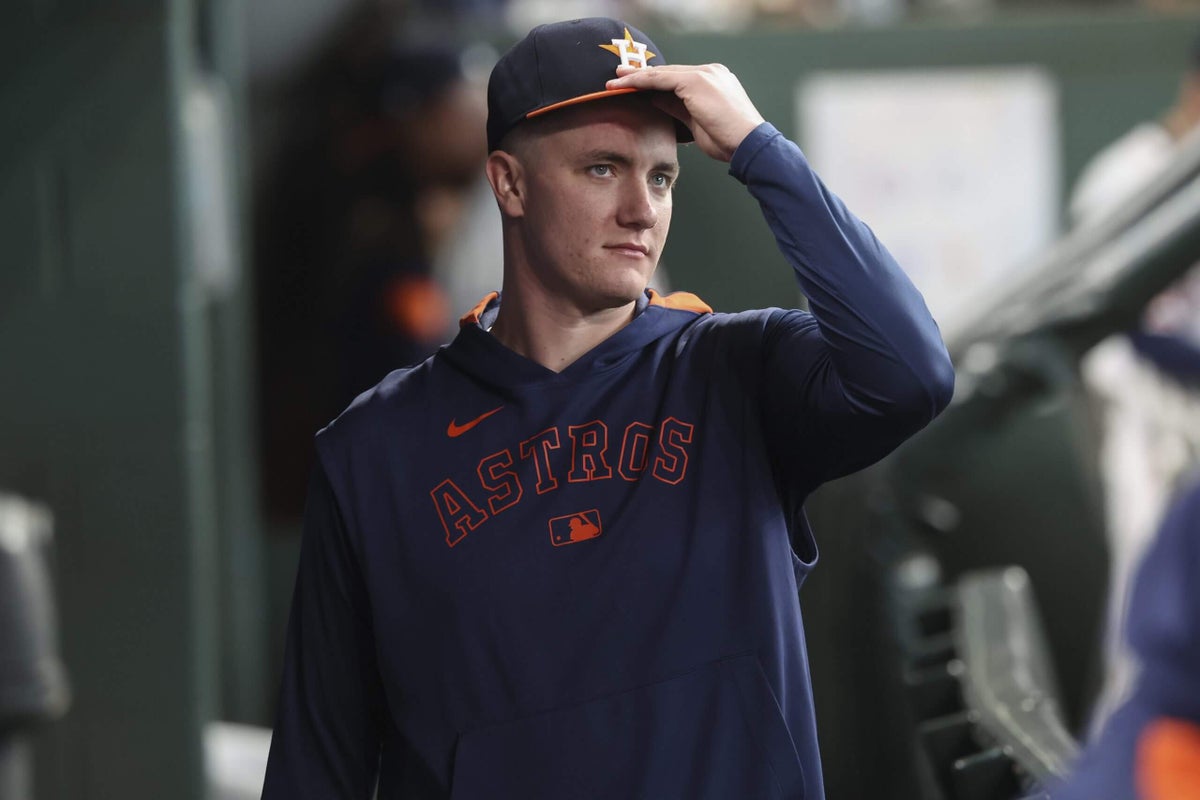
WEST PALM BEACH, Fla. — Hunter Brown’s Monday afternoon flight from Houston landed in West Palm Beach around 3:30 p.m. Before disappearing to a rental home, Brown planned to play catch at the Houston Astros’ spring training complex. Twenty seconds after he arrived in the building, the schedule changed.
Manager Joe Espada summoned Brown into his office. The two men spent most of January preparing for the season at Daikin Park and Espada thought about conducting this meeting there, perhaps after one of Brown’s bullpen sessions. Doing it on the eve of pitchers and catchers reporting to spring training felt more meaningful.
“When I had my initial meeting in there with the pitchers,” Espada said before their first workout on Wednesday, “I wanted them to know who is going to lead this rotation.”
Brown being named the Astros’ Opening Day starter will be the least surprising revelation of this team’s six-week stay in South Florida. He finished third in American League Cy Young voting last season, completing his ascent to acehood. Framber Valdez’s departure to Detroit removed the only possible roadblock to Brown’s first career Opening Day nod.
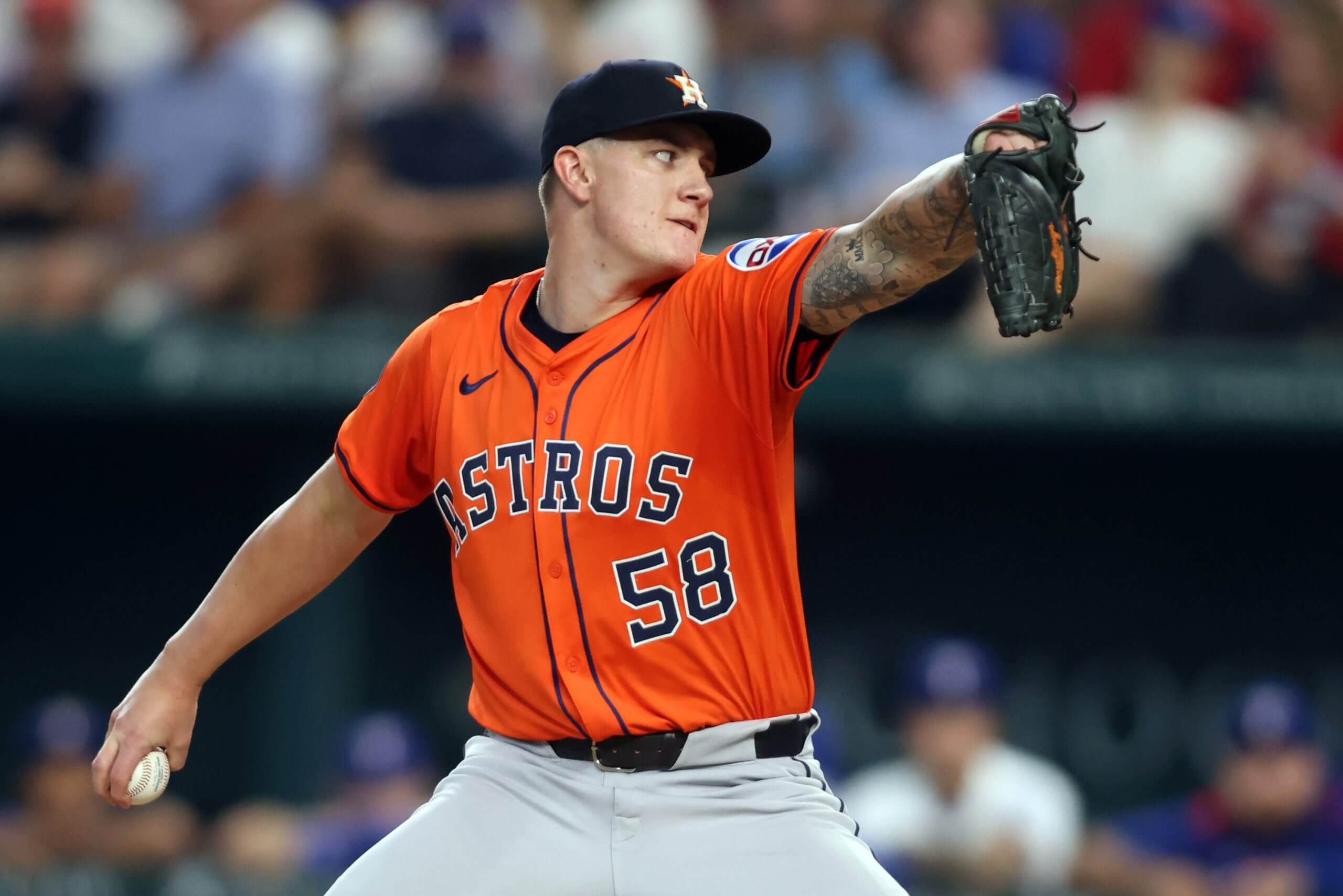
Hunter Brown will almost certainly be Houston’s Opening Day starter. Tim Heitman / Imagn Images
“It’s a big deal for me,” Brown said. “Your whole career, when you’re a little kid, that’s the stuff you dream about.”
Realizing it on the eve of spring training may have served a double meaning. Both Espada and general manager Dana Brown have cast at least some doubt on the team’s clubhouse leadership in the past year. On multiple occasions, both men have brought it up when discussing Carlos Correa’s return during last August’s trade deadline.
Correa is the consummate clubhouse and team leader. Jose Altuve, too, but in a far less demonstrative fashion than Correa. Both men serve as a conduit between the clubhouse and Espada. Now, count Brown among that group.
“I told (Brown) being the ace comes with some responsibilities,” Espada said. “He is the guy that’s going to get us going and people are going to be looking up to him.”
“There’s a lot of new faces in there and I think he’s the right guy to lead the charge.”
It’s something Espada seemed hellbent on making clear from day one.
“It’s high praise and it’s a big compliment coming from Joe, but I think the way you carry yourself day in and day out and the way you prepare kind of irons some of that stuff out,” Brown said. “I expect that of myself, to be the leader, and I don’t think it’s anything surprising or anything like that. I would think he would think that of me anyway.”
Though he said trade talks have “slowed down quite a bit,” general manager Dana Brown did not sound like someone stopping his pursuits. That Brown did not take the chance to establish a cutoff date or deadline for his negotiations only reinforced what has been apparent all month: the Astros are exploring any avenue to create a more functional roster prior to Opening Day.
“When you’re running a major-league roster, you try not to put deadlines on yourself,” Brown said on Wednesday. “You just kind of let it happen organically. There’s a lot of things that could happen — guys come up sore all the time. I don’t anticipate putting any deadlines on any of these moves. We’ll keep it competitive all the way through and we’ll make those tough decisions in the final week.”
Discussions are still centered around third baseman Isaac Paredes, who does not have an everyday position within Houston’s infield surplus. Two of the most prominent teams to express interest in Paredes — the Boston Red Sox and Pittsburgh Pirates — made additions on Monday afternoon that may lessen the likelihood of landing Paredes.
Neither Paredes nor first baseman Christian Walker — the other infielder available in talks — has reported to camp yet. Position players are not mandated to arrive until Sunday, the day before Houston’s first full-squad workout. Presuming both infielders remain on the roster, both will endure a deluge of questions after a winter’s worth of speculation about their organizational standing.
Perhaps, then, a move before Monday would be beneficial. If Brown had his druthers, would that be the best course of action?
“With trades, you just never know,” Brown said. “Other teams are having conversations and I’ve seen it where a trade could come together within 12 hours. I’ve also seen where it takes six weeks. It’s so unpredictable. But look, if we feel like we can make a move that will make the team better, we’ll consider that.”
Tatsuya Imai’s first bullpen session turned into the sort of spectacle only seen in spring training. Most of the Astros’ front office lined the bullpen fence to watch their prized free-agent pitch for the first time. Espada joined in, as did a sizable contingent of Japanese reporters. Closer Josh Hader stood inside the fence a few feet away from Imai’s mound for a closer look.
Imai conducted three interview sessions — one before the workout with English reporters, another with Japanese reporters and a follow-up with the Japanese group after his bullpen session. His engaging personality is apparent, even with a language barrier.
Pressed for his favorite part about Florida, Imai laughed while reminding a reporter that this is just his second day in the state. Asked about the excitement of seeing Kevin Durant drain a buzzer-beating shot last month from owner Jim Crane’s courtside seats at Toyota Center, Imai replied, “That’s inspiring and something I should definitely follow up.”
Slotting in as a solid No. 2 starter would suffice for an Astros rotation seeking stability behind Hunter Brown. Imai must navigate the transition from NPB and Astros officials are committed to listening to his feedback — even if it runs counter to some of their preferences.
Though Imai said last month he would skip the World Baseball Classic to help facilitate a smooth move to MLB, he informed Astros officials on Tuesday that he is one of six pitchers included in Team Japan’s designated pitcher pool for next month’s tournament.
Tournament rules allow for any of these six pitchers to be summoned as substitutes after pool play. Imai’s inclusion in the DPP will not affect the Astros’ plans to build him up or his schedule. If Imai’s services are required, Dana Brown said he would serve as a reliever.
“I project they probably won’t need him. I think they have a lot. But if they need him, we’ll put a plan in place so he won’t hit any bumps in the road,” Brown said.
Should Team Japan advance out of Pool C, its quarterfinal games would be held in Miami — less than an hour from the Astros’ spring training facility. Safeguards seem to be in place, but the tone of Dana Brown’s comments indicated he still might be wary of the setup.
The Astros have no major-league pitchers participating in the World Baseball Classic. Neither Carlos Correa nor Jose Altuve will play, either, after failing to secure necessary insurance. Last month, Correa told The Athletic that Crane called him during the process and told him “to focus on the team and spring training (and) obviously he traded for me to win a championship here.”
“I always like (for) our pitchers, if we have the opportunity, to build them up the way we want to build them up here,” Brown said. “The fact that he’s a replacement, that’s one thing. But these guys, it’s their prerogative. If they want to go, it’s up to them. But we like to build our guys up here as a preference.”