
SCOTTSDALE, Ariz. — The Giants were intent on adding a second baseman this winter. They couldn’t land Brendan Donovan. Or Nico Hoerner. Or CJ Abrams. Then, a week-and-a-half before spring training, they landed Luis Arráez, a three-time batting champion with a divisive skillset, on a one-year deal.
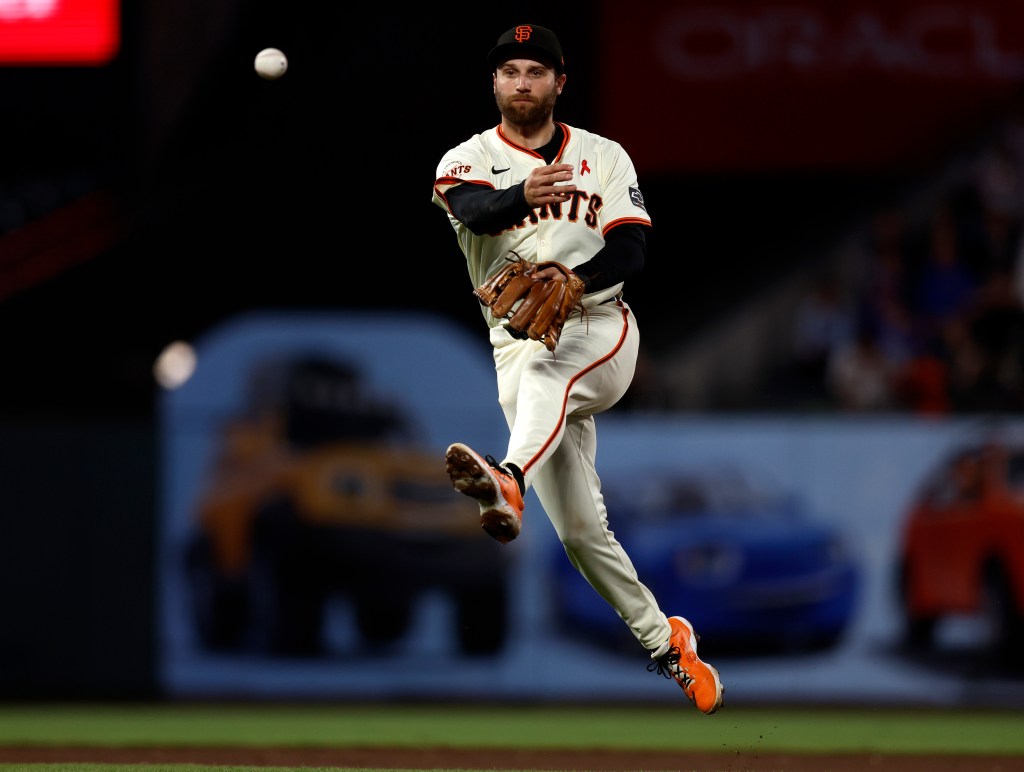
For Casey Schmitt, the ripple effect was obvious. Despite an encouraging season, one where he grinded through multiple brutal injuries, Schmitt will transition from starting second baseman to San Francisco’s utility man.
“Casey did make some big strides last year,” said president of baseball operations Buster Posey on Tuesday. “(Christian) Koss, same thing. Adding a guy like Arráez, I think, is an opportunity for a guy like Casey and a guy like Koss to learn from, as well as they continue their development. And then it just gives us another layer of depth in our infield to have Arráez.”
Having played all four infield positions, Schmitt is plenty qualified for the role. Still, there’s an argument that Schmitt, who turns 27 in March, deserved a chance to start at second base — and that the Giants should’ve dedicated the $12 million they spent on Arráez to its pitching staff.
Schmitt’s third season in the majors was his best to date, one that ended with him seizing the starting second baseman job. His numbers don’t leap off the page but he totaled career-highs in homers (12), RBIs (40) and games (95) while posting a .706 OPS (101 OPS+).
The former second-round pick struggled for the first two months, missing time due to a left oblique strain. When Matt Chapman hit the injured list, Schmitt took off as Chapman’s temporary replacement. Before Chapman’s injury, Schmitt had a .521 OPS over 58 plate appearances. From June 10 onward, Schmitt posted a .742 OPS over 290 plate appearances.
That performance is especially impressive considering his body was a magnet for baseballs.
On June 15, the day the Giants traded for Rafael Devers, Schmitt fouled a pitch off his left foot and left the game.
On June 25, Schmitt got nailed in the left wrist by a 95.2 mph sinker from the Miami Marlins’ Calvin Faucher.
On August 15, the Tampa Bay Rays’ Edwin Uceta nailed Schmitt on the right elbow with a 93.3 mph fastball, forcing Schmitt to leave the game.
On September 1, Chase Dollander, who played for new manager Tony Vitello at Tennessee, hit that same right elbow with a 95.7 mph sinker.
Schmitt described the season as “a little bit of a grind physically and mentally,” but thought the season went well overall. He conceded that the left wrist ailment affected his swing, particularly his ability to hit the inside fastball.
The wrist kept barking after the season, and Schmitt underwent surgery in December to remove the carpal boss in his left wrist. He’s a little behind schedule compared to other position players in camp, but has one more week of his hitting progression before being fully cleared for all baseball activities.
Assuming health, Schmitt is the overwhelming favorite to win a spot on the bench as a utility player. Schmitt, who has dropped five to ten pounds, said he hasn’t done any work in the outfield aside from shagging fly balls, and Vitello said the Giants haven’t discussed getting Schmitt reps in the outfield.
“It just seemed to be a season of interruption for him,” Vitello said. “For him to do what he did and look back on it and still gain valuable reps … he should take confidence in that he was able to accomplish things, but he also he was able to build up some experience.”
Added Vitello: “To me, if he’s of the right mindset and he prepares the way I think he will with Wash, he kind of becomes a weapon at third base and second base defensively.”
Schmitt isn’t the only primary infielder affected by the team’s signing of Arráez.
For Koss and Tyler Fitzgerald, the path to an Opening Day roster spot becomes more unclear. Given the positional inflexibility of Arráez and Rafael Devers (and potentially Bryce Eldridge), it’s pretty much a prerequisite for Fitzgerald and Koss to play in the outfield.
Fitzgerald and Koss aren’t unfamiliar with grazing the grass. The former has played 61 combined games in the outfield in the majors and minors, while Koss has seen time in the outfield in both the minors and the Puerto Rican Winter League.
“I think grabbing reps voluntarily is important, but also it’s on us, if we see a point where it’s like, there could be a day in May where this guy needs to help us at this position, then we need to put him that position in spring training,” Vitello said.
Fitzgerald has already spent time with both the infielders and outfielders this week. On Wednesday, he took grounders at shortstop while Schmitt and Chapman fielded grounders at third. On Thursday, he worked with the outfielders, fielding fly balls in center field and right field, then took batting practice in the same group as Jung Hoo Lee and Heliot Ramos.
“I have heard reports that (Fitzgerald) is moving in the box well,” Posey said on Tuesday. “We’ll get some looks at him on the infield, potentially in the outfield as well and see if some of that versatility will add another layer of depth.”
Fitzgerald said he spent “99 percent” of the offseason working as an infielder but understands the need to get more reps in the outfield. Koss has yet to report to camp, but position players do not report for a couple days.
“We signed Arráez, so now my best chance, barring any injuries, will probably be for me to play better in the outfield and get more reps out there,” Fitzgerald said. “That’s something that I’ve talked to the coaches about. … It’s going to be a little bit of a balance and trying to find a new routine. I did some of that in the first half in ‘24 and I started to get a good routine. It’s all about just communicating with the coaches and trusting that they’ll put me in the best spot to succeed.”