
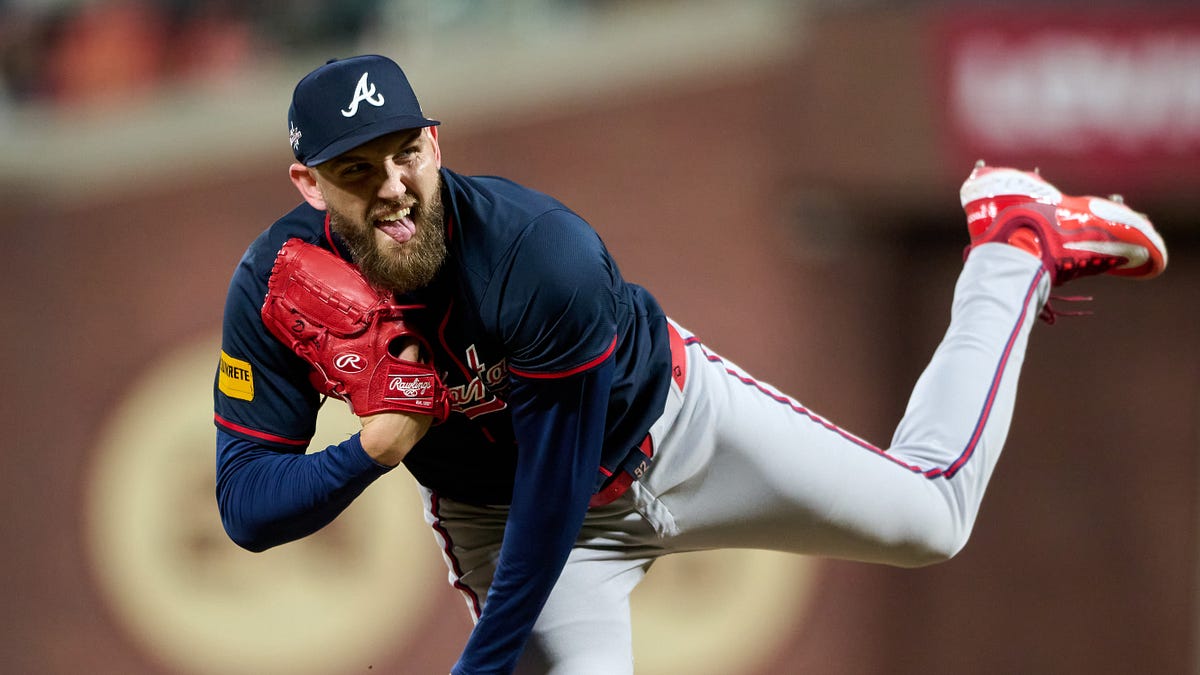
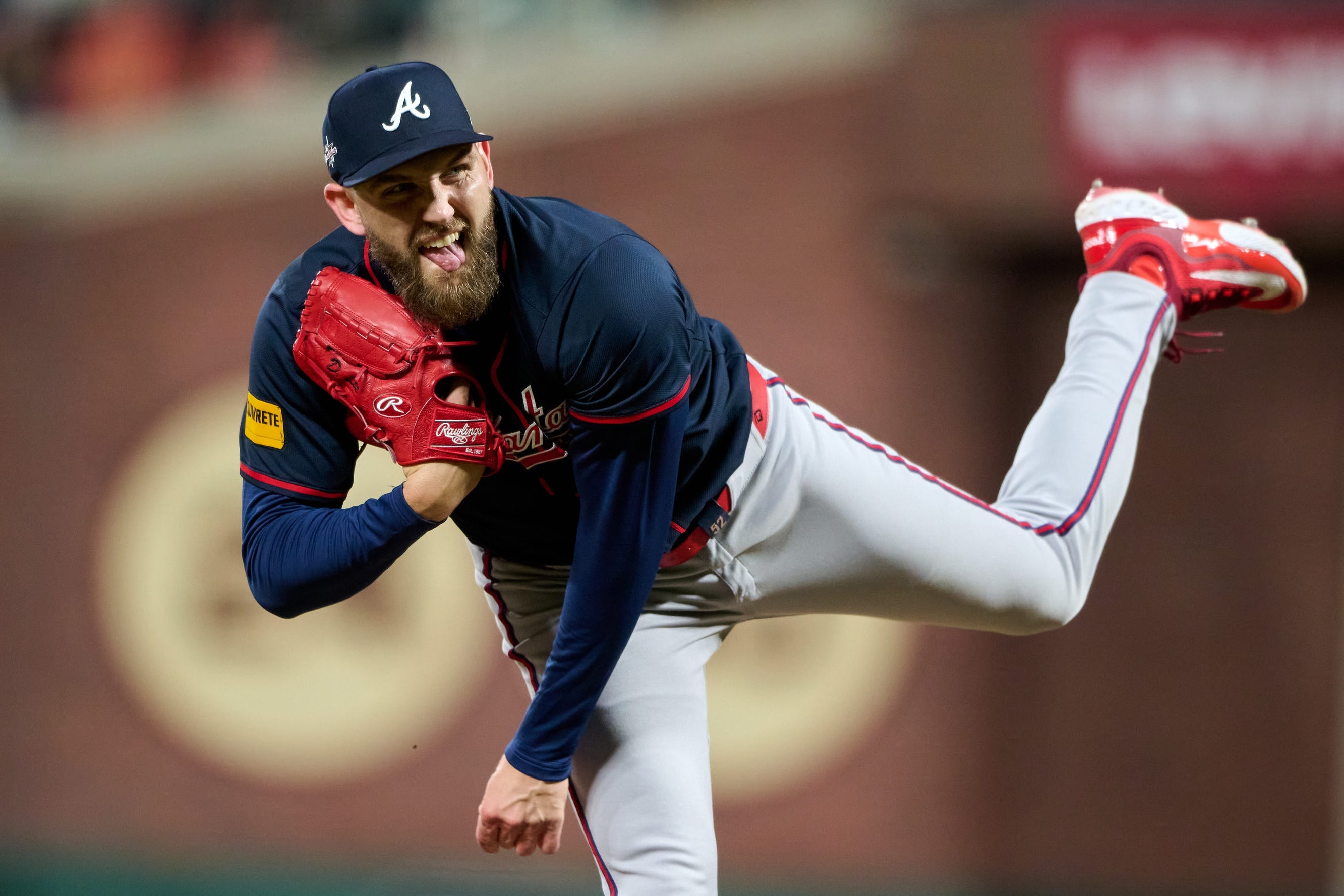
 Atlanta needs more good beards on the roster
The Atlanta Braves’ rotation is missing one of its top starters, Spencer Schwellenbach, for an extended absence. The righthander was placed on the 60-day injured list earlier this week with elbow inflammation caused by bone spurs, and arthroscopic surgery appears likely.
The loss forces everyone to move up a seat. Spencer Strider and Reynaldo López now slide higher in the rotation, leaving some combination of Bryce Elder, Grant Holmes, and Hurston Waldrep to round out the back end.
It’s not an especially reassuring trio. Each comes with effectiveness, health, or workload questions, raising a simple concern: can they handle a full season’s worth of starts while still remaining effective deep into the year?
The Braves may not need to find out. With one of the deeper bullpens in the league, Atlanta has an opportunity to intentionally shorten some outings and ‘steal’ key middle-inning outs before those risks ever materialize. Let’s talk about it.
Atlanta’s 2024 bullpen was one of the best in baseball. Anchored by closer Raisel Iglesias and featuring Joe Jiménez, Dylan Lee, Pierce Johnson, Aaron Bummer, and utility pitcher Grant Holmes, their 3.32 ERA was third-best in baseball and their 3.45 strikeout-to-walk ratio led all of MLB.
2025, however, was a different story. Faced with the loss of Jiménez (injury), AJ Minter (free agency), Holmes (rotation), and Jesse Chavez (age-related decline), the Braves had to pivot. Atlanta rode some of the remaining arms hard, with Dylan Lee tying for 9th most appearances with 74 and Raisel Iglesias finishing inside the top 25 with 70 appearances of his own.
But not only did they use the remaining back-end guys more, they also used them differently.
The Braves frequently asked the key leverage relievers to finish one inning and then stick around for the next, choosing to get four (or five) outs out of each reliever instead of three. Dylan Lee made eight different appearances of four or more outs and had thirty of his 74 outings start and end in different innings. Pierce Johnson was used similarly, with seven of 65 outings ending with four or more outs and 23 total outings spanning multiple innings. Tyler Kinley, same; after being acquired from Colorado at the trade deadline, he had four outings of four or more outs and bridged in fourteen of his twenty-three Atlanta appearances.
While clearly some of these were coming in to clean up someone else’s mess, several of them were by design. That shift in usage offers a blueprint for how Atlanta can manage its rotation risk in 2026.
The best way to prevent your starting rotation from struggling as they go deep into the game is to…not let them go deep in the game.
Pitching coach Jeremy Hefner has been doing this with the Mets for a while. Reliever Max Kranick frequently pitched multiple innings last year in New York, finishing with thirteen more innings than appearances in his partial season. José Buttó was a swingman extraordinare, covering 74 innings across 30 games with seven starts, five game finishes, and three saves.
With all of the ‘Swiss Army Knives’ in Atlanta’s bullpen, the Braves have the ability to capitalize on the versatility by limiting any given starter’s exposure to the third time through the order. Across MLB last year, opposing hitters gained 17 points of batting average and on-base percentage and added 31 points of slugging when they faced a pitcher the third time, with their OPS+ rising from 97 to 102 to 110.
Here is how I’d sort the Braves bullpen by innings and/or pitch count:
This first one is obvious – any of the spot starter options are candidates to take up to three innings. The idea here would be to not burn out the bullpen if someone were to get blown up and need to be pulled early – send one guy out to clean up and cover the rest of the starter’s typical innings and then use the bullpen like normal.
These are the relievers I’d use similar to how Atlanta used Kinley and Lee last year – finish up an inning and come back for the next one. Across MLB last year, there was very little difference in opposing hitters’ performance against relievers until workloads became extreme, often around the 35-pitch threshold.
1.1 innings/25 pitches: Raidel Iglesias, Robert Suarez, Dylan Lee
Atlanta’s highest leverage arms are mostly exempt from this additional usage under my plan, although I hope new manager Walt Weiss is in favor of four-out saves and/or calling on a high-leverage reliever outside of the start of the 8th or 9th inning.
Selectively, it could.
Not every single Braves starter struggled their third time through the order – Chris Sale’s opponents improved their OPS by forty points the third time through, but it was still just to .677 – but enough did where this could be beneficial.
Will this approach solve every rotation concern? Of course not. Starters still need to give Atlanta quality innings, and there will be nights when the bullpen simply cannot cover four or five extra outs.
But selectively shortening outings for vulnerable matchups, avoiding unnecessary third-time-through exposure, and leaning on a versatile relief corps could turn several narrow losses into wins over the course of the season. For a team that dropped 35 one-run games last year, even a modest improvement in how those middle innings are managed could quietly become one of the biggest swing factors in the Braves’ 2026 season.
Atlanta built this bullpen to provide flexibility. Now the opportunity is there to use that flexibility not just to finish games, but to shape them much earlier.