
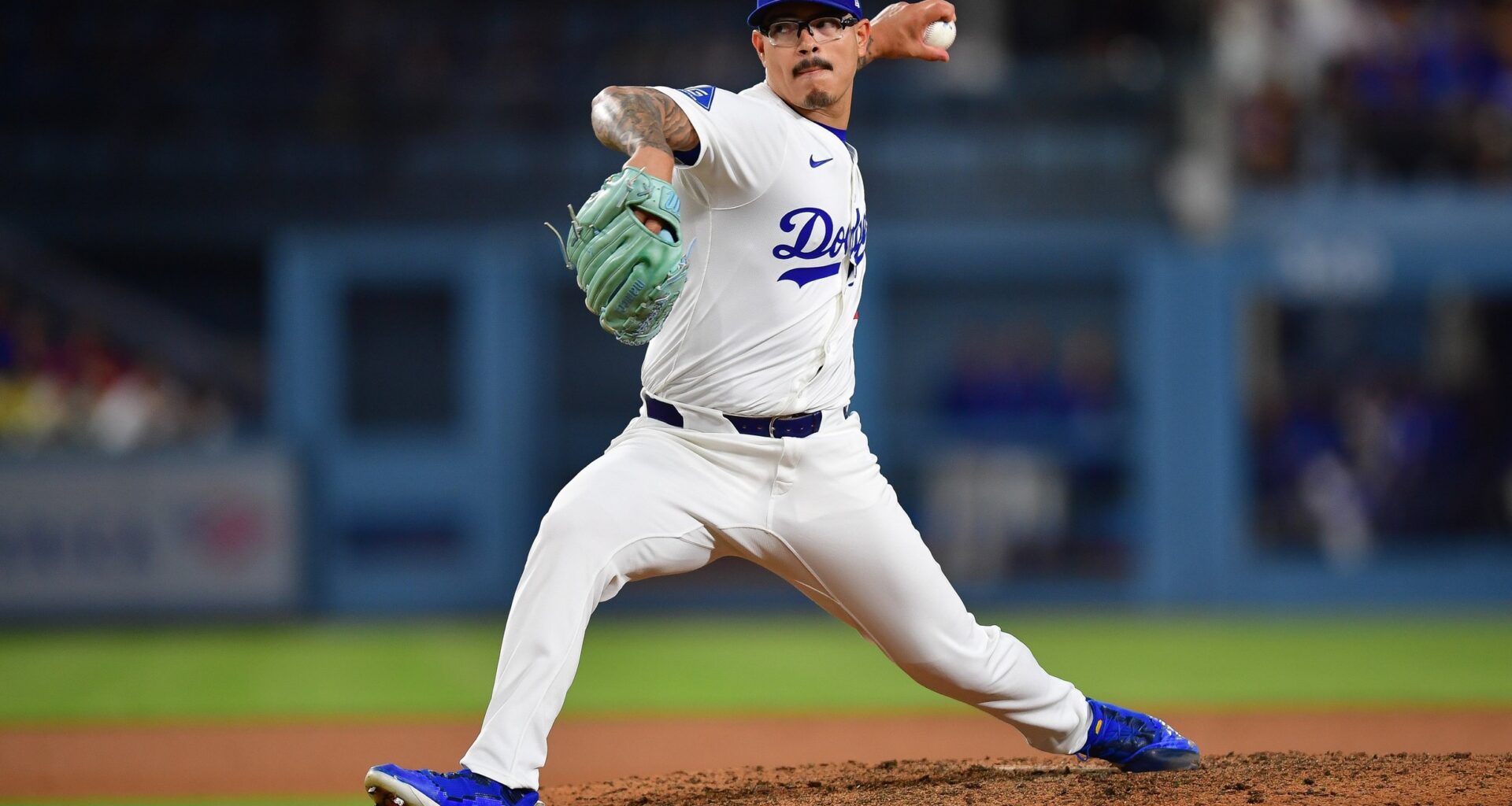
While the Dodgers have decided “No Hay Banda” for their bullpen, the Twins declared, “Silencio!”
Why the Dodgers dropped Anthony Banda is only somewhat clear. While there were concerns over the underlying stats, it is more likely that the team thought the $1.625 million settled number for his first year of Arb would be enough to keep other teams from claiming him through waivers—and if not, get something decent in return. After all, the Dodgers cycled through over 40 pitchers last year, and Banda pitched more innings than some of their top starting arms, often in high leverage situations.
But for the Twins, this is a no brainer pick up. On the first day of Spring Training, Derek Shelton reminded the media scrum of his familiarity with Banda from his Pittsburgh days and declared him “a bulldog [who is] not afraid of taking the ball.”
Drafted in the 10th Round in 2012 by the Milwaukee Brewers, Banda bounced around over ten different minor league systems and a brief major league stint with the Nationals before somehow landing with the Dodgers in a mid-season trade with the Guardians for cash considerations. However, he made an immediate impact thanks to a few adjustments.
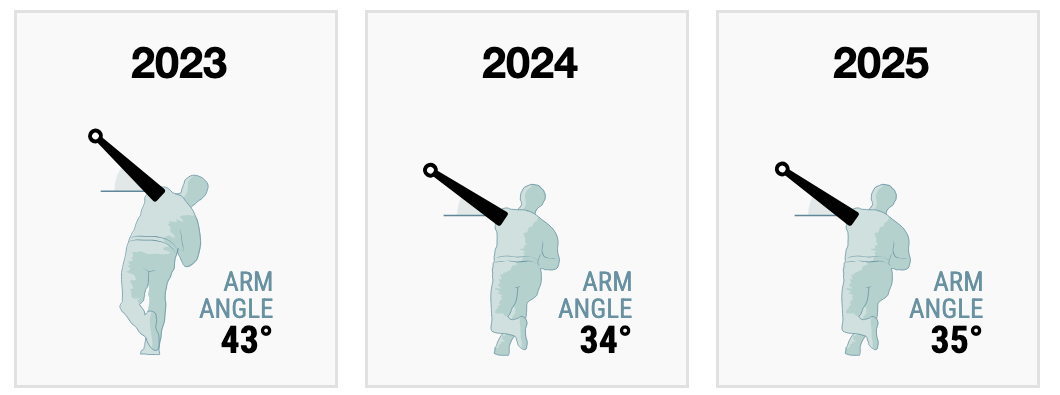
First, the Dodgers lowered his general arm angle 34 degrees as opposed to 43 in 2023, according to Sam Scherer of Dodgers Digest.
But the big difference came on the slider, which runs about 10mph slower than the mid-90s fastball. According to Fabian Ardaya of The Athletic, Dodgers pitching coach Connor McGuiness decided to change his unorthodox slider grip.
Quote
He instructed Banda to try to grip the baseball with a “spike,” digging the nail of his index finger into the seam to impact movement and spin. The instruction was simple: Aim down the middle, throw it like a fastball and let it rip…Rather than loop, the slider moved sharply. Instead of feeling like he was guiding the pitch, he threw it emphatically without sacrificing command.
Banda’s slider, which took almost 40 inches of vertical drop over the last two seasons, ranked only below a few elite arms like Josh Hader, and made him a devastating lefty tool for the eventual World Series winners. During the 2024 postseason run, Banda played critical role after the team’s other left handed option, Alex Vesia, got sidelined in the NLCS. Over his ten appearances, Banda allowed only a single run.
In 2025, Banda posted a 3.18 ERA over 64.2 IP last year, appearing in a 70 different games. While he held a 3.34 FIP against lefties, Righties managed a brutal 5.54 FIP. Banda posted one of the worst walk rates in baseball last year, which will need to be fixed.
But even when Banda struggled, he was still one of the most central players for a team whose bullpen looked cooked. As high profile arms like Blake Trienen and Tanner Scott struggled, David Roberts trusted Banda to make almost daily appearances; he received the call three straight days in a row, multiple times throughout the season. Half his appearances came in either high or medium leverage, and others were often because no other trusted arms were available to throw. His numerous appearances netted a 1.2 WPA, only second behind Vesia for the bullpen. Banda’s 2025 postseason did not go as expected—his match-up against Addison Barger in Game 1 of the World Series led to the first even pinch-hit grand slam, which cooked any stats you might see—but the stuff is still there.
If anything, the Dodgers may have overused his slider in 2025. Getting the fastball and sinker back into place could make him a critical piece. And in a team that needs elite arms, Banda has proved his stuff is there.
Banda carried the Dodgers bullpen at times over their two first runs. Now they think he won’t prove useful in the threepeat. At 32, he comes in with more experience than most of the arms and can prove his worth. Under Pete Maki, it would not be unexpected to see the Twins either turn him into a fireman for jams in the mid-innings, or even as an eighth inning man.
Either way, Banda feels like the first real piece to cement the next steps of the bullpen.