
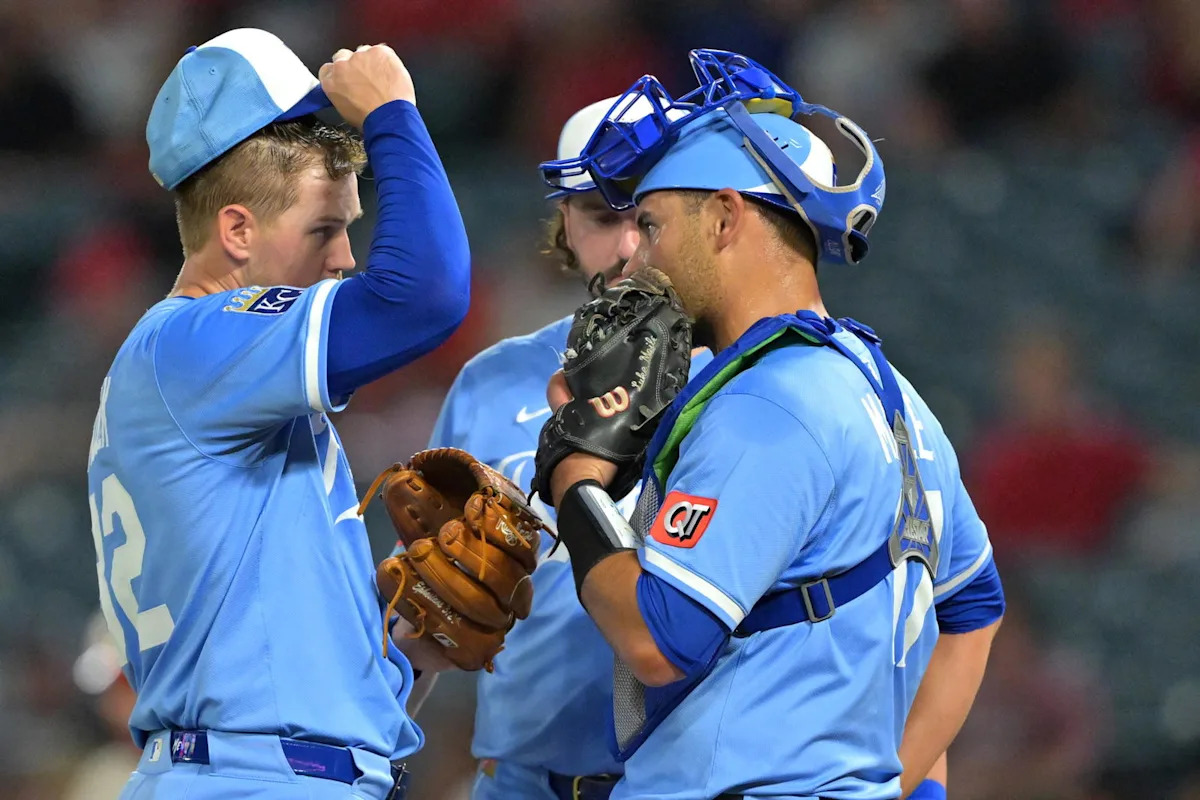
The Kansas City Royals made an unexpected adjustment to their spring training roster this week, removing a veteran player from camp as the team continues preparations for the 2026 season. While roster tweaks are common this time of year, this particular development stood out because it involved an experienced presence who was competing for depth at a key position.
The Royals have emphasized continuity and depth throughout camp, especially at catcher, where experience handling a pitching staff is critical during exhibition play.
Advertisement
With several young arms in camp and competition for bullpen and rotation spots, having a steady veteran behind the plate can be valuable in evaluating talent. However, one veteran backstop will not be with the team due to personal reasons, that player being Luke Maile.
“Luke Maile is not on the camp roster anymore. Dealing with a personal issue but Royals are open to return if the time comes,” reported Anne Rogers of MLB. The wording leaves the door open for a possible return later in camp or even during the regular season, but for now the veteran catcher is away from the team.
Maile’s 2025 season provided context for why he was in camp competing for a role. The 35‑year‑old appeared in 25 games last year in Kansas City, hitting .244 with 1 home run and 6 RBIs while posting a .702 OPS across 54 plate appearances. While those offensive numbers were modest, Maile’s value has long been tied more to his defense, pitch framing and experience than to his bat.
Advertisement
The significance of his removal lies in both depth and leadership. Catching is one of the most demanding positions in baseball, and clubs often rely on veteran backups to mentor young pitchers and provide steady game management. Maile has built a reputation throughout his career as a reliable defensive option who can guide a staff through difficult stretches.
For Kansas City, losing that presence, even temporarily, places greater responsibility on the remaining catchers in camp, Salvador Perez and Carter Jensen. It also affects competition for roster spots, as fringe players now have an expanded opportunity to prove themselves in spring games.
At the same time, the Royals’ willingness to welcome Maile back signals that this is not a baseball‑related decision. Personal matters take priority, and the organization’s support reflects respect for the veteran’s situation.
As camp progresses, Kansas City will continue evaluating its depth behind the plate. Whether Maile ultimately returns or not, the development serves as a reminder that spring training roster construction can shift quickly.