
While a handful of intriguing free agents remain available, the MLB offseason is all but over. It’s unlikely we see a true needle-mover get moved from now until Opening Day, if not later. With that, is there a better time than a week before spring training games begin to recap the wild offseason that just transpired?
There’s no better way of doing that than declaring the biggest winners and losers from the winter. Let’s dive in.
Winner: Los Angeles Dodgers
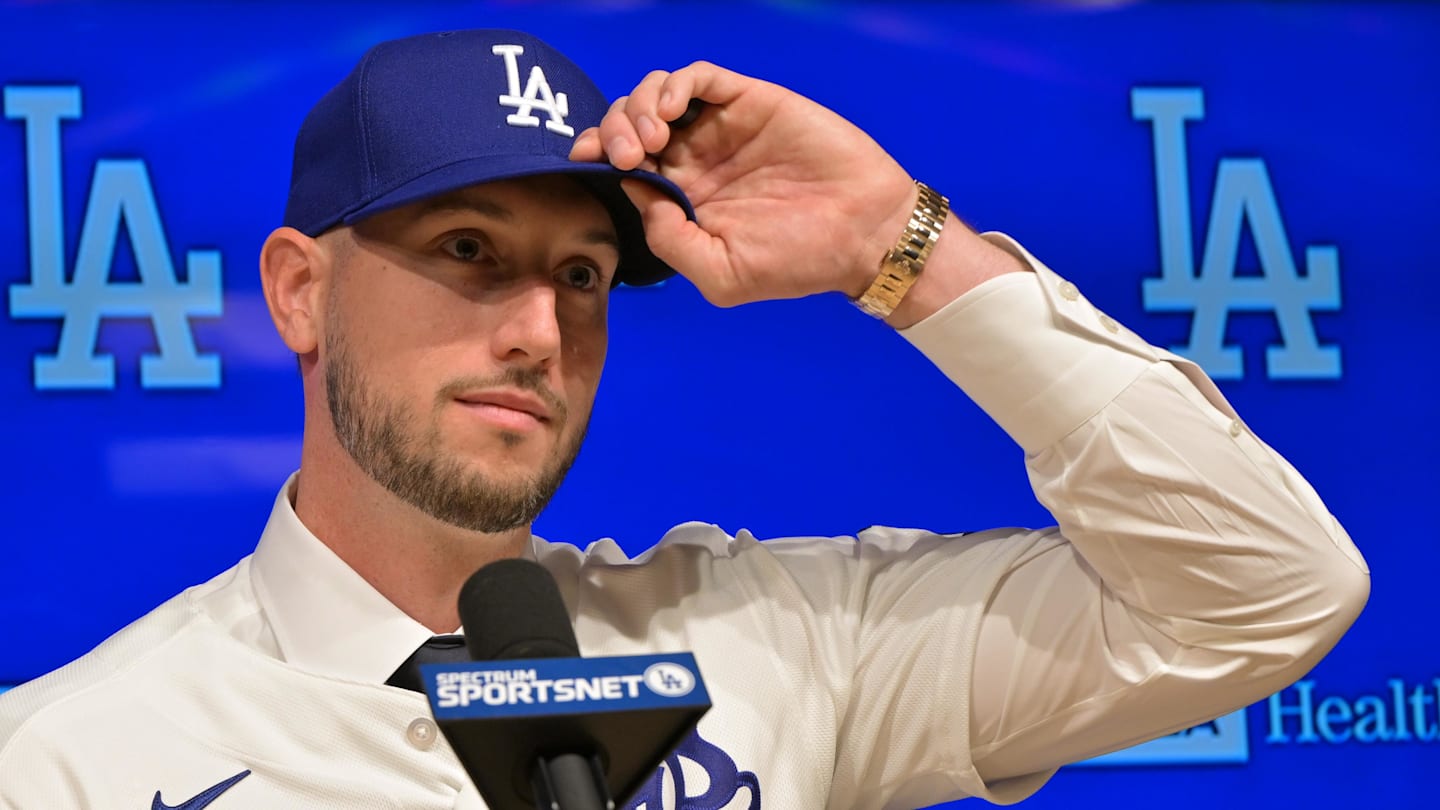
There’s no point in delaying what you already know. The Los Angeles Dodgers won yet another offseason, and did so in dominant fashion. Yes, they won their second straight World Series title in 2025, but they did so with one of the worst postseason bullpens I’ve seen and with lackluster outfield production. In response, they signed both Edwin Diaz and Kyle Tucker, the best reliever and outfielder available.
The Dodgers would’ve been the favorites to three-peat no matter what, but made themselves clearer favorites by signing two of the best free agents available, and stealing them away from fellow contenders in the process. And they just signed Max Muncy to a team-friendly extension.
Loser: Philadelphia Phillies
Philadelphia Phillies catcher J.T. Realmuto | Eric Hartline-Imagn Images
Perhaps this is a bit harsh since the Philadelphia Phillies did re-sign Kyle Schwarber, but their inability to do anything else notable is frustrating. The Phillies have made the playoffs in each of the last four seasons, but they’ve lost in the NLDS in each of the last two years and look like a team heading in the wrong direction. Their response to this is essentially running back the same team that’s fallen short without Ranger Suarez, their best postseason pitcher during this span.
They replaced Nick Castellanos with another older free-swinging outfielder who hasn’t hit much in recent years, Adolis Garcia. They did sign Brad Keller, but also traded Matt Strahm, making that addition feel like a wash. They attempted to sign Bo Bichette, but after that failed, pivoted to re-signing J.T. Realmuto. The only real change will be Justin Crawford patrolling center field, and it remains to be seen how that’ll play out.
The Phillies will still be good, but it’s hard to get excited about running back the same version of a team that’s consistently fallen short in October and is one year older. Failing to add a big bat to this lineup will come back to bite them.
Winner: Kyle Tucker
The Dodgers were fortunate to sign Kyle Tucker, but Tucker got a pretty good deal, too. He signed a four-year, $240 million deal to join the Dodgers. No, it wasn’t the long-term deal everyone expected he’d get, but a $60 million AAV is absurd. Tucker is getting more money annually than Juan Soto is from the New York Mets.
Tucker’s deal includes two opt-outs, allowing him to test the market after the 2027 and 2028 seasons. There’s a good chance Tucker will have made nine figures in just two years and then can re-test the market at just 31 years old. If Tucker decides not to opt out, he has another nine figures waiting for him over the next two years and then he can still get a hefty deal at age 33.
It’s hard to envision a better scenario for Tucker than the one that played out. He’s making a lot of money now, has a golden opportunity to earn a lot more later, and gets to play on a team trying to three-peat in Southern California. Sounds good to me.
Loser: Zac Gallen
The Dodgers had no problem paying the qualifying offer penalties to sign Tucker, a proven superstar. The same cannot be said about Gallen, who rejected the qualifying offer and was the last notable free agent to sign. Gallen wound up inking a one-year, $22.05 million deal to return to the Arizona Diamondbacks. It’s the same amount as the qualifying offer, but since $14 million of the deal was deferred, the present value of the deal is lower than the qualifying offer contract he declined.
Gallen’s rejection of the qualifying offer clearly meant he was hoping to cash in on the open market. He was, at the very least, hoping to sign a deal similar to the one Framber Valdez did, which was short-term, high-AAV with an opt-out. Having to settle for a deal technically less than an amount he already turned down months later makes him an easy offseason loser.
Winner: Tarik Skubal and Framber Valdez
Detroit Tigers pitcher Tarik Skubal | Junfu Han / USA TODAY NETWORK via Imagn Images
The Detroit Tigers signed two of the best left-handers in the sport, Tarik Skubal and Framber Valdez, to contracts this offseason. Both of those deals, though, feel more player-friendly than team-friendly.
Skubal is a clear winner for an obvious reason — he got exactly what he wanted. He won his highly anticipated arbitration case against the Tigers and will make a whopping $32 million in his final year before free agency.
Valdez didn’t get the kind of long-term security he wanted, but he still made out very well this offseason despite his cross-up incident with Cesar Salazar. Valdez signed a three-year, $115 million deal with the Tigers, a contract with an average annual value of $38.3 million. The deal also includes an opt-out after the 2027 season, allowing Valdez to re-test the market in search of more security. He joins a team trying to win now in an easy division to pitch in and in a very pitcher-friendly ballpark.
The Tigers weren’t losers by any means as Skubal is still wearing the English D and Valdez is an awesome co-ace (and possible replacement if Skubal were to leave after the 2026 season), but Skubal and Valdez making a combined $70.3 million in 2026 sure sounds great.
Loser: Jose Ramirez
Jose Ramirez also got paid, as he inked a seven-year, $175 million extension with the Cleveland Guardians this offseason. Since Ramirez already had three years and $69 million remaining on his deal, the new deal essentially adds four years and $106 million to the already existing contract. It’s obviously great for Ramirez that he got what he wanted and great for the Guardians to keep their franchise icon in town likely for the remainder of his career, but there is a clear reason why he’s an offseason loser.
Ramirez, despite once again leaving money on the table, was rewarded with an offseason full of nothing. The biggest addition the Guardians made this winter was signing Shawn Armstrong, a solid middle reliever. They did nothing else of note.
Ramirez continues to show unrelenting loyalty to Cleveland, and the Guardians respond by doing nothing with the money they save. Perhaps something will change, but until it does, there’s nothing to say other than the Guardians continue to waste the prime of a future Hall of Famer by refusing to surround him with much talent at all.
Winner: Pete Alonso
New York Mets first base Pete Alonso | Junfu Han / USA TODAY NETWORK via Imagn Images
Pete Alonso went all of last offseason hoping to sign a lengthy deal that never came. He entered this offseason hoping for a different outcome, but it became apparent that the New York Mets were not going to be willing to exceed three or four years to bring him back. Fortunately for Alonso, he was able to find a team willing to give him the kind of length he was looking for.
Not only did the Baltimore Orioles give Alonso a five-year deal, but the value of Alonso’s deal was higher than the deal Kyle Schwarber signed with the Phillies. It was surprising to see Alonso get a five-year deal, and it was shocking to see him earn more money than the reigning NL MVP runner-up.
This isn’t to say Alonso isn’t deserving. He’s one of the best power hitters in the game, and he was coming off a strong season. Alonso just beat expectations by securing the deal he did.
Loser: Minnesota Twins
The Minnesota Twins made it clear that they were entering a rebuild at the 2025 trade deadline by trading almost half of their active roster in exchange for primarily prospects. Or so we thought. The Twins, for reasons only they can explain, not only refused to continue rebuilding but also did not make any effort to get better.
The Twins could have traded stars like Byron Buxton, Joe Ryan and Pablo Lopez and received massive hauls of prospects in return expaditing their rebuild in a big way. They also could have surrounded that trio with impactful free agents and tried to win a very winnable AL Central division. They did neither.
The result will either be the Twins selling their stars for less than they could have this winter, or the Twins holding onto their stars in a losing season. The lack of direction is frustrating.
Winner: Scott Boras
Agent Scott Boras | Troy Taormina-Imagn Images
Scott Boras gets a lot of flak, but he continued to prove why he’s the best agent in the sport this offseason in a variety of ways. Let’s go through them.
In arbitration, he got Tarik Skubal the richest deal any arbitration-eligible player has ever received. Skubal’s $32 million mark not only shattered David Price’s previous record for an arbitration-eligible pitcher, but also beat Juan Soto’s record for any player. That’s pretty good.
Boras crushed it in free agency as well. Dylan Cease signed a seven-year, $210 million deal. Pete Alonso got more money than Kyle Schwarber. Cody Bellinger signed a five-year, $162.5 million deal despite seemingly losing leverage as the winter went on. Alex Bregman signed a five-year, $175 million deal with the Chicago Cubs. Ranger Suarez got a $130 million deal from the Boston Red Sox.
It feels like Boras’s only whiff was Gallen, but there’s a chance Gallen pitches well this upcoming season and then cashes in on a long-term deal. Other than that, Boras crushed this offseason.
Loser: Milwaukee Brewers fans
I understand why the Milwaukee Brewers traded Freddy Peralta. He’s a free agent after the year, and he’ll almost certainly command more money than the Brewers would be willing to pay him. In that vein, trading him to ensure they receive more than just a draft pick when he leaves in free agency, makes sense.
The Brewers did well, acquiring Jett Williams and Brandon Sproat from the New York Mets in exchange for Peralta and Tobias Myers. With that being said, I can’t help but feel bad for Brewers fans. They just watched their team win a league-leading 97 regular-season games, only to get embarrassed in the NLCS by the Dodgers. Rather than making an effort to bridge the gap in any way, the Brewers then turned around and traded their ace.
The Brewers always find ways to defy the odds and make the playoffs even after trading their stars, and there’s every reason to believe they’ll make it back to October this season as well. Why should anyone believe they’ll get to, let alone win a World Series, though? Brewers fans have seen their team make the playoffs seven times in the last eight years, but they haven’t won a game past the NLDS since 2018. Getting there isn’t a problem, but winning there has been.
Yet, the Brewers continue to trade win-now pieces in exchange for prospects. Even the Caleb Durbin deal looks quite questionable from a win-now perspective. When will the Brewers give their fans a real push to try and win a World Series? Clearly, the answer isn’t right now, and after such a promising season, that’s a real shame.
More MLB news and analysis: