
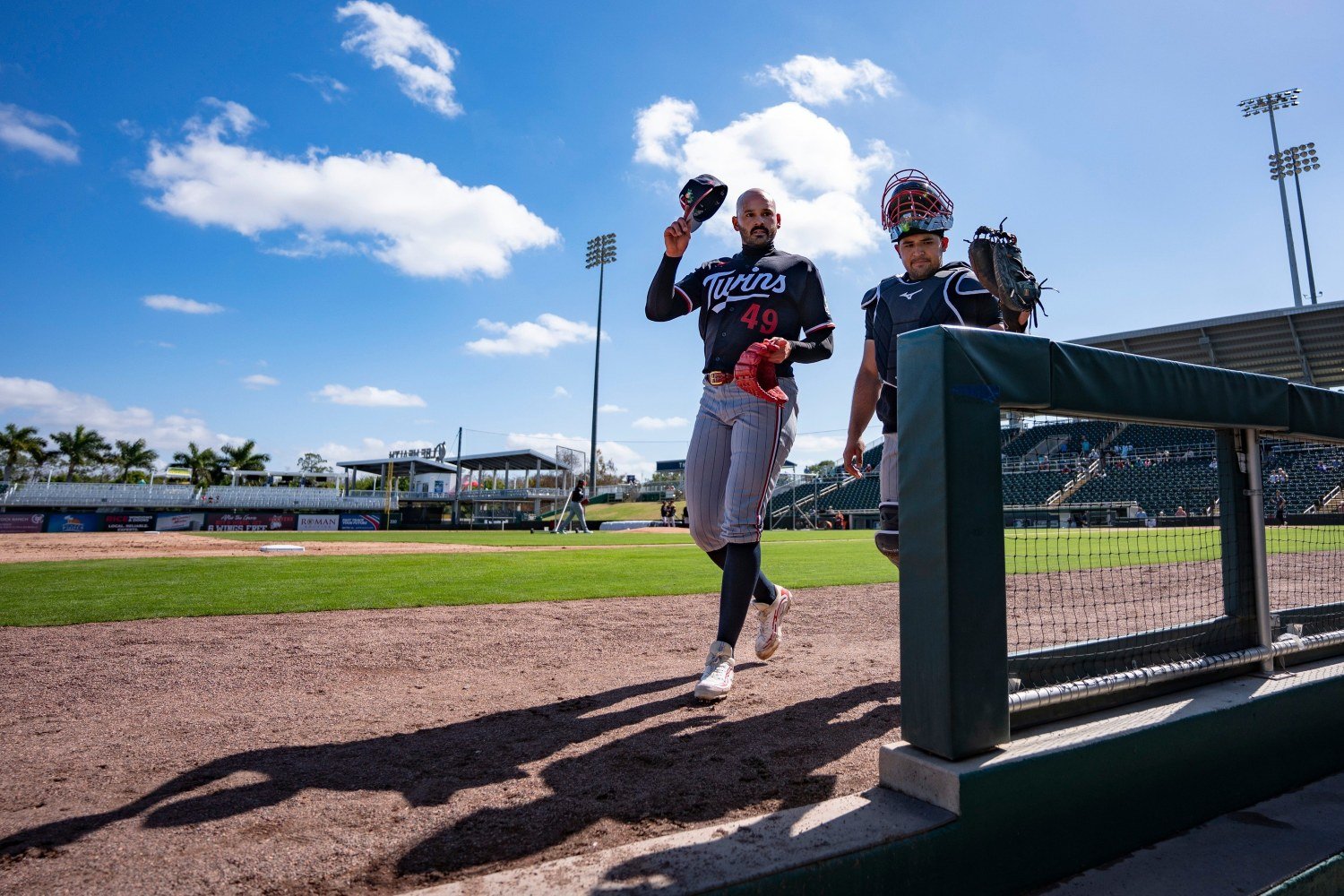
The Twins lost arguably their best starting pitcher this week. Pablo López is seeking a second opinion on the prognosis for a torn UCL, but is very likely to undergo season-ending surgery in the coming days. The rotation was expected to be the strength of a roster projected to finish below .500 by many projection systems. With a further bite taken out of the Twins’ chances, it’s fair to wonder whether they try to replace their ace. One could easily argue, however, that they shouldn’t try to do so.
The Twins have several interesting options to fill their currently vacant rotation spot. At the 2025 trade deadline, it felt as though they were preparing for life without López and Joe Ryan, as they acquired several arms who could contend for a rotation spot for years to come. The offseason took plenty of twists and turns, but eventually, the organization settled on another run at contending in 2026, while holding onto the veterans that had survived the 2025 fire sale. As a result, the Twins were set to stash several starting pitchers in Triple-A who had nothing left to prove there.
The Twins’ depth is such that they will not have enough rotation spots for the number of pitchers whose next step in development must come at the big-league level. Taj Bradley, Mick Abel, Zebby Matthews, and David Festa all have cases to make the parent club’s roster on opening day. They will also have Connor Prielipp, Andrew Morris, and Kendry Rojas headlining the rotation in St. Paul, who could all debut in 2026 if needed. Though there’s no such thing as too much pitching depth, the Twins have no immediate shortage of young, exciting options to mix into the rotation throughout the year with the potential to be productive.
While many of their immediate options are unproven and far from guaranteed to be successful in the rotation, it’s worth weighing them against potential external replacements. Lucas Giolito sits atop the list of remaining free agents. He could be looking for a one-year prove-it deal, after missing all of 2024 and looking like a diminished version of himself in 2025. Other options include Frankie Montas, who posted a 6.28 ERA in 2025, and Max Scherzer, who is unlikely to be interested in spending what is possibly the last season of his career in Minnesota at 41 years old.
While it would be hard to fault the Pohlads for spending money, an argument can be made that the development of the Twins’ internal rotation candidates is more valuable than the production any of these last-minute signings could make. The remaining free-agent market lacks the upside in both the short- and long-term that the Twins’ current selection of young arms offers.
The Twins could seek out a trade for a big name, but doing so comes with significant risk beyond the 2026 season. The Twins aren’t the only team seeking starting pitching help headed into spring training. Toronto and Atlanta are dealing with injuries to their rotations, as well, and options are limited at this advanced stage of the offseason. Much like the trade deadline in recent seasons, it would be a sellers’ market for anyone willing to deal starting pitching. The Twins, being buyers in this scenario, could be paying premium prospect capital to acquire a big arm. There’s a time and place for going big, but it’s hard to argue that this 2026 roster warrants such a gamble.
The current roster, in fact, is the strongest argument against replacing López with any external additions. The Twins set themselves up for a mediocre 2026 season at the 2025 trade deadline. They then spent much of the offseason sitting on their hands, as they tried to decide the organization’s direction. They’re left with much of the same offensive core that has consistently failed over the last two years (and four of the last five), and have mostly replaced their previously elite bullpen with minor-league signings and waiver claims. Anything can happen in baseball, but the projections paint the picture of a team that should not be mortgaging the future for 2026.
This season should be an opportunity for several players to debut and develop at the MLB level, rather than blocking them or trading them away in favor of external options. There is plenty of upside on the pitching and position-player sides of the roster, but many players need the opportunity to show what they can provide in the future. If things go extremely well, the Twins can compete in 2026 without replacing Pablo Lopez. If they do not, they will at least have sorted through the roster in preparation for 2027.