
Want more ways to catch up on the latest in Bay Area sports? Sign up for the Section 415 email newsletter here and subscribe to the “Section 415″ podcast wherever you listen.
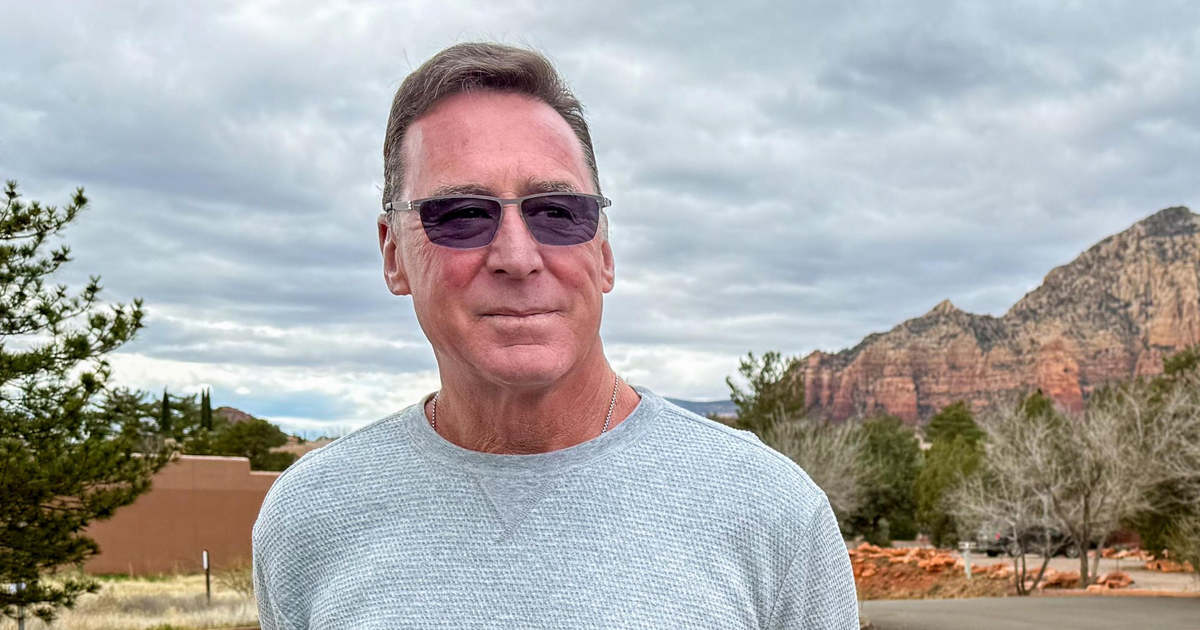
SEDONA, Ariz. – Amid the radiant red rock formations along one of Earth’s most scenic geological marvels, Bob Melvin is in a peaceful yet rejuvenated mood, having exhaled from two rough years with the Giants and eagerly awaiting his next chapter.
Melvin’s legacy in the game is solid, ranking 20th all-time in regular-season wins among major-league managers – more than Hall of Famers Tommy Lasorda, Earl Weaver, and Whitey Herzog – and no one else in history can say he grew up in the Bay Area and managed both hometown teams.
“Look, to be able to put a Giant uniform on and go into that ballpark every day, at some point in time, I’m going to be able to reflect on managing the A’s and Giants — not in my wildest dreams did I ever think that would happen,” Melvin said in a Thursday interview with The Standard at a Sedona golf club, two hours north of Scottsdale Stadium. “I was very lucky and fortunate.”
After managing 22 of the past 23 years with five big-league clubs, the 64-year-old Melvin is on unfamiliar ground, no longer wearing a manager’s cap with spring training fully underway.
The Giants open their Cactus League season Saturday with Melvin’s successor, Tony Vitello, who had never been at a spring training game in his life (as a player, fan, or anything else), running the show. Melvin will be somewhere else, across the Valley of the Sun in Mesa to report for Day One in his new gig.
Melvin spent exactly half his managing career with the Oakland A’s, and now he’s rejoining them — minus the “Oakland” — as a special assistant in baseball operations. He’ll be in A’s camp Saturday and Sunday and then again later in spring, available to give opinions, advice, and anything else that’s requested including evaluating minor-leaguers.
An advisory opportunity never came from the Giants. It was a clean split. The day after the season, president of baseball operations Buster Posey called Melvin back to Oracle Park for an extremely brief chat in which Melvin was informed he was fired, three months after Posey exercised his $4 million option for 2026. Twenty-three days later, Posey hired Vitello, whose task is to return the Giants to the playoffs.
“It makes sense that Buster wants somebody who can be around for a while and grow with,” Melvin said. “I totally understood that part. I wish him the best. It seems he’s going to be a really good fit for that team based on what I’m hearing. The guy’s got a great track record, did a lot of great things very quickly at Tennessee, knows the game really well, seems like he’s well spoken. It’s a good hire.”
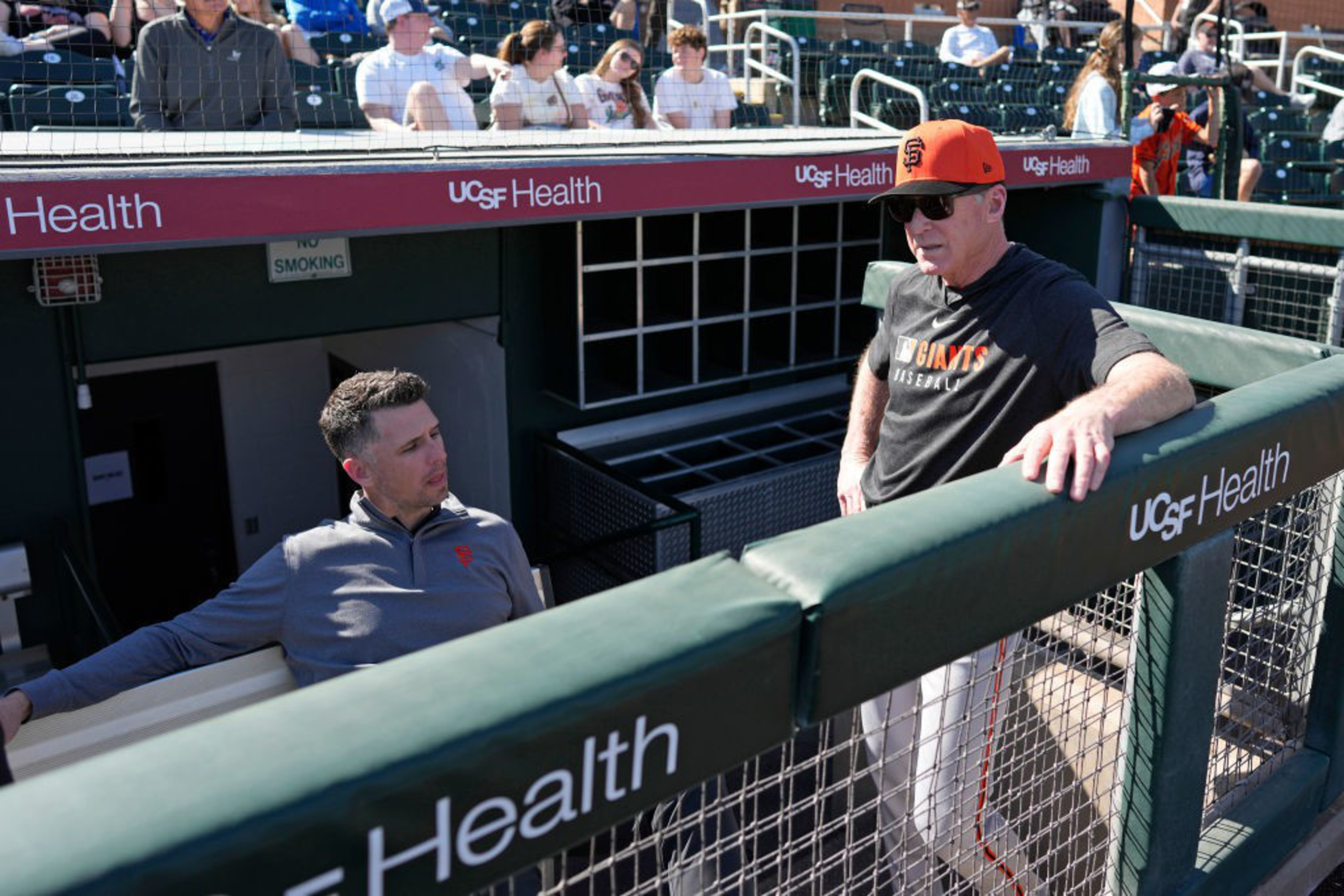 Buster Posey picked up Melvin’s 2026 option in the middle of the Giants’ 2025 season. | Source: Andy Kuno/San Francisco Giants/Getty Images
Melvin remains bummed that the Giants didn’t fare better on his watch, especially after the trade for Rafael Devers in mid-June. Curiously, the Giants were 41-31 before Devers arrived and went 40-50 the rest of the way, and nobody took losses harder than the manager.
That the Giants with Devers were 13-24 before the trade deadline prompted Posey to shed three key players (Camilo Doval, Tyler Rogers, Mike Yastrzemski), virtually assuring the team would miss the playoffs. Melvin wasn’t given a chance to ease out on his own terms, a courtesy given to Bruce Bochy and other long-time managers in orange and black.
Today

3 days ago
Friday, Feb. 13
“The way we started out, we really had high hopes, and then once we brought in Rafi, it was like, this is next level,” Melvin said. “But we were way too streaky, like other teams who went through significant streaks, and didn’t play very well for a period of time up until the trade deadline, and if you’re looking to kind of indict me, that’s the period of time you look at.
“I don’t feel great about that. I came there for a reason. Leaving San Diego and wanting to come back home and manage the Giants, it was disappointing for me that we did not do better, especially last year. Of all the places I’ve been, that’s probably the most disappointing.”
Regarding the trades of two top relievers that made late-game decisions a crapshoot, Melvin said, “The bullpen was the biggest asset we had. When you lost that, it was going to be tough to win, but I totally understand why they had to make some moves.”
Third baseman Matt Chapman, who played for Melvin in seven of his nine big-league seasons and calls him a father figure, has remained in contact with his former manager and said Friday he was planning to call him to offer congrats on the A’s gig.
“I’m glad BoMel gets to stay in the game,” Chapman said. “He’s a great baseball mind and great person and will have a lot to offer. He’s been super impactful in my life and career. I thought he did great [in 2025]. It was kind of a funky year. We didn’t all get rolling at the same time. Sometimes that happens. BoMel understands the nature of the business.
“I don’t think he has any ill will toward what happened. It just didn’t work out unfortunately. I’ve had a great relationship with him, and I think I’ll have a great relationship with Tony. I think he’ll be really good for us. Sometimes it happens like that.”
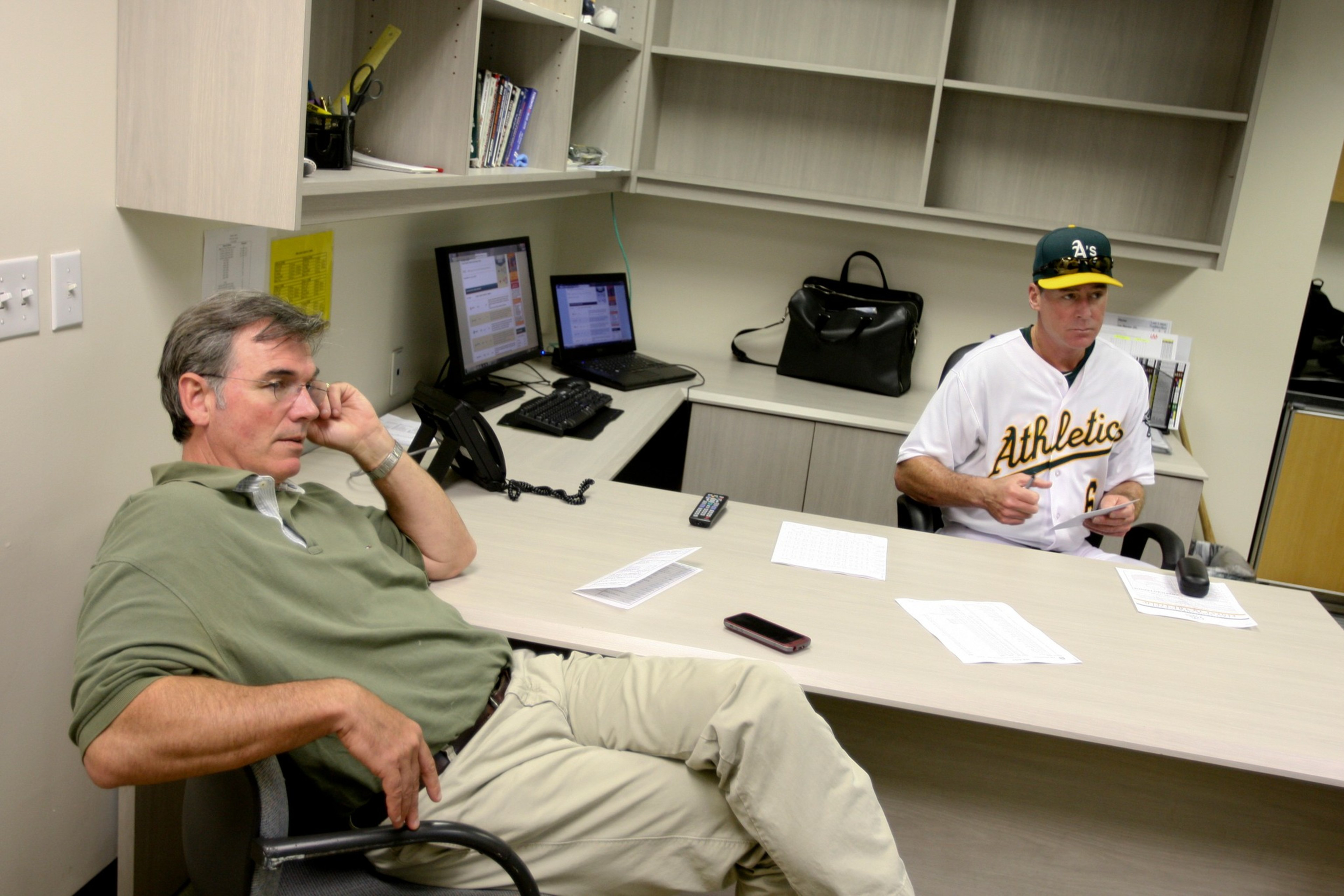 Billy Beane hired Melvin to manage the Oakland A’s ahead of the 2011 season. | Source: Michael Zagaris/Oakland Athletics/Getty Images
If Melvin was going to be an adviser, no team made more sense than the A’s, with whom he won two Manager of the Year awards, reached the postseason six times, and won more games than any manager in franchise history except Connie Mack. Plus, Melvin still has many close associates throughout the organization.
Shortly after the Giants fired Melvin, A’s owner John Fisher, who’s desperately in need of good publicity after pulling the team out of Oakland in his pursuit of Las Vegas, called him. Discussions ensued after the holidays with Billy Beane and David Forst involved, and an agreement was struck but only after Melvin made sure Beane, Forst, and manager Mark Kotsay, Melvin’s old bench coach, were aboard.
It’s not full time for now, so Melvin has the luxury that’s rare for him this time of year to engage in hobbies such as mountain biking, hiking, and golf, and he remains a fitness enthusiast.
“I’m going back to a place that I’m very comfortable with, and I know a lot of people really well,” Melvin said. “One of the things the A’s have done really well is create continuity in the hierarchy. There’s very little turnover there over the years. It’s the A’s way to do things, and I think that’s beneficial.”
Oakland fans who lost their team have a different perception of what “the A’s way” means, but Melvin’s point is that many team employees maintain longevity, which is why he’s familiar with folks on the coaching staff, in baseball operations, and on the clubhouse staff, along with his old buddy, traveling secretary Mickey Morabito, who dates to the Billy Martin years.
“The players cycled in and out; once they started getting paid at a certain level, you’d see them traded and so forth,” Melvin said. “Now it’s going to be different, now that they’re signing these guys going into Vegas, which is always what they’ve been looking for, a new stadium. I think my timing’s good because this new cycle’s coming, and they’re going to be able to hold onto players once they get into Vegas.”
 Melvin managed Ichiro Suzuki in Seattle from 2003-2004. | Source: Daniel Shirey/MLB Photos via Getty Images
As for managing again, it’s not happening – unless Melvin gets an offer in Japan, which has been on his mind for a while. When he took the Giants job, he said it would be his final big-league managing stop, and he’s content for now with the A’s advisory role but is open to other positions within the organization in the future as the team transitions from Las Vegas via Sacramento.
Why Japan?
“The style of baseball, the different culture, the players I’ve managed,” said Melvin, who had many Japanese players on his teams including Ichiro Suzuki, Hideki Matsui, and Yu Darvish, and managed the A’s on a couple of trips to Tokyo. “I love their commitment and how they play. If I were ever lucky enough to manage again, and lucky to get an opportunity there, that’s one I would consider.”
Melvin, who needed to adjust to three bosses in each of the past three years — A.J. Preller in San Diego and Farhan Zaidi and Posey in San Francisco — now is pivoting to another environment, but it’s a familiar team with familiar personnel, and he’s embracing the opportunity.