
There was perhaps no need that was more evident, for any team in Major League Baseball, than starting pitching was this winter for the San Diego Padres. They lost Dylan Cease early in free agency and appeared poised to do the same with Michael King. Yu Darvish was quickly declared out for the entirety of 2026, if he doesn’t call it a career it a career altogether. Nestor Cortes was a virtual non-factor upon his acquisition at last year’s trade deadline and never really merited discussion of a return. In short, the situation was dire for the Padres’ 2026 rotation.
As the offseason progressed, however, they started to shift the narrative, at least a bit. King was, surprisingly, re-signed to what could amount to a one-year deal (though reads three on paper). Joe Musgrove is going to be close to a full-go for the regular season from the jump as he works back from Tommy John surgery. Adding those two to Nick Pivetta provided at least some stability to the top of the group. Questions remained, however.
Sure, Randy Vásquez finished the year strong. But his profile is still flawed given some command woes against a lack of upside in his stuff. Even if he is able to build on that finish, the absence of anything resembling certainty helps to make this the murkiest positional group on the roster. With the team more recently opting for a pure volume approach in addressing it, though, they might have an opportunity to capitalize on that lack of clarity in seeking a more creative solution: the six-man rotation.
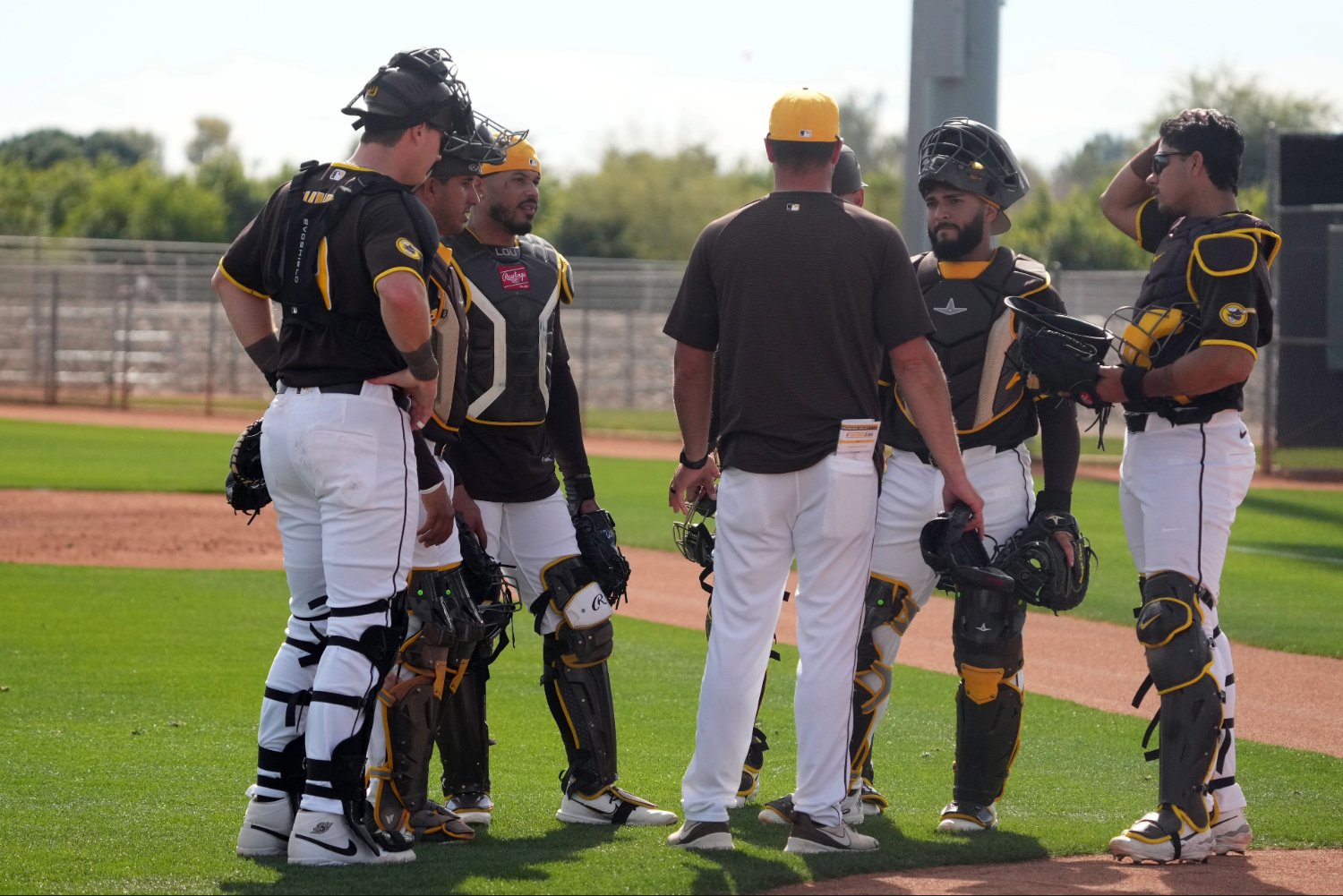
Last week, the team signed Griffin Canning and Germán Márquez to one-year deals. They join in-house holdovers JP Sears, Kyle Hart, and Matt Waldron and non-roster invitees Triston McKenzie, Marco Gonzales, Sean Boyle, and Walker Buehler to create a competition that presents plenty of intrigue, even if it’s lacking in upside.
If you’re keeping count, that’s 13 names for five spots. Pared down based on the more certain aspects, that’s 10 names for two spots. It’s not a terribly favorable probability for those that are on a deal of the minor-league variety or lacking in upside altogether. For example, it’s much more likely that we see a name like Hart in the bullpen or El Paso on the guaranteed contract side, with Boyle serving a similar role off the 40-man roster. However things shake out, though, it’s an opportunity to the Padres to explore the possibility of the six-man setup.
The concept of a six-man rotation is floated throughout the league with decent regularity, but few teams actually adopt it. Pitchers being as routine oriented as they are stifles at least some of its usage, while another share of the responsibility goes to simply not having six options with which to work in the context of some organizations. In the Padres’ case, though, there’s real logic in exploring the possibility.
From the standpoint of the certain aspects of the rotation, King is coming off a season in which he made only 15 starts. Musgrove hasn’t thrown a big-league inning since 2024. Pursuing such an avenue as a six-man rotation allows each of the two to settle back into regular work without putting too much stress on either arm early in the season. That’s the primary reason the team would even consider it. But it may not be the only one.
As an added benefit, it also provides the Padres with runway beyond the spring to sort through some of the volume they’ve accrued. If they like what they see from the likes of Triston McKenzie or Walker Buehler – two pitchers that have performed at a high level in the past – they could structure the rotation in such a way that allows them sufficient time to evaluate whether some of the upside still persists within either pitcher. With Griffin Canning likely needing some time to work his way back from the Achilles injury, too, they get additional coverage from an innings standpoint.
FanGraphs’ prognostication indicates that, in some way, the Padres will heavily feature at least six starters in 2026. Their list includes Canning grabbing 11 percent of the available starts, which is the lowest among the six starters playing on a guaranteed contract. That amounts to roughly 18 starts. While the depth charts are predictive and don’t necessarily always factor in context, this at least suggests that the thought isn’t entirely unreasonable.
The Padres represent as good a case as any for the six-man rotation. The situation is always different when these conversations manifest around different organizations. But considering their lack of certainty at the back end of the rotation and their group of pitchers recovering from injury, the merits of the approach are at least visible to the naked eye.
Think you could write an article like this one? We’re looking for additional contributors, and we pay for all our content! Please click here, fill out the form, and someone will reply with more information.