
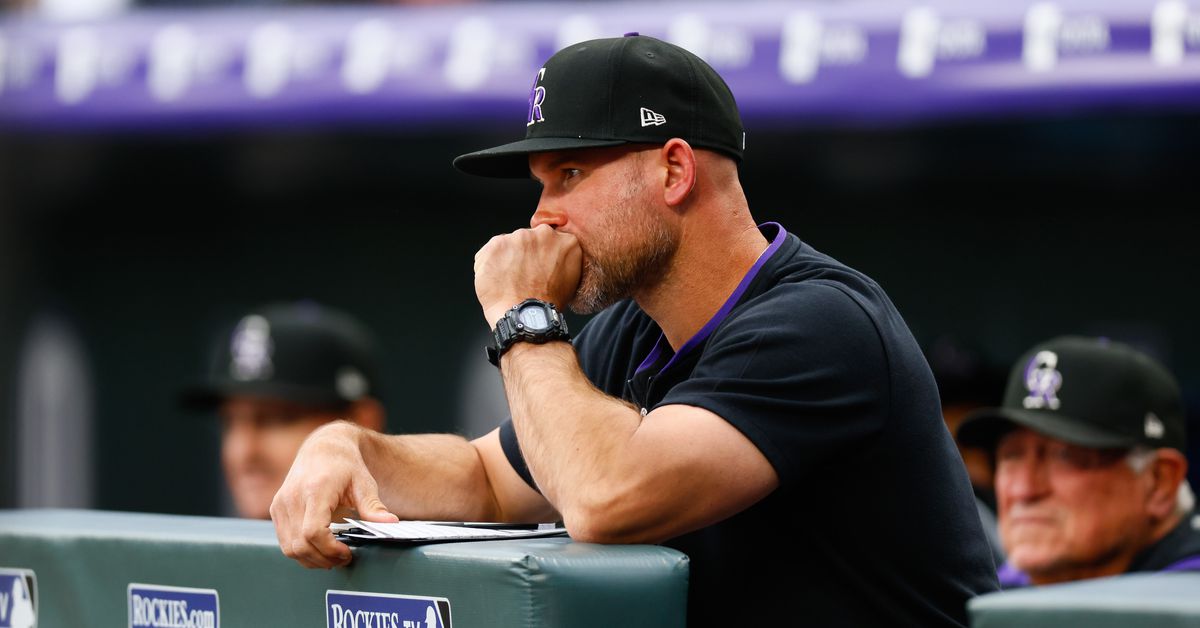
The Colorado Rockies are officially in a rebuild.
It’s not something the team has said, but the decision to dismiss manager Bud Black and bench coach Mike Redmond indicates a desire on the part of the organization to truly head in a different direction.
Interim manager Warren Schaeffer has been in his new position for just over two weeks, so it’s worth taking a moment to consider what we’ve learned so far about his approach to coaching, or his “pedagogy.” In other words, how does Schaeffer build relationships with players to support their development?
First, it’s important to understand that he sees the 9-45 Colorado Rockies in a moment teeming with potential.
“We are in a very unique situation at the moment,” Schaeffer said, “and for me, opportunity abounds in the situation we’re in. And if we don’t look at it like that, shame on us.”
Rather than saying that the Rockies are historically bad, Schaeffer has instead decided to cast this as a moment of potential in terms of the Rockies’ long-term goals.
“We could take this moment that we’re in right now and look back three years from now and say, ‘Boy, we used that the right way to move forward,’” Schaeffer said, “But if we’re going to commiserate and wallow in our pit, that’s no way for a man to act, and that’s no way for a group of players and just a group of people to act if you want to move forward.”
What, then, is Schaeffer’s strategy? Below are a few early takeaways.
1. Care about players and develop relationships
For Schaeffer, it all begins with players knowing that he cares about them.
“Number one, I think in order to put something like (player development) in place, you have to care about the player, and I care about all these guys,” Schaeffer said.
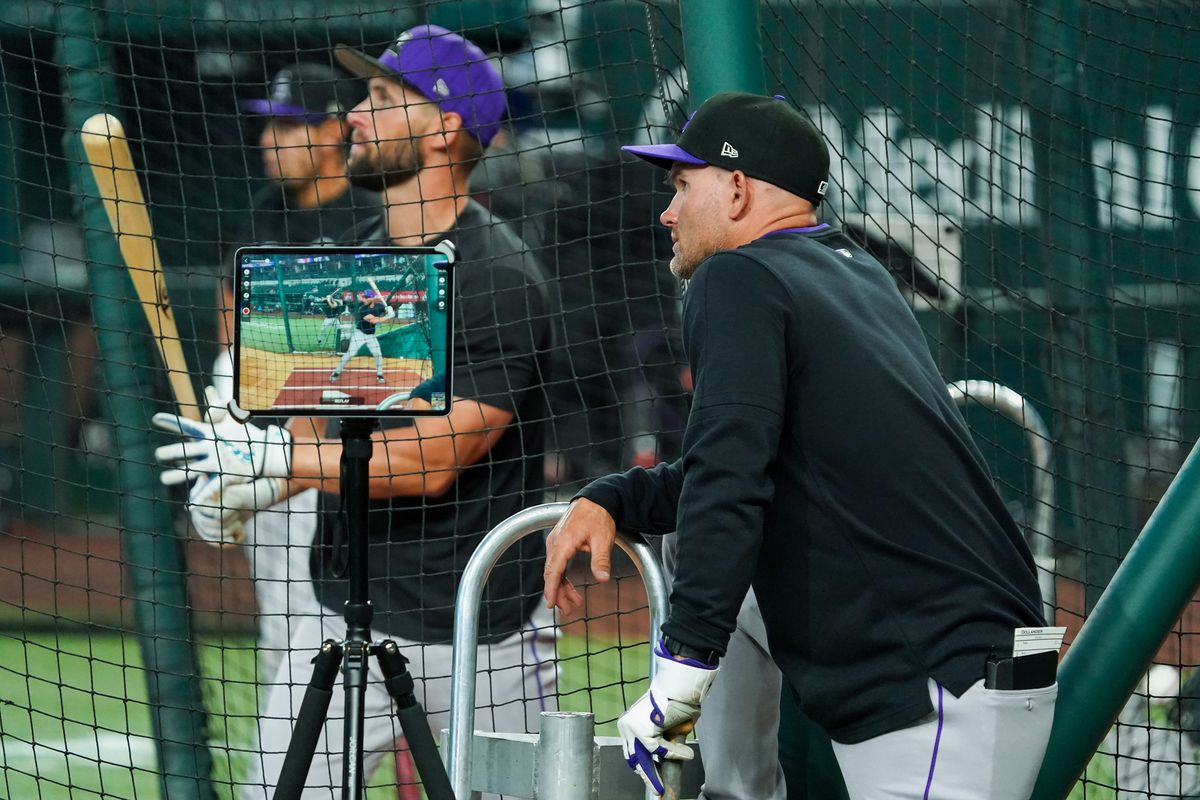
He emphasizes his time spent in the minor leagues, as both a player and a manager, in that those experiences gave him an important perspective.
“I spent however many years in the minor leagues — 10, 11 years? — in the minor leagues,” Schaeffer said, “and that was my main job as a manager in the minor leagues: Develop all day long relationships and skills, and then try to put it in practice during the game at night, and try to win because winning, for me, is a skill that you need to develop, and we’re in a process of doing that right now.”
Raymond Carlin III-Imagn Images
Player development is at the heart of Schaeffer’s approach.
“That’s how I look at the game,” he said. “I look at the game as a developer because there’s so much downtime in the day.”
Some of those relationships are already in place for Schaeffer; others, he’s having to work on, especially those with the pitching staff.
“Even though I have relationships with them,” Schaeffer said, “I’m just getting to know how they operate within their game.”
2. Communicate
It there’s anything that comes up repeatedly in conversations with Schaeffer is clear communication.
When he became interim manager, the following days were filled with individual player meetings.
“We always talk about communication,” Schaeffer said. “That’s something that you learn when you’re 10 years old. In baseball, it doesn’t matter who you’re playing with out there. The ball goes up, needs to be caught. Other forms of communication throughout the game need to happen. These are all things that we preach to them.”
Part of that means connecting with players as the Rockies navigate being historically bad.
“I think it’s extremely important. It’s a focus of mine every day. It’s a focus of the staff every day. We’re all in this together,” Schaeffer said.
Tied to effective communication, then, is community building. When Schaeffer says, “We’re all in this together” and “We’re all learning together right now,” he’s putting himself in the players’ position.
Part of that communication involves players feeling free to communicate to their manager when they have issues.
“I told (them) this in the first meeting,” Schaeffer said, “if they have issues with me, come on in. Let’s talk about it. It goes both ways. It’s not a one-way issue. I have a lot of things I need to work on on a daily basis.”
Those conversations, then, provide a basis for learning and trust.
“For me, you just have straight conversations,” he said. “And when that happens, when you develop a relationship, then you can have the really hard conversations, which that’s where growth comes for the player and for me.”
3. Set benchmarks to measure improvement
After building relationships and establishing clear communication, Schaeffer has built a basis for trust. That, in turn, encourages players to grow and take risks. In his first interview, Schaeffer reiterated that he wanted players to “play free.”
As he told Thomas Harding, “My message is we’re going to go out there and play free – and see how you can play by playing free.” To do that, however, players need to trust Schaeffer and have a clear sense of expectations.
“You have to be realistic of where they are and where they can go as a team and individually.”
He does this by considering what’s working and what isn’t for individual players — which goes back to building relationships and clear communication.
The errors and strikeouts? For Schaeffer, those are opportunities for improvement.
“These are all learning experiences where we want to see the standard upheld every day more and more as we go,” he said. “I want this team to look different in July than it does June and August. Hopefully we see that progression, but the standard never changes. The standard is extremely high.”
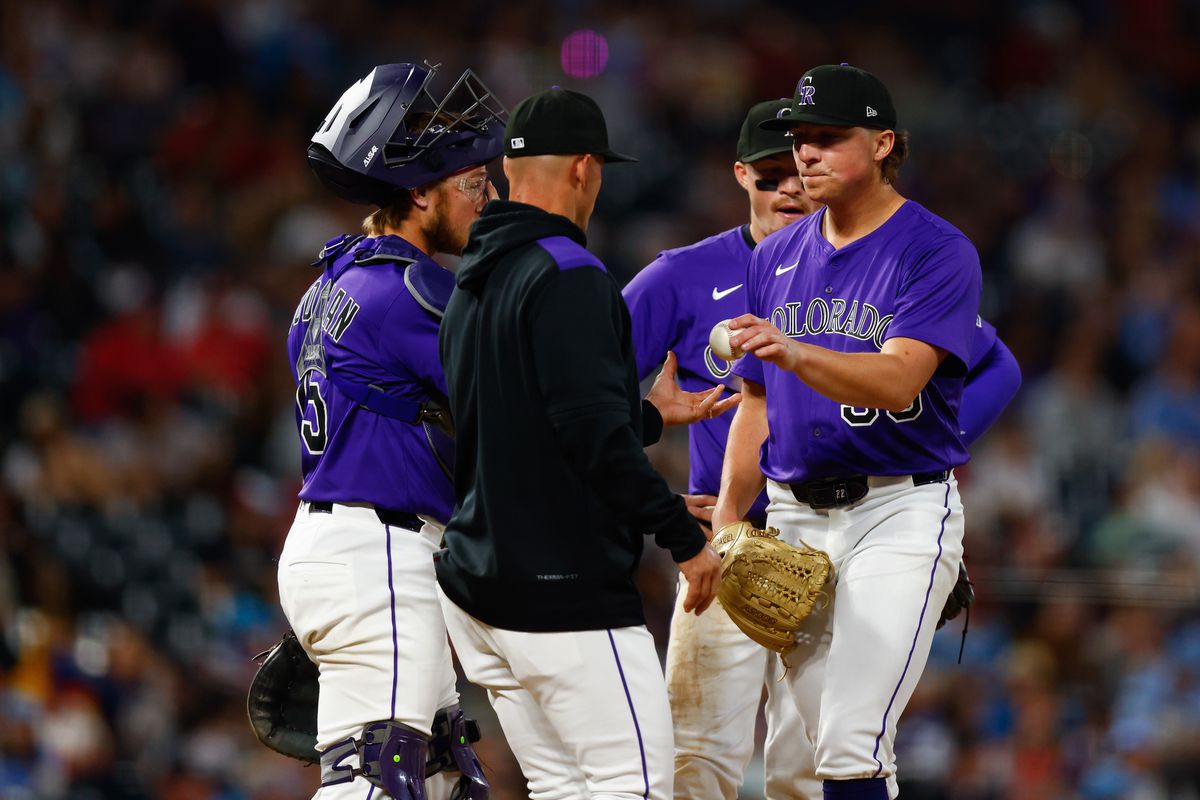
Photo by Justin Edmonds/Getty Images
Specific areas of improvement are something he thinks about a lot.
“So after the game last night,” Schaeffer said on Wednesday, “you think about what you want to accomplish the next day. You write it down, and then you check it off the list. I want to talk to this guy, this guy, this guy, this guy, this guy, about specific things, and then you make it happen because it’s important.”
Closing thoughts
Keep an eye on Schaeffer’s relentless positivity.
When he is asked about a player’s performance, Schaeffer always begins with a compliment, moves into some tactful criticism, and closes with confidence the player will improve. Those “feedback sandwiches” dominate his conversations about players.
Also worth noting is how differently Schaeffer has handled Michael Toglia. Schaeffer and his staff acknowledged the first baseman’s potential as well as his struggles. “He’s not performing like he wants to at the moment,” Schaeffer said.
Rather than letting him work through it at the plate, Toglia was removed from the lineup for three days to focus on physical and mental adjustments, and Schaeffer was open in conveying this: There was no “sore back” or a “day off his feet.” It’s a straightforward expression of expectations and belief.
Overall, players have spoken positively about Schaeffer’s management style though the proof will emerge in the course of the season. Will the Rockies improve? If so, how much? It’s probably time to set some benchmarks to assess the effectiveness of Schaeffer’s management style.
In addition to player improvement, under consideration is Schaeffer’s handling of a difficult situation. He is, after all, making a case for himself as the Rockies’ permanent manager. How he handles this season will reveal a great deal about how he would do the job going forward.
★ ★ ★
A (timely) Purple Row flashback
After I’d finished writing this, Sam Bradfield reminded me of this piece by Joelle Milholm from Opening Day 2024: “The Rockies need Ted Lasso.”
Perhaps in Warren Schaeffer, the Rockies’ Ted Lasso has arrived (albeit with actual knowledge of the sport he is being tasked to coach).
Let us know what you think in the comments.
★ ★ ★
This week on the internet
Rockies owner Dick Monfort has been the object of significant criticism this season. Last week, Kyle Clark weighed in.
★ ★ ★
The real truth about the Rockies’ attendance in historically bad season | Yardbarker
We’ve read all the national stories about Coors Field attendance is devoted Rockies fans. Not so fast.
Herget’s success providing stability in Rockies’ bullpen | MLB.com
Owen Perkins considers what “The Human Glitch” has brought to the Rockies. Although the Rockies will probably not have many players to move at the trade deadline, expect Herget to finish the season with another team.
Rockies Fans’ Best Hope Might Be More Losses | Defector ($)
If anyone gets Colorado sports, it’s Tom Ley. (I’ve tried to use a gift link here, so perhaps you can access the story.)
★ ★ ★
Please keep in mind our Purple Row Community Guidelines when you’re commenting. Thanks!