
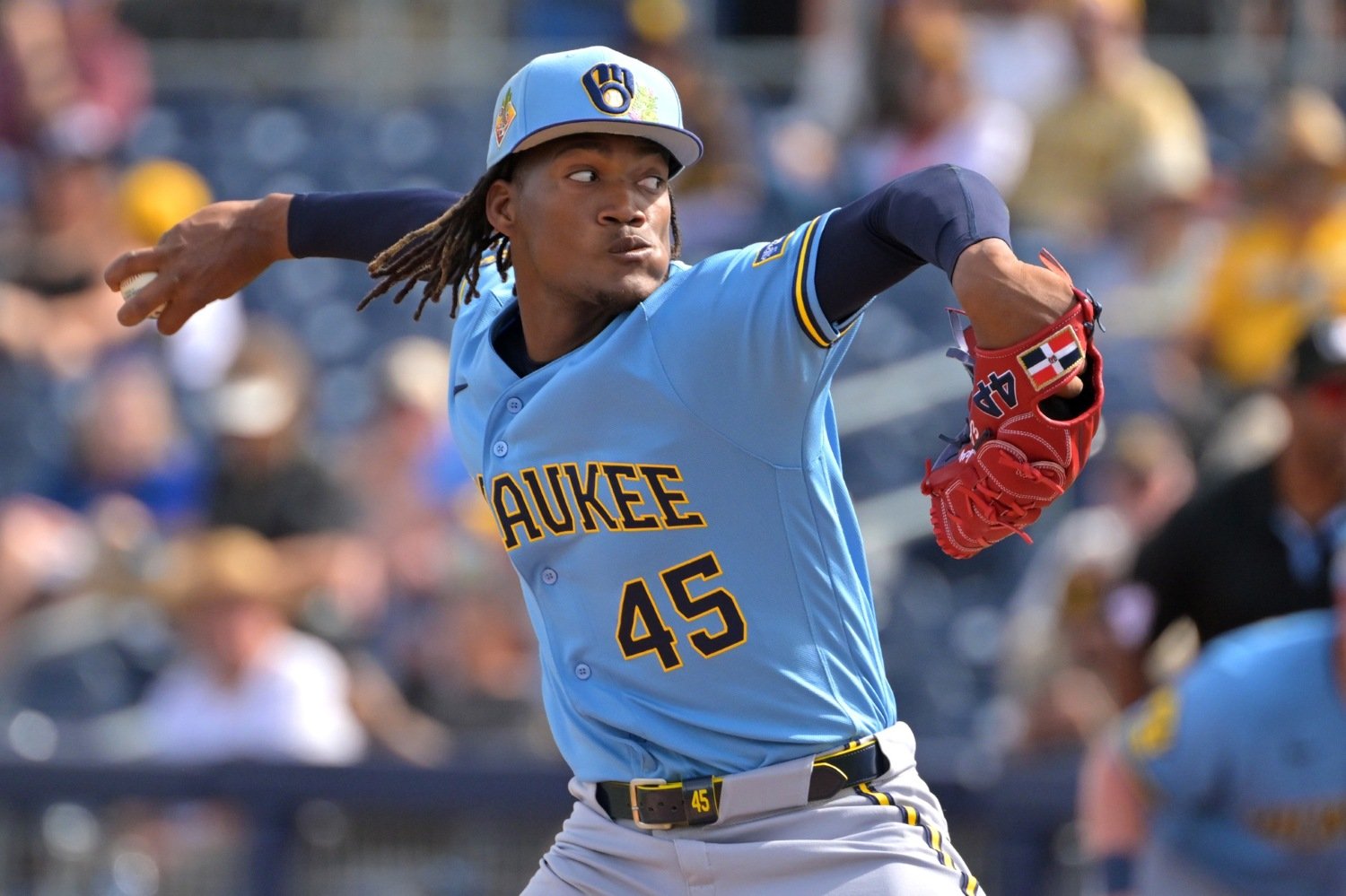
When the Brewers held a lead after six innings in 2025, it was almost certain they would come out the winners at the end of the game. The bullpen remains a strength in 2026, especially since, in a way, it feeds off the rotation depth that the Milwaukee organization has built. More than one starter in Milwaukee has found a home in the bullpen, where they become valuable contributors.
2025 In Review
Milwaukee’s bullpen depth was demonstrated in 2025, when the team allowed pitchers who were valuable contributors in previous seasons—like Joel Payamps, Bryan Hudson, and Elvis Peguero—to be plucked off the waiver wire. That came after the Brewers traded closer Devin Williams during the offseason. Trevor Megill, Jared Koenig, Nick Mears, Abner Uribe, and Grant Anderson were the mainstays in the late innings, joined by Aaron Ashby, DL Hall, Tobias Myers, and Chad Patrick from the rotation by the end of the season. Craig Yoho had a rough first ride of the big-league circuit, but also flashed signs of being the next dominant Brewers reliever.
Current Roster Situation
Megill, Uribe, Koenig, and Anderson all return to handle the late-inning duties, with Yoho likely to force his way to Milwaukee on a full-time basis sometime in 2026. Other relief candidates on the 40-man include Easton McGee, Sammy Peralta, and Rob Zastryzny. Ashby, Ángel Zerpa, Hall, Patrick, Shane Drohan, Carlos Rodriguez, Logan Henderson, and other starting pitchers in the Brewers’ rotation Royal Rumble may end up in the bullpen.
Among non-roster invitees, the Brewers have Gerson Garabito (though he’ll miss at least the first two months of the season with an injury), old friend Peter Strzelecki, and Jacob Waguespack as options, although they may be more likely to serve as depth at Triple-A Nashville. A lot of the Brewers’ rotation prospects at Nashville or Double-A Biloxi could find themselves doing work out of the bullpen to start their careers in Milwaukee, a path previously trodden by former Brewers ace Corbin Burnes and current ace Brandon Woodruff in their early years in Milwaukee.
Best-Case Scenario
The Brewers cash in on one or two relievers (Ashby and Megill seem like top candidates) around the trade deadline not only to pick up some help elsewhere for a playoff push, but also to clear space for younger pitchers with more talent and roster flexibility. No pitcher appears in more than 60 games. If this is happening, then the Brewers are getting excellent production from the bullpen, and they are building more assets to continue their competitive run of finishing above .500 in every full year since 2017.
Drohan is one likely candidate to take a multi-inning fireman role, similar to what Josh Hader held down in 2017 and 2018, and he could save the Brewers a not-insignificant amount of money by forcing a trade of Ashby. But this also will be dependent on how well Brewers relief prospects fare in Nashville and Biloxi. The Brewers have numerous pathways for their bullpen to succeed in 2026. The real question will be whether that depth is leveraged to bring in new assets for the team, or if it addresses injuries.
Worst-Case Scenario
The Brewers end up trading for relief pitching help. This scenario involves injuries and ineffectiveness across the entire pitching staff, and the prospects at Triple-A and Double-A. In 2025, the Brewers were able to win big, even when their bullpen was cobbled together, but the price was a heavy reliance on Megill, Uribe, Anderson, Koenig, and Mears, creating a bill that came due in the playoffs.
In this case, the Brewers’ preference will be to deal from their surplus, likely involving pitchers who are out of options, and picking the cream of the crop from teams in need of bullpen help.
Overview
The bullpen will probably be a source of strength for the Brewers in 2026, even if the team starts a churn when top pitching prospects push their way to Milwaukee. The biggest question isn’t if the bullpen will be a strength; it will be how it is a strength. If the innings for Brewers relievers are more spread out, the team will be in good shape for October. If multiple pitchers hit 70 appearances a game, the team might have a good record, but there’s a risk of an October dropoff as fatigue catches up.