
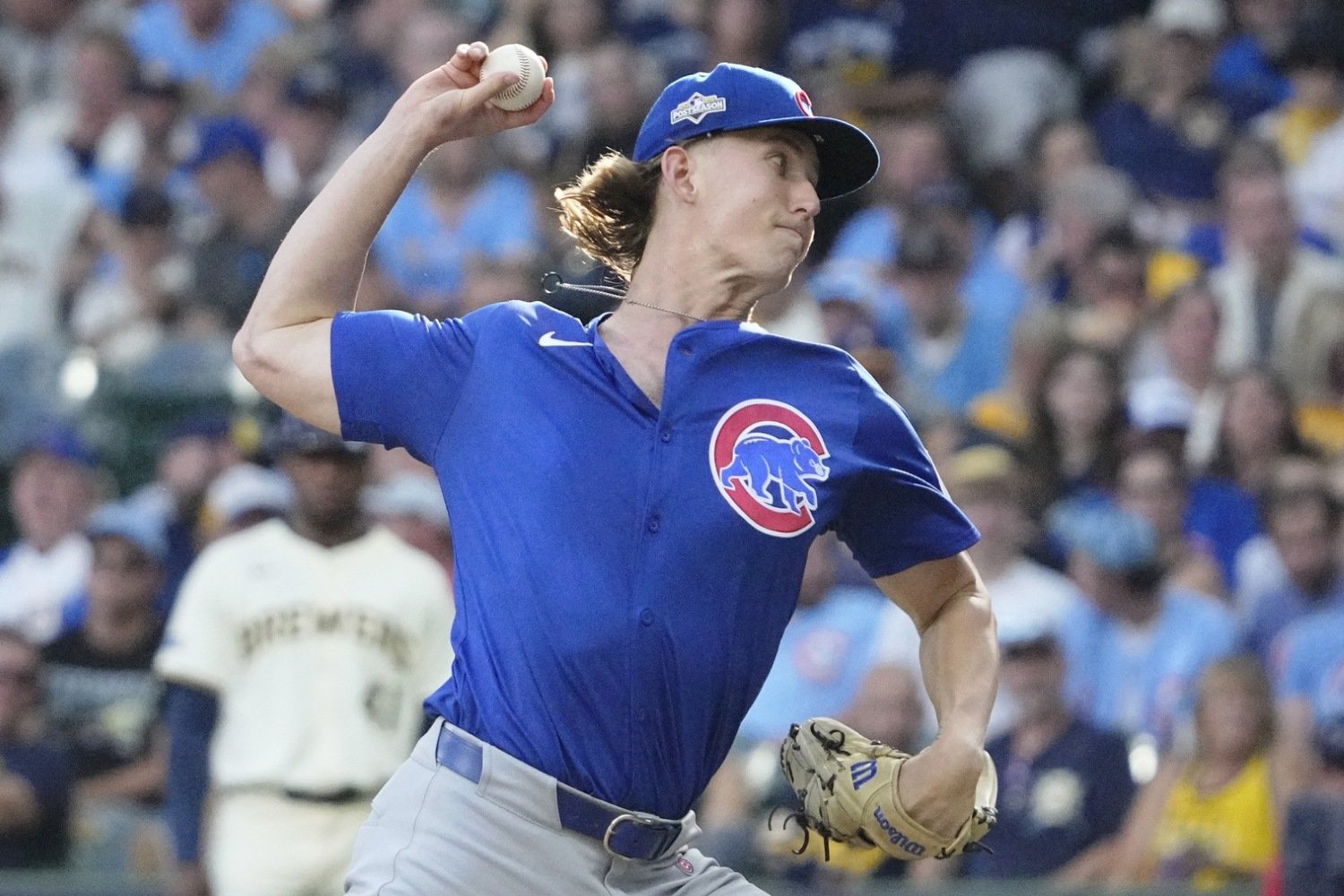
In his first action of the 2026 Cactus League season, Ben Brown needed just 30 pitches to get through two breezy, scoreless innings. He held the Royals to two hits and didn’t issue a walk, while striking out three. That’s just part of the story, though. For Brown, the bigger questions were bound to be about stuff and developmental progress—and on that front, there was even more good news.
Brown threw 12 curveballs, but of his other 18 offerings, only eight were his formerly standard four-seam fastball. The other 10 were, pretty unequivocally, sinkers—or, more precisely, two-seamers. The pitches still had quite a bit of carry, but they ran much more to Brown’s arm side, toward right-handed batters.
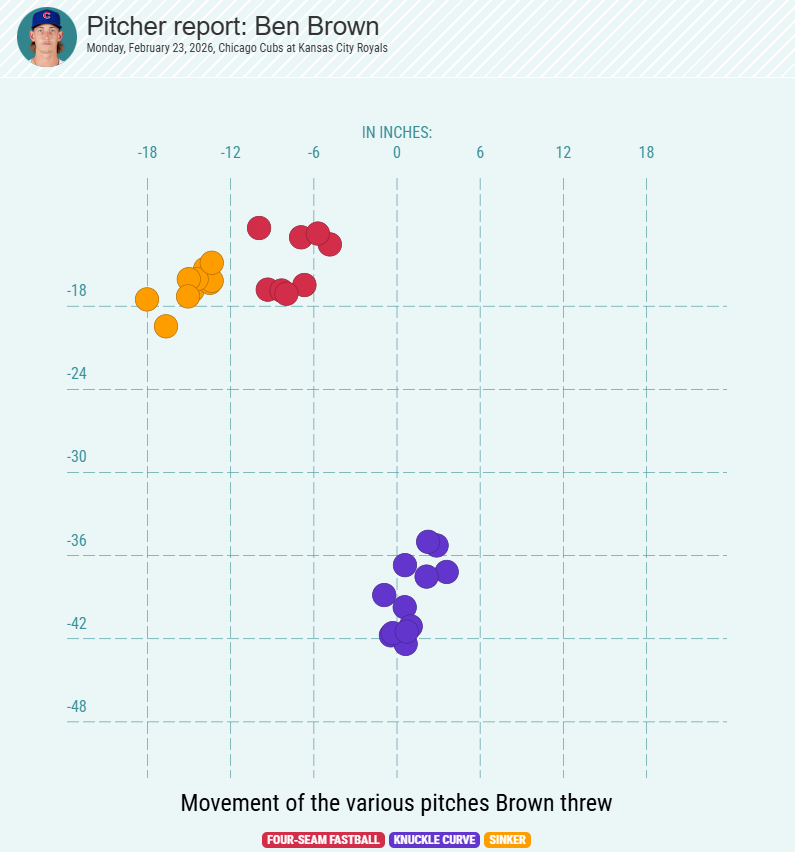
This is not the kind of third pitch Cubs fans have been waiting and hoping for Brown to add to his repertoire over the last two years. He’s experimented with different breaking-ball shapes to complement his hard curveball and with various forms of the changeup; those offerings would be the ones he could use to turn a lineup card over better and thrive as a starter. This pitch is something else.
Brown throws from a high three-quarter arm slot. Last year, he averaged a 45° arm angle, significantly higher than the big-league average. From that slot, hitters are virtually always looking for a four-seamer. Sinkers from such an angle are very rare. However, there’s no sign that Brown has lowered that angle this year. Spring games don’t come with arm angle data, at least right away, and Monday’s game wasn’t broadcast on video, but the video we do have shows Brown operating from at least as high a slot.
.png.4d33b41141cd417f5ed6feb4e12050dc.png)
Brown faced almost exclusively right-handed batters Monday, which is probably why we didn’t see him try out a cutter or test-drive this year’s flavor of changeup. It was still illustrative, though, because we got to se him use both the four-seamer (7 times) and the sinker (10) against batters of the same handedness. He was, plainly, using the sinker as a lane-changer, commanding the inner half of the plate with that pitch and the outer half with the four-seamer. The curve can play off each pitch; he just needs to prove to opposing righties that he can throw strikes on both sides of the dish.
Most sinkers come from lower-than-average arm slots, but the high-slot, running two-seamer is coming more into vogue. Last season, 15 pitchers threw at last 300 sinkers from arm angles of 45° or higher. Most notably, José Alvarado of the Phillies and Félix Bautista of the Orioles use high slots, but throw running, high-velocity heaters with which batters can hardly do anything.
Brown also sat 97 in his outing Monday. That’s the key to all of this. At that high a velocity, in two- or three-inning stints, he can be a monster, especially if utilizing multiple fastball shapes opens up the whole zone for him and forces hitters to chase his curve more frequently. The presence of a sinker does not make him a good candidate to start, per se, and we need to see whether he’s made any progress with pitches that neutralize left-handed batters before getting excited.
If Brown does end up in a stretched-out relief role, though, the sinker he showed Monday could be the key that unlocks his seemingly limitless potential. A version of him that mixes elite extension and average-plus command of both fastballs with that hammer curve is the second-best reliever in the Cubs bullpen, trailing only Daniel Palencia. Even if they keep trying to make things work for him as a starter, having the sinker in his mix will come in handy. If nothing else, he’s showing a new and vital skill that had previously been missing from his scouting report: adaptability.