
A couple of weeks ago I was able to get access to 20 games from the bridge league and the instructional league out in Arizona featuring the Cincinnati Reds taking on various opponents. Not all of those games included Statcast/Hawkeye information, but a majority of them did.
But I didn’t get access to the files with the data, so I had to watch each game and input all of that myself from what the screen was showing. And not all of the data you normally see was included. None of the games identified the pitches, just velocity and spin rates. Some games didn’t include exit velocity, some didn’t have the distances, and some didn’t have either. And the toughest part was that some of the games didn’t even list who was pitching or hitting. And during the bridge league games the Reds uniforms didn’t have names, just numbers. And those numbers were not always the same for players who were in instructional league with their names, which made everything tougher to figure out.
This article was first sent out to those who support the site over on Patreon. Early access is one of the perks that you could get be joining up as a Patron and supporting the work done here at RedsMinorLeagues.com
With that said, I have now gathered all of the data from those games and while some of the players are guys we’ve seen before, a lot of it is from guys we haven’t – Dominican Summer League kids, 2025 draft picks and signings that didn’t play during the regular season, etc.
Before getting into the data and some of the things that I saw I need to make it as clear as possible: The sample size here is incredibly small for everyone. And the games were spread out over about a 6-week period of time and even the guys that played in the most games only have about 20 batted balls worth of data spread out over that span. It’s not nothing, but I think it’s worth noting that the high exit velocities are worth paying attention to because it shows that they have the ability to reach those numbers, but the lower stuff probably isn’t because there just isn’t enough data.
The Hitters DataPlayerTop EVAVG EVTop DistanceBatted BallsAlexander Vargas102 MPH88 MPH3839Alfredo Alcantara107 MPH107 MPH3211Alfredo Duno83 MPH83 MPH61Anielson Buten100 MPH92 MPH3896Anthuan Valencia102 MPH87 MPH34214Arnaldo Lantigua102 MPH96 MPH3283Cam Collier93 MPH93 MPH3071Dylan King103 MPH96 MPH4058Eli Pitts106 MPH84 MPH33118Esmith Pineda103 MPH91 MPH3654Francisco Urbaez101 MPH101 MPH601Hansel Jimenez106 MPH92 MPH39515Jalen Hairston106 MPH90 MPH34912Jirvin Morillo104 MPH95 MPH39117Kien Vu114 MPH84 MPH4456Leo Balcazar65 MPH65 MPH41Mason Neville111 MPH95 MPH3546Naibel Mariano105 MPH89 MPH31316Pablo Nunez106 MPH89 MPH35123Rafhlmil Torres105 MPH91 MPH3698Steele Hall96 MPH85 MPH36322Ty Doucette111 MPH97 MPH43112Tyson Lewis110 MPH96 MPH825Yael Romero108 MPH99 MPH3365Yanuel Casiano103 MPH93 MPH3519Yeycol Soriano104 MPH88 MPH37111
Some Observations
There’s probably a sample size things going on here, but among everyone I watched one guy stood out for how overmatched he looked and it was Eli Pitts (video below). He played more than most others and has the third most batted balls among the players I was able to see. It was probably around the 16th game or so until I saw him actually hit a ball hard. Once again, I need to emphasize the sample size being incredibly small and the fact that this was about a six or seven week stretch where I watched about 20 games and no one played in all of those games, so don’t take any of this with some declarative statement about the future.
With that said, he simply was not hitting the ball hard nor was he hitting the ball well. 10 of the 18 batted balls from the games I saw didn’t go 40 feet before they hit the ground. Seven of the 18 didn’t even go 10 feet before they hit the ground. With that said, he had multiple extra-base hits in games that had no pitch or hit tracking and they certainly went well beyond the infield and were hit hard.
On the flip side of that was Ty Doucette. The 10th round pick out of Rutgers in 2025 didn’t play after the draft. But in the sample of my viewing of games he was playing in out in Arizona he was absolutely clobbering the ball. He topped out with a 111 MPH exit velocity and hit a ball 431 feet. He only had 12 batted balls in the games I watched but seven of those had an exit velocity in the triple digits.
Jirvin Morillo was incredible steady on the exit velocity from the sample of games I watched. Six of the 17 batted balls he had were 100+ MPH exit velocity and while none of his hits were home runs he had four balls go at least 331 feet out of the 16 that had a distance (17 had an EV, but one had no distance along with it).
Pablo Nunez was also rather consistent with his batted ball profile. He had the largest sample of any hitter with 23 batted balls worth of data. Of those 16 were at least 87 MPH or faster on the exit velocity scale.
2025 1st round pick Steele Hall (video below) didn’t show off any high-end exit velocities on the 22 batted balls he had. But 18 of the 22 batted balls he did have were between 88 MPH and 96 MPH off of the bat. It was quite consistent.
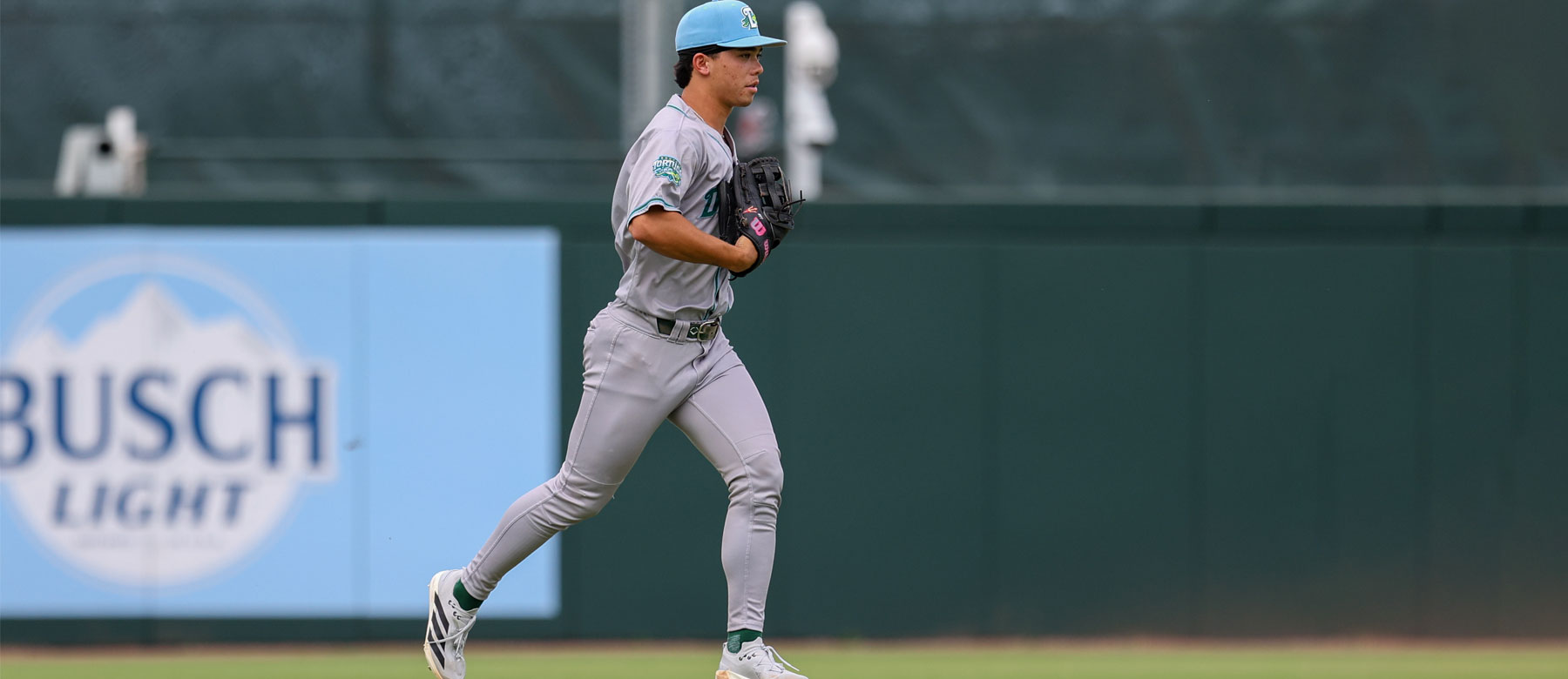
And then there was Kien Vu. He had both the hardest hit ball and the furthest hit ball from the games that had data. He crushed a 445-foot home run with a 114 MPH exit velocity (video below). He played with Daytona last year, hitting .273/.371/.532 in 23 games after the draft. While we only have verified data for the road games he played, his top exit velocity with the Tortugas was 107 MPH and the furthest he hit a ball was 395 feet.