
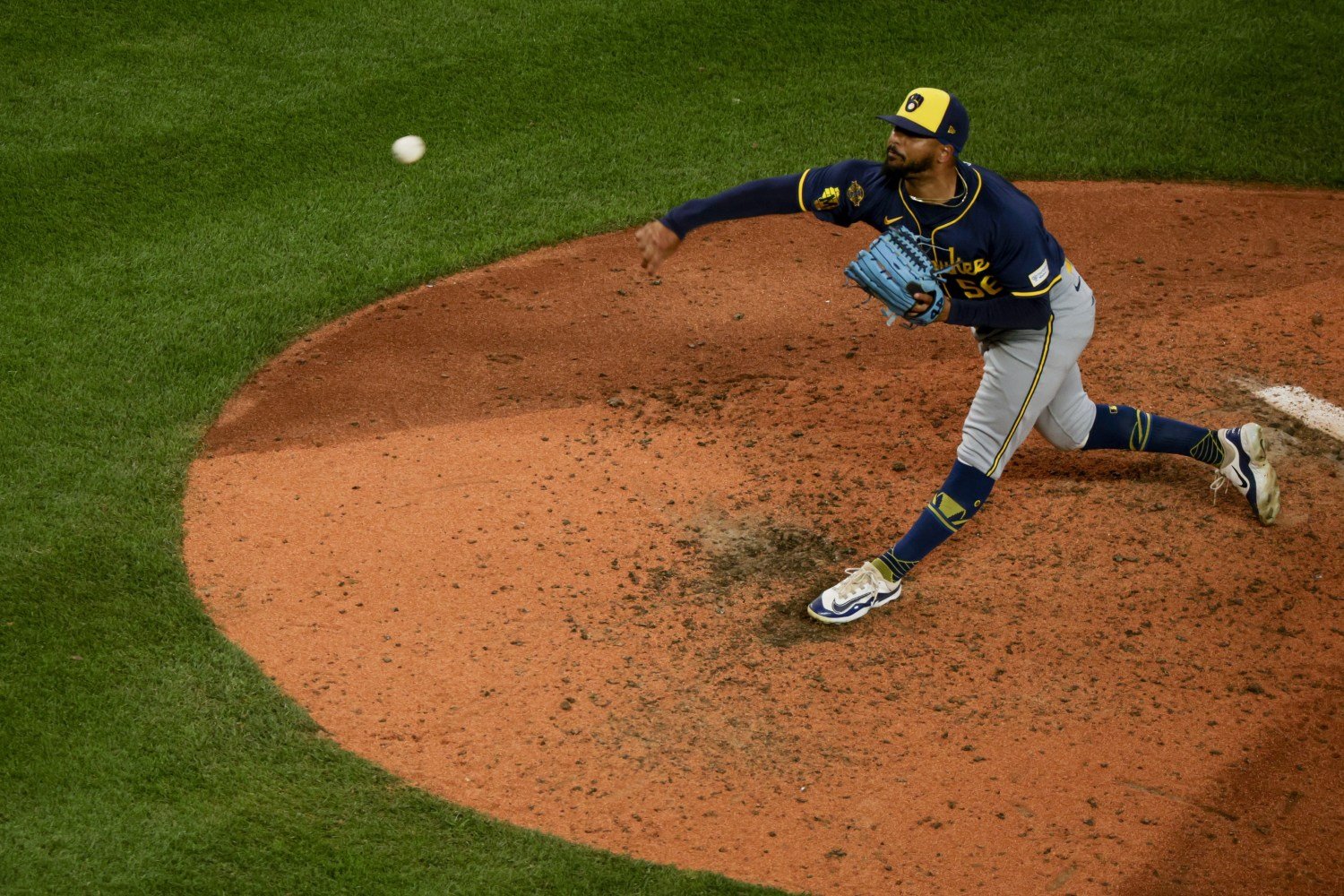
He’ll be overshadowed all season, by the likes of Trevor Megill and Abner Uribe. He won’t always even fit onto the active 26-man roster; being eligible to be optioned to the minor leagues is a mixed blessing. After a 2025 season in which he finally established himself in the majors, though, Grant Anderson is feeling comfortable and ready for 2026. He became a father this winter, and earlier this week, he became a peddler of a fine South Texan delicacy.
“He tried to get me to eat raccoon [Monday],” said manager Pat Murphy in a daily meeting with reporters in Maryvale, and he was serious. Anderson is from Beaumont, Texas, just east of Houston, and he still lives there during the offseason. He’s relatively soft-spoken and isn’t taking the big-league life for granted, but he’s become more at ease in the clubhouse.
“It was a good offseason,” the 28-year-old right-hander said. “I think I got a good amount of time off to rest the arm, so I felt pretty prepared coming into camp.”
He needed a chance to recharge, after appearing in 70 games in 2025: 66 in the regular season with the big-league team, another two during a stint at Triple-A Nashville, and two in the playoffs. He’d pitched just 49 times in the majors before last year, but he won over the Brewers and became a key piece of a deep bullpen.
“He was really super dependable at times. I mean, we used him in all situations,” Murphy said. “That’s the thing about our staff. You don’t have guys that are going six and seven, everybody’s got to pitch, so 13 guys of the staff, pitchers No. 11, 12, and 13 are gonna pitch in a variety of situations. He consistently kept answering the bell, so yeah, I think he’s earned a lot in our minds. We’ll see how he throws his spring.”
If that final sentence seems to threaten a negation of the rest of the paragraph, your antennae are working. Anderson was great last season. He’s won the team’s trust. Because they have so much depth, though—and because Anderson can still be optioned to the minors—he won’t be automatically handed a roster spot when the team breaks camp next month.
Last year, he had to fight hard to win that trust at all, because Murphy was acutely aware of his history as a punching bag for left-handed batters. Murphy is a staunch believer that (while it’s important to play matchups) every reliever in a modern bullpen has to be able to get out batters of each handedness, and Anderson entered 2025 having been shelled to the tune of a 1.200 OPS by lefties in the majors. Last year, he held them below .700. How?
Firstly, he raised his arm angle. Though famously a sidearmer, Anderson said that he came to feel he could execute his arsenal better by slightly raising his slot. In particular, that made it easier for him (with his unusual hand position, as well as the arm slot) to throw a running two-seamer, as opposed to a plunging sinker.
“Yeah, that was intentional. Sometimes, the lower the arm gets, the pitch shapes can kind of change slightly. and I didn’t really like the huge, you know, straight-down sinker,” Anderson said. “I felt like it was maybe okay to throw it to righties, but if you ever wanted to throw it to lefties, it was just not a good pitch, not that I would throw it a ton to lefties anyways, but it was just—it [also] made the sweeper better, bringing the arm back up. That was one of the things we talked about when I got here, was making the breaking ball better, so that was part of it. The grip was the biggest part, but also kind of raising the arm back up, too.”
The result was, indeed, a change in movement profile, albeit a subtle one. Anderson saw slightly more run and slightly less heavy sink on the sinker. His four-seamer ran a bit less, but maintained its carry, and he and the team transformed his slider into a true sweeper, as we documented last spring.
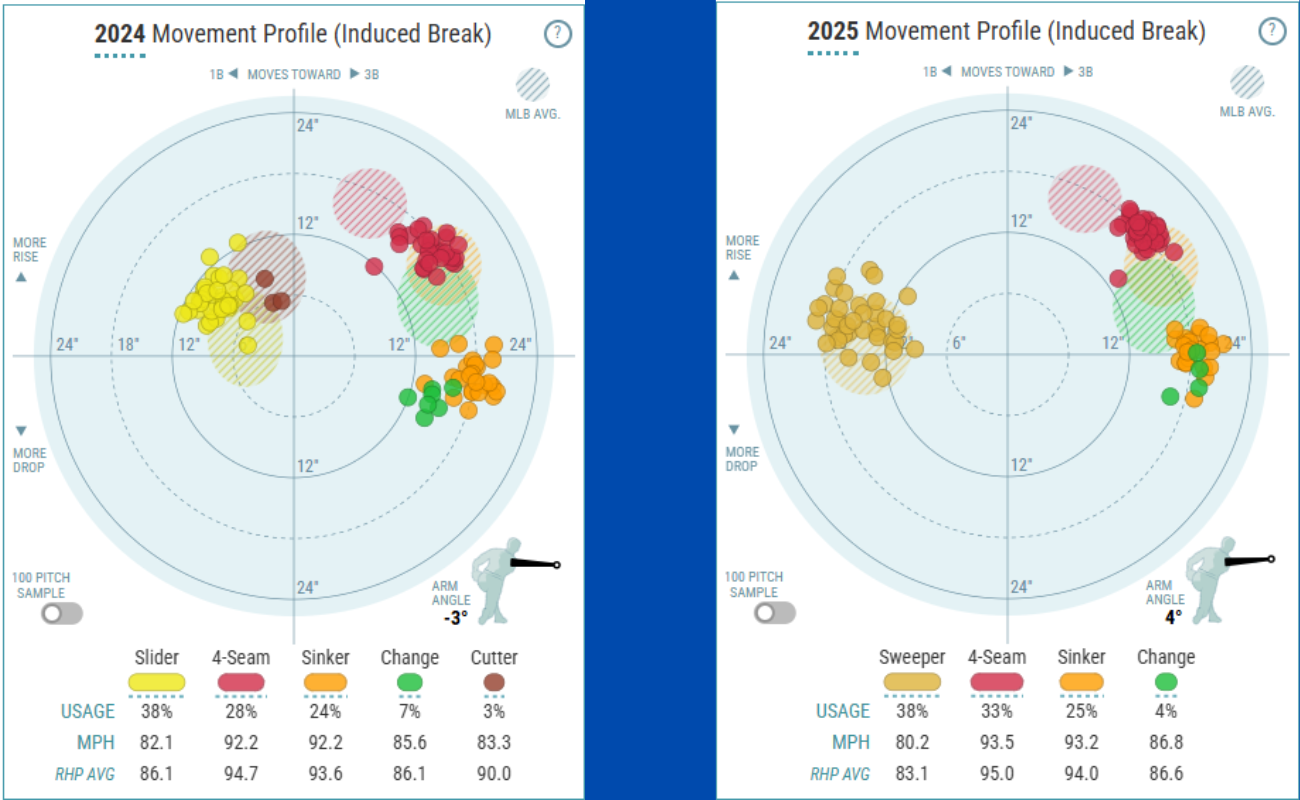
The seemingly slight change in slot was also part of a plan to allow Anderson to work more athletically down the mound, whence came his uptick in velocity. Taken together, the changes meant he was no less deceptive, but much more versatile.
The heavy lifting of this particular pitching development project, therefore, is done. Anderson said his arsenal will remain relatively stable this year, and expects to cleave to the same mechanics he worked out last year. The adjustments, now, are more granular.
“I think that, you know, obviously the arsenal stayed the same,” he said. “It’s just a matter of, you know, usage in certain counts and maybe a slight adjustment to last year, what we might have done ahead in the count or behind in the count, just to kind of prepare for the adjustment hitters might make.”
Changing angles opened up all of those changes to his arsenal, and indeed, most of the benefits redounded against left-handed batters. Here’s an animated proxy for what righty batters saw against Anderson in 2024 and in 2025.
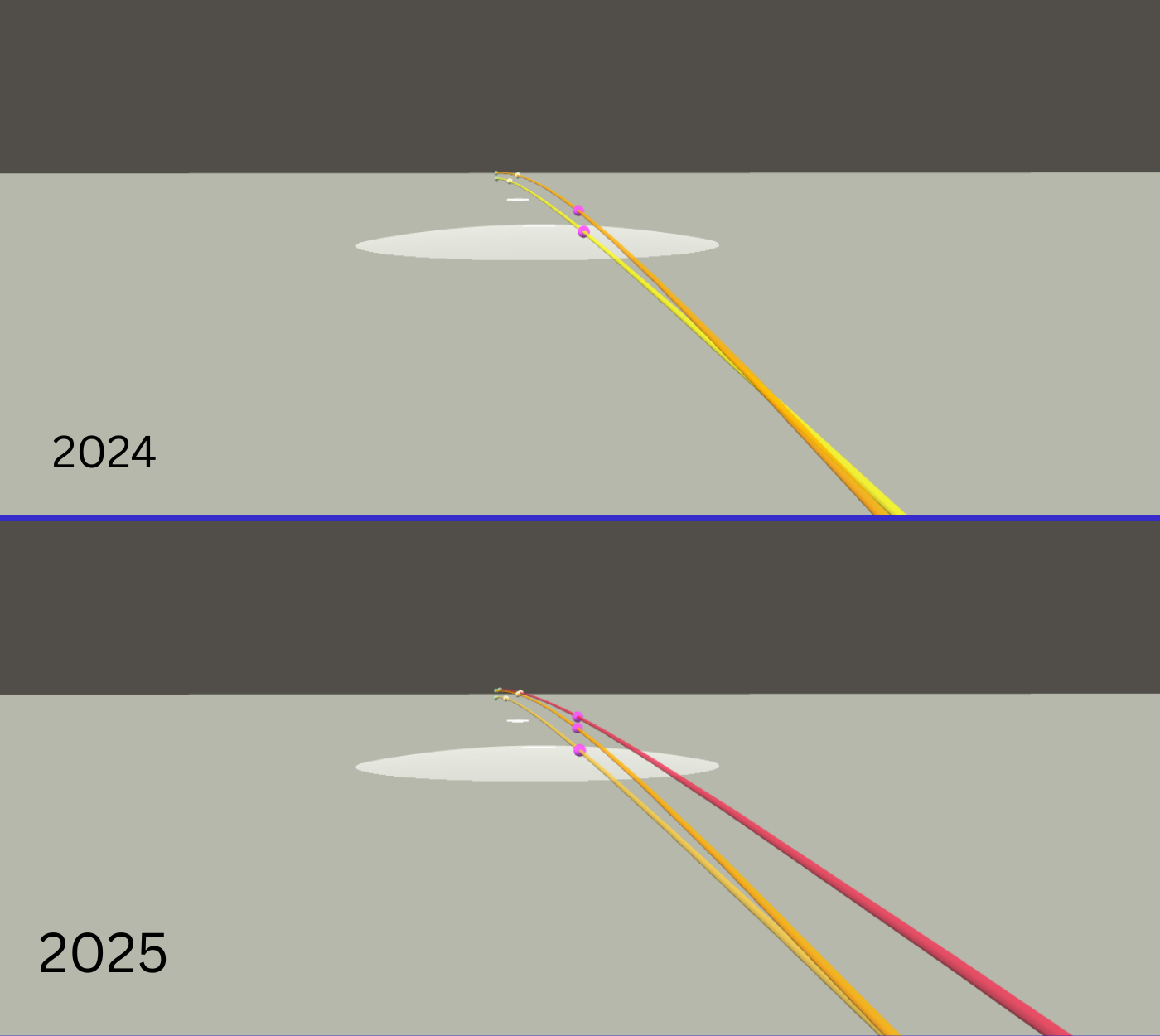
The higher slot allowed Anderson to become one of the pitchers who throws the highest percentage of their four-seamers above the belt, and to lean on that four-seamer even against righties. Anderson said he was comfortable with the four-seamer even from the lower slot, but tended not to use it to righties until the small tweak made it possible to attack the top of the zone with the pitch. (This is one area, he acknowledged, where he and the team might do things slightly differently in 2026.) More importantly, in those matchups, the sinker was able to be confined to the inner edge, because the four-seamer worked any time he needed to go for the outer half.
Against lefties, the changes are more obviously beneficial.
.png.e3e17ec7aa4c223a239b68c510cc42da.png)
As Anderson mentioned, changing the slot made him more comfortable throwing the sinker to lefties, which made him much less predictable. It also made disguising his changeup and sweeper easier. This was the key to the lock for Anderson against lefty batters. That’s a specialty of Chris Hook and Jim Henderson, whom Murphy has dubbed the “H & H Carwash” this spring, an homage to a beloved landmark from his time in the minors that also captures the systematic way the duo shines up new arms as they arrive in Milwaukee. However, as Murphy hastened to note, that doesn’t always mean giving a pitcher something entirely new.
“Sometimes it’s something they already have, but they haven’t emphasized,” Murphy said. “You know, say, we’re gonna throw a little more two-seamer. And here’s why. They do a great job; they really do. But again, left-handers, [Anderson]’s got enough in there to make it really uncomfortable for them, too, in a different type of way. It’s not the angle that’s gonna get you—or it’s not the same-side angle, it’s gonna be that there’s a different way the ball comes to you.”
That’s exactly what’s happened with Anderson. He’s unlikely to step into any closing or high-leverage setup role, but he looks like a medium-term answer in the middle innings, capable of getting out both lefties and righties. He’s as likely to make another 60 appearances this year as not, given good health, thanks to the Crew’s carwash—and to his own open-minded approach to making small adjustments with big payoffs.