
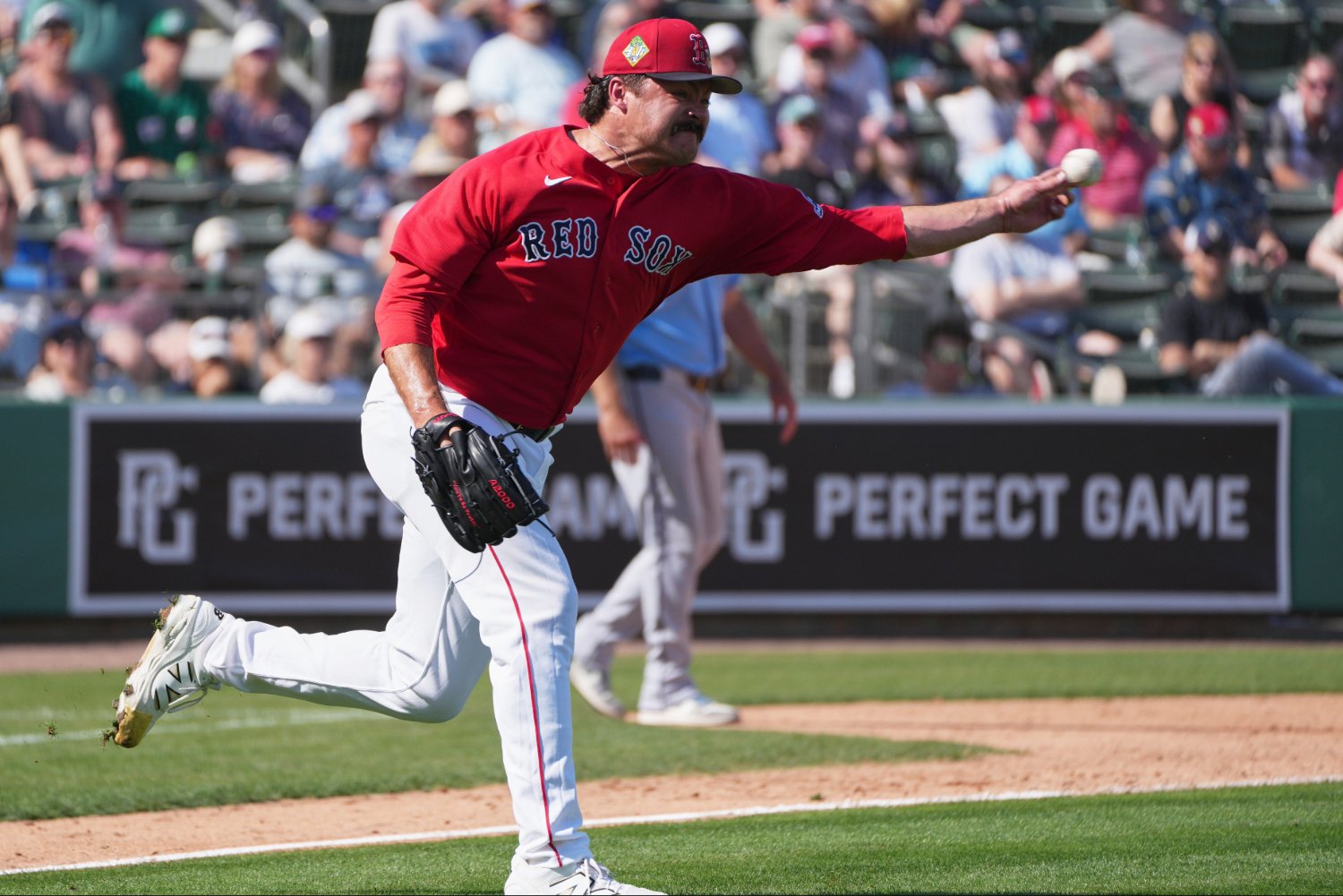
Real, live MLB action is finally upon us once again. It feels so sweet after such a long (and cold) offseason — aptly named, spring training marks the unofficial end of winter and the even-less-official start of the season before summer. But while snow and blizzards continue to rampage the northeast, Florida and Arizona are unperturbed. The sunshine is unrelenting, and so too is the baseball that comes with it.
All of that is to say: Welcome back to the funniest and most headache-inducing period of baseball discourse. If you’ve followed this sport for more than a season, you know the trap that is spring training. It’s a time of year when unheralded non-roster invitees look like future MVPs all while the ace your team shelled out $150 million for looks like a washed-up scrub. Because baseball has been absent for so long, it’s impossible not to draw conclusions from the evidence of our eyes and ears, but we must use precedent and history to remind ourselves that nothing happening during this exhibition slate actually matters.
For every Nolan Arenado or Kris Bryant-style breakout — where a top prospect announces that they are truly, wholly ready for the big leagues — there’s 100 players who ride unsustainable hot streaks in spring to undeserved roster spots or, at the very least, 15 minutes of fame. It’s as inevitable as it is frustrating.
Let’s take the 2025 Red Sox as a case study. Last year, the team’s spring training leader in OPS was Mikey Romero (2.048 OPS). Among players with at least 10 at-bats, though, the top five looked as such: Trayce Thompson (1.280), Alex Bregma (1.026), Nate Eaton (1.022), Marcelo Mayer (.982), and Abraham Toro (.951). Toro is perhaps a perfect microcosm of the biggest pitfall spring training presents: the sample size. Toro repeated his blistering spring in May (124 wRC+) before slumping to a .574 OPS in July.
Anyone who gets invited to spring training is capable of getting hot, even against the best players in the world, because they are the best players in the world. They wouldn’t be at spring training if they weren’t able to hit against pro pitchers, or if their fastball sat at 75 mph. In a small-enough sample, anything can happen. Which is precisely why we can’t trust what happens in February and March, especially since the average level of competition is lower than it is during the regular season.
So, when Brayan Bello and Ranger Suarez are repping double-digit ERAs through their first appearances, or when Tyler McDonough and Andruw Monasterio are posting OPS figures above 1.000 through the end of February, remember that none of this guarantees anything when the games start to actually matter.
Now, this whole conversation requires a caveat once every three years, including 2026: the World Baseball Classic. Unlike spring training, these games “matter” in a somewhat technical sense. Though nothing from the tournament carries over into the regular season, there’s a lot of pride on the line. And as baseball’s version of the World Cup grows more and more popular with each iteration, players take their performance — both from an individual and team perspective — more seriously. Winning championships and posting huge stat lines gets your name in the record books, something that not even the most legendary spring training performances have a claim to.
When the WBC gets fired up next week, it’ll be a little more difficult to discern which performances are worth reading into. Masataka Yoshida was the best player in the last edition of the tournament, setting a new WBC record for RBIs. He debuted with the Red Sox that year to the tune of a solid but unspectacular 111 wRC+. Could a similar dominant performance from one of the Red Sox’s many representatives portend a 2026 breakout? It’s hard to say with any degree of certainty.
So, let yourself dream on that long-awaited Romero breakout and don’t be discouraged by Bello’s ugly stats. Just as the players are warming up their bodies for a long season ahead, we too must get our minds back in the habit of deciphering what’s real and what isn’t.