
Conceptually, a Zero-SP draft strategy is attractive because starting pitching, no matter the cost, is a very fragile and/or volatile asset. Hitters, on the otherhand, are less volatile, and it’s wiser to choose them in the early and mid rounds — within the top 100 picks. But now comes the hard part that makes the faint-hearted turn tail and run — building a staff of fantasy starters from around pick No. 100 and later.
Again, I advise this strategy (or at least not drafting a starter in the first five rounds) in all formats except head-to-head leagues with very limited hitting starters (typically nine active hitters) and a nine-man pitching staff. There’s as much free-hitting loot on waivers in these leagues as pitching bargains — and probably more.
I’m not making big promises with the pitchers I recommend here. About half will get hurt or have bad years. But I think the hit rate will be similar to the pitchers drafted in the top 100. And to be clear, I think these pitchers have serious upside relative to cost. The big benefit is that losing one of these guys to injury isn’t a disaster because your investment was low. And you also avoid the worst situation for any fantasy manager — the forced hold of a terrible performing player because you paid too much to cut him. Think Aaron Nola last year. You have no loyalty to any pitcher you roster, and that’s very liberating; this ruthlessness makes you a more formidable opponent.
I put all the pitchers with 40+ innings last year through five filters, but only got eight names at a February ADP of 100 or later — not enough. So then I used just two filters: K% and xwOBA (which is basically a proxy for expected ERA and captures everything — Ks/BBs, contact quality, trajectory — in one bucket), which gave me an actionable list I feel really good about.
Some pitchers just missed qualifying, and there will be needs beyond this list, even after taking two closers (the higher the K%, the better) in the first eight rounds. Because closers are known quantities, you have to pay up for them. For any remaining pitching needs, check Statcast for those with better strikeout rates and OPS allowed marks.
Five-filter targets
Nolan McLean, NYM (ADP: 96): McLean is close enough to pick No. 100 that you can take him near his ADP or, about half the time, outside the top-100 picks. McLean had a 2.06 ERA and .259 wOBA. His expected ERA was 3.53 (xwOBA was .293, with .316 being average). His K-BB rate was elite at 21.8%. McLean has four pitches with a whiff rate over 30%, including a curveball with an absurd 3,248 RPMs that’s swung at and missed 50% of the time. I actually believe in his actual numbers more than his expected ones when looking at his tape. McLean could win a Cy Young Award, health permitting.
Brandon Woodruff, MIL (ADP: 127): He came back from major shoulder surgery last year, which ends most careers, and he lost a lot of velocity when he returned. There are questions about his availability on Opening Day and his innings generally, but the results were there. His K rate was 32.3%. Woodruff’s xwOBA was absurdly good at .233, which translates to an xERA of 2.22 (99th percentile), though in only 64.2 innings. Still, his K-BB rate of 26.9% is otherworldly. The league hit .063 against his changeup. Woodruff’s ADP is a gift. Make sure you revisit it by setting filters for “last week” only when you draft. His ADP could change radically based on his April availability.
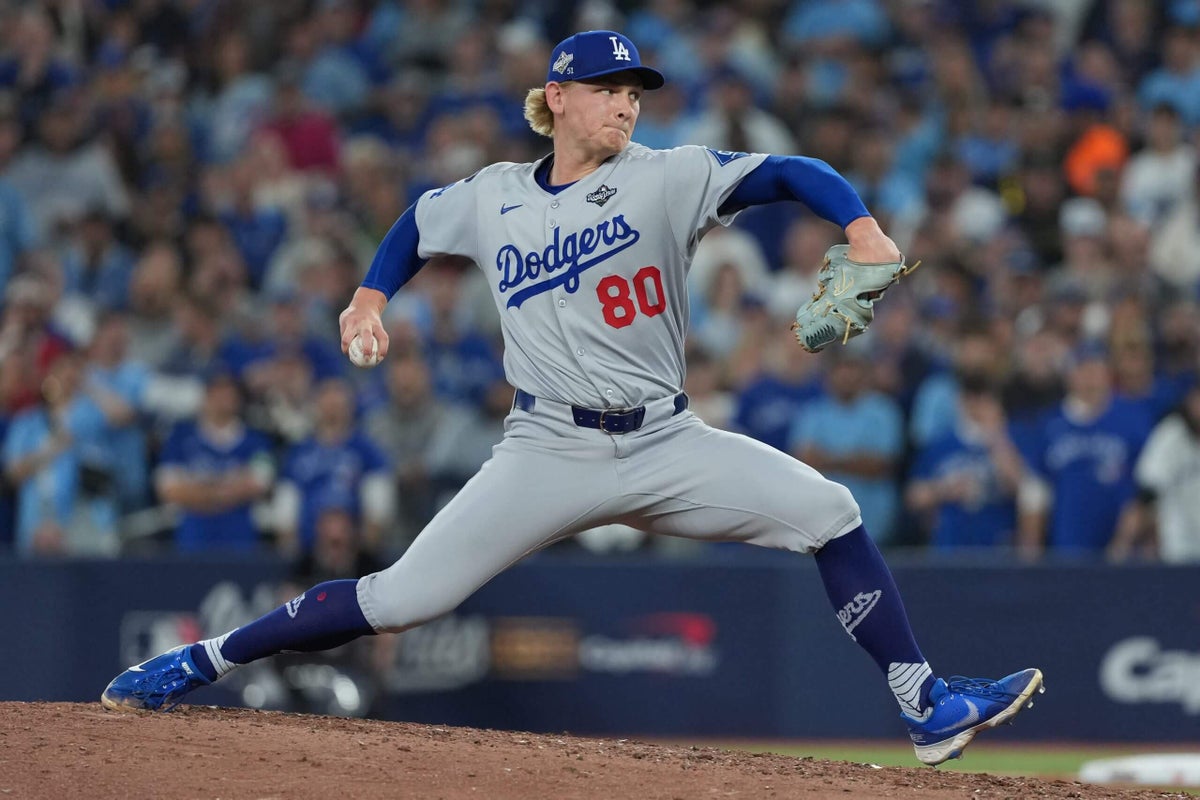
Emmet Sheehan, LAD (129): He won so many leagues for people down the stretch last year that those of us who rostered him can’t believe he’s this cheap. His K-BB rate was 23%. His xERA was pretty much in line with his actual at 2.82. Dodger Stadium is the most homer-friendly park in baseball at 27% above average, and Sheehan is an extreme fly-ball pitcher. There’s not much of a resume here and a significant injury history, but Sheehan has SP1 upside, and we’ve seen it already.
Cam Schlittler, NYY (137): His velocity is 95th percentile, and his cutter is very effective, which he throws along with his fastball 76.7% of the time. Statcast calls the pitch a cutter, but some refer to it as a hard slider. His curveball has shown promise, and maybe it can be more effective going forward than it was in 2025 (just a 21.8% whiff rate). If the curveball becomes an average pitch, Schlittler could be a top-10 fantasy starter. The velocity at which he throws, unfortunately, carries more injury risk than average.
Blake Snell, LAD (138): He’s pitched 130+ innings twice and won the Cy Young after both those seasons. That’s Snell in a nutshell, and unavailability is why he’s so cheap. He’s also not scheduled to open the season in the rotation as of late February. I wouldn’t draft him, but I am afraid Snell will beat me, especially with his ADP likely to sink in light of the latest news that he won’t be back until May 1, at the earliest. You need multiple IL spots to even think about this.
Sean Manaea, NYM (289): Now we’re talking. Manaea is even an NL-only league play, given how absurdly cheap he is. Manea’s K-BB rate would have ranked third in baseball and edged out Paul Skenes. I know the actual stats weren’t there, but he was essentially the pitcher he was in 2024, though with much worse luck. Manaea has worked this winter to get his arm slot exactly where it was in 2024, rather than dropping it even further down as in 2025. He’s looking for the perfect mix of fastball ride. Combine that with his extension, and he has one of the best heaters in the game. He will be on all my teams. Always gamble when it doesn’t cost you anything.
Reid Detmers, LAA (350): Look, we’ve been down this road before with Detmers, who has always been stuff over results. And his success last year, as limited as it was in closing that gap, was as a reliever. But we’re talking a $2 pitcher tops in only leagues and a deep reserve pick in mixed. Over the past two years, his expected ERA has been sub-4.00, with a K rate approaching 30%.
Jacob Lopez, ATH (400): One of my guiding principles is that you can’t fake Ks, so I don’t care about Lopez’s lack of velocity. I get that his home park is a joke, and expected stats are park-neutral. But he has a 28% K rate with a 33.2% hard-hit rate (average is 37%). His home ERA, somehow, was just 2.64. I know being an extreme fly-ball pitcher is a dangerous way to live, especially in Sacramento. But he’s almost guaranteed a winning WHIP if he gives up soft fly balls and pop-ups and maintains his K%.
Two-filter targets (Ks, xERA/xwOBA)
All of the pitchers above are on this list, too. And you can argue that the five filters are overkill since xERA/xwOBA (which is the same stat expressed differently) is a big bucket that captures and weights everything perfectly, according to Statcast. Strikeouts are a category of their own, and getting a high K rate allows for flirting with league minimum inning requirements. In most formats, the fewer innings your staff pitches, the better. I fully endorse these additional pitchers at their ADPs.
Nick Pivetta, SD (95): Pivetta is close enough to No. 100, which means he’ll be drafted later than No. 100 about half the time. I don’t get Pivetta’s price. I didn’t get it last year, either. His xERA is way worse than his actual ERA, but he’s been over a 20% K-BB rate for the past three years, cumulatively. His park is a net plus but not radically so. He’s beaten his xERA in seven seasons. Is his history of consistently outperforming his xERA proof he’s not just lucky? No. It’s more likely there’s something about Pivetta’s pitching that allows him to beat expectations. He’s another extreme fly-ball pitcher, and maybe he’s benefiting from good defense. I think the ninth round or so for Pivetta is basically paying for 27% Ks, which is very bettable, and a 4.00 ERA with a winning WHIP.
Chase Burns, CIN (109): I write the backs of Topps cards and am familiar with the ultra-modern market, though I only collect vintage. There is such a disconnect here because Burns is a player being chased in the hobby. In our drafts, he’s an afterthought. But he has 97th-percentile velocity, which alone is worth pick No. 109. But he also has a 35.6% K rate and a 27.1% K-BB rate. His xERA was more than a run lower than his actual ERA. His ADP makes me question whether he’s hurt. He’s not.
Sonny Gray, BOS (137): I hate small pitchers, but not as much as the market. While his 4.28 ERA in 2025 wasn’t great, his xERA has been 3.71, 3.64, and 3.88 over the past three years. Now add a 21% K-BB rate — the average is 13.8. Sure, he’s in his age-36 season, but he throws seven pitches and three breaking balls; he’s maybe the best breaking-ball starter in baseball. Additionally, his K rate for the past two seasons combined is 28%.
Nathan Eovaldi, TEX (147): Just look at this Statcast page. The 0.85 WHIP isn’t repeatable, but the prior two seasons were 1.14 and 1.15. Finishing at 1.09 is a reasonable projection. His walk rate was 98th percentile, and there’s nothing random about walk rate. His ADP seems too low. He’s old (36), but he’s already lost his elite velocity (down to 44th percentile last year), and it clearly hasn’t mattered. Eovaldi doesn’t need much with that devastating splitter (.196 average allowed with 36% whiff rate).
Edward Cabrera, CHC (189): He’s always been an injury-prone tease, but in his final 19 starts last year, Cabrera had a 2.87 ERA and 117 Ks (27.3%). If you get 30 innings out of Cabrera before an injury, what kind of damage will that do to your team at his ADP? Most Round 15-16 picks get waived. Cabrera is a high-K, high-ground-ball pitcher and thus way more likely to have a positive ERA than his career stats indicate.
Jack Flaherty, DET (223): He over-regressed last year, and we all expected it. But Flaherty is probably a 4.00 ERA pitcher with a K rate closer to 30% than 25% — and 25% is fine. His knuckle-curve went from being a good pitch in actual results to only good in expected ones. The whiff rate on that pitch (an absurd 42.4%) was virtually unchanged.
Joey Cantillo, CLE (281): “Well, he was mostly a reliever (games), so who cares about his stats?” Did you know he had a 2.96 ERA in his 13 starts with a K rate of 26%? The four-seamer got mashed last year, but his changeup is so elite (49.4% whiff rate) that there’s a chance it will play up if he can tunnel those pitches better. He probably won’t be a mixed-league asset, but it’s far more likely than his ADP suggests. In September, Cantillo had a 1.55 ERA and 0.90 WHIP (five starts).
Chad Patrick, MIL (315): Part of my recommending Patrick is faith in the Brewers’ organization. While he performed better than expected, his xERA was still under 4.00. We’d like the Ks a little higher, but 25% is fine. The fastball has a lot of revs/ride and plays up, while his velocity is average. He’s also on a good team with a top bullpen, so his wins should be helpful. Patrick isn’t a world beater, but he could be a sixth or seventh mixed-league starter for basically zero cost.
Michael Soroka, ARI (462): Soroka can be valuable in mixed leagues despite an NL-only league price tag. Soroka was once a top prospect before multiple Achilles tears, and he rediscovered himself last year. As of now, he’s slated to be the sixth starter for Arizona, hence the ADP. But I can’t see that holding, and not just due to injury. Soroka had a 1.13 WHIP last year. The ERA was out of whack, but his xERA was 3.53. Soroka’s slurve was one of the best breaking balls in MLB (.118 average, .131 expected average, 38.3% whiff rate), and he gets whiffs on 20% of his fastballs, which is solid.