
Baseball can be a cruel game. The Minnesota Twins entered spring training this year with starting pitching as their biggest strength. They had two ace-level starters, Pablo López and Joe Ryan, veterans like Bailey Ober, and a large cast of young arms ready to prove themselves.
However, news broke last week that López would miss the entire 2026 season with an elbow injury requiring Tommy John surgery.
Despite the devastating news, the Twins opted to lean on their internal depth of Mick Abel, Taj Bradley, David Festa, and others. Ryan is dealing with back inflammation and has yet to make his spring training debut. On top of that, Festa is set back multiple weeks due to a joint impingement. He had a minor case of thoracic outlet syndrome that prematurely ended his 2025 campaign. Minnesota’s deep pitching pool is now concerningly shallow.
Even though the Twins still have more than enough big league options in the rotation now, the regular season is still a month away. More injuries to the current group could put the Twins in a position they hoped to avoid. They wanted to avoid using young pitchers who aren’t ready for big-league action or leaving a struggling arm in the majors, because there is nobody who can take their spot in the big leagues.
After future Hall of Famer Max Scherzer re-signed with the Toronto Blue Jays, the list of productive free-agent starting pitchers is short. The Twins need to be realistic about adding a veteran arm. They won’t be able to land an ace to replace López. They just need someone whom they can trust to keep their team in the game every five days. However, not every free agent left clears that low bar.
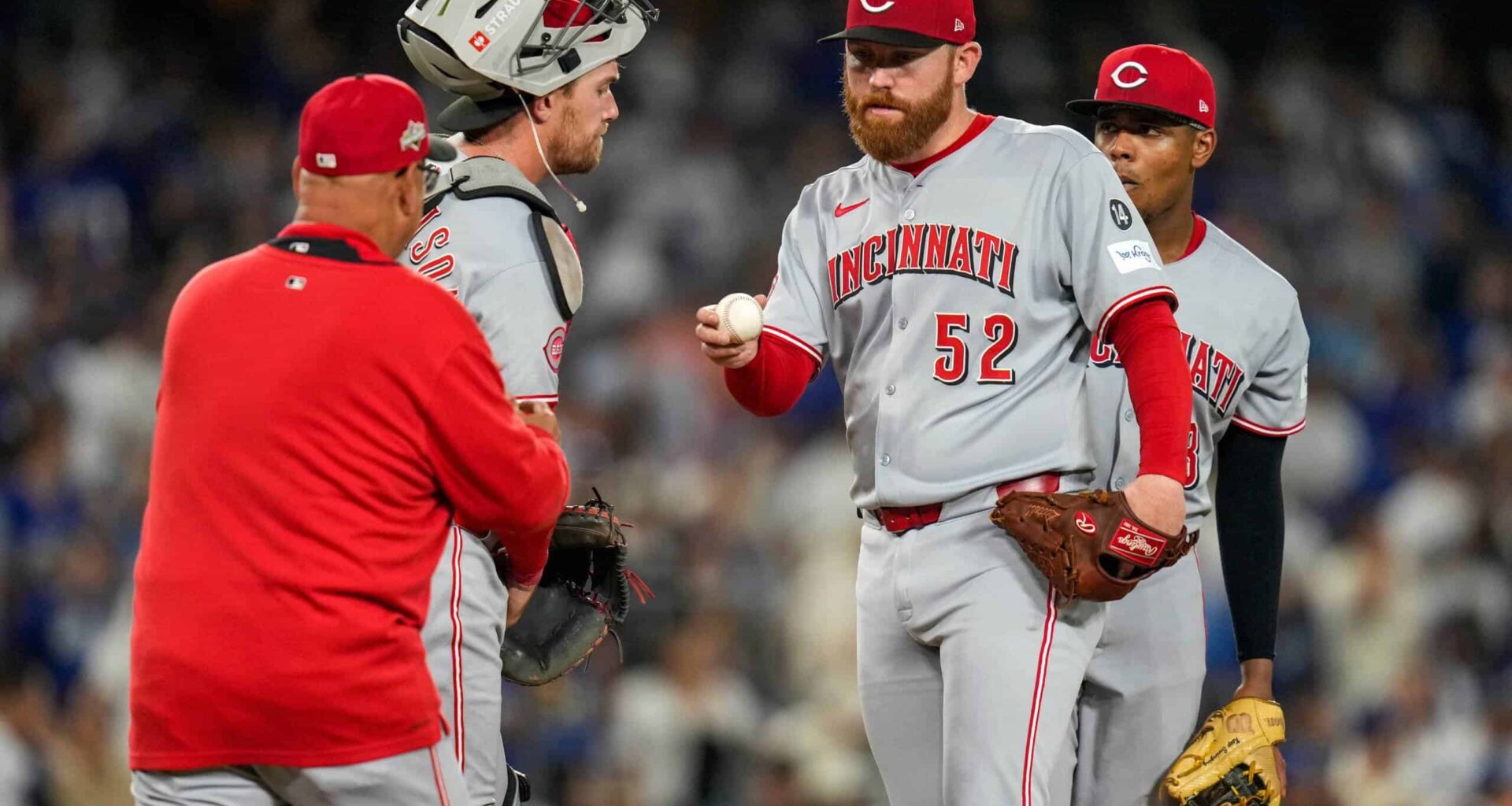
A reunion tour is the vibe of the 2026 Twins. So if that’s the case, why not see if Littell wants to get the band back together? Littell pitched for the Twins from 2018 to 2020 and had a productive 2025 campaign with a 3.81 ERA over 186.2 innings with the Cincinnati Reds and the Tampa Bay Rays. His slider and fastball-heavy pitch mix caused a 30.8 percent chase rate. Adding in a 4.2 percent walk rate was the lowest in all of baseball among qualified starters, and there’s enough to like for a back-end of the rotation option.
Despite getting a good amount of swings and misses and attacking the zone, Littell only recorded a 6.27 k/9, which was bottom-five in MLB. His 91.9 MPH average fastball velocity meant hitters saw a healthy dose of pitches in the strike zone and got some loud contact against the right-hander. A 90.2 MPH average exit velocity that’s worse than the 89.7 MPH league average. The 1.74 HR/9 were second-worst across all of baseball. Part of that can be chalked up to playing in the hitter-friendly Great American Ballpark. 8 of his 10 home runs allowed with the Reds were in Cincinnati.
A Littell signing would reunite the Twins with another familiar face. Not just with the team, but also with manager Derek Shelton, who was the bench coach in Minnesota from 2018 to 2019, to continue developing buy-in with the new manager. He’s someone who can eat innings with his 5.8 innings/start in 2025, which ranked 27th in baseball among qualified starting pitchers.
On a team with a young rotation and a bullpen with plenty of uncertainty, that experience will be crucial to keep the pitching staff as intact as possible over the long season. If the Twins can help find a path to put away hitters, they can squeeze enough production out of him to be a productive bottom-of-the-rotation starter.
Giolito has the biggest name-brand appeal of the group. Twins fans and Giolito know each other incredibly well. The right-handed pitcher has 25 games started against the Twins, most of any team in that span, because he pitched for the Chicago White Sox from 2017 to 2023. He had Tommy John surgery in 2024, but bounced back last year with a 3.41 ERA in 26 starts over 145 innings.
Giolito’s 6.7 extension on these throws is a positive sign. That’s a quality the Twins have valued with pitchers like Joe Ryan to generate swings and misses without high-end velocity. Getting a full offseason of throwing and not rehabbing an elbow injury could also be a step in the right direction for Giolito.
While he was a three-time 200-strikeout season thrower, Giolito relied on being a contact pitcher in 2025 with a 78.4 percent contact rate and 42.5 percent of that contact resulting in fly balls. Despite losing a tick of velocity on his 94.2 MPH average fastball in his All-Star 2019 campaign, he is now down to a 93.3 MPH average last season, which ranks in the 32nd percentile. That being said, his 4-seam fastball had a +5 pitch value last season.
The issue is that Giolito isn’t the dominant pitcher Twins fans remember when he was with the White Sox. He had a 5.06 xERA last season, indicating that he was pitching a full run and a half worse than his production indicated.
Part of that stems from his 90.3 MPH average exit velocity, which is worse than league average and the worst since his 2016 rookie campaign. His 9.1 percent walk rate is worse than the league average, and he no longer has the high strikeout numbers, a 7.51 k/9 last season, to look past the extra baserunners allowed.
Minnesota would also be concerned with his injury issues. Giolito pitched well in 2025 but missed the final weeks and postseason with right flexor irritation and a bone issue.
The reality at this point in the MLB calendar is that the Twins need a serviceable starter. Dallas Kuechel played that role for the Twins in 2023. Minnesota’s deep rotation had some injury concerns at one point in the season.
Even though he had a 5.97 ERA, it protected Minnesota’s younger arms from an early call-up and allowed veterans to return. A starter who can get to the 5th inning consistently with an ERA that doesn’t tick much above 4.50 would be a glue guy the Twins didn’t know they needed until this week.
Who should the Twins choose?
Either pitcher would suffice for Minnesota’s needs. Still, a Littell reunion makes the most sense. There is already a degree of familiarity on both sides. Littell has been healthier and more productive, compared to Giolito, who might still be holding out for a Red Sox reunion.
Signing a veteran starting pitcher left on the market comes with some risk. They will arrive at camp behind everyone else. Even if a pitcher has been throwing on their own, pitchers need time to ramp up to in-game situations and build a rapport with their catchers.
The Twins learned this lesson the hard way in 2018 when they brought in Lance Lynn halfway through spring training. Lynn was never comfortable in Minnesota, finishing with a 5.10 ERA in 20 starts before they traded him to the New York Yankees.
That means a deal needs to be struck sooner rather than later. New Twins head of ownership Tom Pohlad confirmed the team was in the mix for starting pitcher Framber Valdez at the beginning of spring training. Even if adding a veteran arm wouldn’t have the same amount of notoriety, it would still have a crucial impact on the early success of the Twins in 2026.
A deep pool of starting pitchers was the one area of the roster the Twins hope to lean on in 2026. Injuries to arms just two weeks into camp are already testing the roster’s deepest group. Adding extra insurance to the starting rotation with a cheaper free agent starting pitcher won’t catch a big headline. Still, it will be a big help to ensure the team’s young arms develop at their own pace and to give the team more assurance that their rotation can hold up over a full MLB season.