
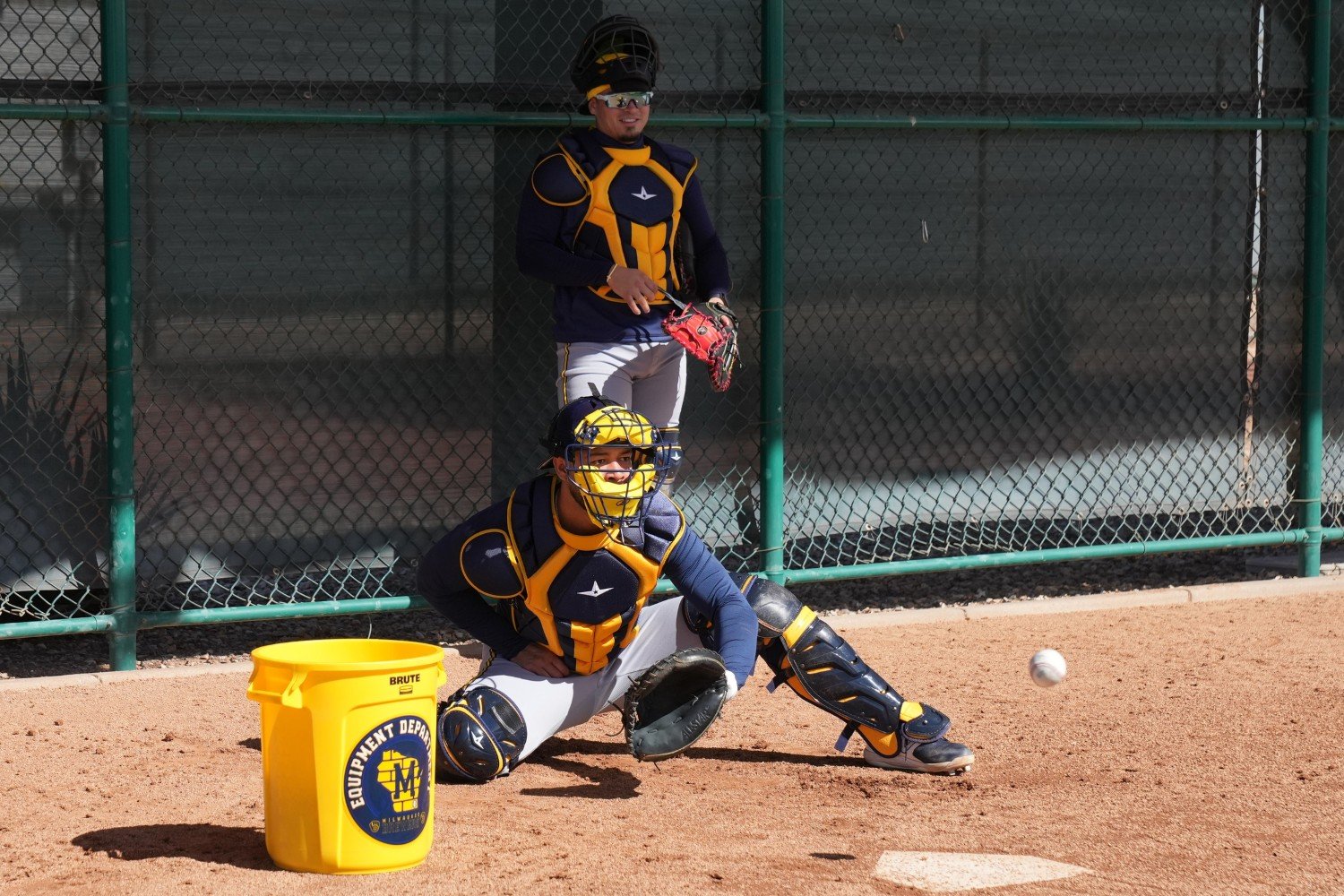
Jeferson Quero’s return to game action in 2025 was an important step after a difficult bout with injuries. He was close to returning from a torn labrum early in the year, before a hamstring issue in spring training delayed his season. Once he got back on the field, he showed encouraging signs, especially during his rehab assignment in the Complex League, where he consistently produced hard contact and flashed the offensive impact that made him one of the organization’s top prospects before the injury.
PA
H
2B
3B
HR
OPS
wRC+
wOBA
K%
BB%
SwStr%
Whiff%
PULL%
CENT%
OPPO%
LD%
GB%
FB%
IFFB%
SB
CS
SB%
90th EV
283
65
17
1
10
.817
115
.364
13.8%
9.9%
10.5%
22.6%
43.5%
22.0%
34.4%
25.5%
36.5%
38.0%
24.1%
2
0
100%
102.8
What to Like
Power has always been part of Quero’s profile, and there were signs that it was starting to return as the season went on. As a 20-year-old in 2023, he posted a 105.2 MPH 90th-percentile exit velocity, a mark that was well above average for his age and strong even by major-league standards. That power did not show up right away after his return to Triple-A, where he finished with a slightly below-average 102.8 MPH EV90. Still, the trend improved later in the season, with several home runs leaving the bat at 107+ MPH and a max exit velocity of 109.5 MPH. Those flashes suggest the raw power should still be there as he gets further removed from surgery, though it will be something to monitor.
Quero also brings strong bat-to-ball ability. He makes consistent contact. He can put the ball in play against various pitch types, with some authority. That contact skill gives him a solid offensive foundation and the potential for an average hit tool. If both the hit and power tools mature as hoped, he has the potential to be a productive big-league hitter at a premium position.
Defensively, Quero still shows many of the traits that made him highly regarded before the injury. His receiving and blocking have largely returned to form—or even improved—and he continues to show strong instincts behind the plate. He calls a good game, shows good awareness, and manages a pitching staff at a very high level.
What to Work On
The biggest offensive area for improvement is his swing decisions and overall plate discipline. While his bat-to-ball skills allow him to make a lot of contact, his pitch selection can be inconsistent. Improving his approach and becoming more selective in the strike zone would help him maximize his power and overall offensive production.
Defensively, the biggest question is his throwing arm. Before the injury, Quero’s arm was considered a major strength, with elite pop times that could come in below 1.8 seconds. That level of arm strength has not yet returned, and his throwing performance last year reflected a noticeable drop. There’s still room for improvement, but a full return to his previous level is uncertain.
If the arm doesn’t return to above-average levels, it could limit his overall defensive value and affect his ability to control the running game. His receiving, blocking, and game-calling still provide a strong defensive base, but continued progress with his throwing will be important in determining whether he profiles as a full-time starter.
Staying healthy and handling a full season’s workload will also be important after dealing with multiple injuries over the past two years.
What’s Next
Quero is expected to begin the 2026 season back at Triple-A Nashville due to the Brewers’ current catching situation. The additions of Reese McGuire and Gary Sánchez provide major-league depth and give the organization time to let Quero continue developing.
Even so, he remains a big part of the organization’s long-term plans and could reach Milwaukee in the near future, and he notably has a very big fan in Pat Murphy.
“This might be a really special story, because I think he’s a special player,” Murphy said. He’s been consistent in his effusiveness about Quero going back to his first spring training as the manager, in 2024.
Quero’s development will focus on improving plate discipline, rebuilding consistent power production, and strengthening his arm. If his health holds and his tools continue trending in the right direction, he still has the potential to become a regular contributor at the major-league level. A strong start to the season could speed his matriculation to the majors, but the questions will be less about stats and more about whether his throwing arm and his approach are better this year.
What are your thoughts on Quero? What are you hoping to see from him in 2026? Let us know in the comments!
Interested in learning more about the Milwaukee Brewers’ top prospects? Check out our comprehensive top prospects list that includes up-to-date stats, articles and videos about every prospect, scouting reports, and more!