
We know that batting averages and OPSes mean very little in spring. As Brewers fans remember well, the adventures of Vinny Capra proved to have no correlation with his performance in the regular season. He hit six home runs in the spring of 2025 and was gone from the organization by the middle of May. Pitchers aren’t game-planning. Their command is hardly dialed-in, and that leaves opportunities for hitters to excel in a small sample.
After four long, lonely, starving months without baseball activity, it’s easy to get carried away, but that doesn’t mean we have nothing to get excited about. If you’re a Brewers fan, it’s quite the contrary. Let’s have a look at those who are making strides from their last competitive action, and why each offers a reason for positivity for a team that reached the NLCS in 2025.
Brandon Sproat
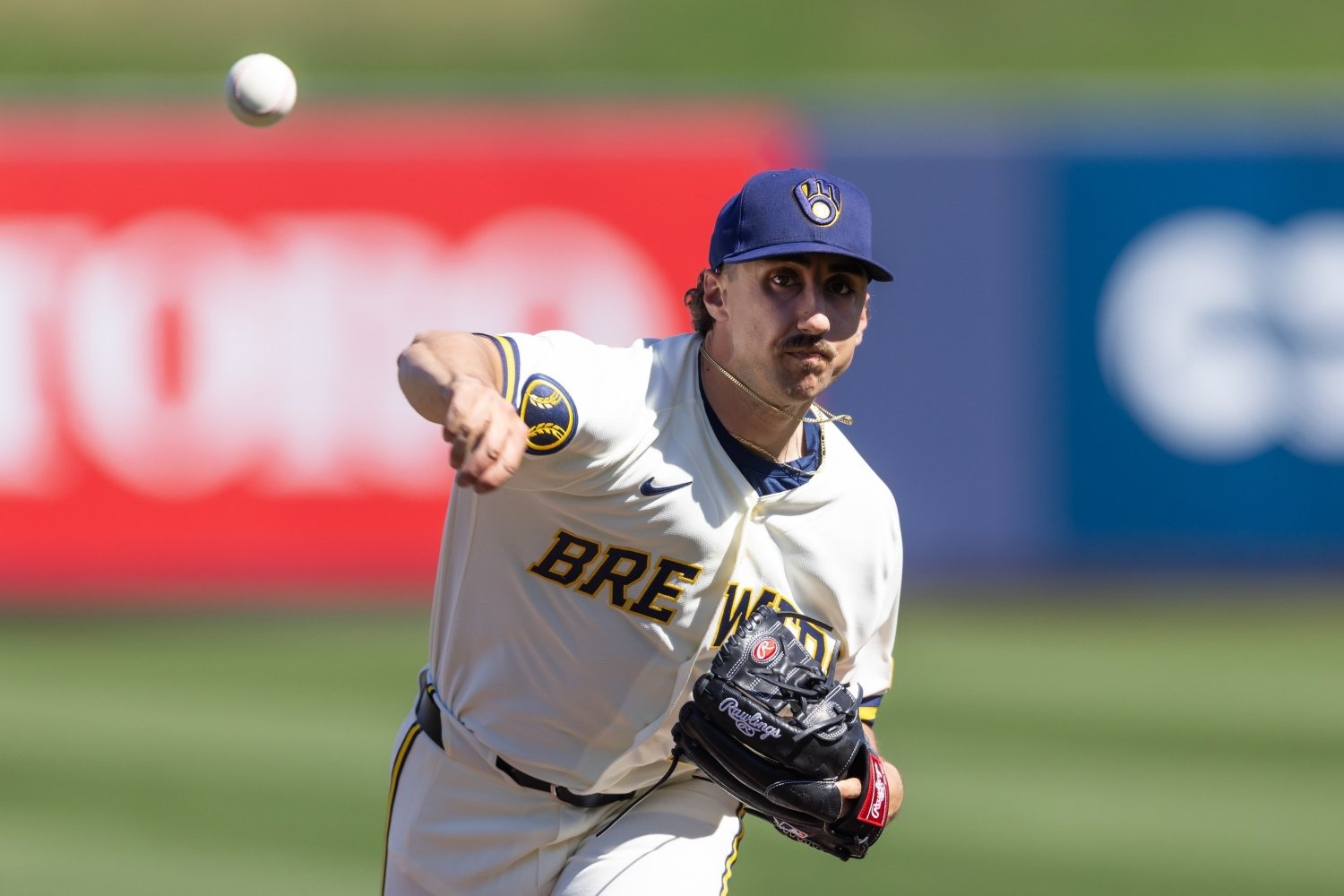
Brandon Sproat came over as part of the Freddy Peralta trade and has hit the ground running. Possessing a full, diverse arsenal that perhaps wasn’t showcased enough by the Mets in 2025 during his cup of coffee, Sproat showed exactly how the Brewers plan to use him in 2026.
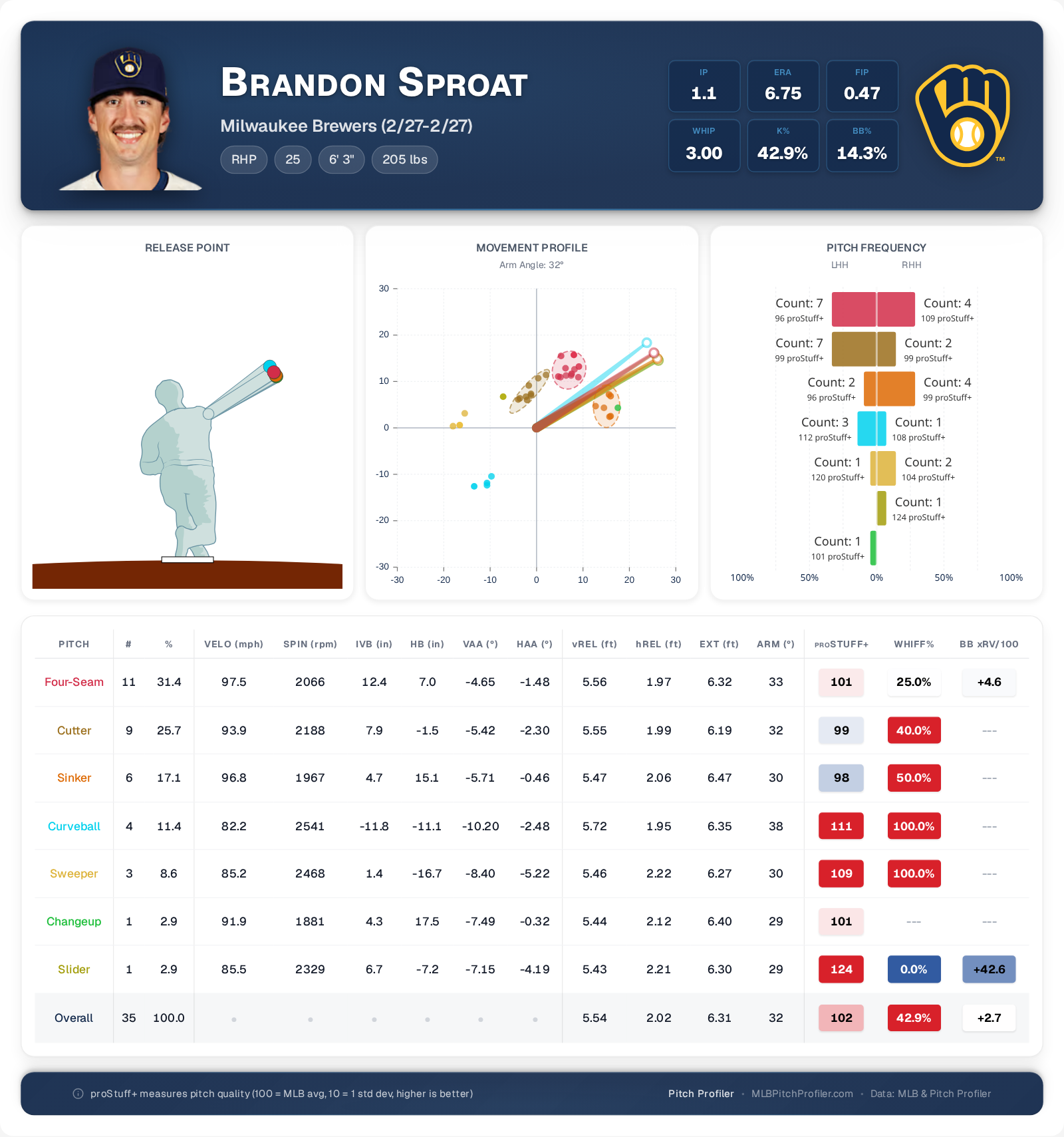
Sproat has converted what was already a hard 88-mph slider into a mid-90s cutter (touching 95 mph at times) and blended the four-seamer he was renowned for in the minor leagues with the complementary sinker and cutter that the Brewers prize so dearly. While the stuff grades don’t pop off the page, the hitters’ swings—and the simple eye test—suggest that his combination of power and movement is valuable.
He threw nearly all his fastballs for strikes, but didn’t land his secondary stuff in the zone in his first game in the Cactus League. There will be far more nuance in the regular season, but the most intriguing part was the swing-and-miss element of Sproat’s arsenal. He conceded two hard-hit balls—one on an upper-third four-seam fastball and the other on a back-up sweeper—but when he executed, he missed bats.
Sproat struck out 17 in 20 2/3 innings last year in the major leagues, which would once have counted as dominant but doesn’t open any eyes anymore. Changes to his pitch mix should increase the deception in his arsenal, and perhaps allow everything to play up. It’s too early to tell, but it bears watching as spring progresses.
Bishop Letson
Letson has been a name on evaluators’ lips for a while, struggling to stay on the field with regularity but showcasing extension, movement, command and a deep enough arsenal to generate some early hype in his young professional career. Over the offseason, his fastball has added several ticks, and the result is monstrous:
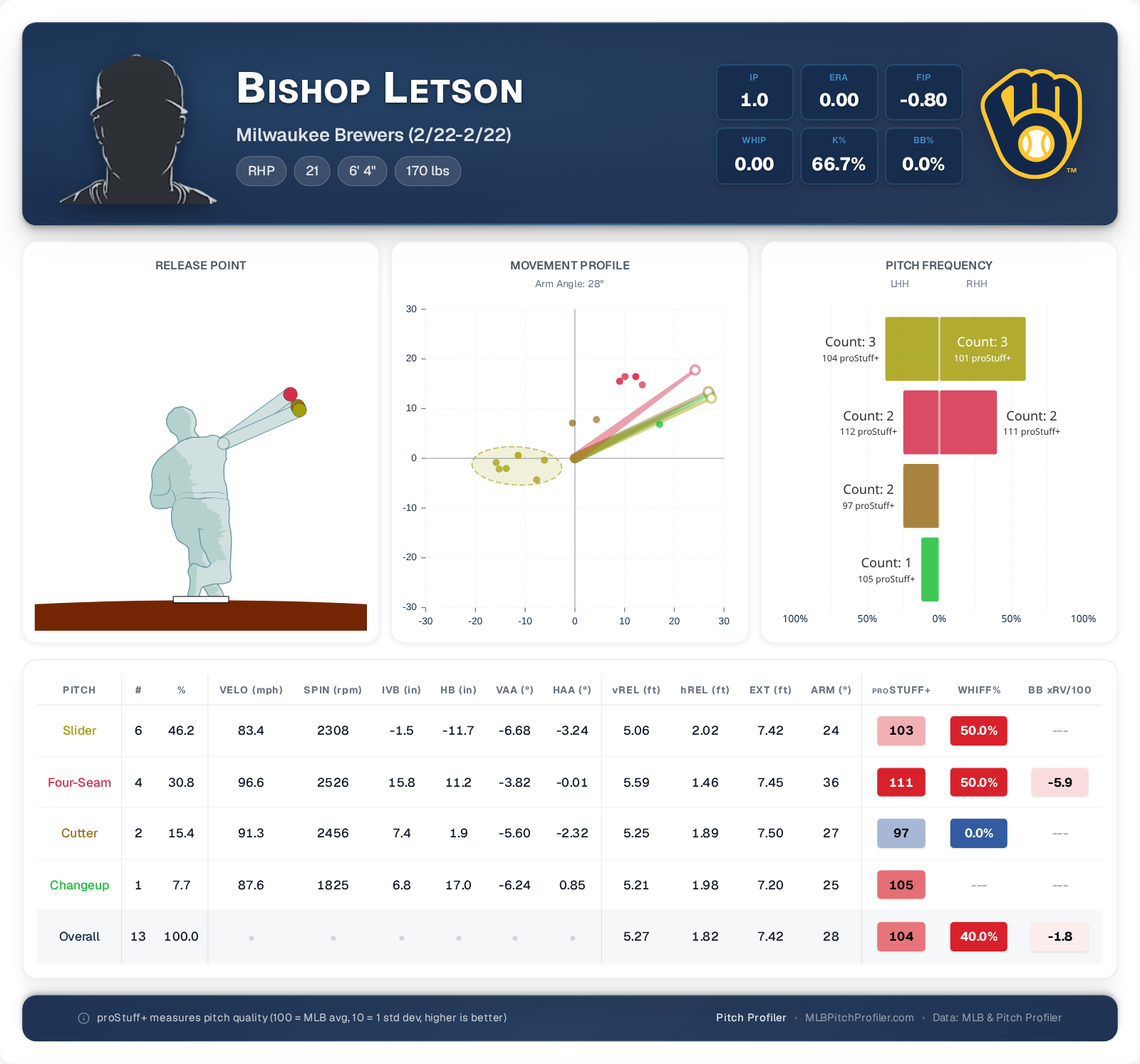
Letson’s fastball has averaged almost 97 mph this spring, with extreme vertical “rise” for his arm angle; plus extension; and big-time spin. It’s a fastball that could be dominant. So far, he doesn’t know how to tunnel it with his other offerings, using a higher release point than the rest of his arsenal to get behind the ball. That’s one reason why he prefers to lead with his slider.
The changeup will be key for Letson going forward, offering him an alternative out pitch to left-handed hitters, against whom a slider is typically less effective. The pitch shows good characteristics, but he’ll need to improve his feel for it as he matures.
Health is the main concern for Letson, but if he can stay on the field, there might be a top-of-the-rotation arm to dream on.
Brandon Lockridge
Lockridge appeared, initially, to be a throwaway piece in the deal that sent Nestor Cortes and Jorge Quintana to the Padres at the 2025 trade deadline. His elite speed seemed unlikely to make up for a dearth of power, but rumors did spread that the Brewers were higher on Lockridge than most.
This spring, we’ve seen some of the fruits of this. Of Brewers to have seen over 50 pitches, only one player (Brock Wilken) has a higher average exit velocity, and only two hitters (Brice Turang and David Hamilton) have swung and missed less often. In the chart below, Lockridge’s emblem is the one in the top left:
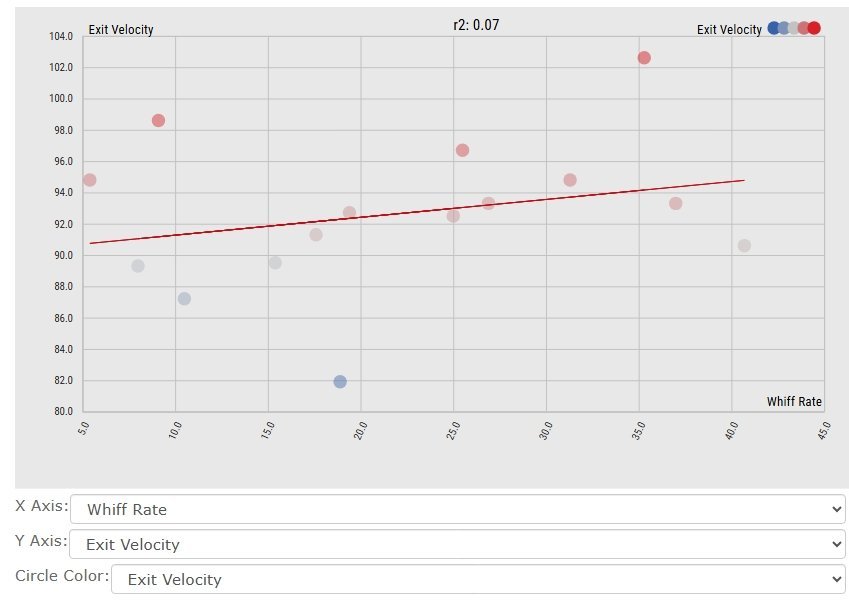
Turang is Lockridge’s closest comparison on this chart, also whiffing very little (just once in camp so far) without quite as much contact as Lockridge in the small sample.
In case you’re concerned about Vinny Capra comparisons, Capra averaged 94 mph exit velocities but did swing and miss 22% of the time last year. Lockridge won’t tear through the league the way he did through early spring training games, but he’s been creating hard hits across the strike zone. That changes his profile substantially.
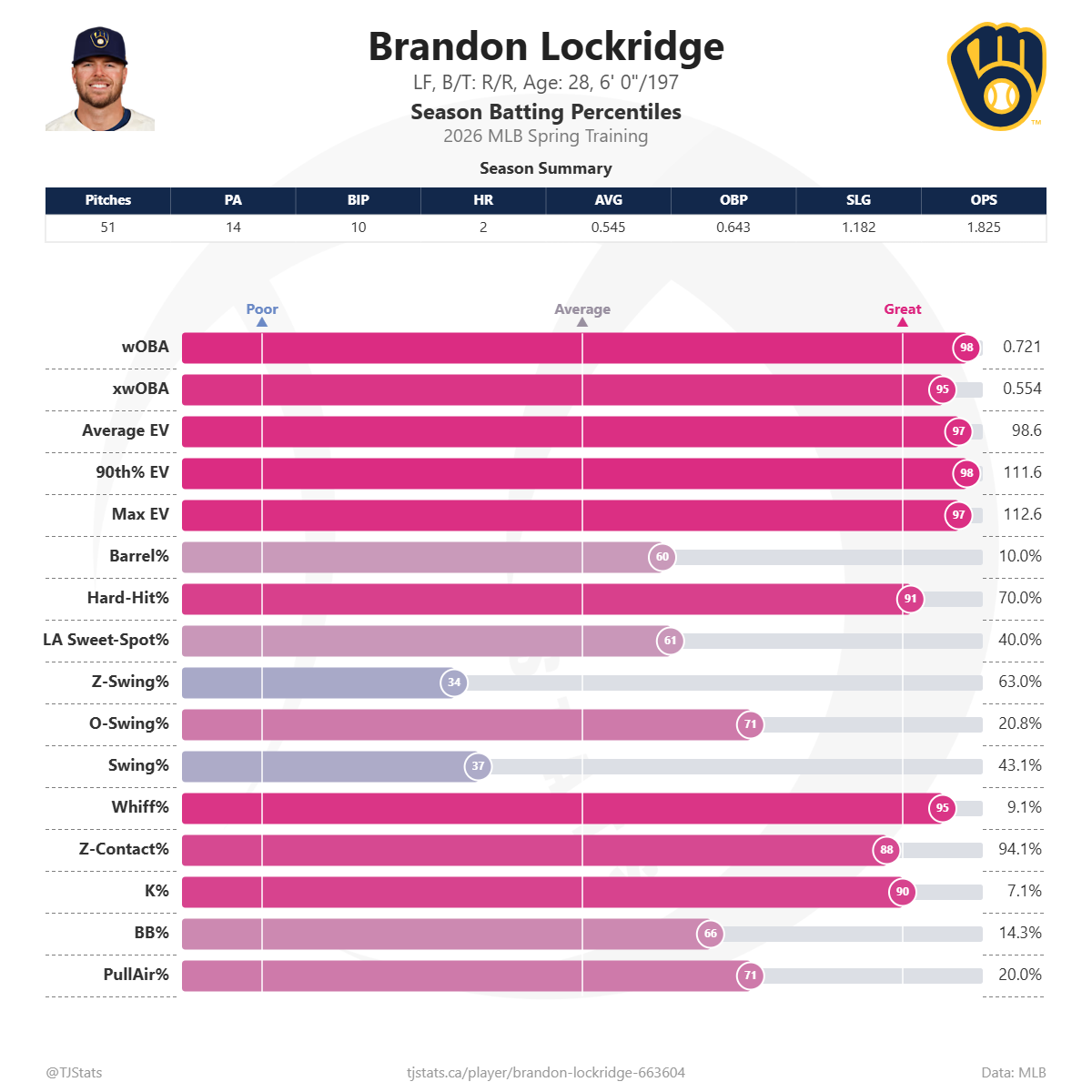
The Brewers are no strangers to an outfielder making strides, Blake Perkins being the most recent example of an unheralded pickup making a meaningful impact. Lockridge’s potential is greater, but of course, we’ll need a larger sample before locking in any observations.
Have you noticed any other standouts in spring training that have impressed? Have you enjoyed any of the prospects making appearances, from Brock Wilken to Jesus Made? Let us know your thoughts below!