
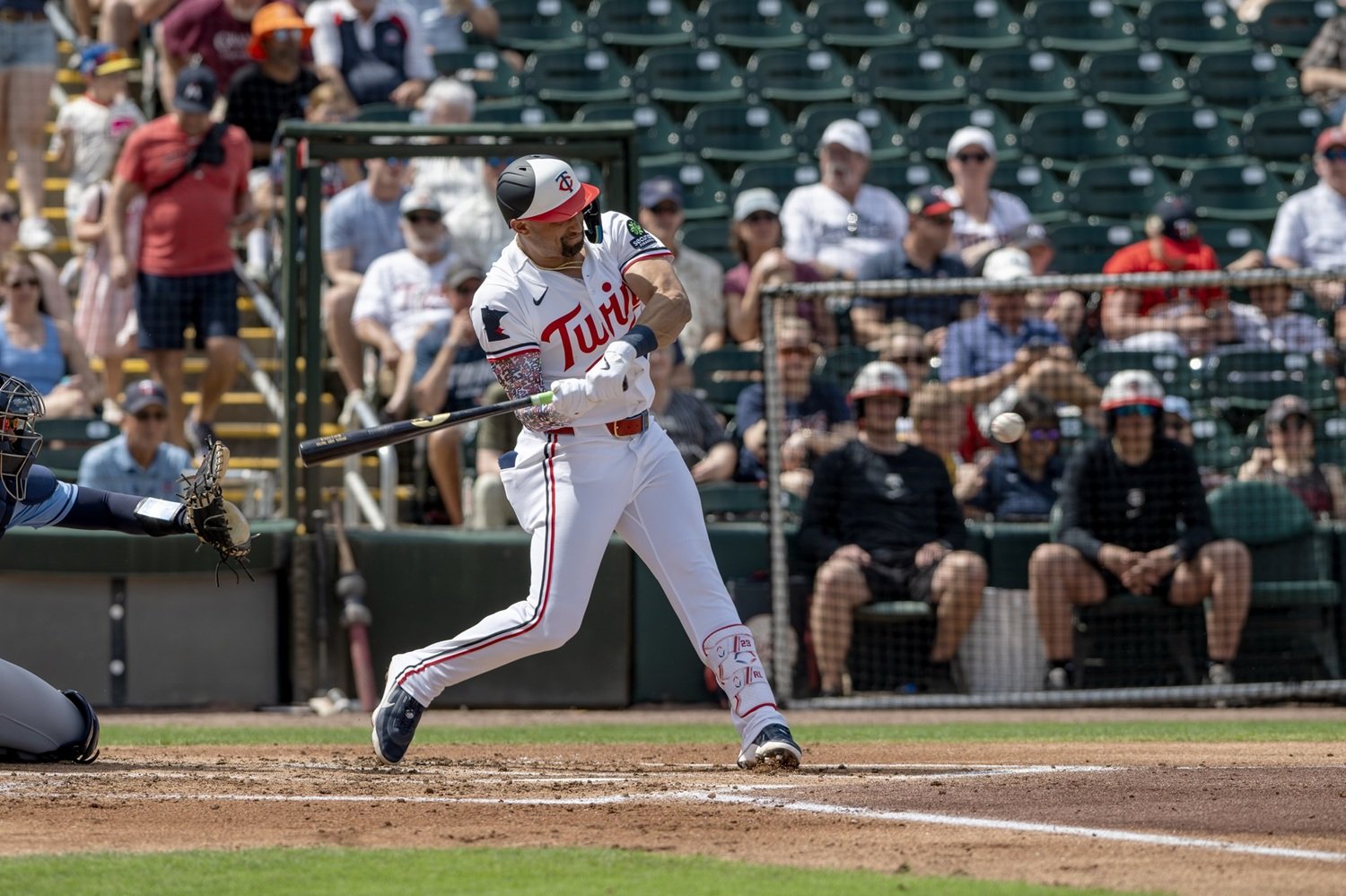
There comes a point in every organization’s development cycle where the shine starts to wear off former top prospects. The tools are still there. The pedigree is still listed on Baseball Reference. The scouting reports still live somewhere in the back of your brain from when you watched their Futures Game highlights three summers ago. But the production has not quite followed them to the big leagues.
That is what makes someone a post-hype prospect. These are players who were once considered foundational. Now they are in their mid-to-upper 20s, fighting to prove they still belong in an organization’s long-term plans. For the Minnesota Twins, that conversation has been happening recently thanks to John Bonnes and Aaron Gleeman on the Gleeman and The Geek.
Now it is put up or shut up time. Minnesota believes it has a roster capable of contending in 2026, but they also need internal improvement to make that happen. If these players do not take a meaningful step forward this season, there is a good chance they will be wearing a different uniform in 2027.
With the stakes clear, let’s examine how Minnesota’s post-hype prospects stack up entering the season.
8. OF/DH Trevor Larnach
Peak Prospect Rank: 39th by Baseball America (2021)
At one point, Larnach looked like a middle-of-the-order fixture in the making. Now he feels like someone caught between roles. When he was used more regularly as a designated hitter in 2024, there were signs of life in the bat (116 OPS+), but the overall body of work has still been that of a below-average hitter for a corner outfielder (101 OPS+).
That becomes a real problem for someone without a true defensive home. Larnach has to hit to justify his roster spot. If he does not, there may not be a clear path forward for him in Minnesota.
7. UTL Austin Martin
Peak Prospect Rank: 19th by Baseball America (2021)
Martin quietly put together a strong second half last season with a 106 OPS+ and 11 steals in 50 games. He showed an improved offensive approach, the ability to impact the game on the bases, and enough defensive versatility to move around the diamond when needed.
Even with those positives, Martin still projects as more of a role player than an everyday contributor. He can handle corner outfield duties and slide to second base in a pinch, but his path to playing time likely runs through the bench unless the bat takes another step.
6. SP Simeon Woods Richardson
Peak Prospect Rank: 61st by Baseball America (2020)
Three years ago, it was fair to wonder if Woods Richardson was ever going to carve out a role in the big leagues. At Triple-A, he posted a 4.91 ERA with a 19.3 K%. Now he has become a steady contributor in Minnesota’s rotation with a 103 ERA+ and a 4.30 FIP from 2024-25.
He may not have the frontline upside of some of the organization’s other arms, but there is real value in a pitcher capable of handling innings in a mid-rotation or back-end role. Woods Richardson has stabilized his trajectory, even if the ceiling still looks somewhat limited.
5. SP Taj Bradley
Peak Prospect Rank: 20th by MLB.com (2023)
The Twins took a swing when they acquired Bradley at last year’s trade deadline in a one-for-one deal involving Griffin Jax. Bradley has pitched over 380 major league innings and has a reputation as someone who has been one of baseball’s top pitching prospects.
The results have been inconsistent at the highest level (85 ERA+), which is exactly why he lands in the middle of this list. Minnesota is betting that there is another gear here, and if they can find it, Bradley could become a major piece of the rotation moving forward.
4. IF Brooks Lee
Peak Prospect Rank: 18th by MLB.com (2024)
Lee is going to open the season as Minnesota’s starting shortstop, whether he is perfectly suited for the position or not. Circumstances have pushed him into the role, and now the Twins need the bat to justify it, as he has been limited to a 75 OPS+ in his first 189 games in the big leagues.
As a prospect, Lee was known for elite bat-to-ball skills from both sides of the plate. He showed some improvement last season, but that contact ability has not fully translated against big- league pitching. If it does in 2026, it could change the outlook for both Lee and the lineup as a whole.
3. SP Zebby Matthews
Peak Prospect Rank: 73rd by Baseball America (2025)
There may not be a wider range of outcomes on this list than there is in Matthews. Minnesota will give him every opportunity to stick in the rotation, especially with injuries thinning out the starting pitching depth. Some of his underlying metrics suggest there is still breakout potential here.
He was known for his ability to throw strikes in the minors, and batters have keyed in on that trait, translating it into a 38.8 Hard-Hit%. Avoiding hard contact will be the biggest key for 2026. Matthews could develop into a playoff-caliber starter or eventually shift into a high-leverage bullpen role. Among the pitchers in this group, he may have the best chance to develop into a future All-Star if everything clicks.
2. OF Matt Wallner
Peak Prospect Rank: Never Ranked on Top-100 List
Even in what felt like a down year in 2025, Wallner still managed a 110 OPS+ with 22 home runs. That alone tells you how impactful his power can be.
If he takes even a modest step forward this season, clearing 30 home runs should be well within reach, with the upside for even more. The Twins need someone in this lineup to provide a legitimate offensive breakout. Wallner feels like the safest bet to do exactly that.
1. 3B Royce Lewis
Peak Prospect Rank: 5th by MLB.com (2019)
Lewis has already shown flashes of stardom. Now he is working to make that level of performance more sustainable. After revamping his swing this winter, Lewis enters 2026 with plenty of internal hype from the organization.
His defense at third base improved from a significant liability in 2024 to something closer to average last season. If the bat returns to what it looked like during his best stretches, Lewis is capable of being an All-Star caliber player and a franchise-altering presence in the middle of Minnesota’s lineup.
Post-hype prospects do not always get a second act. Sometimes the league tells you exactly who a player is before they ever get the chance to adjust.
The Twins are counting on several of these players to rewrite that narrative in 2026. If even two or three of them take meaningful steps forward, Minnesota’s chances of staying in contention improve dramatically. If not, the next time we talk about this group, it may be in the context of where their careers went after leaving the organization.
How would your rankings look for the organization’s post-hype prospects? Leave a comment and start the discussion.