
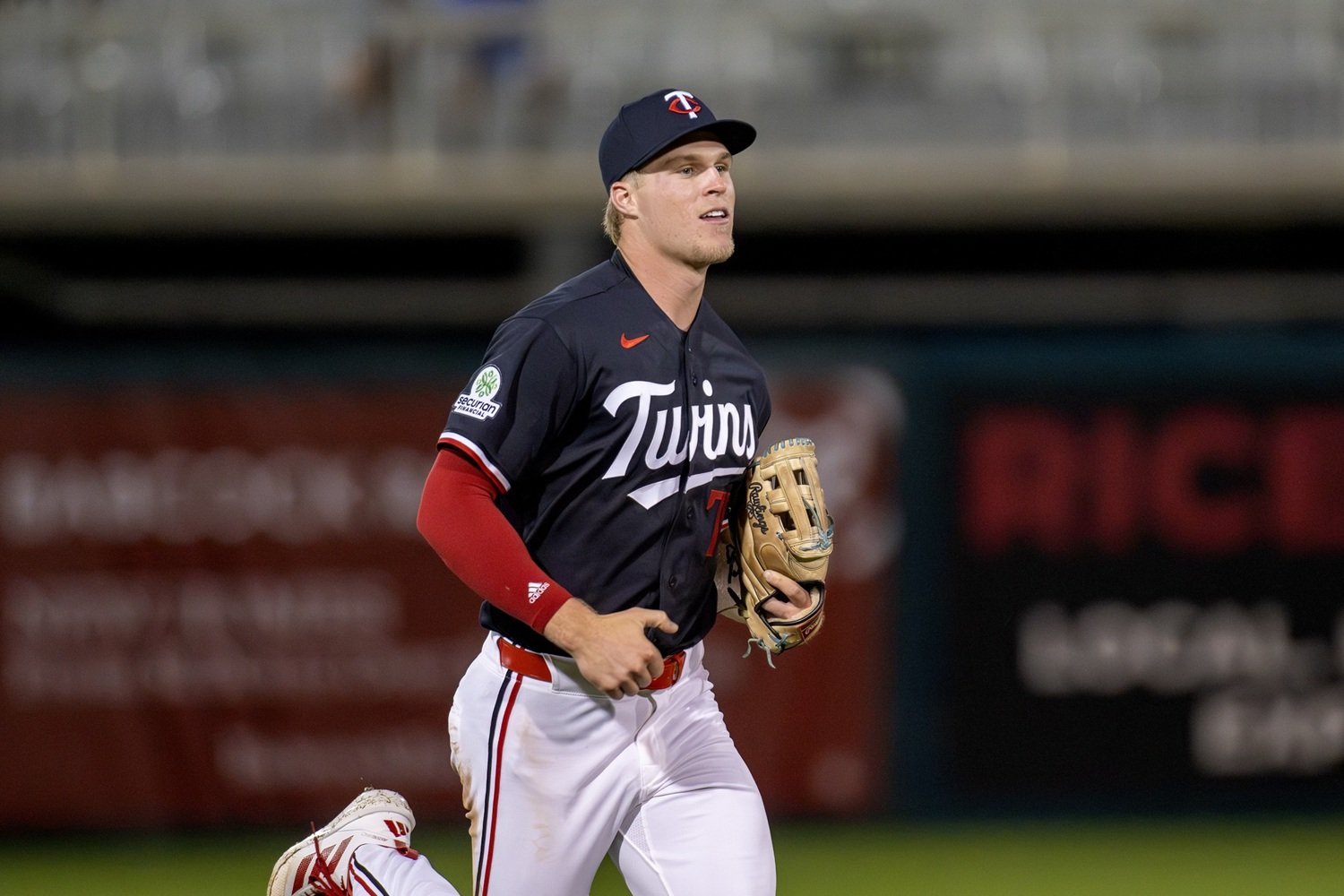
Walker Jenkins is the crown jewel of the Minnesota Twins organization. Ranked as the Twins’ top prospect and the 14th overall prospect in the latest MLB Pipeline Top 100, Jenkins has quickly established himself as one of the most intriguing young players in baseball.
So let’s not bury the lead: Walker Jenkins will be the 2026 American League Rookie of the Year.
It won’t happen because of a lack of competition; the American League is loaded with incoming talent. Samuel Basallo headlines Baltimore’s next wave. Cleveland’s Travis Bazzana and Detroit’s Kevin McGonigle bring advanced contact skills and polished offensive approaches. Carter Jensen made noise in September with Kansas City. On the pitching side, Boston features high-upside arms in Payton Tolle and Connelly Early, while Toronto’s Trey Yesavage turned heads with a dominant postseason run.
There will be no shortage of legitimate candidates. Jenkins won’t win the award on reputation alone. But Rookie of the Year isn’t awarded for prospect rankings. It’s earned through everyday opportunity and immediate, bankable production. And that’s where Jenkins’ profile becomes especially compelling.
His offensive game is built for sustainability. He controls the strike zone and he doesn’t rely on one primary tool that has to carry his entire profile. He doesn’t need a 10-homer heater to stay relevant in the race. Instead, his value shows up in quieter ways: competitive at-bats, line drives into the gaps, not chasing out of the zone, and steady defense in the outfield.
In the grind of a baseball season, that kind of consistency matters.
Opportunity is the other half of this equation. Outfield depth rarely survives a full season untouched. If someone like Byron Buxton misses time, the Twins will need a reliable everyday option. Jenkins will be firmly in that conversation alongside Emmanuel Rodriguez.
The difference is stylistic. Rodriguez offers loud power but comes with more swing-and-miss risk. Jenkins is beyond his years as a pure hitter, making him easier to insert into a lineup without living with extreme volatility. For a team trying to win games in the middle of an up-for-grabs division, that stability may be just what the Twins are looking for.
Jenkins is close enough to the majors that he won’t feel rushed. He’s polished enough that he won’t look overwhelmed. And he’s well-rounded enough that even modest across-the-board production becomes extremely valuable over a full season of at-bats.
The statistical foundation supports that projection.
At Double-A in 2025, Jenkins hit .309 with a .426 on-base percentage across 235 plate appearances. More importantly, he showcased growth. His walk rate climbed to 14.5 percent, reflecting a hitter who was adjusting as pitchers adjusted to him. That type of development is what you want to see from a future impact bat.
The late-season promotion to Triple-A presented a tougher challenge. Across 101 plate appearances, he hit .242 with a .324 on-base percentage, collecting nine extra-base hits and four stolen bases. His strikeout rate ticked up, marking the only stop in his minor league career where swing-and-miss became a noticeable storyline.
For a 20-year-old facing older, more experienced pitching, simply holding his own at that level is encouraging. It wasn’t dominance, but it didn’t need to be. It was exposure to the final layer of adjustments before the big leagues.
And here’s the key: he doesn’t need to overhaul anything to win this award. He just needs incremental improvement.
If Jenkins trims his swing rate slightly and forces pitchers to attack him, his on-base skills could jump another tier. His power likely settles in the 15-20 home run range in the short term. That may not scream “superstar,” but paired with a strong average, power to the gaps, and competent defense, it creates a player who contributes in multiple ways every single night.
Rookie of the Year campaigns often reward players who are ready, not just electric.
There will be rookies in 2026 with louder tools. There will be stretches where a young pitcher strings together six dominant starts and captures the spotlight. There will be power surges that drive headlines for a month.
But over the course of a season, steady production accumulates. Quality at-bats add up. Defensive reliability builds trust. Managers keep writing the same name into the lineup card.
Jenkins’ game is built on that kind of trust. His track record shows a hitter who adjusts quickly and rarely lets one rough stretch spiral. In a race that will likely feature plenty of upside and volatility, his steady, well-rounded profile might ultimately be what separates him.
He doesn’t have to be perfect. He simply has to be what he has consistently been throughout his minor league career: a mature, adaptable hitter with a clear runway to everyday at-bats.
That combination of tools plus opportunity is powerful. And in 2026, it’s going to put Walker Jenkins at the front of the American League Rookie of the Year conversation.
Interested in learning more about the Minnesota Twins’ top prospects? Check out our comprehensive top prospects list that includes up-to-date stats, articles and videos about every prospect, scouting reports, and more!