
The vintage baseball card market is prized for its organic rarity versus the manufactured scarcity of today’s ultra-modern cards. This usually means a high-eye appeal player base card in annual sets. But the really rare cards from the 1960s through the mid-1970s are special set inserts and test products from the then Topps development team, most of which were never widely released.
These are the holy grails of the hobby to a small but passionate segment of collectors. For example, a superstar playing card from the ultra-rare Topps Dice Game (fashioned after Strat-O-Matic, and released in 1963, though it’s officially labeled 1961 by trading card grader PSA) is virtually unattainable. The Willie Mays card recently sold for $156,000 in a PSA 5 (Excellent condition grade on a scale of 1-10) and a PSA 1 Mickey Mantle went for $396,000 in 2022. There are only 35 total graded cards from that set of 18 players. Other inserts and test sets from the period are far more common but still rare relative to the standard releases of those years.
“Fewer and fewer people deal these cards,” says rarity or ‘oddball’ collector Dave Hornish, currently writing an illustrated biography of the Topps head of development from the 1950s through the early 1970s, Woody Gelman. “You need to search exhaustively — online and auctions. Sometimes you just blow a lot of money. But most of the major auction sites have sold something recently where you can get a ballpark value.”
Hornish aims to own at least one example of every insert or test product of the period, focusing not so much on the superstars of the vintage hobby but the lesser-known (and thus less expensive) players.
“Many collectors of older Topps sets only focus on the regular issue cards and ignore the ones that were inserted or sold on a supplemental basis to these,” said Hornish, who maintains a site with a page that catalogs all these inserts and test issues by Topps through 1980. “And it’s really too bad, because Topps has produced some truly exquisite cards over the years that remain in the backwaters of the hobby.”
Below are some of the more easily obtainable inserts and test issues, listed in chronological order of release. Dealer Durward Hamil, who specializes in these kinds of rarities at the Philly Show and also at the National, shared these recommendations for collectors in search of more unique cards.
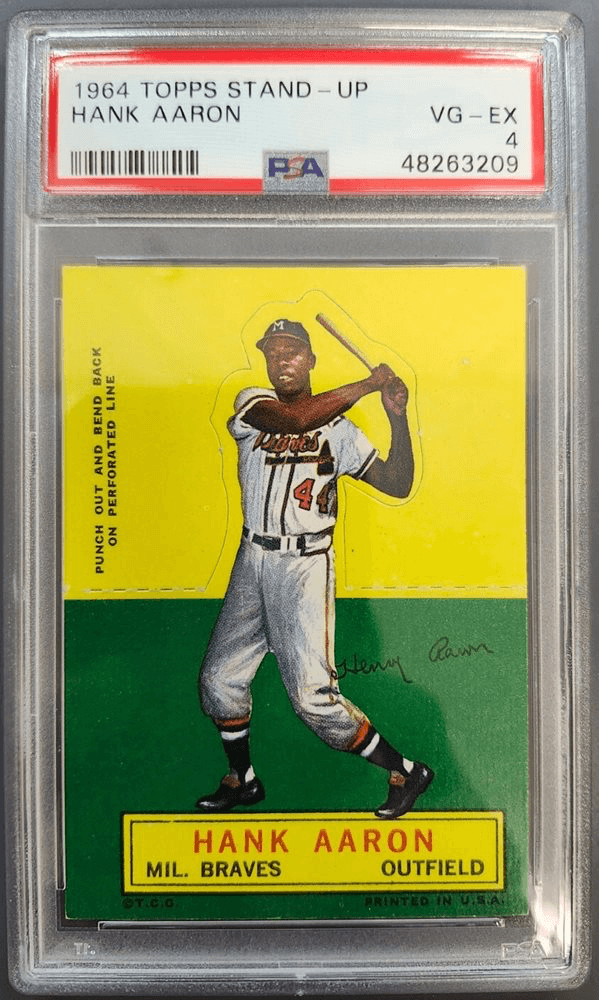
This set of 77 cards was issued in an explosion of products by Topps in conjunction with the All-Star Game being held that year Shea Stadium in Flushing, Queens, near Topps’ Brooklyn headquarters. The cards are standard size with blank backs and eye-popping yellow and green backgrounds. Of the 77, there are 22 “short prints,” which collectors know not just by graded population counts but when full, uncut sheets are discovered. The short prints include icons of the hobby: Mays and Roberto Clemente. Other Hall of Famers who are highly sought in the set are Sandy Koufax, Mantle and Hank Aaron. Only the cards that were never “stood up” by releasing the player image from the die-cut background get graded. Mid-grade examples of the aforementioned stars can be had for $1,000 (Mantle in a PSA 4) or less (for as high as PSA 7s). To get a sense of rarity, there are 1,270 Mantles in all grades by all graders, according to Card Ladder, which also tracks card populations.
Topps brought back the design in its retro-themed 2025 Archives set with a mix of legends and present-day players, with autographed variations.
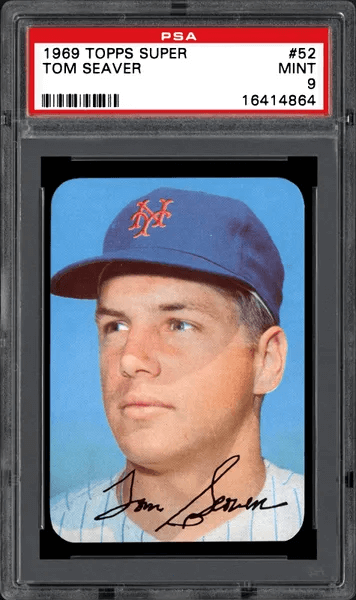
The “Super” cards (actually released in 1970 and 1971) are super thick. They mostly have rounded corners (some are square) and none have borders. But they are conventionally sized. The backs are mostly blank except for a player name and card number. ESPN’s Rex Ryan, an avid card collector since childhood, tried to put together a Gem Mint 10 complete set of these 66 cards. “But the commons were all hundreds of dollars and were next to impossible to find,” he said. So he abandoned the project and sold what he bought.
According to Hornish, Topps issued these test sets in limited quantities in Brooklyn, Penn., (where the cards were printed) and the Boston area (where it had a lot of distribution). The 1969 Super Mantle is the prize here (Mantle didn’t play in 1969 but also has a 1969 card in the Topps base set); a PSA 1 sold last year for $645. For higher-grade versions of the multitude of super superstars in this set, the cost is as high as $1,000 and up. (Mays, Aaron, Clemente, Tom Seaver and Bob Gibson are in the set, a third of which consists of Hall of Famers.)
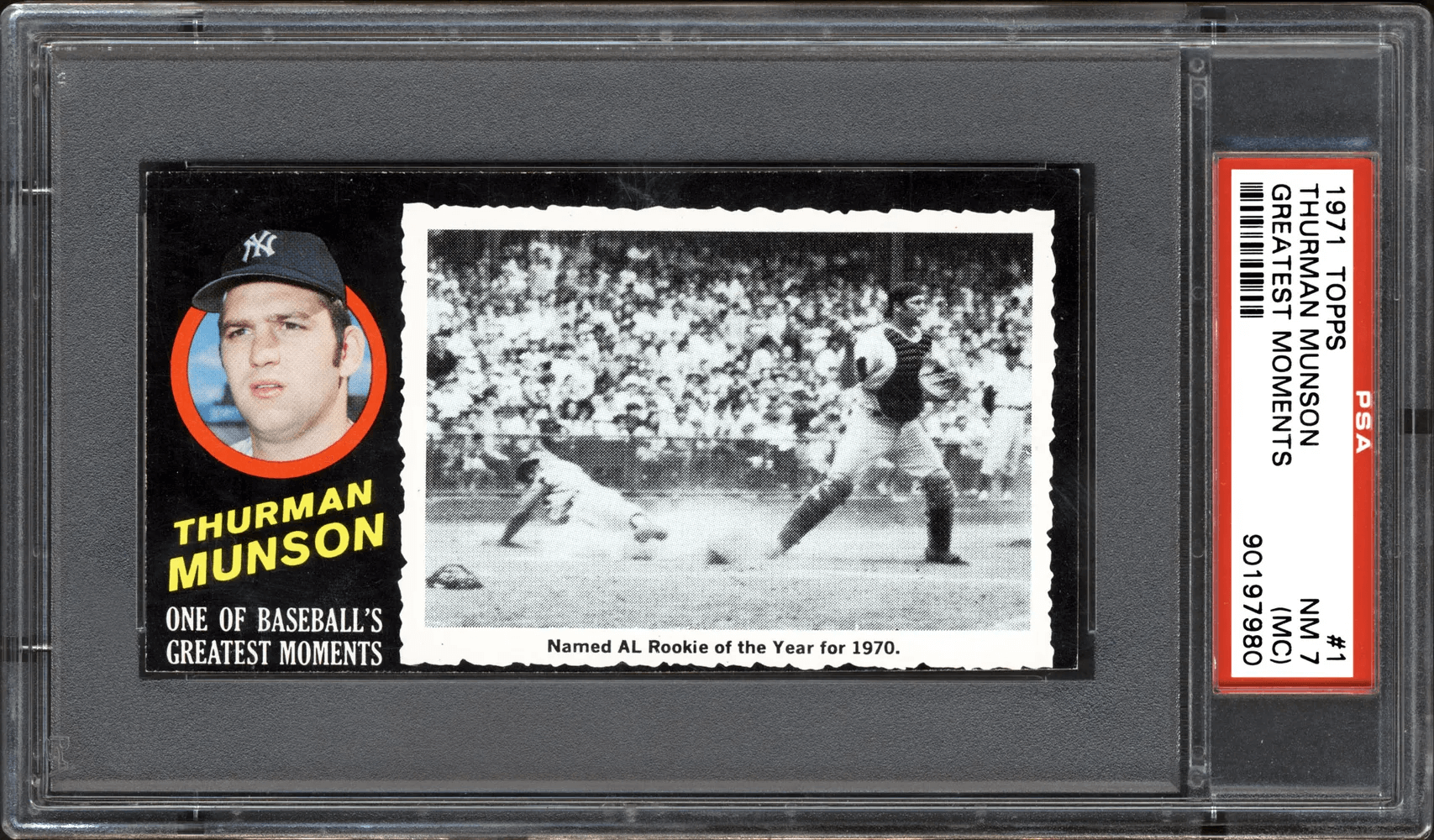
These oversized cards with black borders similar to the 1971 base set were, according to consensus, only released in packs and only in a few Brooklyn locations.
“To me, this set is the perfect challenge: manageable size, optimum level of scarcity versus price and visually pleasing. You won’t complete it in a week, but you can do it in a year,” Hornish said. “It has 55 cards including 22 double prints (meaning twice as many printed as the other 33 cards). Because of the black borders, high grades are virtually impossible. Each card highlights a great performance from the best players of 1971. Post-1971, many hand-collated sets were purchased through a mail-order business called “Card Collectors Company,” now defunct but owned then by Topps’ Gelman. This set excludes some of the biggest stars of the era, including Clemente, Seaver and Aaron. There is a double-printed Mays, which can be had in mid-grade for under $500. A PSA 6 of the No. 1 card in this set, the Thurman Munson, recently sold in an auction for $1,530.
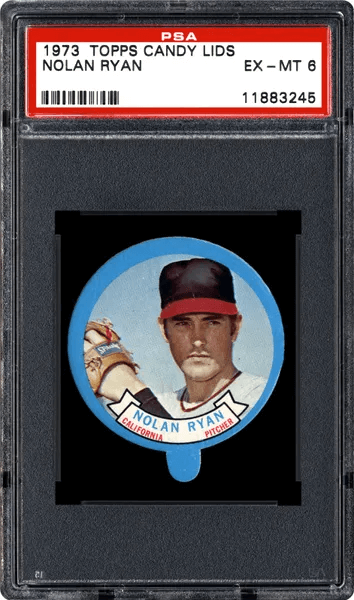
According to Hornish, when Topps was renewing its deals with MLB, it would experiment with test products that had no team designation. So on these lids, which were to be collected after ripping them off a small container of gum, the logos of the teams on the front of the caps are airbrushed out.
“Collectors generally disdain unlicensed sets, which is what Topps was doing in 1973; but when it comes to Topps, almost everything is collectable,” Hornish wrote.
The round lids have major centering issues. The set features 55 players of the time with Nolan Ryan, Mays and Munson being the most desirable. The Ryan in a PSA 5 with mild centering issue for the set sold last July for $709. There are only 14 graded higher by PSA.
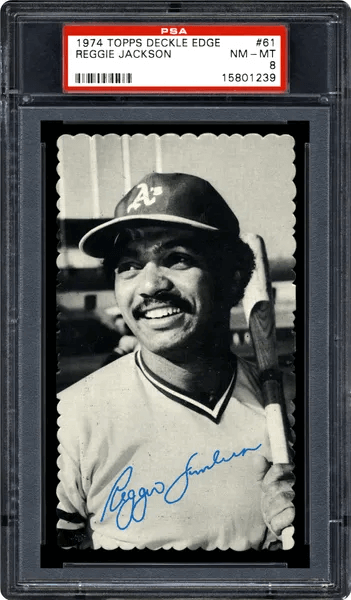
These are oversized as a test of a reimagined 1969 Deckle Edge set that was more widely released. The 72-card set has a scalloped “deckle” border with black and white images of the players. The backs simulate a newspaper clipping and highlight a player milestone. Seaver, Pete Rose, Ryan, Aaron, Reggie Jackson and Johnny Bench highlight the set. This set was issued on a limited basis in Massachusetts only, so examples are harder to find. Someone somehow got a PSA 6 Seaver on eBay as a best offer recently for just $245 where PSA 8s are over $3,000. There are only 32 Seavers graded higher than a 6 by PSA. A Ryan in a PSA 8 recently sold for nearly $4,000.
This may cause sticker shock for some, and probably everyone who isn’t seriously in the card market. But other even greater rarities can be had for less money than you’d expect because, according to Hamil, “most collectors don’t even know what they are.”
For example, the 1969 4 in 1s (how they’re officially labeled by PSA) are miniature versions of the front of the four base cards in the 1969 baseball set on one normal-sized card. The set of 27 cards (So 108 cards depicted) lacks star power, though Mays is included on one and a PSA 7 of that sold last year for $1,010, according to PSA.
1973 Topps Pin-Ups and Topps Comics
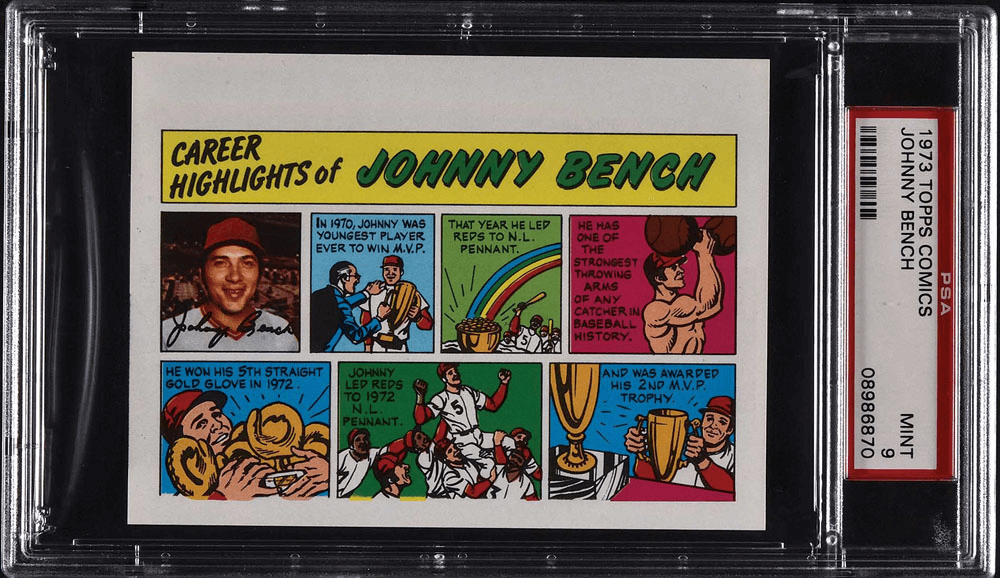
These have the same numbers and players (24 total in each set) as the 4 in 1s and are both larger than conventional cards. They were meant to wrap a large slab of Bazooka gum, but the test versions have no fold lines. A PSA 1 of the Pin-Up Ryan sold last year for $2,400 and mid-grade versions of the other stars go for about $1,500. To get a sense of rarity of the Pin-ups, the total PSA population according to Card Ladder is 20. As for the comics, a Seaver in a PSA 9 sold last year for $8,100 (Card Ladder says PSA has graded only eight total). A Ryan in a PSA 6 sold for over $10,000 in 2023 (there are also just eight Ryans graded by PSA in all grades). The only web sale in 2025, according to Card Ladder, was a Mickey Lolich for just under $500 in a PSA 8.
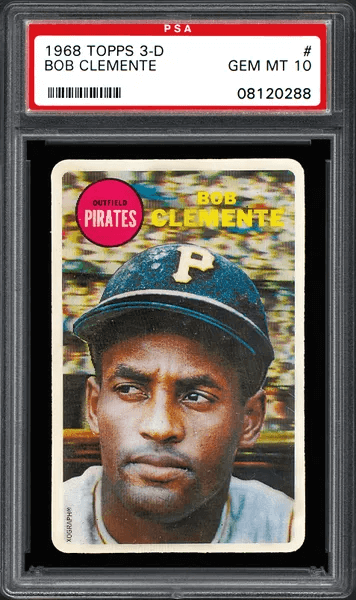
These cards were also issued as a test product in 1968, with Clemente the most sought after; the last sale of one of the 86 total PSA graded 3-D Clementes fetched $39,000 in a PSA 8 in 2023. According to Hornish, Clemente “goes for at least 10 times as much as every other player in the set.”
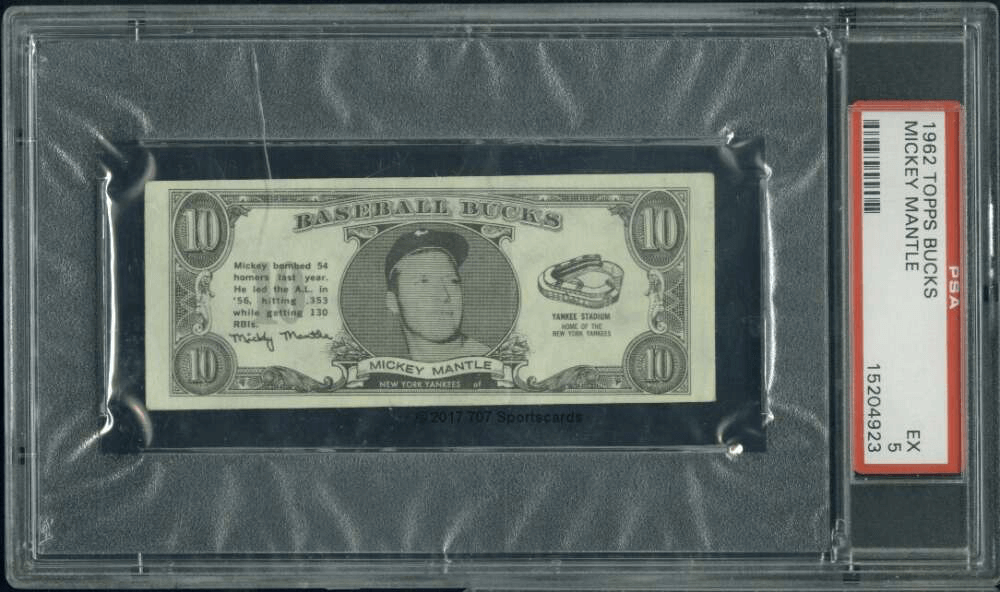
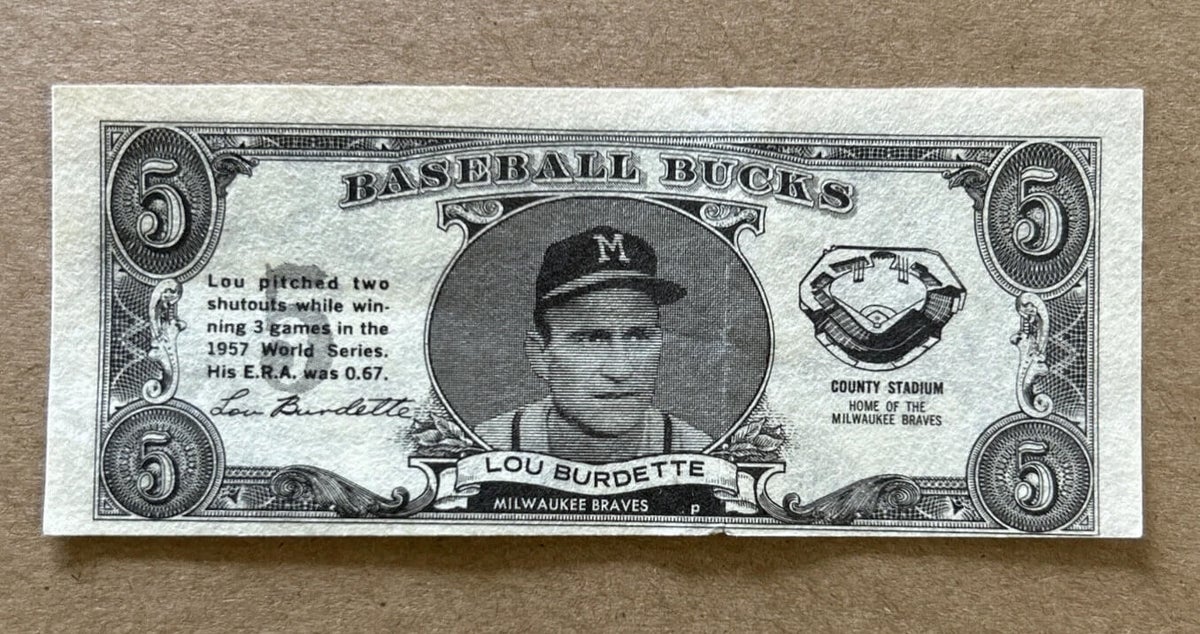
These are a more affordable option for collectors who want something unusual, with player images on what looked like currency in various denominations. So instead of having George Washington staring back at you, it was Koufax, Mantle or Jerry Lumpe. There are 96 in all, including the top stars of the day. And even the Mantle won’t require a second mortgage, with a PSA 2 going for $340 in June. There are under 200 Mantles graded by all grading companies combined.
The Athletic maintains full editorial independence in all our coverage. When you click or make purchases through our links, we may earn a commission.