
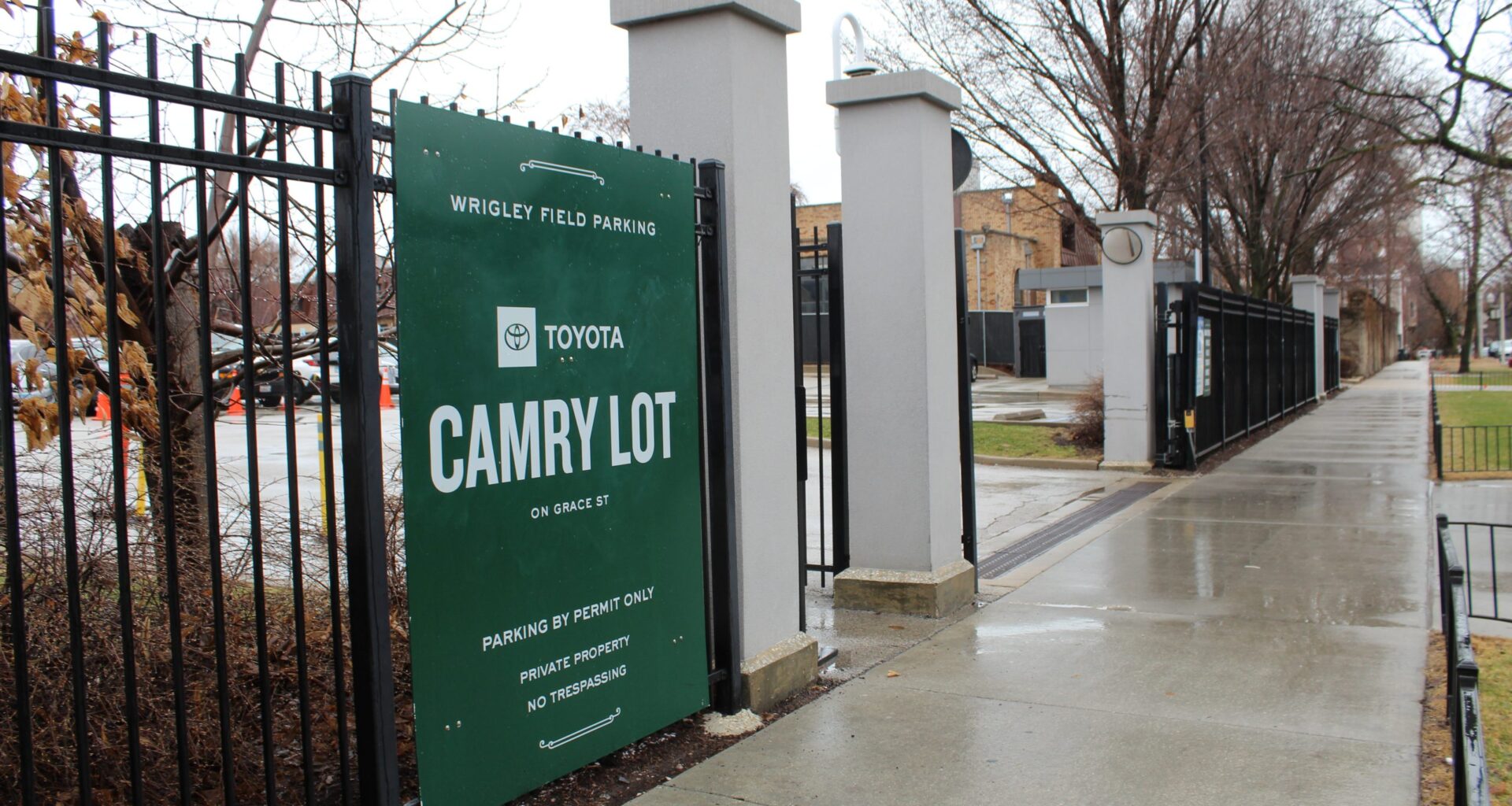
WRIGLEYVILLE — The Chicago Cubs want to expand a team-owned parking lot near Wrigley Field by hundreds of spaces after buying a neighboring property — a plan some neighbors say could worsen traffic on game days.
The Cubs are seeking city approval to amend the planned development of the Camry Lot, a large team-owned parking lot west of Wrigley Field. The proposal would add nearby properties to the planned development the team recently acquired, including the former House of the Good Shepherd site owned by Catholic Charities of the Archdiocese of Chicago.
Team officials presented the proposal during a Tuesday community meeting with the East Lakeview Neighbors Association, where residents raised concerns that the additional parking would bring more cars onto residential streets and make it harder for them to navigate the area before and after games.
If approved, the change would increase the lot’s capacity from 579 spaces to as many as 947. Cubs officials said the expansion would help meet existing demand from fans who drive to games and reduce the number of visitors parking on residential streets.
Neighbors at Tuesday’s meeting questioned that logic, arguing the expansion could instead encourage more driving, worsen congestion on nearby blocks and create safety issues for pedestrians and cyclists navigating the dense residential neighborhood around the ballpark.
“To take a quote from baseball: ‘If you build it, they will come,’” one resident said during the meeting, arguing that adding hundreds of parking spaces would inevitably lead to more people driving to games.
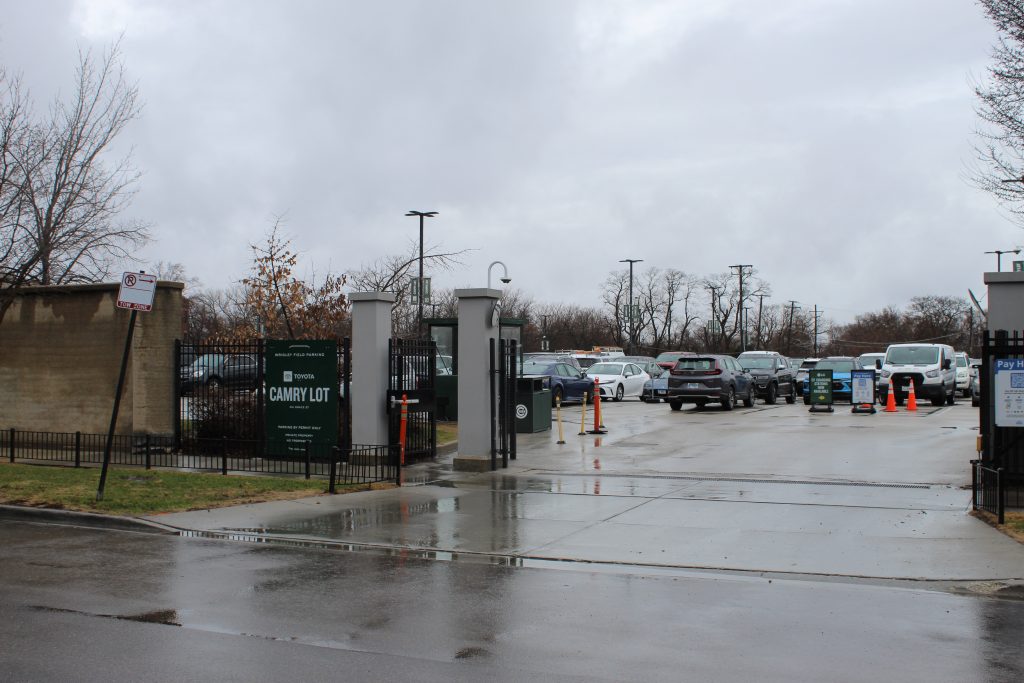 The Wrigley Field Camry Lot parking area west of the ballpark in Wrigleyville. The Chicago Cubs are seeking city approval to expand the lot and add hundreds of parking spaces on nearby property they recently purchased. Credit: Patrick Filbin/Block Club Chicago
The discussion grew tense at times as residents pressed Cubs executives on traffic, environmental impacts and whether the newly acquired property could be better used for housing or other development instead of additional parking.
Cubs officials said the project is intended to manage existing demand rather than encourage more fans to drive.
Will McIntee, the team’s director of government and community affairs, said a recent survey conducted by the Cubs showed about 37 percent of fans travel to Wrigley Field by car, while the majority walks, bikes or uses public transit.
“We’re not adding more fans,” McIntee said. “We’re not adding seats to the ballpark. What we’re trying to do is accommodate people who already drive and give them a place to park.”
The land needed for the expansion became available after Catholic Charities decided to sell the House of the Good Shepherd property, citing aging infrastructure and shifting program needs.
Brendan O’Sullivan, of Catholic Charities, said the organization approached the Cubs about buying the property in recent years after determining it would relocate its services elsewhere in the city.
“When we made a decision, the natural reaction for us was to talk to our neighbors who we already had a close relationship with, to see if they were interested in the property,” O’Sullivan said. “And that’s how we ended up here.”
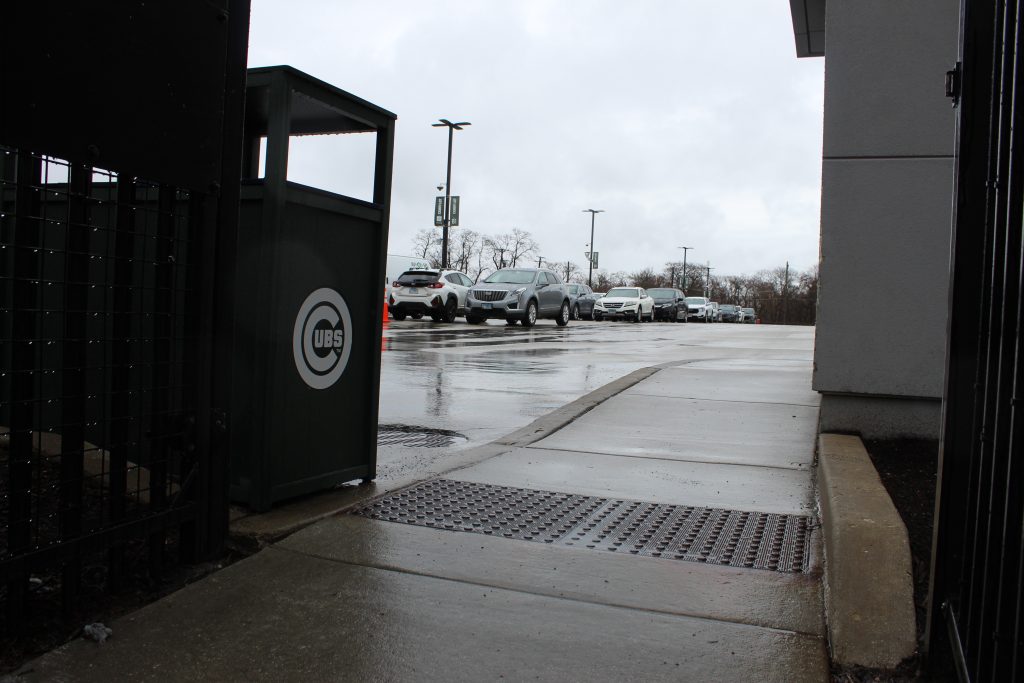 The Wrigley Field Camry Lot parking area west of the ballpark in Wrigleyville. The Chicago Cubs are seeking city approval to expand the lot and add hundreds of parking spaces on nearby property they recently purchased. Credit: Patrick Filbin/Block Club Chicago
The expansion is meant in part to ease the amount of fans who park on residential streets, a longtime frustration for residents and the team, Cubs executives said.
Michael Lufrano, the Cubs’ executive vice president of community, government and legal affairs, said the team regularly hears from neighbors about fans taking nearby permit parking spaces during games.
“If we can’t provide them a place to park, they’re going to park on neighborhood streets,” Lufrano said. “They’re going to park elsewhere in the community.”
Providing additional spaces in the team-owned lot could draw those drivers away from residential blocks and into the team parking area, Lufrano said.
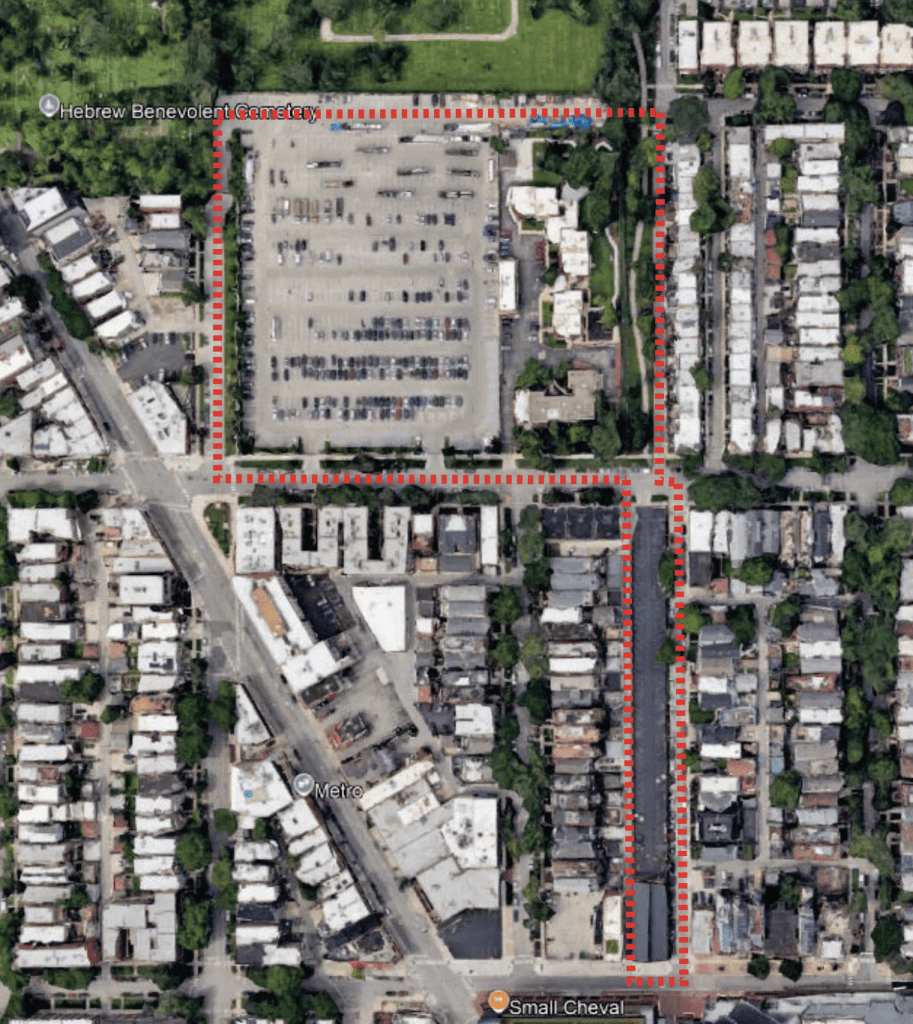 An aerial view of the Camry Lot and surrounding properties west of Wrigley Field in Wrigleyville. Provided/44th Ward Office
The proposal would expand the existing Camry Lot by incorporating the former House of the Good Shepherd property along with the nearby Highlander Lot, sometimes referred to as the “Blue Lot,” which sits adjacent to the existing parking complex.
Under the proposal, the Cubs would add 368 spaces, bringing the lot’s total capacity to 947 parking spots. The current planned development allows up to 800 spaces.
Cubs officials also said they are exploring changes aimed at easing postgame congestion, including creating an exit route through an adjacent team-owned parking area that would allow drivers to move more quickly onto Clark Street instead of filtering through smaller residential streets.
Still, several neighbors said streets surrounding the ballpark already become gridlocked on game days, making it difficult for residents to drive, walk or bike through the neighborhood.
Residents also raised environmental concerns, including the potential removal of trees on the property as the lot expands.
The team is still refining the design and plan to preserve as much of the existing landscaping as possible, Lufrano said.
“We are looking at the trees and the landscaping,” Lufrano said during the meeting. “We need to look at replanting and preserving as many as we can as part of the design.”
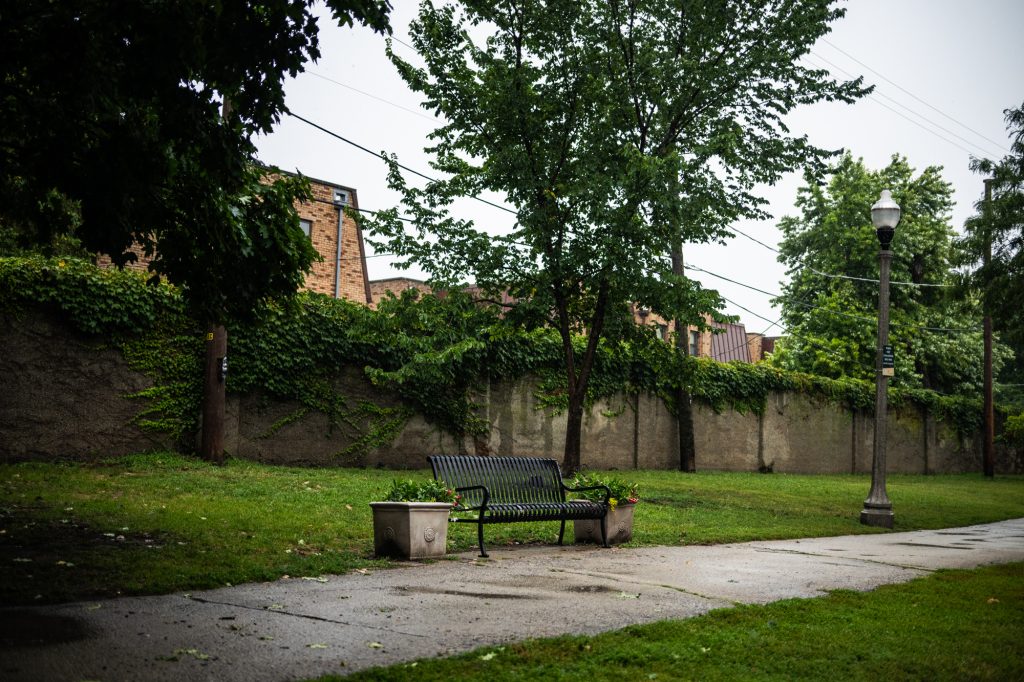 A bench at Kelly Park in Lakeview on Aug. 12, 2025. Credit: Colin Boyle/Block Club Chicago
Some neighbors also asked whether the expansion could increase traffic on nearby residential streets, particularly along Grace Street and Seminary Avenue near Kelly Park, where neighbors said vehicles already struggle to enter and exit during games.
Lufrano said the team believes the additional exit route and controlled parking layout would help move vehicles out of the neighborhood more quickly after games.
“We’re trying to avoid adding as much traffic as possible,” he said.
The proposal must still be approved by the city as an amendment to the site’s planned development, and officials with the offices of alds. Bennett Lawson (44th) and Angela Clay (46th) are gathering community feedback.
Listen to the Block Club Chicago podcast: