
The Athletic has live coverage of Korea vs. Dominican Republic and USA vs. Canada in the 2026 World Baseball Classic quarterfinals.
TOKYO — The stated purpose of the World Baseball Classic is to grow and promote the game globally.
But in Japan, there’s concern that MLB’s partnership with Netflix to exclusively air the games in the baseball-crazed country will ultimately lead to a major dip in how many people watch the tournament.
Japanese fans are used to watching their national team’s games on free-to-air national outlets — and they have proven tremendously popular, with reports stating that nearly 100 million of the 125 million people in the country watched at least some of the WBC in 2023, when it was broadcast on various national outlets.
MLB owns and operates the tournament, meaning they made the choice to partner with Netflix, in a nation where subscriber services are unusual for sports. As a result, many expect that the move to Netflix will have a dramatic impact on interest in a country not used to paying to watch its national team’s games.
“Without terrestrial coverage, the overall national excitement around the WBC may become more limited, which may reduce the tournament’s mass appeal,” said Nobby Ito, executive advisor for the Nippon Professional Baseball Commissioner; a league that notably has no official say in broadcast partnerships.
Ito is also a Japanese baseball historian, and has coordinated with MLB on past projects.
“I believe in (MLB commissioner) Rob Manfred because it sounds like his top priority is the fans,” Ito said. “If that is the case, I hope he will make a good judgement on this issue before the next WBC.”
While viewership data has not yet been made public, Ito is not alone in his concern. Subscription services in the United States are ubiquitous. However, that is not the case in Japan, where residents are used to consuming such content at no cost. The Japanese news outlet Asahi Shimbun reported in December 2024 that Japan, which has a population of more than 125 million people, has roughly 10 million Netflix subscribers.
In August 2025, MLB announced the partnership with Netflix for exclusive broadcast rights in Japan, and a league source told The Athletic it believes the decision will help grow the game. But many here believe it might only grow Netflix’s subscriber base, with many other residents choosing not to watch the tournament.
“Most people are not used to Netflix,” said Taro Abe, a Japanese journalist of more than two decades for the paper Chunichi Shimbun. “In Japan, television is free for a long time. Some people are used to subscriptions. But older people are not. I think it’s just Japanese culture. The Internet, TV, it’s for free, not subscriptions. … That’s why I think there’s a Netflix problem here.
“In Tokyo, Osaka, in big cities, it’s fine. But local cities, in the north of Japan, the south of Japan, I think it’ll impact [viewership]. In my opinion, it will limit the audience.”
MLB did not offer an interview or official comment.
Netflix’s policies could also limit viewership in public settings, such as bars and restaurants.
This is lame, @netflix
Tell Japan’s sports bars they can and should show the World Baseball Classic games (some will anyway, but make it clear it’s not something they should “refrain” from doing).
Japanese people gather at bars to watch sports because many homes aren’t… https://t.co/VXfOZ57nmL pic.twitter.com/EjxCBGHKR8
— Jeffrey J. Hall 🇯🇵🇺🇸 (@mrjeffu) March 4, 2026
Netflix is assisting in broadcasting the games in numerous public locations throughout the country, providing more widespread access to the games, and initially said in public comments that it discouraged commercial use, which is against its terms of service. But in a subsequent statement to The Athletic, the company said that it is not planning to act against businesses that do air the games.
“Netflix’s services are intended for the account holder’s personal, non-commercial use,” Netflix said in a statement. “That being said, no action will be taken if a bar/restaurant uses its personal accounts to stream the games.
“We are very encouraged by the strong momentum in audience engagement with the World Baseball Classic so far. Not only Samurai Japan but all participating teams are delivering highly competitive, high-energy games that are captivating fans, and we expect interest and viewership to build further as we head into the championship round,” the statement continued.
A Major League Baseball source said the league views its partnership with Netflix as “a vehicle to help grow the game and reach a larger audience through a streaming service platform that is widely available,” noting it has around 325 million subscribers globally.
“While the topic of a paywall was part of the discussions leading into the partnership,” the league source said, “with a low cost equivalent to $3 U.S. to watch the entire 47-game tournament live and on demand in March, the league believes Netflix airing the games is accessible to fans from Japan.”
MLB has also partnered with Netflix to air some of its other marquee events, such as Opening Day, the Home Run Derby and Field of Dreams game next season. Those events, however, apply largely to the audience stateside.
Samurai Japan’s manager, Hirokazu Ibata, has praised Netflix’s coverage of the tournament and said he’s been regularly watching on the platform. When asked in English if he had any concerns about his country’s access to the games, Ibata said in Japanese, “Having Netflix covering all the games, I think we get better information than previous tournaments, which is good to us.”
The WBC is not airing on Netflix in the United States, which has the games available on Fox Sports and Tubi. Netflix declined to say how much it paid MLB for the rights to air the games in Japan. Various Japanese news reports have suggested a price somewhere between $63.5 million and $98 million U.S. dollars — approximately three to five times higher than the rights cost in 2023, the last time the tournament was held.
The explosion of interest in the tournament might not be enough to close the gap of interested viewers and paying subscribers. That interest is what led Netflix to leverage the games in its effort to grow a subscriber base of fans highly supportive of their national team.
But some of the response from fans has been critical of Netflix and MLB’s partnership, and it’s unclear how successful the effort has been. Former Samurai Japan shortstop Shinya Miyamoto, who was on the country’s inaugural team, said “it’s really unfortunate” in an interview on his YouTube channel.
In February, a study conducted by the Sports Management Research Institute at Sanno University revealed that only 4.9 percent of respondents said they signed up for Netflix because of the WBC, while 8.8 percent said they’d consider signing up. Most notably, 68 percent said they had no plans to sign up, and only 17.3 percent said they’d already had a Netflix account.
The survey was given to 10,000 people, both men and women between the ages of 20 and 60 years old, from 47 prefectures across the country.
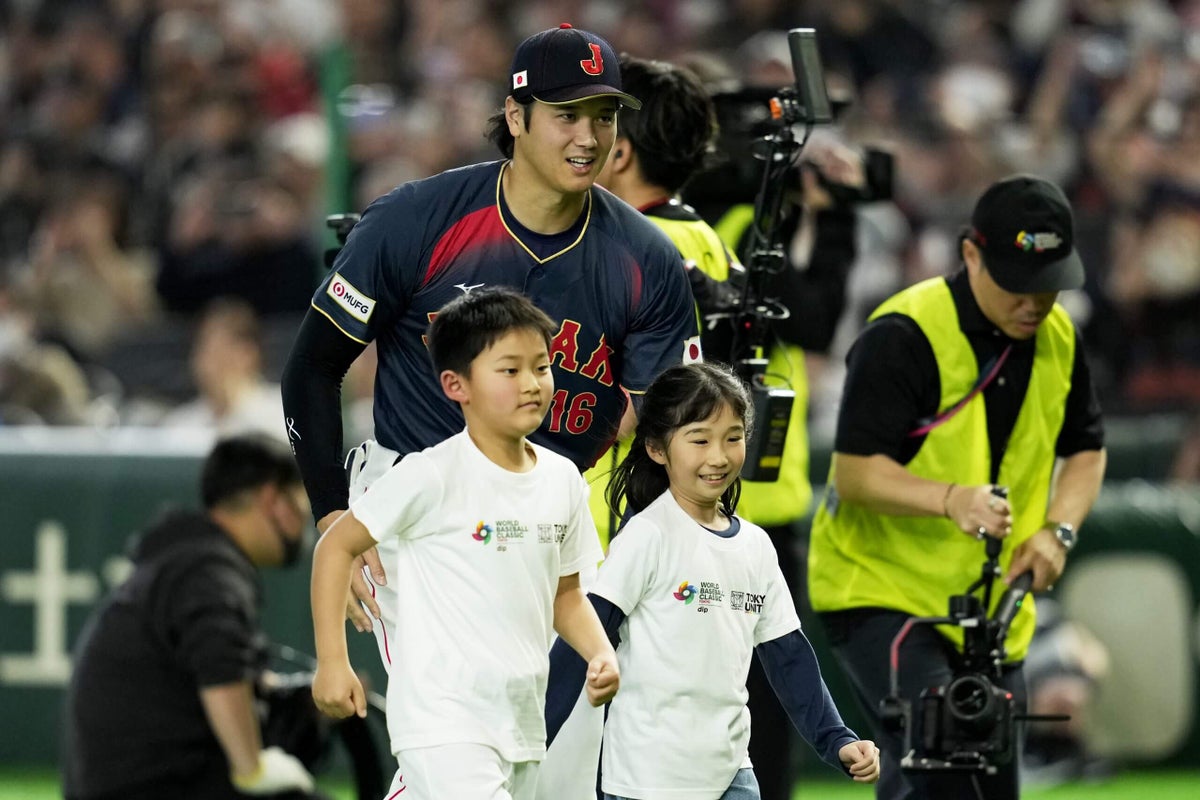
At the Tokyo Dome, Japanese fans have come in droves, celebrating their favorite players before every pitch. They stayed in their seats and cheered for nearly an hour after their wins, basking in the joy of victory.
The love of the team is evident, and fans across the world can see that. But what’s on screen for the viewing audience might not be reflective of the millions of people in Japan who likely will not be watching.