
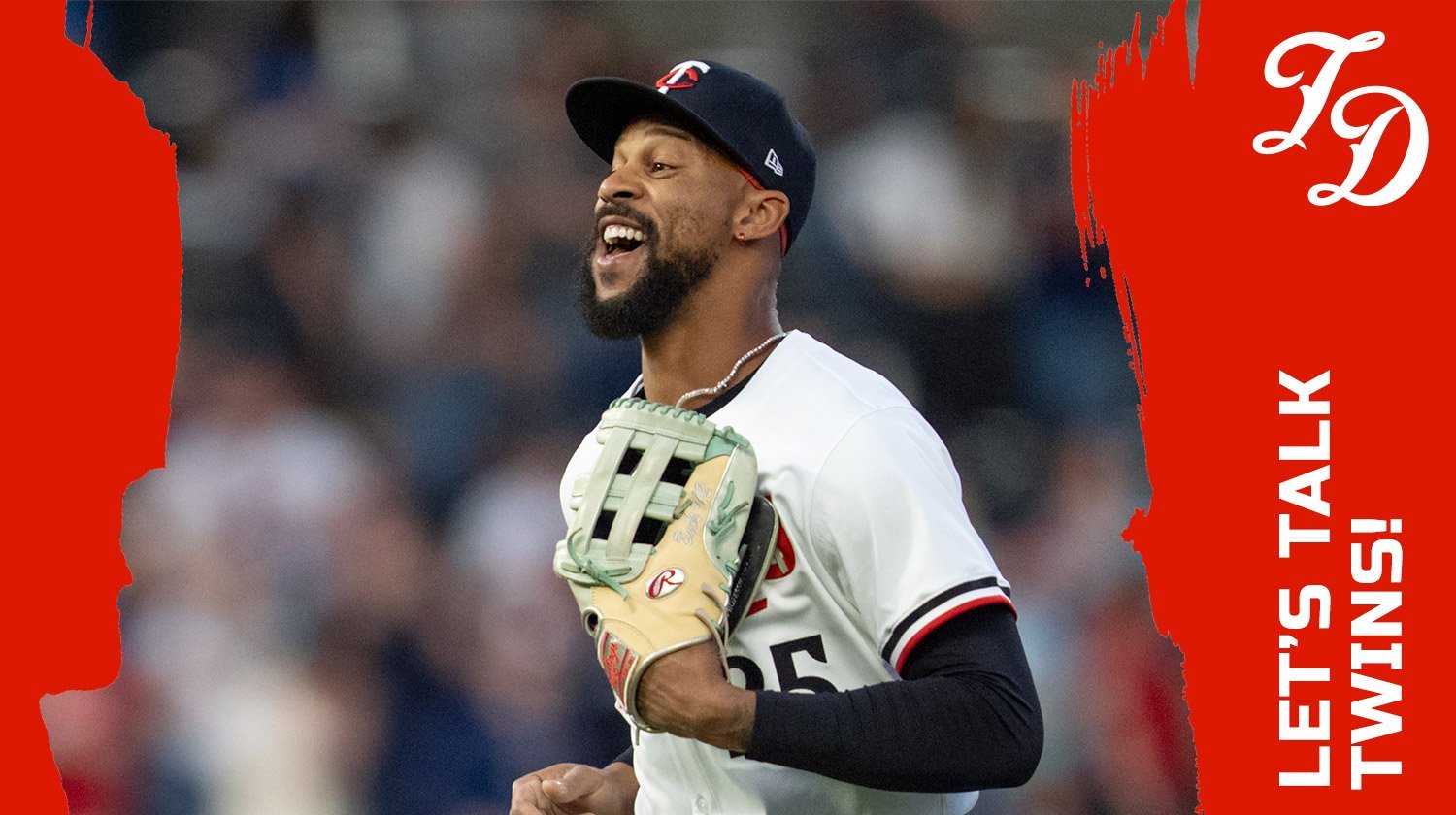
Image courtesy of William Parmeter
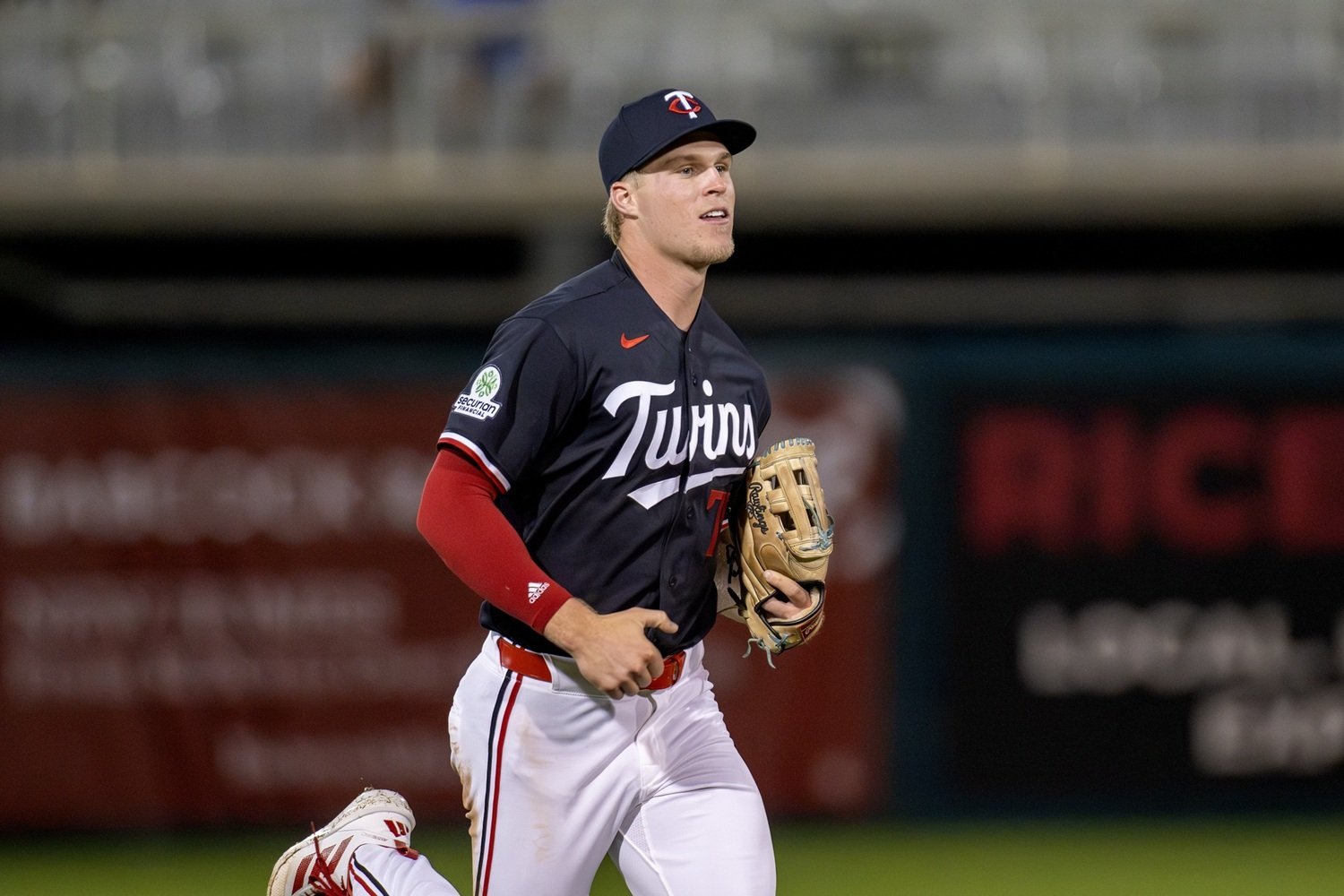
Walker Jenkins has largely lived up to the billing since the Twins selected him fifth overall in 2023. Before his 21st birthday, he had climbed to Triple-A, a sure sign of a top prospect progressing at top speed. Jenkins’s has not been a flawless ascent. He’s missed chunks of time with lower-body and related injuries. Even with the missed time, though, his production says he’s the real deal—and the eye test corroborates that assessment.
For a 20-year-old to pair strong Double-A numbers with meaningful Triple-A exposure is rare and important. Jenkins has the frame, the bat path, and the instincts to make evaluators optimistic. He can run, he can play center field, and his approach at the plate is advanced enough to instill confidence, despite the lack of a robust track record.
Walker Jenkins
Age: 21 (DOB: 2/19/2005)
2025 Stats (AA/AAA): .286/.399/.451 (.850), 17 2B, 2 3B, 10 HR, 34 RBI, 17 SB, 135 wRC+, 84 G
ETA: 2026
2025 Ranking: 1
National Top 100 Rankings
BA: 5 | MLB: 14 | ATH: 11 | BP: 19 | ESPN: 9
What To Like
Jenkins checks almost every box you want from a premium position-player prospect. He pairs a smooth, repeatable left-handed swing with elite pitch recognition and selectivity. That combination produces lots of barrels, a steady walk rate (13.5 BB%), and far fewer strikeouts (20.5%) than you might expect from a player with his size at his age. Though it came in just 58 games, his .292/.407/.454 line in Double-A testifies to his ability to adjust and win the difficult battles within the strike zone.
He’s a fluid athlete in the outfield. At 6-foot-3, he looks like he was built to cover ground and make plays. Jenkins has primarily played center field in the minors, and his reads and routes have received positive reviews. He’s not a straight-line burner, but his instincts and above-average footwork allow him to make the plays that matter. On the basis, he’s shown good instincts and graded out as a plus baserunner, in however limited a sample. Speed should be a boon to his offensive value, rather than a limiting factor for it.
What’s Left To Work On
Power remains the most obvious question. Jenkins has hit plenty of doubles and triples, and he’s hit the occasional tape-measure shot. Still, he’s totaled 19 home runs in 192 professional games, and true over-the-fence power has been sparse. Part of that is mechanical. His bat head takes a little while to get on plane, which can cap exit velocities and lead more of his best contact to be hit on a line to the opposite field than is strictly optimal. There is room for more bat speed and strength gains as he matures. If those gains come, he could push into the 25-plus home run range. If they don’t, his floor still reads as a very good contact-based run producer, but maybe not a perennial All-Star.
Durability is the other major worry. Jenkins has missed significant time in nearly every pro season to date because of hamstring, quad, ankle, and other lower-body issues. He’s already missed time this spring with a hamstring injury. Those have not been one lingering malady, but a string of discrete setbacks. The good news is that he has repeatedly come back and produced at a high level. The bad news is that availability matters, and repeated trips to the injured list can slow development and erode a team’s willingness to rely on a young player in high-leverage situations.
Finally, there is the matter of consistent hard contact, by big-league standards. Jenkins’s hard-hit rate and peak exit velocities sit around league average. He destroys mistakes, but pitchers have shown they can limit his damage with soft stuff away and spin that keeps him from turning on the ball. If he can continue to tweak his swing plane and get the bat head out quicker, those pitches will get punished more often.
What’s Next
Jenkins is likely to start 2026 in St. Paul, and he should have a long look there early in the season. The projection is simple. If he stays healthy, a midseason arrival to the big-league club is a real and reasonable expectation. Whether he arrives as a center fielder or moves to right field will be dictated as much by health and team need as by his sheer skill set. The upside is clear. Jenkins looks like an everyday major-league outfielder with the tools to be a middle-of-the-lineup contributor and the potential to be an All-Star if the power and health line up.
Jenkins is the kind of prospect who makes you excited about the future of the organization. He blends feel and polish with a physical profile that still has room to grow. The rest of 2026 will go a long way toward telling us whether Jenkins becomes a very good major-leaguer or something closer to a star. For now, he sits at the top of the system, for good reason.
Catch Up on the Rest of Twins Daily’s Top 20 Prospects
(Part 1)
20. James Ellwanger, RHP
19. Khadim Diaw, C/CF
18. C.J. Culpepper, RHP
17. Kyle DeBarge, 2B/SS/CF
16. Hendry Mendez, OF
(Part 2)
15. Marco Raya, RHP
14. Quentin Young, SS
13. Brandon Winokur, SS/CF
12. Andrew Morris, RHP
11. Riley Quick, RHP
10. Charlee Soto, RHP
9. Marek Houston, SS
8. Kendry Rojas, LHP
7. Gabriel Gonzalez, OF
6. Dasan Hill, LHP
5. Connor Prielipp, LHP
4. Eduardo Tait, C
3. Emmanuel Rodriguez, OF
2. Kaelen Culpepper, SS
1. Walker Jenkins, OF