
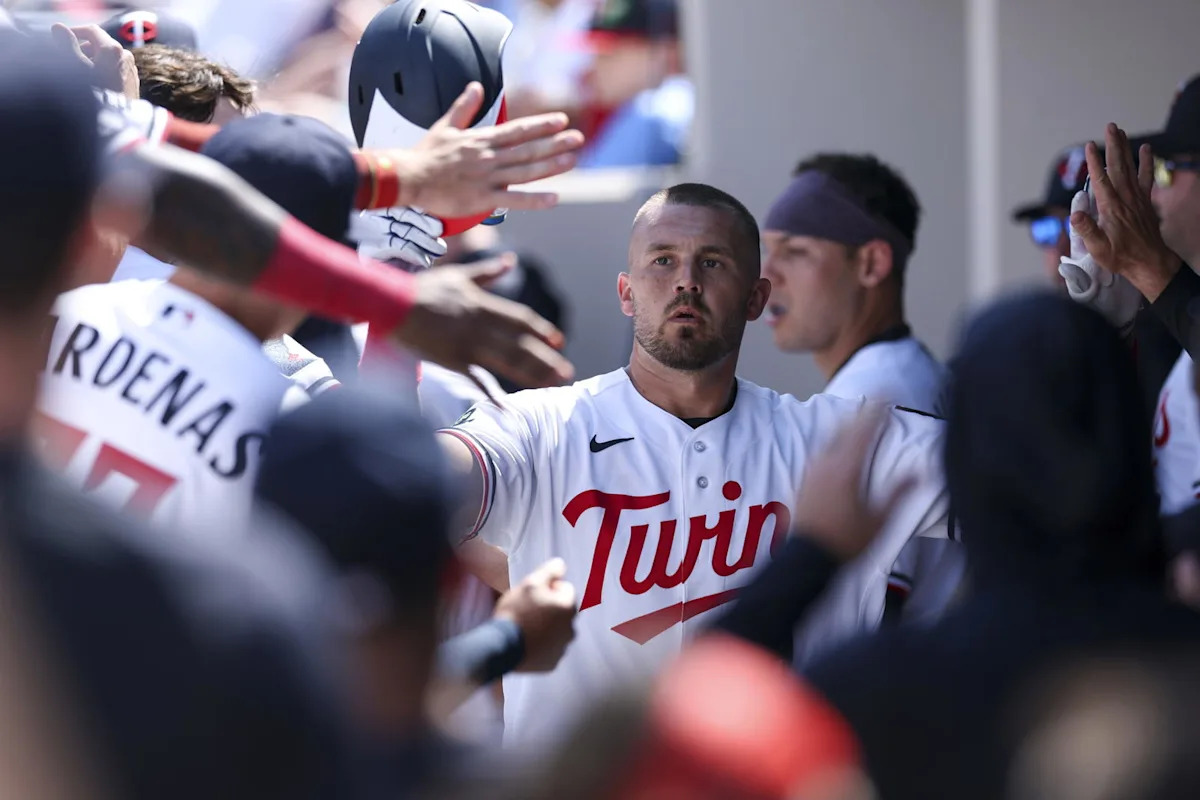
Spring training injuries can often be minor, but for a Minnesota Twins roster already leaning heavily on younger players, even short‑term setbacks become something the organization watches closely.
The Twins are entering a transitional season where development and consistency will be crucial, and maintaining health across the roster will play a large role in determining how competitive the team can be throughout the year. Minnesota’s ownership has continued to set expectations high, fully expecting the current group to return to the MLB playoffs.
Advertisement
However, one player is dealing with a minor issue. Outfielder Trevor Larnach, who was recently removed from the lineup ahead of a spring matchup against the Boston Red Sox and has not appeared in a game since. He also missed Monday’s contest against the Pittsburgh Pirates.
Larnach is sidelined with left side soreness. His status is “day to day” according to hitting coach Keith Beauregard, and he will be back in the cages on Tuesday (h/t Talkin’ Twins).
The update suggests the injury is not considered serious, though it is still something worth monitoring given Larnach’s history. Injuries have occasionally limited the outfielder throughout his career, making any early‑spring discomfort something the Twins will handle cautiously.
Advertisement
Larnach has spent his entire five‑year career with Minnesota after the club selected him in the first round of the 2018 MLB Draft. Despite being drafted during a previous era of the organization, he remains on the roster even as the franchise shifted directions following last season’s trade deadline. Several established players were moved in deals that signaled a younger core and entirely new look moving forward.
Because of that shift, Larnach’s role on the roster is somewhat unique. The Twins now feature a large amount of young talent, not just across the outfield but across all areas of the roster. That makes him one of the more experienced hitters still in the lineup alongside All-Star center fielder Byron Buxton.
Last season was a positive step for Larnach, particularly in terms of durability. He appeared in a career‑high 142 games, an encouraging sign after dealing with injuries earlier in his career that typically had limited him to under 100 appearances. He finished the year with a .250 batting average, .323 on‑base percentage and .727 OPS, along with 17 home runs and 60 RBIs.
Those numbers highlight why the Twins hope the current soreness proves to be temporary as although his production is not elite, it provides much-needed stability. As the team continues transitioning to a younger roster, Larnach’s bat and experience could play an important role in keeping Minnesota competitive during the upcoming season.