
With Opening Day 2026 on the horizon, it’s moving season for relievers, though situations remain muddled for multiple teams. Before delving into the closer competitions or match-up-based approaches, here’s a look at relievers who have seen their stock rise or fall since my last post.
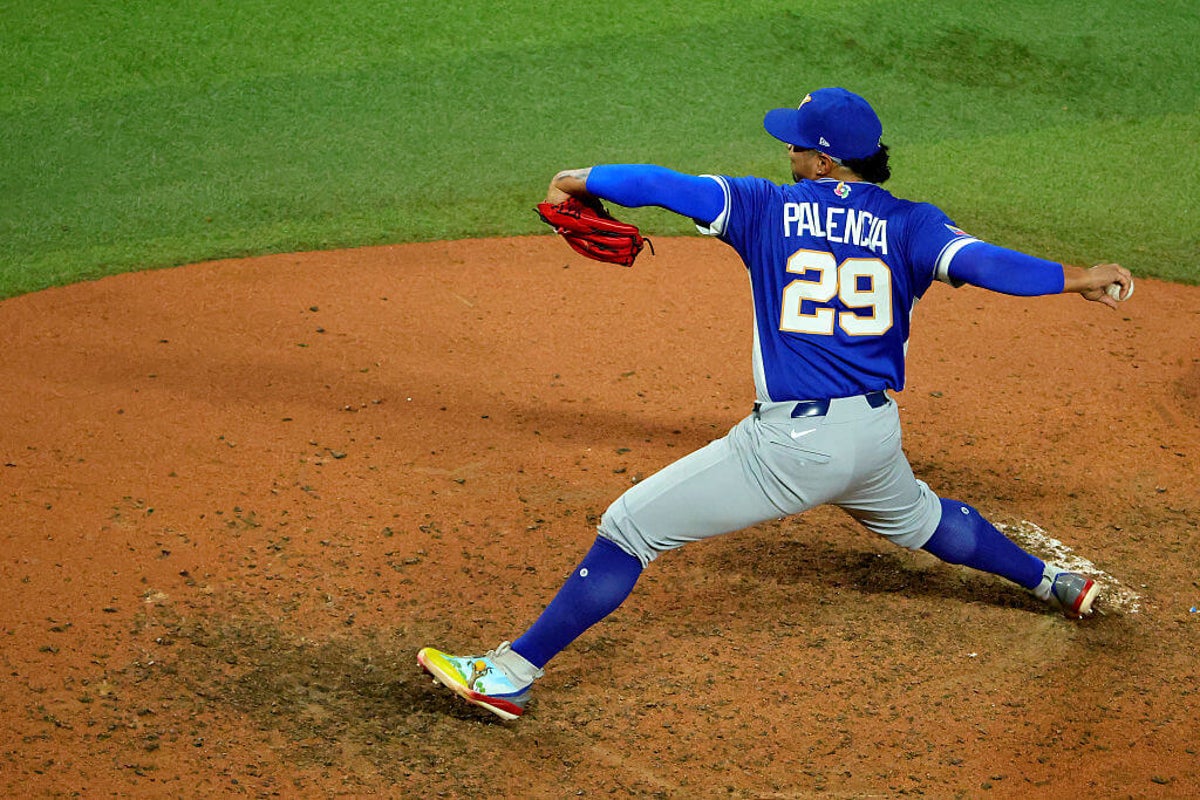
Stock upDaniel Palencia (CHC)
During the three knockout games, including the World Baseball Classic championship game, Palencia recorded a 66.7 strike percentage (39 pitches, 26 strikes), with 12 whiffs (30.8 SwStr%), six strikeouts and zero walks (50 K-BB%), while retiring all 12 batters faced. Pure dominance on a big stage.
Paul Sewald (ARI)
Sewald has not flashed the velocity many teams crave at the backend of their bullpen, but his 86 career saves, including 29 with Arizona between 2023 and 2024, may make him the “bridge” option for saves until A.J. Puk returns.
BEAT OUR EXPERTS
Predict how you think the tournament will
play out. Can you beat one of our experts?
Ryan Walker (SF)
There was apprehension after he lost the closer role last year, but through his first seven spring outings, he’s recorded seven strikeouts against zero walks (31.8 K-BB percentage) and allowed three hits in six innings (0.50 WHIP).
Stock downCarlos Estévez (KC)
It’s tough repeating as the saves leader, and it’s even more challenging working with reduced velocity. Estévez dealt with a back issue last spring and averaged 93.9 miles per hour on his four-seam fastball, according to Brooks Baseball, but ended the season with a 96.7 mph average on his four-seamer in September. This spring, his velocity is even lower, though it ticked up to an average of 90.5 mph across his first two outings in March. However, he has not pitched since March 9. Combining this with his fly-ball tendencies and his home ballpark moving the fences in translates to migration toward the mean this season. Tread lightly.
Victor Vodnik (COL)
Vodnik finished with a flourish last year, converting eight of nine save chances between July 12 and September 21. This spring, he’s allowed multiple hits in three of his five outings with Colorado and for Team Mexico in WBC contests, resulting in a 3.43 WHIP over 4.2 innings. It’s less than optimal.
Robert Stephenson (LAA)
Honestly, I feel bad for the talented reliever. Stephenson was hoping to compete for the closer role to start the season, but he experienced a setback and may be sidelined for an extended period.
Leverage pathwaysHigh-leverage identifiers
Let’s shift our focus to teams with potential committees or shared-save situations. Each team will be labeled with one of the following high-leverage pathway identifiers:
Mostly linear: This is a more traditional approach, with a manager preferring one reliever in the seventh inning, another in the eighth and a closer (when rested) in the ninth. There are shades of gray, but it usually follows a predictable pattern in high-leverage situations.
Primary save share: The team prefers one reliever as the primary option for saves. However, the team might also use that reliever in matchup-based situations, as dictated by batter-handedness or batting order, especially in the late innings. This approach provides multiple relievers with save chances each series or week throughout the season.
Shared saves: Typically, two relievers share save opportunities, often based on handedness, rest or recent usage patterns that help keep each player fresh. While these situations typically involve a primary and ancillary option, others may also be used. Some teams also prefer a matchup-based option, assigning pitchers a hitter’s pocket for a series, which creates fluid save opportunities.
In flux: The manager has not named a closer, and usage patterns regarding the leverage roles remain unclear.
Projected American Leauge leverage pathways
TeamLeverage PathwayCloser (Primary)Stopper/HLRStealth/Ancillary Option
Mostly Linear
Ryan Helsley
Tyler Wells
Keegan Akin
Mostly Linear
Aroldis Chapman
Garrett Whitlock
Greg Weissert
Primary Save Share
Seranthony Domínguez
Jordan Leasure
Grant Taylor
Mostly Linear
Cade Smith
Shawn Armstrong
Colin Holderman
Primary Save Share
Kenley Jansen
Kyle Finnegan
Will Vest
Mostly Linear
Bryan Abreu
Bryan King
Kai-Wei Teng
Mostly Linear
Carlos Estévez
Lucas Erceg
Matt Strahm
In Flux
Kirby Yates
Jordan Romano
Drew Pomeranz
In Flux
Cole Sands
Taylor Rogers
Liam Hendriks
Mostly Linear
David Bednar
Camilo Doval
Fernando Cruz
Mostly Linear
Andrés Muñoz
Matt Brash
Jose A. Ferrer
Shared Saves
Griffin Jax
Garrett Cleavinger
Bryan Baker
Shared Saves
Robert Garcia
Chris Martin
Cole Winn
In Flux
Hogan Harris
Mark Leiter Jr.
Justin Sterner
Mostly Linear
Jeff Hoffman
Tyler Rogers
Louis Varland
Situations of interest
Los Angeles Angels: After targeting veterans with closer experience, the team will decide between Kirby Yates, Jordan Romano or Drew Pomeranz as the primary save option, or have them share the late innings based on lineup lanes. Those who play in leagues with an injured list designation can try stashing Ben Joyce, who could become the closer by June for first-year manager Kurt Suzuki.
Minnesota Twins: This leverage ladder shifted appreciably after the trade deadline last season. Minnesota only converted eight saves by five different relievers, with only Justin Topa (four) recording more than one. Remember, this covered a two-month span. The team added its former closer, Taylor Rogers, and signed Liam Hendriks to a one-year deal. He’s working with reduced velocity this spring, but may emerge as the primary save share if his command stabilizes.
Tampa Bay Rays: Manager Kevin Cash confirmed there will be a matchups-based approach, though fantasy managers hope Griffin Jax can earn a primary share like Pete Fairbanks in 2023. However, for our purposes, the 2022 template aligns best with the current committee, when 11 different pitchers secured at least one of the team’s 44 saves, with the following dispersal by the leaders:
Eight saves: Jason Adam and Pete Fairbanks
Seven saves: Colin Poche
Six saves: Brooks Raley
Five saves: Andrew Kittredge
Three saves: Ryan Thompson
Two saves: Shawn Armstrong and Jalen Beeks
Something similar may not happen, but it could, which caps the upside for all.
Texas Rangers: Once again, the team went thrift shopping for leverage relievers and will open the year with co-closers: Robert Garcia and Chris Martin. Garcia has a 1.51 WHIP in save situations since 2023, per Baseball-Reference, while Martin enters his age-40 season with 16 career saves versus 119 holds.
The Athletics: Despite recording a 34-24 record (.586) from July 24 through the end of the 2025 season, the team only posted 10 saves after trading Mason Miller. Here are the relievers who secured a save, and the dates on which they occurred:
Hogan Harris (4 saves): Aug. 19 and 23, Sept. 16 and 18
Sean Newcomb (2 saves): Aug. 16 and Sept. 12
Michael Kelly (2 saves): Sept. 14 and 19
Tyler Ferguson (1 save): Aug. 20
Osvaldo Bido (1 save): Aug. 21
A dark horse may be Elvis Alvarado, but patience will be required since he has command issues. Justin Sterner could also be in the mix early on, along with new additions Mark Leiter and Scott Barlow — Harris is the left-handed leverage option.
Projected National League leverage pathways
TeamLeverage PathwayCloser (Primary)Stopper/HLRStealth/Ancillary Option
Primary Save Share
Paul Sewald
Kevin Ginkel
Ryan Thompson
Mostly Linear
Raisel Iglesias
Robert Suarez
Dylan Lee
Mostly Linear
Daniel Palencia
Hunter Harvey
Phil Maton
Mostly Linear
Emilio Pagán
Tony Santillan
Graham Ashcraft
In Flux
Victor Vodnik
Zach Agnos
Seth Halvorsen
Mostly Linear
Edwin Díaz
Tanner Scott
Alex Vesia
Primary Save Share
Pete Fairbanks
Calvin Faucher
Andrew Nardi
Shared Saves
Trevor Megill
Abner Uribe
Jared Koenig
Mostly Linear
Devin Williams
Luke Weaver
Brooks Raley
Mostly Linear
Jhoan Duran
Brad Keller
José Alvarado
Mostly Linear
Dennis Santana
Gregory Soto
Justin Lawrence
Shared Saves
JoJo Romero
Riley O’Brien
Matt Svanson
Mostly Linear
Mason Miller
Jeremiah Estrada
Adrian Morejon
Mostly Linear
Ryan Walker
José Buttó
Erik Miller
Shared Saves
Clayton Beeter
Cole Henry
Cionel Pérez
Situations of interest
Arizona Diamondbacks: It may be more by default than merit, but Paul Sewald has emerged as the favorite for the primary save share. His competition, Kevin Ginkel, has a spring WHIP of 2.99 over his first 4.2 innings of work.
Colorado Rockies: Manager Warren Schaefer has intimated he will deploy a matchups-based approach, meaning save chances must be earned. Seth Halvorsen has intriguing velocity, but his command remains spotty. Zach Agnos may emerge as a dark horse based on his strong spring. But ballpark environment and wins may cap any intrigue for a Rockies reliever among fantasy managers.
Milwaukee Brewers: There would be zero controversy in this bullpen if Pat Murphy announced he was keeping the roles relievers he had last year. However, he did not, and he may try providing more rest for Trevor Megill and Abner Uribe, which wouldn’t be ideal. One reliever could benefit from being named the closer. Are you feeling lucky?
St. Louis Cardinals: Three spots in the leverage pathway could not cover how many relievers Oli Marmol indicated could be in the mix for saves: Riley O’Brien, JoJo Romero, Matt Svanson and Ryne Stanek. Will this be the case? It largely depends on health and performance this season. O’Brien was one of 10 relievers with at least four saves last September, and he recorded a game finished in 10 games following the trade deadline. Romero converted eight of nine save opportunities after the trade deadline, leading the team. Svanson led all Cardinals’ relievers in ERA after the All-Star break (1.13) and is 44-for-46 in professional save chances, including a perfect 33-for-33 with the St. Louis franchise — just none in the majors, yet.
Washington Nationals: Although the fantasy community has anointed Clayton Beeter as its preferred option for the primary save share, neither the team nor the new manager has confirmed it. Last year, Beeter was recalled on Aug. 5. He had one save, nine holds, a 2.49 ERA and a .116 opponents’ batting average over 21.1 innings. Cole Henry, who’s in the mix, recorded more saves (two) than Beeter in this same timeframe, but two of his final three appearances resulted in multiple runs allowed. Plus, the team added Drew Smith and Cionel Pérez as non-roster invitees who may break camp with the team, potentially leading to a committee approach early in the season.
Taking all of this into consideration means planning on saves will be a priority in many leagues. It does not mean overpaying will be required, but there’s a cliff at the closer position until usage patterns become clearer. For our subscribers, the first posting of my tiered rankings for saves and SOLDS formats:
It will be a long season covering closers. Strap on some band-aids; it’s a marathon, not a sprint.
Statistical Credits: Fangraphs.com, Baseball-Reference.com, BaseballSavant.com and BrooksBaseball.net. Check out my work at Reliever Recon and Closer Monkey for daily updates.