
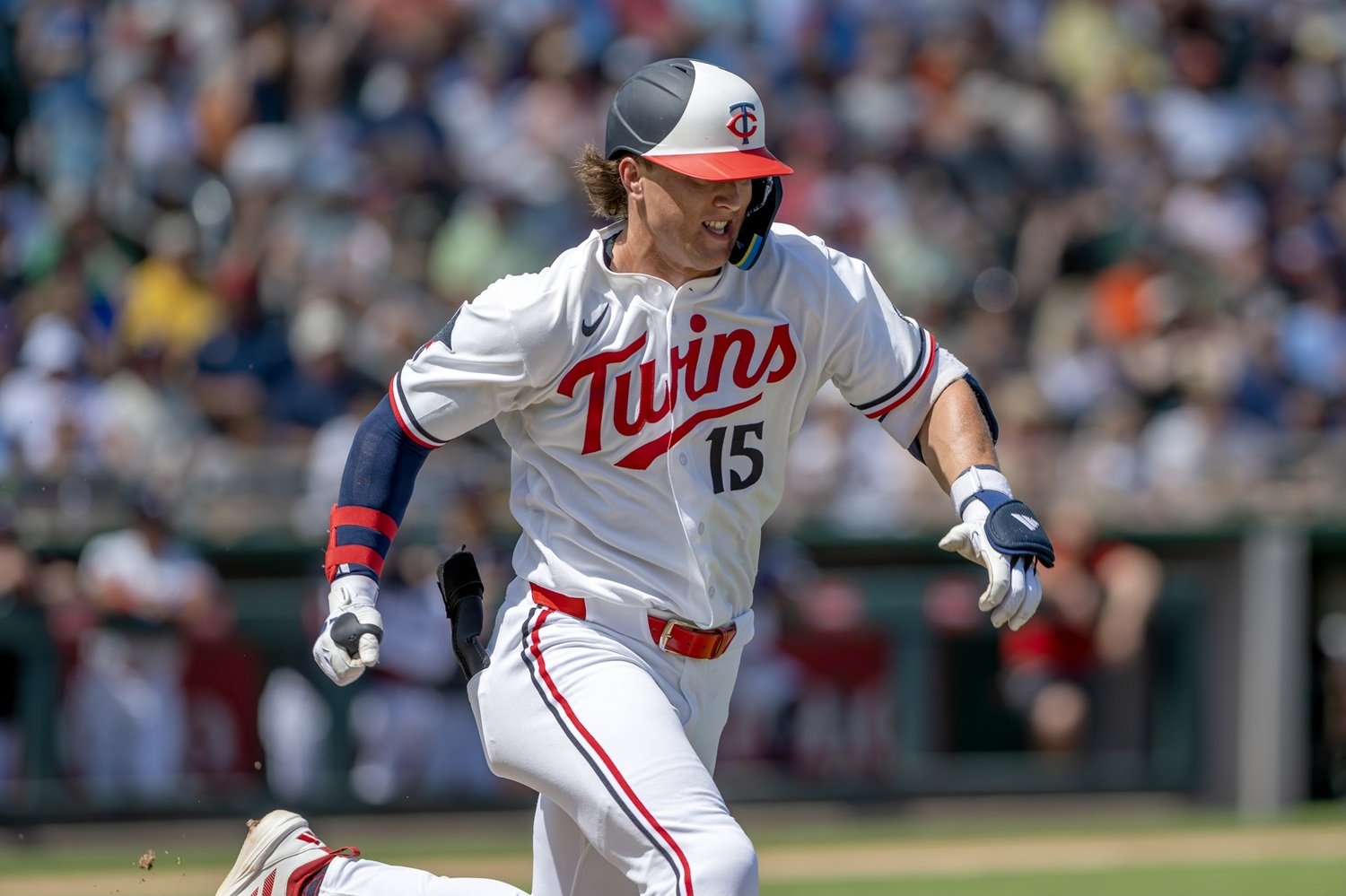
With a new manager in Derek Shelton, there are always questions about how specific lineup and roster decisions will play out. Over the weekend, the Twins named Joe Ryan as the team’s Opening Day starter, checking one major decision off the list before the regular season begins.
Another question carries just as much intrigue, though: Who should be the Twins’ leadoff hitter?
The answer is not as simple as it once was. Teams across baseball have shifted their thinking in recent decades, prioritizing getting their best hitters more plate appearances by placing them at or near the top of the lineup. The logic is straightforward. More trips to the plate mean more opportunities to alter the game.
At the same time, the sport has reintroduced elements that once defined traditional leadoff hitters. With rule changes encouraging stolen bases and more action on the basepaths, players who can get on base and create chaos still hold significant value. With the advent of the ABS challenge system, we could see a return of OBP-over-power guys, in general, regardless of whether speed is part of the package. Finding the right balance is where Shelton’s decision becomes interesting.
Who Will Do It? Byron Buxton
Reasons For: It feels like the easiest answer to the leadoff question is Buxton. He’s the Twins’ best all-around hitter and one of their most dynamic offensive players. He has expressed comfort hitting at the top of the lineup, and putting him there ensures he will accumulate the most at-bats over the course of the season. There is also a growing trend of elite hitters occupying the leadoff spot, with stars like Shohei Ohtani doing it for contending teams.
Reasons Against: There is an inherent tradeoff when your best hitter bats first. In the opening inning, there’s no one on base ahead of him. Beyond that, the bottom of the lineup often provides less consistent on-base production, limiting RBI opportunities when the order turns over. While Buxton maximizes plate appearances in this role, it does not always maximize run-producing situations. Moreover, for all the things Buxton does well, he has a .308 career on-base percentage, and even since the start of 2024, that number is .330. That’s a fine figure, but it’s underwhelming for a leadoff man. Buxton’s skill set is better suited to the No. 3 spot.
Who Should Do It? Luke Keaschall
Reasons For: Keaschall brings a more traditional leadoff profile, with a modern twist. He showed an ability to get on base during his rookie season and was efficient on the bases, going 14 for 17 in stolen base attempts despite limited playing time. His skill set could allow him to function as a true table setter, creating opportunities for Buxton to drive in runs from the number two spot. On Sunday, the Twins put this one-two punch into action, so there may be a chance it comes to fruition.
Reasons Against: Keaschall has just over 200 major-league plate appearances, and some regression would not be surprising. Asking him to handle the leadoff role on a daily basis could add unnecessary pressure at this stage of his development, especially since he missed development time in the minors due to injury. The Twins may prefer to deploy him in different lineup spots to take advantage of matchups and ease that burden.
Who Could Do It?
Matt Wallner is one of the more unconventional options. Minnesota experimented with him in the leadoff spot against right-handed pitching last season, and the results were encouraging at times. Last season, he posted an .808 OPS against right-handed starters. His power profile is not typical for the role, but his ability to produce against righties gives Shelton a matchup-based alternative.
Ryan Jeffers could factor into the equation as well, especially against left-handed pitching. He’s been one of the team’s most productive right-handed bats in those situations, posting strong numbers that could justify giving him extra plate appearances at the top of the lineup when Buxton isn’t in the order. Last season, Jeffers posted an .885 OPS when facing lefties and a .910 OPS when facing left-handed starting pitchers.
Then there’s Brooks Lee, a player once viewed as a prototypical leadoff hitter thanks to his bat-to-ball skills and approach. Those traits have yet to show up (and, indeed, contact is less important than plate discipline at the top of the lineup; Lee has never demonstrated good patience), but the organization still believes in his offensive upside. If he takes a step forward, he could reenter the conversation later in the year.
Shelton’s first few lineup cards will be closely watched, but this is unlikely to be a one-time decision. The Twins have multiple viable options, each offering a different look depending on the matchup, health, and performance.
Buxton remains the most logical choice to open the season, simply because of his talent and impact. However, Keaschall represents an intriguing alternative who could shift the lineup dynamic if he continues to develop. Meanwhile, players like Wallner, Jeffers, and Lee provide flexibility that could allow Shelton to adjust on the fly.
In today’s game, the leadoff spot is less about fitting a mold and more about maximizing value. The Twins have the pieces to experiment, and how Shelton deploys them could quietly become one of the defining storylines of the 2026 season.
Who should be the team’s leadoff hitter? Leave a comment and start the discussion.