
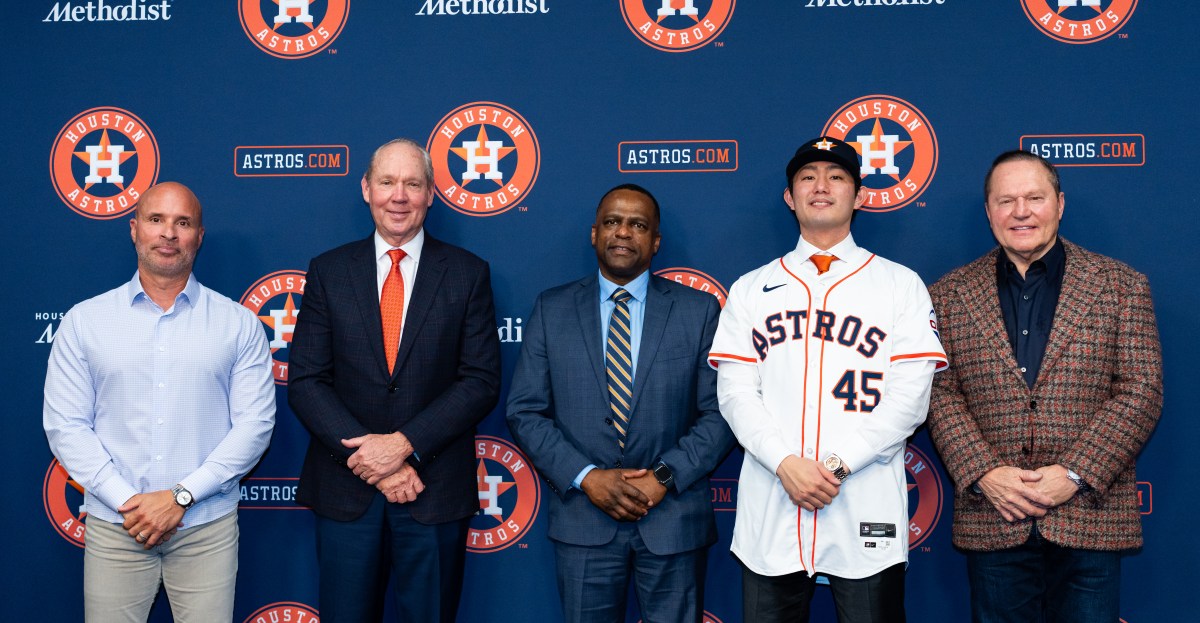
As the Houston Astros prepare for another season with championship expectations, two of the most important figures in the organization find themselves in uncertain territory. General manager Dana Brown and manager Joe Espada are both entering the final years of their contracts, and owner Jim Crane has offered little clarity about their futures.
In an organization where the standard is not just contention but championships, that uncertainty carries weight. Performance this season may ultimately determine whether either, or both, remain part of the Astros’ long-term vision.
High Expectations, Limited Security
Both Brown and Espada have publicly expressed a desire to remain in Houston long term. But as is often the case in professional sports, the decision isn’t theirs to make. Crane has consistently maintained that the Astros’ championship window is “always open,” a philosophy that places constant pressure on leadership to deliver results.
That pressure is magnified by the reality that neither Brown nor Espada had previously held roles of this magnitude before stepping into their current positions. With that comes an expectation of growth and inevitably, some growing pains and mistakes along the way.
Espada’s Steady Leadership
Espada’s leadership style has never been loud or overbearing, but it has been effective. Known more for his calm demeanor than fiery speeches, he has earned the respect of his clubhouse.
Last season may have been his most impressive work to date. Despite a roster plagued by injuries and constant lineup challenges, Espada kept the Astros competitive deep into the season, with the team remaining in the playoff hunt down to the final stretch.
There’s a strong case to be made that Espada is the right manager to guide this team forward. Still, in a results-driven environment like Houston, belief alone isn’t enough, he will ultimately be judged on what happens next.
Dana Brown’s Balancing Act
Brown’s situation is more complex.
While both he and Espada face scrutiny, evaluating Brown comes with an added layer of uncertainty. The internal dynamics of decision-making, particularly the level of control exerted by ownership, remain largely unknown. That makes it difficult to fully assess what roster decisions are truly his.
Publicly, Brown has often said what fans want to hear, especially when it comes to retaining star players. But the organization’s track record tells a different story. Time and again, key names have departed, and the Astros have shown a reluctance to commit to long-term, high-dollar contracts in free agency.
That disconnect has not gone unnoticed.
The looming contract situations of Hunter Brown and Jeremy Peña only add to the pressure. Brown has voiced a desire to keep both players in Houston, but fans remain skeptical, especially after similar assurances were made about Kyle Tucker before he was dealt to the Chicago Cubs.
Beyond contracts, there are clear questions about the roster itself.
As the Astros approach Opening Day, the imbalance is hard to ignore. The infield appears crowded with talent, while the outfield lacks proven, high-level experience. That discrepancy leaves Brown with a critical decision: address the issue through trades or acquisitions, or trust that the current roster can compensate offensively for its shortcomings.
It’s a gamble either way and one that could directly impact how his tenure is judged. There are holes to be filled and problems to be addressed and to date, nothing has been done or attempted to resolve any of the current issues.
Hovering over everything is Crane.
The Astros owner has built a winning organization, but his level of involvement in baseball decisions remains a point of speculation. How much autonomy Brown truly has is unclear, and that ambiguity complicates any evaluation of the front office.
It also raises a larger question: does Crane prefer leadership that aligns with his vision, or is he willing to bring in more established voices who might challenge it?
Former manager Dusty Baker offered a different dynamic, an experienced, confident presence capable of pushing back when necessary. Brown and Espada, while more aligned with modern baseball philosophies, don’t yet carry that same weight of experience. It may never be known how much control either man has ever had or has at this point and time. We have heard all the stories, seen the brutal signings of Montero and Abreu and have had hunches about the limitations both men have had to deal with, but we may never know for sure just what they had to deal with.
A Season That Will Define the Future
Ultimately, this season feels like a turning point.
For Espada, it’s an opportunity to prove he can lead a team with championship expectations through adversity and into October. For Brown, it’s a chance to solidify his vision for the roster and show that he can align words with action.
And for Crane, it’s a decision point: stay the course with two leaders who fit his organizational style, or pursue bigger, more established names who might offer a different path forward.
The stakes are clear. The expectations are higher than ever.
Now, the results have to follow.