
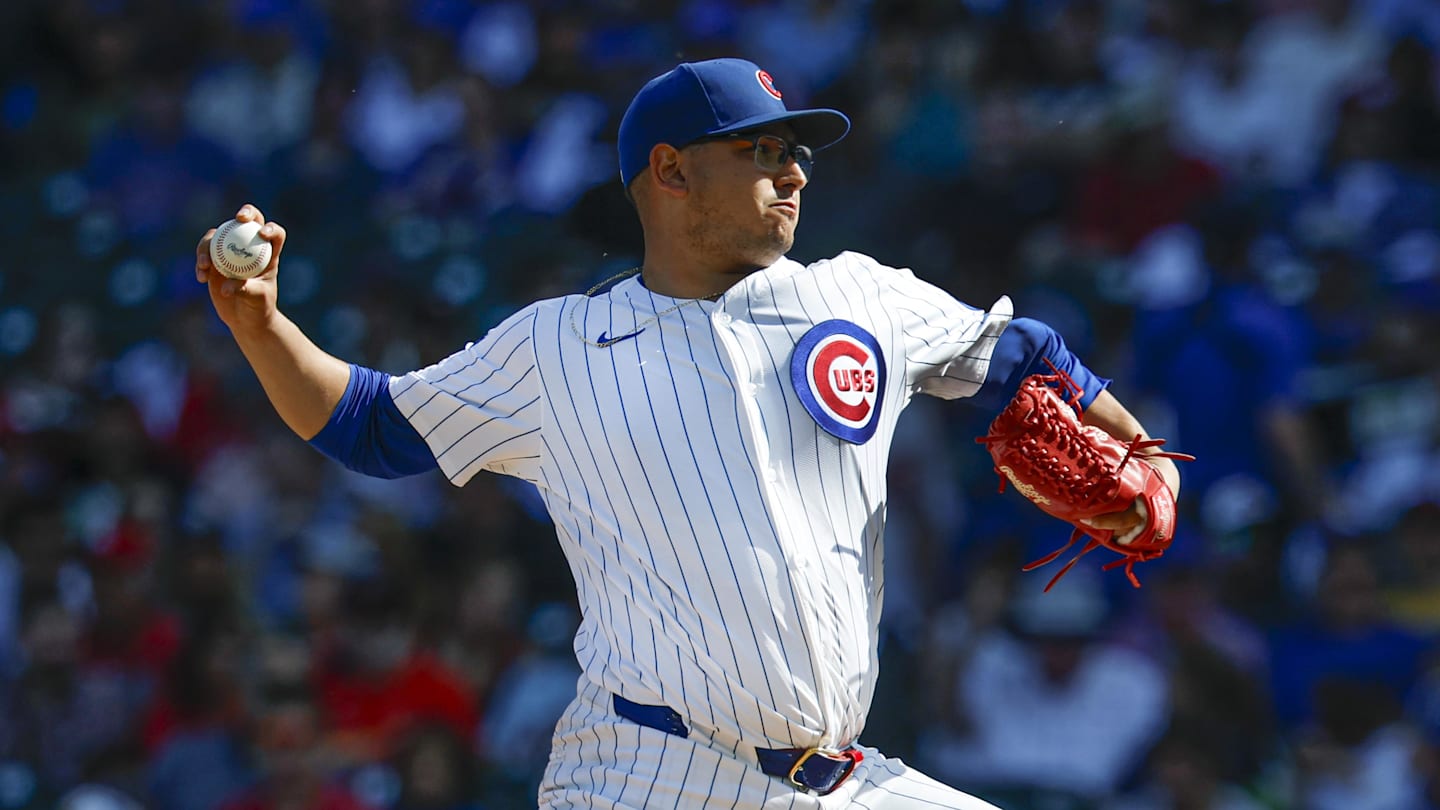
Javier Assad failing to make the Chicago Cubs’ Opening Day roster wasn’t all too surprising. He spent a bulk of camp with Team Mexico at the World Baseball Classic, and the team’s rebuilt bullpen and Edward Cabrera-headlined starting rotation simply didn’t have room to accommodate his skill set.
They’re also not violating any rules by optioning Assad to Triple-A, seeing as the 28-year-old has two option years remaining. By all accounts, this is just the case of a deep team stashing some of their depth for future use.
Why, then, does seeing Assad go to Iowa feel so wrong? Is it because he’s only pitched 66 2/3 career innings in Triple-A, which is about 20% of his total major-league workload? Or did the Cubs make a bad call, rostering someone else less deserving?
Unless you haven’t watched Ben Brown pitch in spring training with the help of his fine new sinker, none of those questions really strike at the root of the issue. In truth, Assad’s future may simply lie elsewhere.
Javier Assad becomes prime trade chip following Cubs’ Ben Brown decision
It’s ridiculous to say that someone with a career 4.46 FIP is “too good” for Triple-A, but Assad has always been a unique case.
Last season, despite an oblique strain that limited him to just seven starts (plus one bullpen appearance) and 37.0 innings, he recorded a 3.65 ERA and 47.4% ground-ball rate while pitching to his career rate of about 1.0 fWAR per 100 frames. His strikeouts were down, but so too were the number of walks and home runs he surrendered.
He’s an excellent contact manager who pitches to the strengths of his defense, flashing a seven-pitch repertoire that’s more designed to keep hitters off balance than beat them. The expected metrics are never particularly kind to him, but Assad’s actual results (career 3.43 ERA) are suggestive of a legitimate rotation or long-relief option in the majors.
Again, none of this is meant to suggest the Cubs were wrong to add Brown to their Opening Day bullpen. His stuff is far flashier than Assad’s, and the difference in their respective potentials is staggering. If the coaching staff believes the former top prospect is finally ready for prime time, then they made the right call.
Yet Assad is better than just veteran fodder in Triple-A. The Cubs don’t owe him anything besides the money on his contract, but there comes a point where a guy’s track record is too impressive to keep his future so murky. With three years of team control remaining, he’d make for a great trade chip if the team doesn’t have designs on calling him up immediately when an injury hits.
If Assad is retained, though, he’ll certainly make his way back to Chicago at some point. When that happens, don’t be surprised to see him thriving at the highest level once again.