
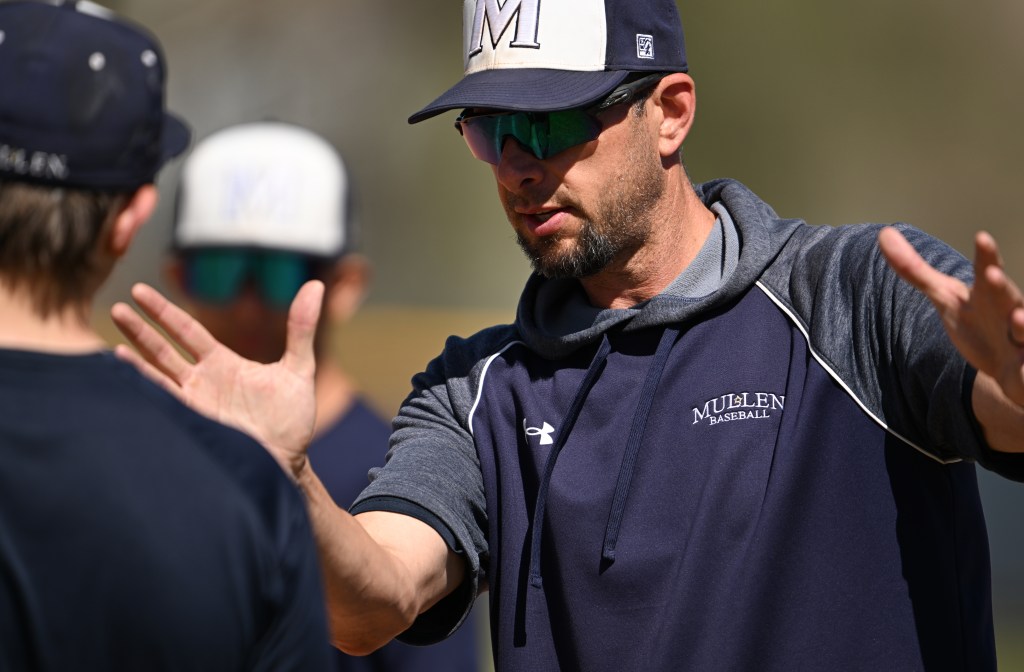
With his arm almost out of bullets, Jason Hirsh discovered his second calling in a bush-league bullpen.
It was the former Rockies hurler’s final year of playing in 2013, when he pitched briefly for the independent Amarillo Sox in the American Association. After several shoulder injuries, the right-hander’s arm wasn’t what it once was, and his passion for the preparation the game required was waning.
At that point, Hirsh had recently gone through a spell of being angry with the game, and with himself. But when his younger teammates asked for his advice, a new light flipped.
“Some of my teammates in Amarillo were fresh out of college or had only played a year or two of indy ball, and they’d be like, ‘Hey, can you come watch a bullpen and help me out?’” Hirsh recalled. “So we’d go down there together and I’d be like, ‘Oh, I see this or I see that.’
“And they would fix those things I was seeing. They’d go out in the game, they’d have success. And from that, I started to get that same sense of joy and fulfillment that I used to have as a player. And so that’s when my mindset really started to switch and I thought, ‘Maybe I should put on a different hat here.’”
So that’s what Hirsh did.
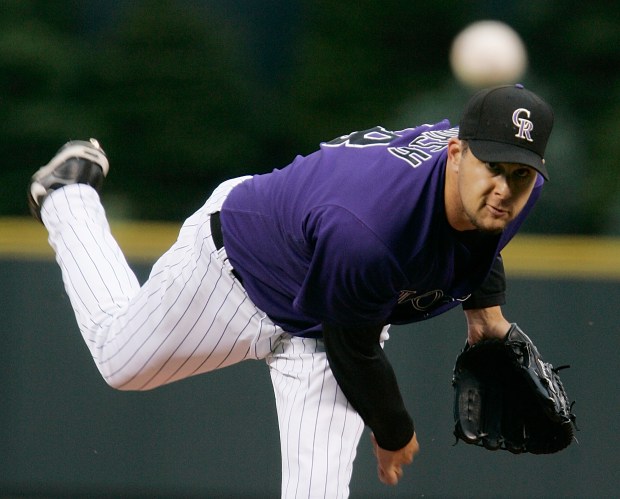 Colorado Rockies pitcher Jason Hirsh throws to the plate against the Arizona Diamondbacks during the first inning of a baseball game in Denver, Tuesday, May 15, 2007. (AP Photo/Jack Dempsey)
From player to coach
Out of the highs and lows of his professional career, Hirsh’s next phase in the game came as a coach. He started the Jason Hirsh Pitching Academy in 2013 by renting a tunnel in a hitting facility in Aurora. Over the last 13 years, his business expanded significantly, and he’s worked with hundreds of high school baseball pitchers across the state. The growth led to his own player development facility, FAST Performance, in Lakewood.
And this year, Hirsh took over as the head coach at Mullen after four years as an assistant. The totality of his coaching endeavors marks a full-circle moment from the advice he offered to other pitchers in American Association bullpens while hanging on to the final remnants of his own career.
“Very few people get to leave the game the way they want,” said Cory Sullivan, Hirsh’s Rockies teammate in 2007 and ’08 who also coached with him at Mullen. “Because of that, a lot of guys can develop that animosity towards it. But for a guy like Jason, his passion was the game, not necessarily playing the game.
“Coaching (at FAST Performance) and at Mullen, I think this is Chapter 2 in a seven- to 10-chapter book. I don’t think he will stop at coaching at the high school level. There will be opportunities for him to coach at the professional level or the collegiate level if he wants it because Jason’s very driven when it comes to the changes in the modern game (via analytics).”
At his facility, Hirsh has made a name for himself in the spheres of arm care and pitching mechanics. One of the pitchers he worked with throughout high school, Columbine graduate Aidan Brainard, is now up to 98 mph with his fastball at Nevada after coming back from elbow surgery earlier in his college career.
Hirsh was there for Brainard before and after his surgery, and never made chasing velocity a sole focus.
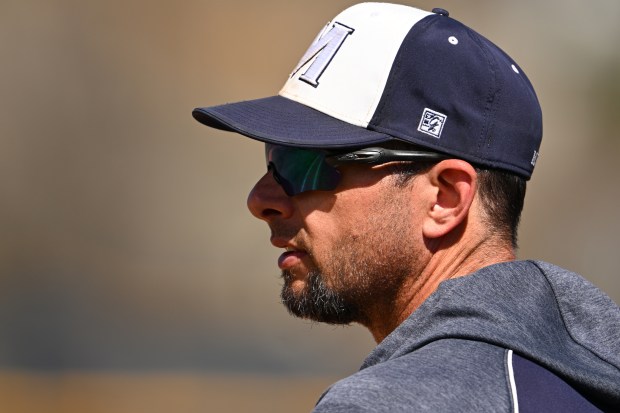 Former Colorado Rockies pitcher Jason Hirsh, now the head coach of Mullen High School’s baseball program. Hirsh coaches practice at the high school’s field on April 02, 2026, in Denver. (Photo by RJ Sangosti/The Denver Post)
“The first time we went to his facility, I asked, ‘What do you think we should be doing to maybe get noticed a little bit more by college scouts?’” recalled Aidan’s father, Jeff Brainard. “And his response was, ‘Eat a peanut butter and jelly sandwich in-between every meal, and eat another peanut butter and jelly sandwich during the meal you’re having.’ Basically just telling Aidan that the most important thing he can do right now is gain weight and sleep.
“There’s a lot of people who are willing to blow smoke, especially when you’re hoping your kid gets noticed by colleges. But Jason has always been incredibly authentic, and he was a great sounding board for Aidan during his recovery from surgery.”
The 6-foot-8 Hirsh started his career as an under-recruited pitching prospect in his native Southern California. He emerged as a star at California Lutheran University, where he became one of the highest-drafted Division III players ever when the Astros selected him in the second round in 2003.
He zoomed through the minors, earning Texas League Pitcher of the Year in 2005 and then Pacific Coast League Pitcher of the Year in ’06. He debuted that August in a stacked Houston rotation that featured Roy Oswalt, Andy Pettitte and Roger Clemens.
But Hirsh’s excitement about being part of that cast in his first full big-league season the next summer was dampened when he was traded to the Rockies in December 2006. The deal sent Rockies ace Jason Jennings and pitcher Miguel Asencio to Houston in exchange for Hirsh, pitcher Taylor Buchholz and outfielder Willy Taveras.
“That was a huge gut punch,” Hirsh said. “I was like, ‘Really? The Rockies?’”
Hirsh’s professional high
Little did Hirsh know that he would be a key piece of the most memorable Colorado roster ever assembled, as the 2007 Rocktober team played in the first and still only World Series in franchise history. Hirsh turned in his signature season, with a 4.81 ERA in 19 starts, before it got derailed when he broke his leg after being hit by a line drive in August.
Hirsh broke his right fibula off a comebacker from the second batter of that game, but kept pitching, turning in a quality start with six innings and two earned runs in a win over Milwaukee. After that, his leg didn’t heal in time to rejoin Colorado for its torrid stretch run that culminated in being swept by the Red Sox in the World Series.
“I had just missed a month with a rolled ankle, and I was determined that they were not going to take me out of that game,” Hirsh said. “… After (realizing it was broken), I tried to just become the best teammate I could. I’d do the bucket. I’d go shag in the outfield, break down opponents with our other pitchers, and contribute in any way that I could.”
A shoulder injury cost Hirsh most of the ’08 season, and by midway through ’09, the Rockies traded Hirsh to the Yankees. Hirsh briefly rediscovered his mojo for Triple-A Scranton/Wilkes-Barre following the trade, but never made it back to the majors. He concluded his career with a stint in the Australian Baseball League and then in the American Association.
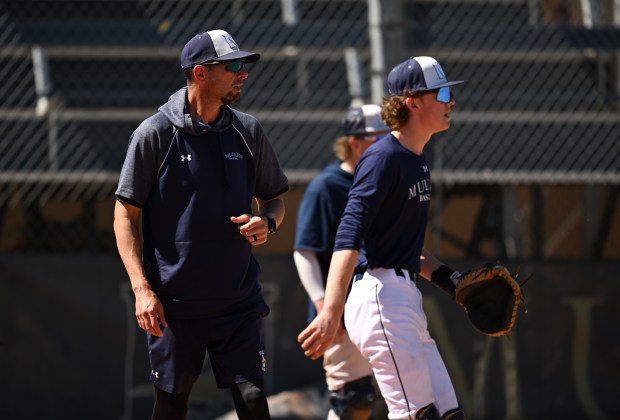 Former Rockies pitcher Jason Hirsh, left, is now the head coach of Mullen High School’s baseball program. Hirsh coaches practice at the high school’s field on April 02, 2026, in Denver. (Photo by RJ Sangosti/The Denver Post)
Now, as a coach, Hirsh says he “enjoys the game more than I ever did as a player.” And while he won’t be at the Rockies’ home opener on Friday at Coors Field, with the club’s front office under new direction, Hirsh is again willing to come out to watch his former big-league team that he became disinterested in over the past three 100-loss seasons.
“I look back on my playing career and I wish I took it in a little bit more,” Hirsh said. “I felt like I was always trying to prove myself, trying to work towards something. And I never really fully grasped or appreciated the process that it took me to get to there.”
The next Hirsh to watch
That’s why Hirsh is preaching process over outcome with his Mullen Mustangs, and especially his son, sophomore first baseman/pitcher Brady Hirsh.
The 6-foot-4, 230-pounder has a sweet, power-laden left-handed swing that is replicated from the swing of the Yankees’ Cody Bellinger. And on the mound, he’s already showing promise, with a mid-80s fastball plus a curveball and changeup.
Brady Hirsh has been one of Mullen’s best players so far this spring in his debut season on varsity. He’s batting a team-best .484 with a .526 on-base percentage and three homers through 10 games, plus a 2.00 ERA on the mound.
The younger Hirsh said he’s relishing the dad-son coaching dynamic, even as his dad was visibly nervous ahead of Brady’s first varsity pitching start on March 14. Brady threw three scoreless innings of one-hit ball in an 11-0 win over Lewis-Palmer.
“We were looking at the game charts afterward and in the first inning, his handwriting was so messy and so scribbly,” Brady Hirsh said with a laugh. “He said his heart rate was so high and his hands were shaking, because he was so nervous for me in my first start. As the innings went on, (the handwriting got better). That’s got to be my favorite moment so far this year.”
While the Mustangs are looking to rebound from a 9-16 record in 2025 — the program’s first losing season in seven years — Hirsh, ever the hammerer of proper technique, wants to see his club play fundamental baseball. That will be even more critical when Mullen’s tough Centennial League slate begins next week.
“I told our guys that I want boring baseball,” Jason Hirsh said. “I don’t need flash. I don’t need flare. I don’t need fancy footwork, fancy glove work, flips from a running position. I need them to catch the ball with two hands. I need good approaches in the box. I need them to field ground balls properly and make nice throws over to first. When we stick to our process, we are really good.”
No matter what happens, Hirsh, 44, is also focused on enjoying every moment in a game he’s learned to never take for granted.
“I’m doing what I do now with the same level of tenacity that I once had as a player,” Hirsh said. “But now, I love watching other people go out there and do it and have that same success, and chase their dreams the same way I chased mine.”
Want more Rockies news? Sign up for the Rockies Insider to get all our MLB analysis.