
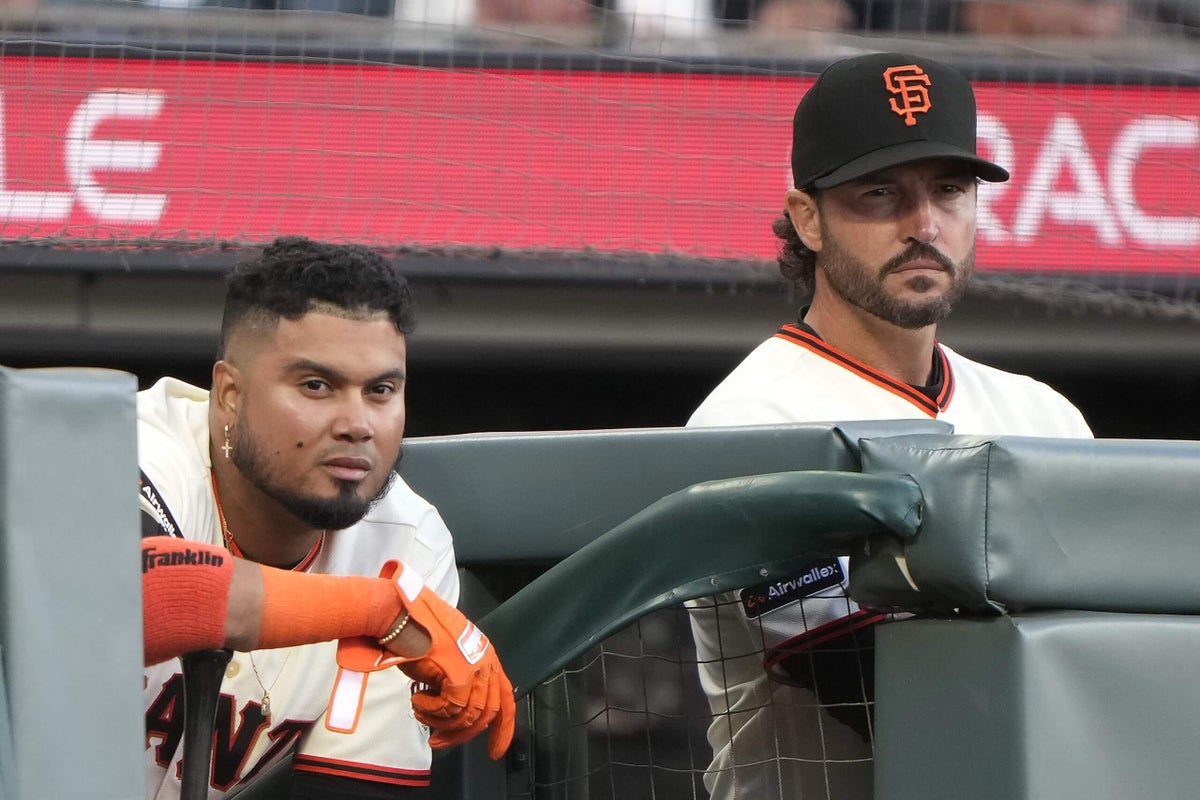
When assessing teams under the most pressure in 2026, start with the usual suspects — the expected big-money contenders in New York, Philadelphia and Boston. Throw in the suddenly-spending Chicago Cubs. And round out the group with the Houston Hotseats, err, Astros, whose manager and GM both are in the final years of deals.
But don’t forget the San Francisco Giants.
Yes, the pressure is significant on a team that was .500 or slightly below in each of the past four seasons. A team that has made the playoffs only once since 2016. A team under its third manager in four years — and one making his debut in professional baseball, no less.
Tony Vitello, jumping to the majors from the University of Tennessee, is equal parts curiosity piece and object of scrutiny. How Vitello, 47, handles his clubhouse, manages his bullpen and deals with a major-league season nearly 100 games longer than a college campaign likely will help determine whether the Giants snap out of their four-year malaise.
The Washington Nationals’ Blake Butera, another first-time manager, is taking over a rebuilding club with minimal expectations. Vitello, like San Diego Padres rookie manager Craig Stammen, is expected to win right away. His predecessor, Bob Melvin, was a three-time Manager of the Year who got fired for managing a .500 team.
Problem is, the Giants play in a highly competitive division. Their roster is expensive but flawed. And for a former college coach, holding the trust of well-compensated major leaguers who are naturally suspicious and forever in “show-me” mode will be a distinct challenge.
Yet, Vitello is only the tip of the spear for Giants president of baseball operations Buster Posey, who surprisingly has some A.J. Preller in him. An executive willing to take risks, if he makes enough correct decisions, will gain a competitive advantage over his peers, many of whom are decidedly and even proudly risk-averse. But with Posey and general manager Zack Minasian in only their second full seasons, so much about this team remains a mystery.
Was Vitello the right call, even in an industry where unconventional hires no longer are uncommon? Was shortstop Willy Adames a wise free-agent investment at seven years and $182 million? Was first baseman/DH Rafael Devers worthy of the $255 million obligation Posey took on in acquiring him from the Boston Red Sox?
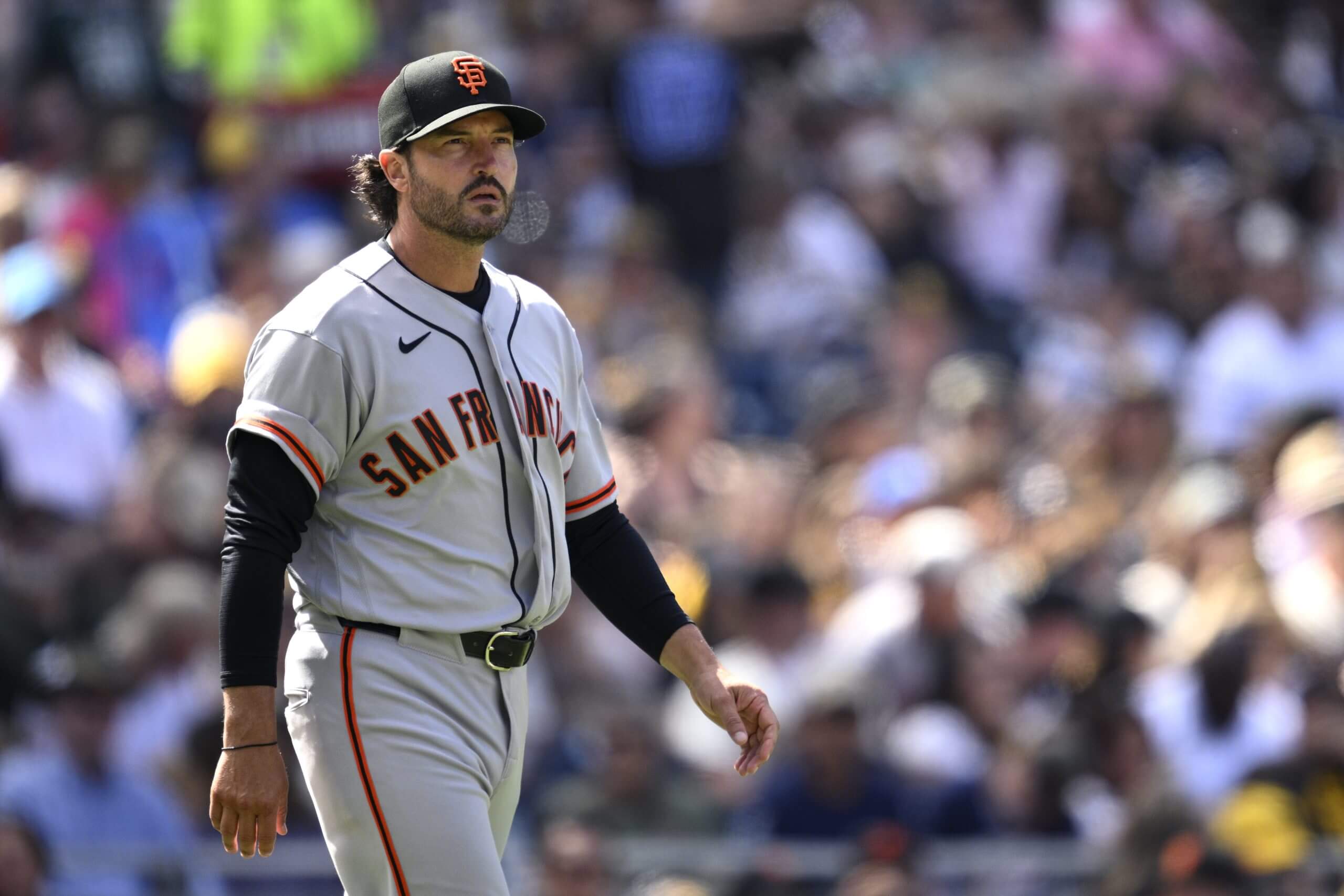
Tony Vitello is the first manager to go directly from the NCAA to MLB. (Orlando Ramirez / Getty Images)
Posey, shortly before replacing Farhan Zaidi in Sept. 2024, also played a key role in the signing of third baseman Matt Chapman to a $151 million extension. And though the Giants’ commitment to Vitello is much less, they are spending a sizable $10.5 million on the manager’s position this season — $3.5 million for Vitello’s salary, $3 million for his buyout from Tennessee and $4 million to pay Bob Melvin in the final year of his contract.
Despite all that, Posey gently pushed back when, in an interview for Fox Sports during spring training, I told him I never imagined him being a risk-taker as an executive. (In fact, as Posey won Rookie of the Year and MVP awards and led the Giants to three World Series titles, all while maintaining a notably even personality, I never imagined him being an executive at all.)
“I don’t know if I see it that way,” Posey, a seven-time All-Star catcher, said of the notion that he might be a swashbuckler. “I want this to be fun. So I think perceived risk sometimes is fun.
“I would argue that every player that makes it to the big leagues is a risk-taker, though. I don’t think you can make it without kind of laying it on the line. You’re going to set yourself up to fail ultimately over and over again, especially as a position player. And you have to be okay with that.
“To me, when you think about risk, you’re weighing obviously what the downside could be and the upside. And if I’m gonna pull the trigger on something that I think is perceived risk, I have to be really comfortable knowing that if it hits rock bottom, I’m gonna be okay with that.”
Will these Giants hit rock bottom? Doubtful. But their path to one of the six National League postseason berths will not exactly be smooth, either.
For starters, the Giants likely will need to establish themselves as the second-best team in the NL West, behind the Los Angeles Dodgers and ahead of the San Diego Padres and Arizona Diamondbacks. It’s easy to imagine two of the three wild cards coming from the NL East. Or two might come from the NL Central, the way they did last season.
The names in the Giants’ lineup, from Adames, Devers and Chapman to Luis Arraez, Jung Hoo Lee and Heliot Ramos, indicate the team’s offense should be strong. But the Giants’ bench is all right-handed and their bullpen is something of a hodgepodge. Neither is ideal for any manager, much less one in his first season.
And, while a rotation headed by Logan Webb and Robbie Ray could prove to be quite good, the Giants spent modestly on free-agent right-handers Adrian Houser (two years, $22 million) and Tyler Mahle (one year, $10 million) rather than go big for a Dylan Cease or Framber Valdez.
Ownership, though, seems rather confident in the team’s prospects, viewing last season as something of a fluke. The Giants never quite ignited after acquiring Devers on June 15 and wound up sellers at the trade deadline, parting with outfielder Mike Yastrzemski and relievers Tyler Rogers and Camilo Doval.
“People tended to say, well, it’s a .500 team. I don’t think we were a .500 team,” Giants chairman and control person Greg Johnson told The Athletic’s Andrew Baggarly.
“We had some key injuries at the wrong time, and we had an unprecedented stretch that seemed like everything could go wrong went wrong. And we finished two games out (of a playoff spot). So I think we were better than a .500 team last year, and I think we’re better than that this year. So expectations, and our expectations as a group, are higher than they’ve been in a while.”
The Giants also are encouraged by the progress of their farm system, which The Athletic’s Keith Law ranked 13th, proclaiming it, “could be top five in a year easily,” and Baseball America listed 14th, saying “the system is in its best shape in years.”
The team’s young core will get another boost in July. The Giants lucked out in the draft lottery and will select fourth overall. But aside from Bryce Eldridge, who figures to arrive from Triple A at some point this season to split the first base and DH spots with Devers, most of the Giants’ better prospects are years away from the majors.
For San Francisco, then, the time is now. That was the point of signing Chapman and Adames for a combined $333 million, of trading for Devers after one major free agent after another said no, of hiring Vitello to generate a spark that Melvin did not provide. The Giants’ $200-million plus payroll, while ranking only 11th in the majors, is one of the highest in club history.
This team is under pressure, all right. The kind of pressure that comes when a franchise is full of questions. The kind of pressure where if things go amiss, it might be best for fans to close their eyes.