
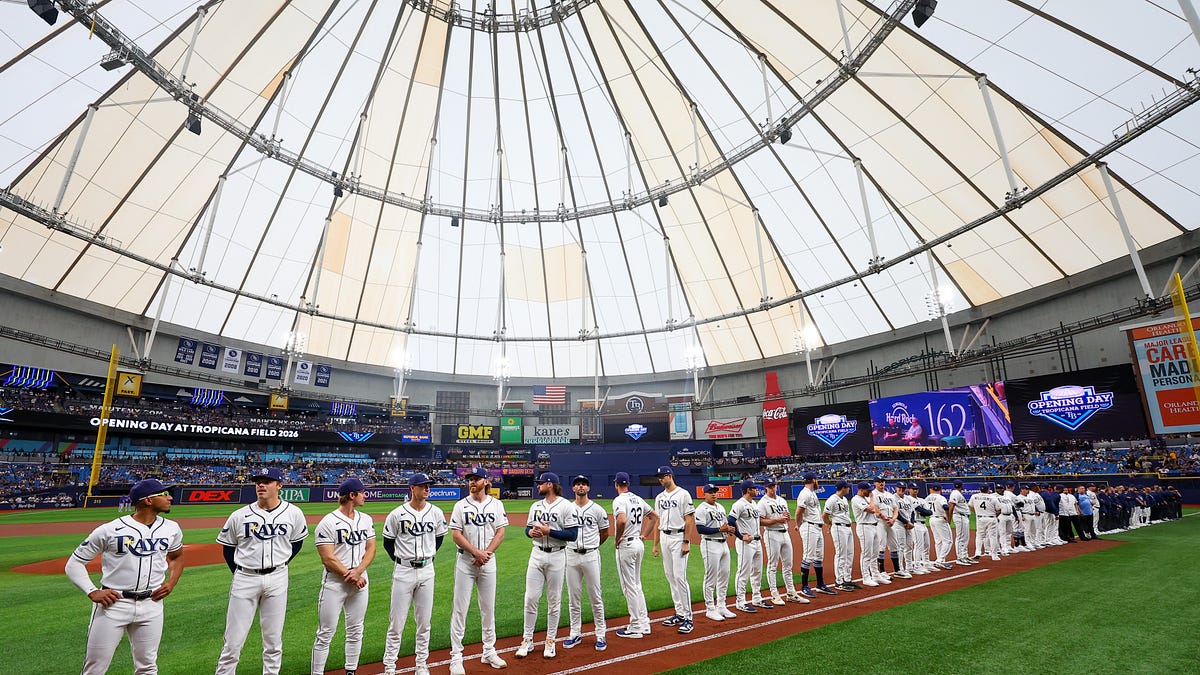
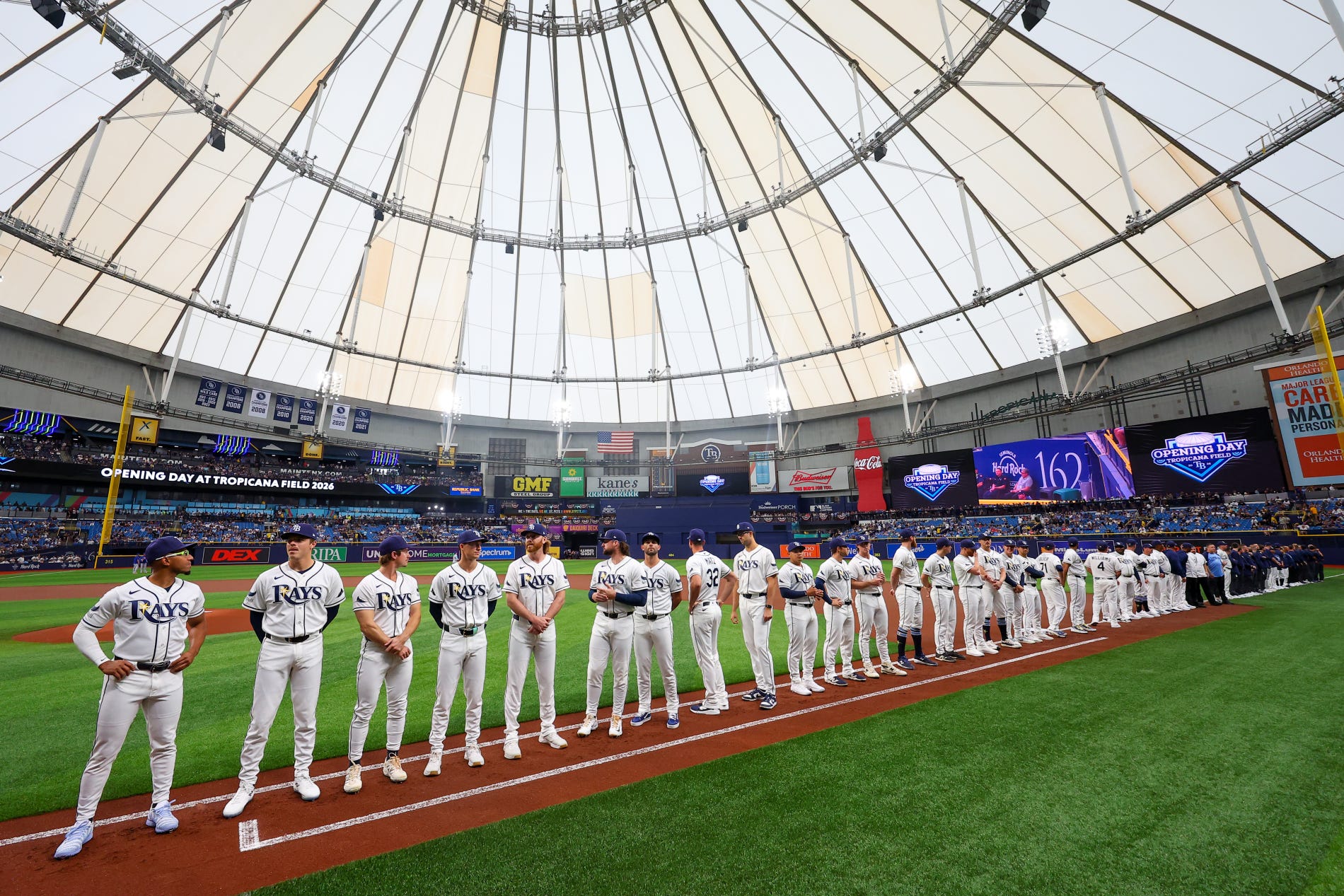
 Members of the Tampa Bay Rays line up along the base path prior to the game between the Chicago Cubs and the Tampa Bay Rays at Tropicana Field on Monday, April 6, 2026 in St. Petersburg, Florida. (Mike Carlson/MLB Photos via Getty Images)
The Tampa Bay Rays have been one of baseball’s most interesting franchises for years, dating back to their stunning 2008 turnaround from perennial cellar-dwellers into a consistent underdog World Series-contender. I’ve often highlighted the fact that, if the “Devil Rays” and “Rays” were two separate franchises, the former would easily rank as the worst in MLB history by winning percentage, while the latter would rank second-best ever (trailing only the Yankees):
There have been many consistent themes to the Rays’ journey ever since, including their early and total embrace of analytics, an uncanny ability to outperform their meager payroll — the latter perhaps correlated with the former — their unrelenting roster turnover, and a shrewd accumulation of talent from other franchises that often leaves opposing GMs “fleeced”. But one that doesn’t always get mentioned is also a factor that was missing last season as the team sputtered to its worst winning percentage (.475) since 2016.
Tropicana Field in downtown St. Petersburg is not much to look at. In fact, it’s been called a “dump” and compared to a giant warehouse; Yelp reviewers detailed their experiences with cockroaches in the stands; it has frequently been rated as one of (if not the) worst ballparks in MLB. Former Rays C/DH John Jaso likened the experience of playing there to being in “a circus tent” with its fabric roof and weird catwalks. By most accounts, redeeming qualities for The Trop would appear to be in short supply.
And yet, it has also been a secret weapon for Tampa Bay over the years — one which the Rays are hoping will help power another turnaround this season.